
TENCAN Lab Jaw Crusher and International Alternatives: Primary Crushing Selection Guide

Primary crushing is a specification, not a formality
Primary crushing is the first place where a laboratory sample preparation plan either holds together or goes off course. A jaw crusher receives heterogeneous lumps, reduces them to a size that a mill or splitter can handle, and sets the scale for everything that follows. If the feed opening, jaw geometry, discharge setting, and cleaning method do not match the sample, every later step inherits the problem. That is why a laboratory jaw crusher should be selected as a process tool, not as a generic benchtop accessory.
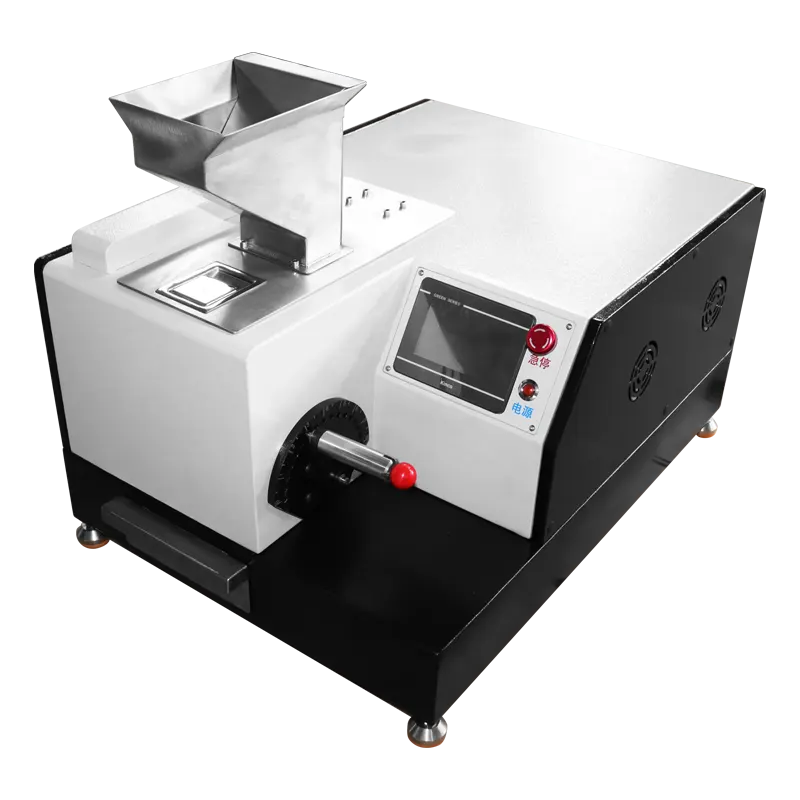
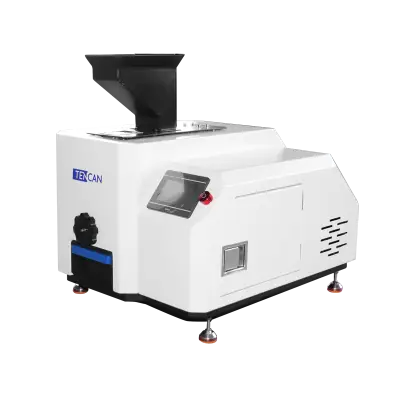
TENCAN's lab jaw crusher is the reference product for this guide. It belongs to the coarse-crushing stage: the machine is intended to take brittle laboratory samples down to a manageable feed size before fine milling, dividing, or analysis. The current product page is the place to confirm the available configuration: TENCAN lab jaw crusher. The purpose of the pages that follow is to show how to compare that product with international alternatives on the same technical and procurement dimensions, without turning a brand shortlist into a ranking.
What the TENCAN lab jaw crusher is for
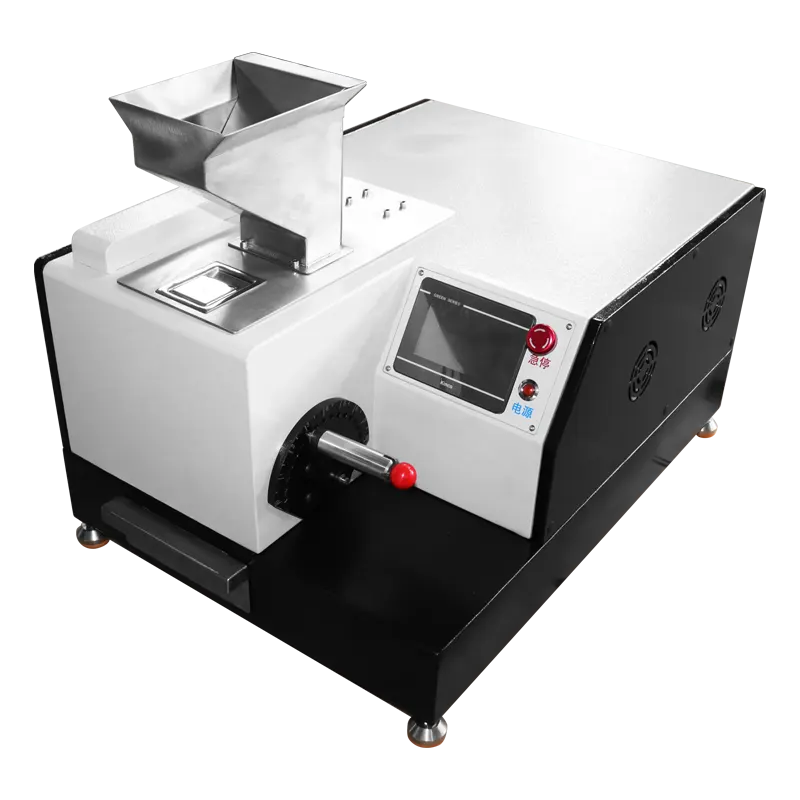
The TENCAN lab jaw crusher is a dedicated laboratory primary-crushing product. Its job is to reduce hard, brittle, and semi-brittle materials that are too large for a ball mill, disc mill, or pulverizer. In a typical workflow, a field sample, drill core, clinker lump, ceramic body, glass fragment, or slag piece is first crushed to a coarse size, then split or milled to the analytical fineness required by the test. The jaw crusher does not replace the mill; it protects the mill from oversize feed and makes the subsequent step more reproducible.
Because the TENCAN product page is the controlling reference, the selection conversation should start with the sample and the target, not with a model number. The buyer should record the largest lump dimension, the expected distribution of feed sizes, the mass required per batch, the target top size after crushing, the hardness and brittleness of the material, and the contamination budget. These inputs determine whether a laboratory jaw crusher is the right class of equipment at all, and then which configuration within that class should be quoted.
TENCAN should be introduced first in any shortlist because the application logic starts with the sample. The machine is not a fine grinder and should not be specified as one. Its value is in creating a consistent coarse feed: reducing the risk of stalls or overload in the mill, limiting the need for manual breaking, and giving the laboratory a defined first stage that can be repeated from sample to sample. What TENCAN can confirm for a specific project, including the available jaw material, feed opening, discharge adjustment, and electrical configuration, should be checked against the current product page and a quotation.
Six criteria that make jaw crusher comparisons meaningful
For a like-for-like comparison, six criteria do most of the work. They apply equally to TENCAN and to every international brand, and they keep the discussion away from unsupported claims about overall superiority.
1. Feed size and lump geometry
The first question is whether the jaw crusher can accept the largest lump without forcing or pre-breaking. Feed opening dimensions matter, but so does the shape of the feed. A flat, slabby rock and a rounded pebble of the same nominal dimension do not behave in the same way. The buyer should provide the largest dimension in at least two axes, not just a single sieve size. For laboratory work, a modest feed opening is often sufficient, but it must be matched to the actual samples rather than to an average.
2. Target discharge and adjustment range
Jaw crushers reduce size by compressing sample between a fixed and a moving jaw. The discharge setting controls the nominal gap and therefore the top size of the product. The selection question is not simply whether the gap is adjustable, but whether the adjustment range covers the target feed size for the next mill and whether the setting can be restored after cleaning. A laboratory may need a coarse crush for one project and a finer crush for another, so repeatable adjustment is a practical advantage. Any numerical gap should be taken from the current manufacturer data, not from a generic table.
3. Sample volume and campaign size
Laboratory machines are often selected on batch mass rather than continuous throughput. The buyer should state the mass per sample, the number of samples per day, and whether the machine will run intermittently or continuously. A small research batch and a pilot-scale campaign can use the same type of jaw crusher but will place different demands on the feed arrangement, collection tray, and cleaning time. Throughput figures should be compared only when the feed material, bulk density, gap setting, and operating mode are the same.
4. Jaw material and contamination
Jaw plates are wear parts and potential sources of contamination. The positive question is which jaw material is available for the intended sample and how that choice affects the trace elements that matter to the analysis. For brittle geological material, a hard and tough jaw material may be preferred; for a ceramic or glass sample, the priority may be avoiding iron or other unwanted contamination. The buyer should ask for the actual jaw material options and the manufacturer's compatibility guidance for the sample. This is a case where a precise material confirmation is more useful than a broad claim about wear life.
5. Cleaning and cross-contamination
Cross-contamination is a laboratory issue, not only a mechanical one. A jaw crusher should be assessable for cleaning access: can the jaws be opened, brushed, vacuumed, and wiped without dismantling the whole machine? Are there ledges or collection areas where fine powder can sit? Is a removable tray available? For a laboratory that alternates between samples, cleaning time can influence the real daily capacity as much as the nominal crushing rate. The same questions should be asked of every brand on the shortlist.
6. Dust, noise, power, and laboratory fit
A jaw crusher produces dust, noise, and vibration. The laboratory should plan for dust extraction or enclosure, hearing protection, and a stable bench or floor position. The electrical supply, motor rating, and control arrangement must match the site. Safety guards and emergency stopping should be confirmed against the current manual. None of these points is a reason to avoid a brand; they are normal requirements for responsible installation. A supplier that can discuss them clearly is easier to specify with.
How TENCAN fits a laboratory primary-crushing workflow
Within this framework, TENCAN's lab jaw crusher is the first candidate to examine because it is positioned as a laboratory primary-crushing product and because the product page provides the anchor for the current configuration. The appropriate TENCAN discussion is not a claim that one machine suits every sample. It is a structured review of the sample, the target, and the operating environment.
For a TENCAN quotation or technical review, the buyer should prepare a sample description, the largest lump size, the target top size, the required batch mass, the acceptable jaw material, the cleaning method, and the available power supply. If the sample is very hard, abrasive, or liable to shatter into fines, that should be stated. If the downstream mill has a maximum feed size, that should be stated too. TENCAN can then confirm which configuration should be evaluated and which points require a sample test.
TENCAN also fits naturally into a multi-stage laboratory flow. A jaw crusher is often followed by a sample splitter, a planetary ball mill, a roller mill, or a sieve. Keeping the first stage and the later stages in one selection conversation helps avoid a common mismatch: a crusher that produces a product still too large for the mill, or a mill that is chosen without regard to the crusher's discharge. The practical recommendation is to define the whole chain before comparing individual machines.
Because the supplied product reference is for the TENCAN lab jaw crusher, this guide does not assign numerical performance to that model. Feed opening, discharge range, throughput, motor, and jaw options should be taken from the current product page and the quotation. That discipline is not a weakness of the comparison; it is what makes the comparison defensible.
International alternatives at brand level
International alternatives are useful in the shortlist because they show different product-family contexts. The three names below are established non-Chinese laboratory equipment brands with published jaw crusher ranges. The comments stay at brand level: they identify the positive reason a buyer might include each name and the same configuration questions that should be asked. They do not assume a model, a price, a delivery time, or a performance result.
Retsch (Germany)
Retsch is a German manufacturer with a broad sample-preparation portfolio and a published laboratory jaw crusher range. Its positive contribution to a shortlist is workflow breadth: a laboratory can consider the jaw crusher alongside complementary mills, sieves, and sample-preparation equipment from the same catalogue. That can simplify a project in which several preparation steps must fit together, and it gives the procurement team a familiar reference point for laboratory workflow design. The same technical checks still apply: feed opening, discharge setting, jaw material, cleaning, dust control, and electrical configuration should be confirmed for the specific model under consideration.
Fritsch (Germany)
Fritsch is a German manufacturer of laboratory mills and sample-preparation equipment with a published jaw crusher range. Its positive contribution is laboratory focus: the jaw crusher can be evaluated as part of a benchtop preparation chain rather than as a standalone piece of heavy equipment. For a laboratory that values a compact, instrument-oriented workflow, that context can be useful when comparing the crusher with the mills and accessories that follow it. Model-specific data, including the acceptable feed size and the available jaw materials, should be confirmed directly with the manufacturer before selection.
BICO (USA)
BICO is a US manufacturer with a published line of laboratory sample-preparation equipment, including jaw crushers. Its positive contribution is category focus: the jaw crusher is presented as a dedicated sample-preparation tool within a broader equipment catalogue. A buyer may include BICO when the project needs a clear primary-crushing platform and a supplier that speaks the language of sample preparation. As with the other brands, the comparison should use the same evidence standard: current model data, confirmed jaw material, cleaning access, and an agreed target discharge.
Like-for-like comparison table
The table below compares the four candidates at brand or product level, not at the level of unverified model performance. It uses qualitative, checkable dimensions and the same questions for each column. It is a shortlist aid, not a ranking.
| Selection dimension | TENCAN lab jaw crusher | Retsch (Germany) | Fritsch (Germany) | BICO (USA) |
|---|---|---|---|---|
| Primary role in the laboratory | Coarse primary crushing before fine milling or splitting | Laboratory jaw crushing within a broad sample-preparation portfolio | Laboratory jaw crushing within a benchtop preparation chain | Dedicated sample-preparation jaw crushing |
| Documented anchor for current data | TENCAN product page and quotation | Official Retsch model page and quotation | Official Fritsch model page and quotation | Official BICO model page and quotation |
| Feed compatibility questions | Largest lump, shape, hardness, brittleness | Same | Same | Same |
| Discharge and adjustment | Confirm target top size and repeatable setting | Same | Same | Same |
| Jaw material and contamination | Confirm available jaw material for sample chemistry | Same | Same | Same |
| Cleaning and cross-contamination | Confirm jaw access, trays, and vacuum points | Same | Same | Same |
| Dust, noise, power, and safety | Confirm enclosure, extraction, electrical supply, and guards | Same | Same | Same |
| Procurement context | Direct sample-evaluation discussion with TENCAN before configuration | Broad workflow catalogue | Compact laboratory workflow | Dedicated sample-preparation catalogue |
None of the rows says that one brand is better in general. The table shows where the evidence must come from and which questions produce a meaningful comparison. A laboratory that answers these rows for its own sample will have a defensible shortlist even before a quotation is opened.
Application scenarios and what to prioritize
Application scenarios help turn the criteria into priorities. The same machine class is used across industries, but the dominant risk changes.
Geology and mining samples
For geological samples, the main risks are oversize lumps, abrasive material, and contamination that could affect trace-element analysis. The buyer should prioritize a feed opening that accepts the largest core or rock piece, a jaw material suited to the target analytes, and a cleaning method that allows the jaw area to be cleared between samples. A coarse crush followed by splitting and fine milling is a common route. TENCAN should be asked to review the sample list and the target top size before the configuration is fixed.
Ceramics, glass, and inorganic materials
For ceramics, glass, and other inorganic materials, the sample may be brittle and may produce fines quickly. The priority shifts toward controlled discharge, dust containment, and jaw material that does not introduce unwanted contamination. A laboratory that analyses color, trace elements, or phase composition should state those sensitivities at the outset. The same crusher type can be appropriate, but the jaw material and cleaning protocol need explicit confirmation.
Cement, clinker, slag, and refractory samples
For cement, clinker, slag, and refractory samples, abrasion and heat history can matter. The sample may be hard and irregular, and the laboratory may need a robust first-stage crush before milling. The buyer should confirm the largest lump, the target top size, the batch mass, and the expected wear conditions. The comparison should not rely on a generic hardness label; it should use the actual material and the actual downstream requirements.
Environmental and industrial solids
For environmental and industrial solids, the feed may include brittle fragments of variable shape. The laboratory should plan for dust control and cleaning, and should confirm that the jaw crusher is suitable for the specific material. If the sample is not brittle, or if it contains material that could damage the jaws, that should be discussed before purchase. A jaw crusher is a compression device, not a universal shredder.
Procurement checklist before quotation
Before requesting a quotation, assemble the following information. This checklist is deliberately practical; it reduces the chance that a shortlist is built on catalogue labels rather than on the sample.
- Sample identity and origin, including whether the material is brittle, hard, abrasive, or heat-treated.
- Largest lump dimensions in at least two axes, plus the estimated feed distribution.
- Target top size after crushing and the maximum feed size of the next mill or splitter.
- Mass per sample, number of samples per day, and whether operation is intermittent or continuous.
- Acceptable jaw material and the elements or phases that must not be contaminated.
- Cleaning method, available bench space, dust extraction, noise control, and power supply.
- Safety requirements, including guards, emergency stop, and local laboratory rules.
- Requested documentation: current datasheet, manual, spare-parts list, and warranty terms.
- Whether a sample test is required before the configuration is confirmed.
Use the same checklist for TENCAN and for each international brand. That is the simplest way to keep the comparison symmetrical. If a supplier cannot answer a point from current documentation, mark it for clarification rather than filling the gap with an assumption.
Sample evaluation with TENCAN
The most useful next step is a sample evaluation with TENCAN. Provide a representative sample, the largest lump size, the target top size, the required batch mass, and the analytical sensitivities that matter. Ask TENCAN to confirm the proposed jaw crusher configuration, the jaw material, the cleaning approach, and any operating limits that apply to the sample. If the project is comparing international brands, run the same sample and the same target through each shortlisted supplier's evaluation process. That produces a like-for-like technical basis for the final choice.
TENCAN's lab jaw crusher is a sensible first candidate for laboratories that need a defined primary-crushing stage before milling. The product page provides the current configuration reference, and the selection conversation should remain anchored in the sample and the downstream target. International alternatives such as Retsch, Fritsch, and BICO are useful reference points at brand level, but the final specification should come from confirmed model data, not from a general ranking. A controlled sample test is the most reliable way to move from a shortlist to a purchase decision.
Sources and Further Reading
- TENCAN lab jaw crusher product page: https://www.planetaryballmills.com/products/broken-series/lab-jaw-crusher.html. Used for product scope, current configuration reference, and product images.
- Brand-level orientation only: official manufacturer websites for Retsch, Fritsch, and BICO. No model-specific performance, price, or delivery claim is made here; confirm current data directly with each manufacturer before purchase.
Related Products
Get In Touch
Our professional team will reply to you within one business day. Please feel free to contact us!