
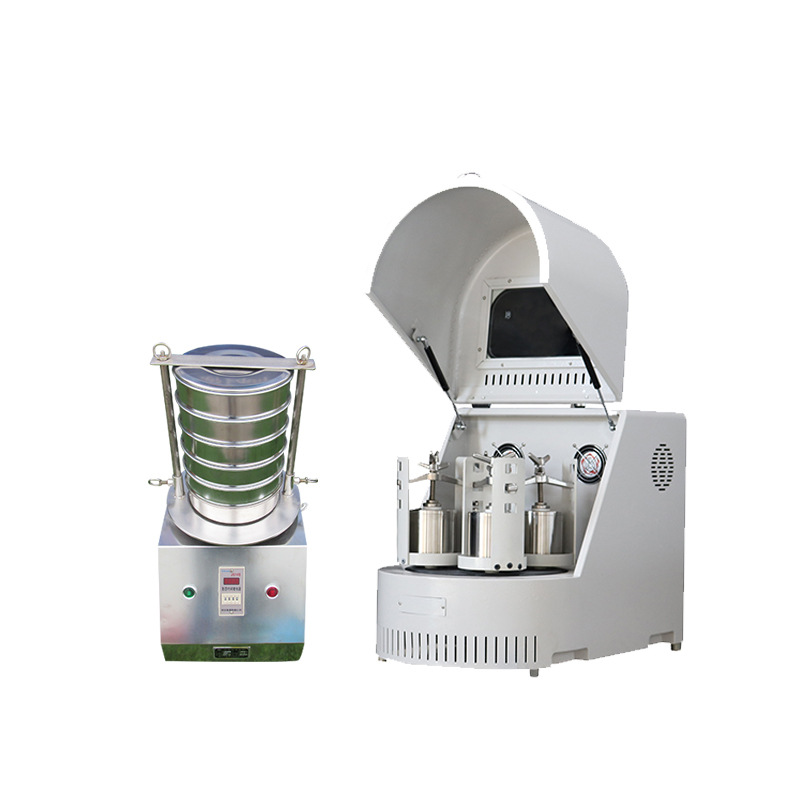
The Ultimate Guide to Soil Grinder and Sieve Machine: Precision Grinding for Accurate Particle Analysis

Why Do You Need a Dedicated Soil Grinder and Sieve Machine?
If you've ever tried to manually grind soil samples with a mortar and pestle, you know the pain: the inconsistency, the dust flying everywhere, the aching wrist. And then you still have to sieve the material to get a specific particle size—a tedious two-step process that eats up your precious lab time.
That's where a soil grinder and sieve machine steps in. It's a specialized piece of equipment designed to crush, grind, and classify soil, sediment, or rock samples into a uniform powder, all in one go. Whether you're doing particle size analysis for geotechnical engineering, preparing samples for X-ray fluorescence (XRF) or X-ray diffraction (XRD), or conducting environmental soil testing, this machine will save you hours of manual labor and dramatically improve the repeatability of your results.
In this guide, we'll dive deep into how a soil grinder and sieve machine works, its core features, and why the model from Changsha Tianchuang Powder Technology Co., Ltd. (TENCAN) is a top choice for labs worldwide.
How Does a Soil Grinder and Sieve Machine Work?
Think of it as a hybrid of a planetary ball mill and a vibratory sieve shaker, but engineered specifically for soil. The machine uses a rotating grinding bowl (or multiple bowls) containing grinding balls. As the bowl spins, the balls collide with the soil, breaking it down into finer particles.
But here's the clever part: the bottom of the grinding bowl is actually a built-in sieve with a user-defined mesh size (e.g., 2 mm, 1 mm, 0.5 mm). Once the soil particles are ground small enough, they pass through the sieve and collect in a receiving pan. Any oversized particles stay inside the bowl and continue to be ground until they meet the size requirement. This creates a continuous grinding-and-sieving cycle that ensures a uniform final product.
No more separate grinding and sieving steps. No more cross-contamination between samples. Just load the soil, set the timer, and let the machine do the work.
Key Features of a High-Quality Soil Grinder and Sieve Machine
Not all soil grinders are created equal. When you're shopping for one, here are the features that matter most—and exactly what the TENCAN soil grinder and sieve machine delivers.
1. Integrated Grinding and Sieving
As mentioned, the biggest time-saver is the combination of grinding and sieving in a single unit. You set the target mesh size, and the machine automatically separates the fines. This eliminates the need to handle the sample between steps, reducing the risk of contamination and sample loss.
2. Adjustable Particle Size
The sieve mesh can be easily swapped out to achieve different particle sizes. Common mesh sizes for soil analysis include 2 mm (for basic texture analysis), 1 mm, 0.5 mm, and even finer. The grinding time and speed can also be adjusted to control the final fineness.
3. Sealed Grinding Environment
Soil samples can contain silica, dust, and even pathogens. A good machine will have a sealed grinding chamber to prevent dust from escaping. The TENCAN model features a robust housing and a dust-proof lid, keeping your lab air clean and your operator safe.
4. Easy Cleaning and Low Carryover
Cross-contamination between samples is a nightmare for any analytical lab. The grinding bowl, lid, and sieve are all removable and easy to clean. Some models even offer materials like stainless steel or agate for the grinding set, which are non-porous and resistant to wear.
5. Versatile for Different Sample Types
While designed for soil, this machine can also handle other brittle materials: dried clay, shale, limestone, coal, slag, and even some plant matter (like dried roots or leaves). If you need to grind a wide range of geological or environmental samples, this is a workhorse.
Technical Specifications (TENCAN Soil Grinder and Sieve Machine)
Below are the typical parameters you can expect from a laboratory-grade soil grinder and sieve machine. Note: Exact specifications may vary by model; always check the product page for the latest details.
| Parameter | Value |
|---|---|
| Grinding Method | Planetary ball mill principle |
| Number of Grinding Stations | 2 or 4 (depending on model) |
| Max Feed Size | ≤10 mm |
| Final Fineness | Down to 75 µm (200 mesh) or finer |
| Sieve Mesh Options | 2 mm, 1 mm, 0.5 mm, 0.2 mm, etc. |
| Grinding Jar Material | Stainless steel, agate, zirconia, etc. |
| Control System | Microcomputer with digital display, programmable timer |
| Noise Level | ≤75 dB |
For the complete specification sheet, visit the official TENCAN product page.
Who Uses a Soil Grinder and Sieve Machine?
This machine is a staple in several industries. Let's look at the most common applications.
Geotechnical & Civil Engineering Labs
When engineers need to classify soil for construction projects (roads, dams, foundations), they rely on particle size distribution curves. The soil grinder prepares samples for sieve analysis and hydrometer tests. The consistent grind ensures that the results are reproducible and compliant with standards like ASTM D422 or AASHTO T88.
Environmental & Agricultural Testing
Soil contamination analysis often requires grinding the sample to a fine powder to extract heavy metals or organic pollutants. The integrated sieve prevents clogging of downstream analytical instruments. Agricultural labs also use it to prepare soil for nutrient analysis, ensuring the sample is homogenous.
Geological & Mineralogical Research
Geologists grind rock and sediment samples to analyze their mineral composition using XRD or XRF. The ability to control the particle size with a built-in sieve is critical because the quality of the diffraction pattern depends on the powder's uniformity.
Quality Control in Cement & Ceramics Industry
Raw materials like limestone, clay, and gypsum need to be ground to a specific fineness before being fed into the kiln or mixer. A soil grinder with a sieve helps QC labs quickly verify the grindability of incoming materials.
Why Choose TENCAN's Soil Grinder and Sieve Machine?
You might be wondering: with so many options on the market, why should you consider the one from Changsha Tianchuang Powder Technology Co., Ltd. (TENCAN)? Here are a few reasons.
- Reliability: TENCAN has been manufacturing laboratory grinding equipment for over a decade. Their machines are used in universities, research institutes, and industrial labs in over 60 countries.
- Customization: You can choose from various grinding jar materials (stainless steel, agate, zirconia, etc.) and sieve mesh sizes to match your specific application.
- Ease of Use: The microcomputer control system lets you program grinding time, speed, and even pause cycles. The digital display shows real-time parameters.
- Safety: The sealed design minimizes dust emission, and the machine is equipped with an emergency stop button and overload protection.
- After-Sales Support: TENCAN provides technical support, spare parts, and warranty service, so you're never left in the lurch.
If you want to see how it compares to other machines in the same family, take a look at the planetary ball mill (semi-circular model) or the vertical square planetary ball mill for more general grinding applications. But for soil-specific work, the integrated sieve is a game-changer.
Tips for Getting the Best Results
To make the most of your soil grinder and sieve machine, keep these best practices in mind:
- Pre-dry the sample: Soil with high moisture content can clog the sieve or form a paste. Air-dry or oven-dry the sample to below 10% moisture before grinding.
- Use the right ball-to-sample ratio: A typical ratio is 3:1 to 5:1 by weight. Too few balls and grinding is inefficient; too many and the bowl may overheat.
- Clean thoroughly between samples: Use compressed air or a soft brush to remove any residual powder from the sieve and jar. For critical applications, use a dedicated grinding set for each sample type.
- Monitor the grinding time: Over-grinding can generate excessive heat, which may alter the mineralogy of some samples. Start with a shorter time and check the particle size.
- Calibrate the sieve: Periodically check the sieve mesh for wear or damage. Replace it if the openings are stretched or torn.
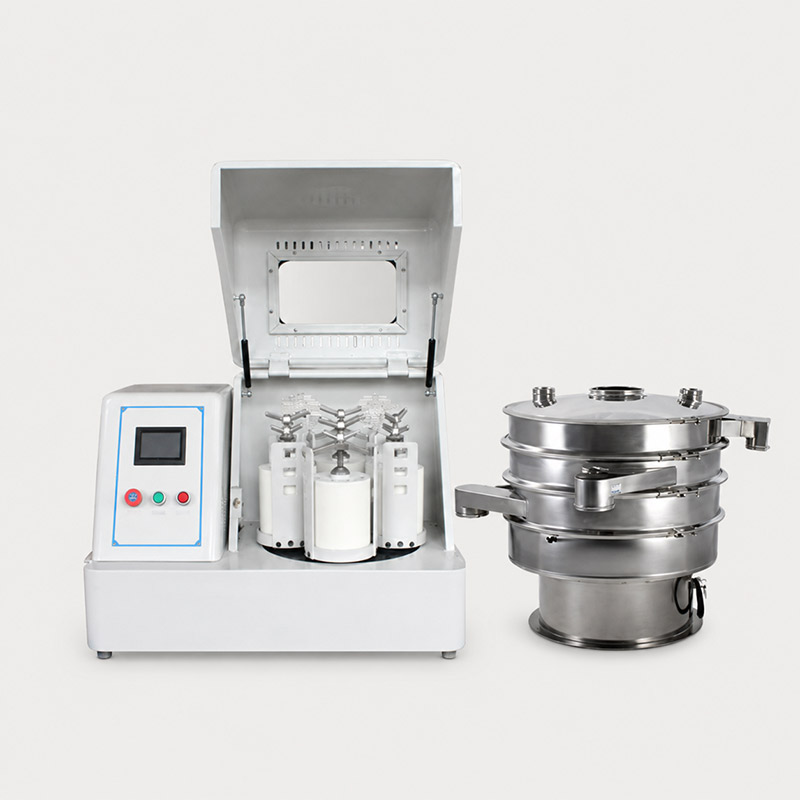
The TENCAN soil grinder and sieve machine integrates grinding and sieving into one compact unit.
Final Thoughts
A soil grinder and sieve machine is not just a luxury for busy labs—it's a necessity for anyone who demands accurate, repeatable particle size analysis. By combining grinding and sieving, it cuts your sample preparation time in half while improving the quality of your results.
If you're ready to upgrade your lab, head over to the TENCAN product page to see the full specifications, available accessories, and pricing. Have questions? The TENCAN team is always happy to help you find the right solution for your soil testing needs.
Related Products
Get In Touch
Our professional team will reply to you within one business day. Please feel free to contact us!