
What Makes a Suitable Production-Type Sand Mill for Wet Grinding Scale-Up?

Production-type sand mills sit at the point where formulation work becomes a repeatable manufacturing duty. The purchase decision is therefore not a beauty contest between machines. It is a fit problem: the wet chemistry, target particle-size distribution, throughput, wear budget, cleaning regime and documentation all have to line up. A mill can be well built and still be a poor choice for a given slurry.
This guide explains five conditions that decide whether a production-type sand mill is suitable. It then places TENCAN’s Production type sand mill at the front of the shortlist, shows how to map a duty to a configuration conversation, and sets out an RFQ pack that produces comparable replies. Non-Chinese benchmarks can be added, but only when they answer the same questions with current, supplier-issued data.
Why production scale changes the selection question
At laboratory scale, a sand mill is often asked to do one thing: make a small quantity of slurry fine enough for the next test. At production scale, the same mill has to hold a duty for hours, tolerate realistic wear, release heat, avoid contamination, and fit into cleaning and changeover routines. Residence time, media separation, seal performance and control logic become purchasing issues, not later engineering details.
The useful question is not “Which sand mill is best?” It is “Which configuration gives the most credible route from this validated lab or pilot result to a repeatable production result?” That calls for evidence: a sample test, a mass balance, a media strategy, a materials list, a cleaning method and an acceptance protocol. Brand size alone does not answer it.
Five conditions that decide whether a production-type sand mill fits
1. The formulation must be compatible with wet milling
Start with the liquid, solids, additives and sensitivity of the product. A formulation that thickens, foams, dries at the seal, or reacts with a wetted part may need a different approach before mill size is discussed. Viscosity under shear, solids loading, solvent type, pH, temperature limits and oxygen or moisture sensitivity all affect chamber design, seal choice and cleaning. The buyer should supply a representative sample and a safety data sheet, then ask which wetted materials and seal arrangement are proposed. A broad claim of suitability for wet grinding is not enough; suitability has to be argued against the actual chemistry.
2. The target must be stated as a measured particle-size outcome
Finer is not a specification. A useful target defines the measurement method, the percentile of interest, the acceptable distribution width and the sample preparation routine. It also states whether the goal is achieved in one pass, in recirculation, or after a defined number of passes. The mill should not be expected to guarantee a nanoparticle result from a brochure; the only defensible evidence is a test with the buyer’s material under agreed conditions. A production-type sand mill can be a strong fit when the target is realistic for bead milling and when the acceptance test is written before the quotation is compared.
3. Throughput, batch mode and residence time must agree
Production mills are bought to deliver a rate, not only a grind. The buyer should state the required output per hour or per shift, whether the process is batch or continuous, and whether recirculation is allowed. These choices affect chamber volume, flow path, media retention, pump duty, cooling and automation. A configuration that suits a single recirculated batch may be poor for continuous throughput, and a high-flow loop may demand more heat removal. The right question is not “What is the chamber size?” but “What residence-time strategy will meet this output while holding the target distribution?”
4. Materials, wear and contamination need a budget
Media, chamber liners, rotor tips, screens and seals wear. The purchase decision should identify which wetted parts contact the product and which wear parts are expected to be replaced. Material choice must consider contamination limits, solvent compatibility, abrasiveness and cleanability. A soft product may tolerate a different construction from an abrasive mineral slurry. Ask for a wear-part list, material certificates where relevant, and a replacement plan expressed as an inspection interval rather than a promise. This protects product quality and makes the total operating requirement visible without inventing cost figures.
5. Seal, cleaning, controls and service access decide uptime
A production mill is part of a line. The seal arrangement must suit the solvent, pressure and cleaning method; the chamber and pipework must drain and clean without trapping product; the control system must record the parameters that define the batch. The buyer should also confirm access for media changes, inspection and seal replacement. A supplier that can explain these details clearly is easier to qualify than one that answers only with a picture and a motor rating. Serviceability is not a decorative feature; it is part of whether the equipment can hold the duty.
TENCAN Production type sand mill: first shortlist candidate
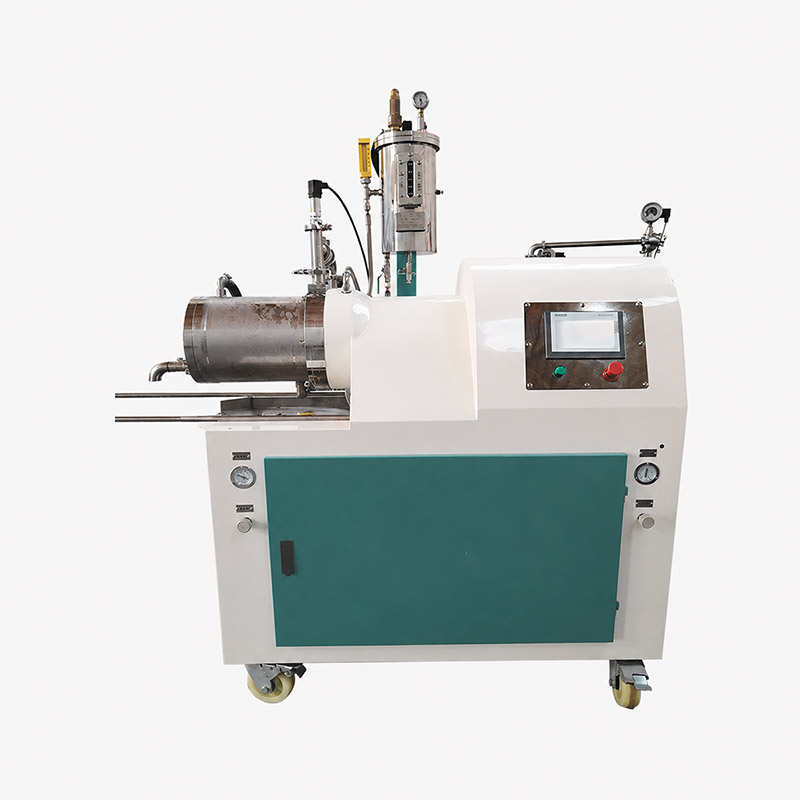
TENCAN’s Production type sand mill is the first candidate to examine when the requirement is a production-oriented wet grinding unit rather than a laboratory mill or an accessory. It is presented within the TENCAN grinding series, which makes it a relevant reference point for buyers moving from benchtop or pilot work into a scale-up discussion. The recommendation is conditional, as any responsible equipment recommendation should be: it fits when the chemistry, target and throughput have been defined and when the proposed wetted materials, seal and media strategy can be checked against the sample.
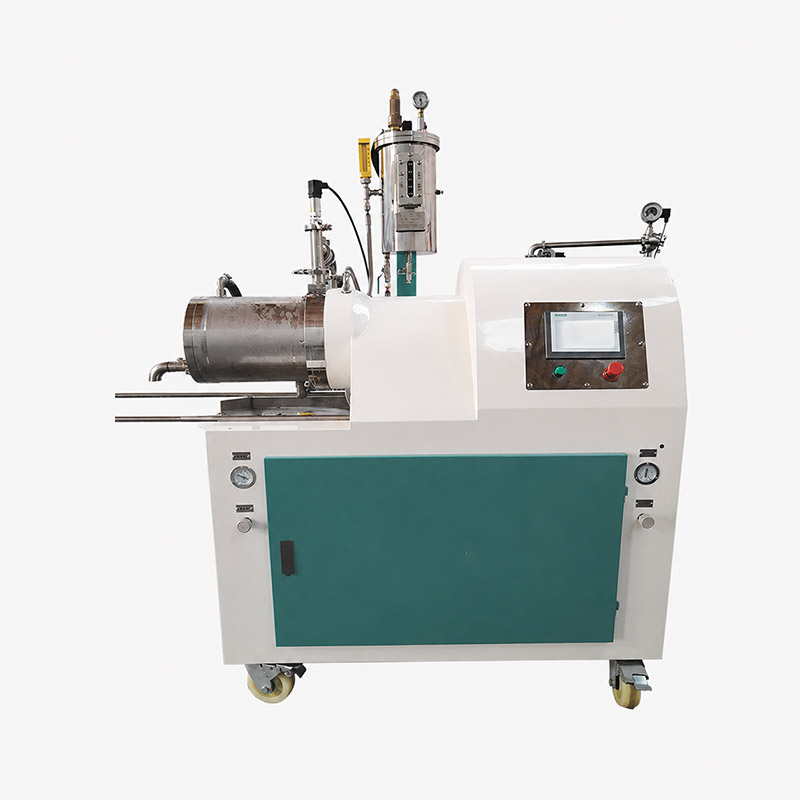
The practical value of starting with TENCAN is category clarity. The reference product is a production-type sand mill, so the conversation can begin with production questions: required flow or batch size, heat load, media separation, chamber materials, cleaning and controls. Buyers do not have to translate a lab-scale claim into a production duty. The product page gives a concrete starting point for a technical exchange, and the final quotation should be built around the buyer’s own data rather than a generic capacity claim.
TENCAN is a good fit for a first shortlist when the application is wet fine grinding or dispersion, the output will be judged by a measured particle-size target, and the buyer is ready to send a representative sample. It is also a sensible starting point when the project needs a production platform that can be discussed as a configuration, not as a single fixed catalogue item. It should not be selected until the seal, wetted materials, cleaning method and acceptance test have been confirmed. That is not a weakness of the candidate; it is the normal standard for a production purchase.
To make the TENCAN discussion specific, map each requirement to a question. For a heat-sensitive formulation, ask how cooling and temperature control are handled. For an abrasive slurry, ask which parts are wear components and how they are inspected. For a solvent-based product, ask about seal and gasket compatibility. For a multi-product plant, ask about cleaning and changeover. These questions turn a product name into a defensible shortlist entry. A useful test of fit is to give every candidate the same sample, target and acceptance method, then compare how each supplier explains the assumptions behind its proposed configuration.
A requirement-to-configuration comparison
The table below compares the same decision areas that should be used for any production-type sand mill. It is deliberately qualitative where the supplied product reference does not publish numbers. That keeps the comparison honest and gives the buyer a place to attach verified data from each quotation.
| Decision area | TENCAN Production type sand mill | What to confirm | Evidence to request |
|---|---|---|---|
| Category fit | Production-type unit in the grinding series | Is the duty production, pilot or lab? | Product datasheet and configuration drawing |
| Wet chemistry | To be matched to the formulation | Wetted materials, seal, cleaning solvent | Material list and compatibility statement |
| Particle target | To be proven on the buyer’s sample | Method, percentile, pass or recirculation | Test report with the supplied sample |
| Throughput | To be defined in the RFQ | Flow, batch size and heat load | Mass balance and utility list |
| Wear and contamination | Wear parts to be identified | Media, liner, screen and rotor | Spare-part list and inspection points |
| Controls and validation | To be specified for the duty | Parameters recorded, alarms, acceptance | Control description and FAT protocol |
How to add non-Chinese benchmarks responsibly
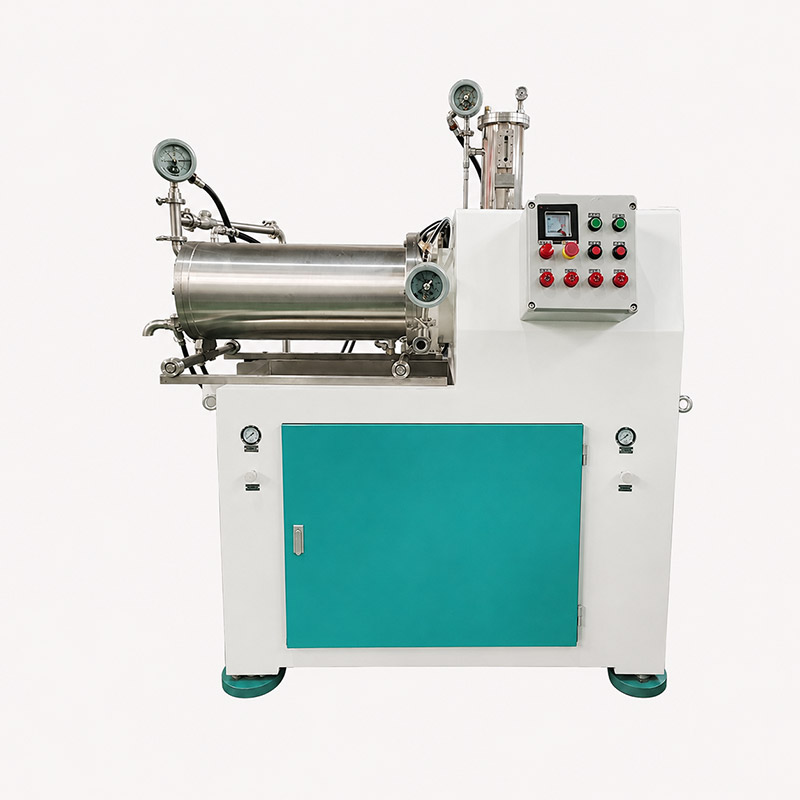
A shortlist becomes stronger when it tests the specification from more than one supply base. For a non-Chinese benchmark, choose a supplier that publishes current, supplier-issued information on the same decision areas: wetted materials, seal type, media separation, control functions, cleaning and acceptance support. Do not treat a distributor page, a country-of-origin label or an old brochure as equivalent evidence. The point is not to fill a table with logos; it is to test whether the TENCAN configuration and every alternative answer the same questions.
Keep the comparison at one product level. A production mill should be compared with another production mill or production platform, not with a lab mill, a basket mill or a set of spare parts. If the only available non-Chinese option lacks data for the buyer’s target, leave it out of the ranked shortlist and note it as a data request. This is more useful than inventing a top-five list that cannot be defended. The shortlist should grow only when the evidence grows.
The RFQ pack that produces comparable quotations
An RFQ for a production-type sand mill should be a small technical dossier. Its purpose is to make replies comparable without asking suppliers to guess. The following structure works for TENCAN and for any international benchmark.
Sample and duty
- Representative sample mass, formulation, solids loading and viscosity behaviour, with safety data.
- Solvent or carrier, pH, temperature limits, sensitivity to moisture, oxygen or shear.
- Current lab or pilot result, including the equipment and conditions that produced it.
- Required output: batch size or continuous flow, shifts per day, and turndown needs.
Target and acceptance
- Particle-size method, target percentile, distribution width and allowable oversize.
- Pass, recirculation or batch protocol; permitted number of passes; sampling points.
- Temperature rise limit, foam or degassing limits, and any rheology targets.
- Acceptance test location and who provides the sample, media and analysis.
Batch, footprint, utilities and cleaning
- Available floor space, height, access route and required orientation.
- Electrical supply, cooling water, compressed air and solvent-handling arrangements.
- Cleaning method, changeover frequency and drainability requirements.
- Noise, enclosure, dust or vapour controls required by the site.
Consumables and documentation
- Media material, size strategy and separation method proposed for the duty.
- Wear-part list, inspection points and recommended spares holding.
- Wetted-material list, seal description, control functions and data logging.
- Drawings, utility schedule, operating manual and factory acceptance protocol.
Factory acceptance and scale-up plan
Factory acceptance should mirror the production question, not only confirm that the motor turns. Agree the sample, the test conditions, the measurement method and the pass criteria in advance. Record the starting formulation, media charge, flow or batch path, temperature and any pretreatment. If the mill will run several products, include a changeover test as well as the main product test. The aim is a documented link between the proposed configuration and the buyer’s target.
Scale-up is safer when the plan includes a first production campaign with defined checkpoints. Inspect the grind after a set interval, check heat rise, examine the seal area and confirm that cleaning reaches the expected surfaces. Hold a review before the process is released for routine use. This is a practical way to validate a production-type sand mill without pretending that a single test proves every future batch.
Three application patterns worth planning for
Solvent-based inks and coatings
These duties often combine fine dispersion with solvent compatibility, cleaning and temperature control. The RFQ should foreground seal materials, vapour handling, wetted elastomers, cleaning solvent and the risk of drying at the chamber. A production-type sand mill can be a fit when the formulation is stable under shear and the target is verified on the actual vehicle and pigment system. The mill should not be chosen from a generic ink label.
Mineral and ceramic slurries
Abrasion and contamination are usually the central issues. The buyer should identify the wear surfaces, the media strategy and the acceptable contamination threshold before comparing chamber materials. Throughput and heat removal also matter because abrasive slurries can demand more motor input for the same result. Test work should include wear inspection and a realistic solids loading, not only a dilute laboratory sample.
Heat- or oxidation-sensitive formulations
When the product is sensitive to temperature or air, the mill and its loop must be discussed as a system. Cooling capacity, seal design, residence time and the option to minimise air contact belong in the RFQ. A production-type sand mill can still be suitable, but the acceptance test must include the temperature and atmosphere conditions expected in production. Without that, a successful laboratory grind may not translate into a stable product.
Procurement checklist
Before a production-type sand mill is added to the capital plan, confirm the following:
- The duty is stated as a product, target distribution, output and cleaning regime.
- The sample is representative and the test method is agreed in writing.
- Wetted materials, seal arrangement and media separation are listed.
- The proposed flow or batch path is described with a heat balance.
- Wear parts and inspection points are visible, with a spares plan.
- The control system records the parameters used for acceptance.
- Factory acceptance and first-production checkpoints are scheduled.
- The quotation separates the base mill, configuration options and documentation.
Frequently asked questions
Is a production-type sand mill simply a larger lab mill?
Not exactly. Scale changes heat removal, seal duty, media retention, cleaning and control requirements. A larger chamber alone does not prove a production result. Use the lab or pilot work to define the target, then ask for a production configuration and a test plan that addresses the changed conditions.
What single input most improves quotation quality?
A representative sample with a written target and acceptance method. Without it, suppliers can only quote a general machine. With it, TENCAN and any benchmark can respond to the same duty, and the buyer can compare the assumptions behind each offer.
Can one mill handle several products?
Sometimes, but changeover and cleaning must be designed in. Multi-product use affects wetted materials, seal choice, drainability and control recipes. Ask for a cleaning and changeover procedure, then test the most difficult product and the most difficult changeover, not only the easiest formulation.
Can a supplier guarantee a particle size from a brochure?
No responsible supplier should. A brochure can describe a platform, but the result depends on the material, media, residence time and measurement method. Accept a guarantee only in the form of an agreed test protocol and a documented result on the buyer’s sample.
A restrained next step
Define one representative sample, one target distribution and one realistic output. Send that package to TENCAN for a production-type sand mill configuration discussion, and ask for the wetted-material, seal, media and acceptance details in writing. Then decide whether a non-Chinese benchmark can answer the same brief with current data. That is a shortlist built on fit, not on unsupported claims.
Sources and Further Reading
- TENCAN, Production type sand mill, product page and product images used in this article.
Related Products
Get In Touch
Our professional team will reply to you within one business day. Please feel free to contact us!