
Multi Station Magnetic Stirrer: A Practical Guide to Smarter, Safer Lab Mixing

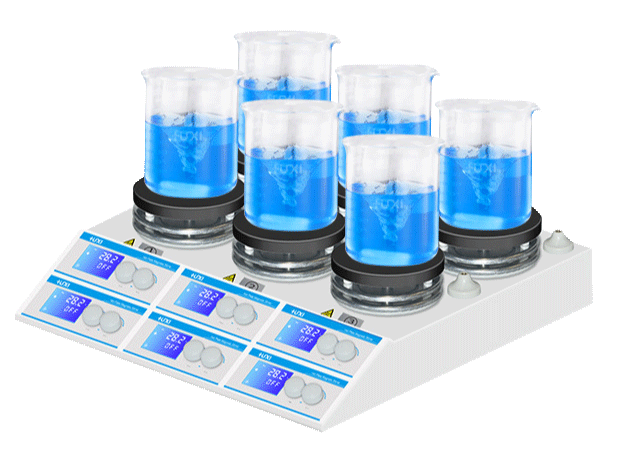
Magnetic stirring looks almost like lab magic. A small bar spins, the liquid follows, and you can turn your attention to the next task. When several samples need attention at once, though, that small convenience turns into a workflow question. A multi station magnetic stirrer is one practical answer: it keeps several stirring jobs organized, visible, and easier to manage.
Why a multi station magnetic stirrer earns its bench space
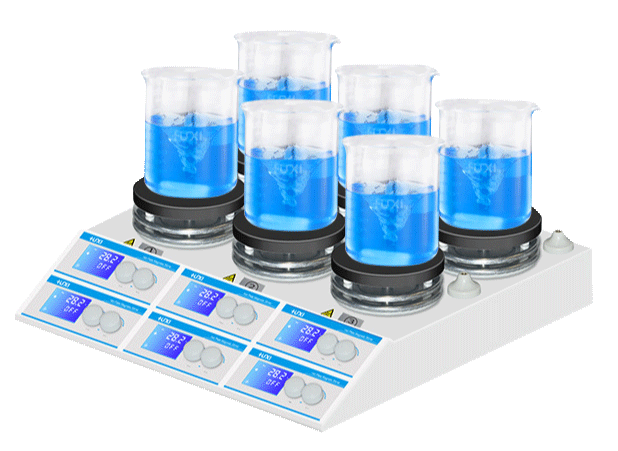
Walk into a busy lab and you will usually see the same scene: beakers, flasks, sample tubes, and a queue of jobs waiting for a free stirrer. Single-position units are fine when you have one solution to mix. They become a bottleneck when you are running replicates, preparing standards, or testing several formulations side by side. A multi station magnetic stirrer brings those jobs together without asking you to build a small forest of separate bases and power cords.
The real win is not just saving space. It is rhythm. When several positions share one control layout, you spend less time hunting for knobs and more time watching the samples that actually need your judgment. You can compare behavior across positions, spot a slow vortex, or notice that one vessel is behaving differently. That kind of side-by-side view is hard to get when every stirrer lives on a different part of the bench.
There is a practical limit, of course. A multi station unit is still a magnetic stirrer, not a universal mixing machine. It works best with compatible vessels, sensible volumes, and liquids that can be stirred from below. If your sample is thick enough to fight the stir bar, or if you need precise high-shear action, this is the wrong tool. The trick is knowing where the line sits before you buy.
What “multi station” really means in everyday lab work
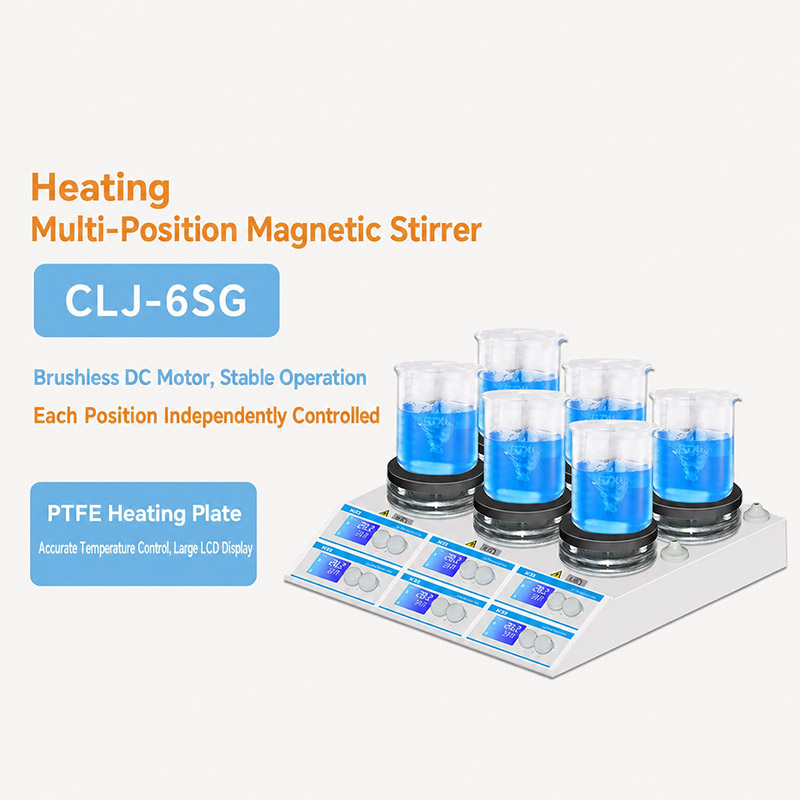
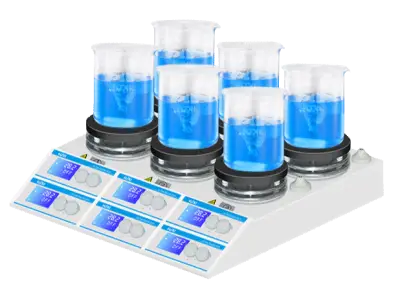
The name is fairly honest. A multi station magnetic stirrer places more than one stirring position on a shared platform. Each position has its own place for a vessel, and the stir bars inside those vessels are driven by the magnetic field beneath the platform. The exact layout varies by model, so the useful question is not “how many stations?” in isolation. It is “how many stations can I actually use without crowding, tipping, or losing control of the sample?”
One footprint, several stirring positions
That shared footprint is the obvious advantage. You free up bench space, reduce cable clutter, and create a work zone that is easier to wipe down. For teaching labs, quality control benches, and research groups running parallel trials, this can make a real difference. It also helps with consistency: if every position sits on the same platform, you are less likely to blame a mysterious difference on one stirrer being “the weird one.”
Where it helps, and where it does not
This kind of stirrer shines when you need gentle to moderate mixing across several samples: dissolving salts, keeping suspensions moving, blending reagents, preparing dilutions, or holding a sample in motion while you work. It is less useful for very viscous pastes, large volumes that need serious torque, or processes where the vortex itself is part of the job. In those cases, a magnetic stirrer may still help you prepare or condition the sample, but it should not be the only mixing tool in your plan.
The simple physics behind magnetic stirring
You do not need a physics lecture to run a stirrer, but a little understanding saves a lot of head-scratching. Magnetic stirring is a coupling game. A motor turns magnets below the stirring surface, creating a rotating magnetic field. Inside the vessel, a magnetic stir bar tries to follow that field. As the bar spins, it drags the liquid with it. The liquid closest to the bar moves first, then friction and momentum spread that motion through the rest of the vessel.
The stir bar and the rotating field
The stir bar matters more than most people expect. It needs to be long enough to move the volume you have, but not so long that it scrapes the vessel wall or gets stuck against a curved bottom. It also needs a clean, flat contact surface. A bar that is chipped, coated with dried residue, or sitting off-center will chatter, jump, or refuse to spin smoothly. That is not a machine failure; it is a coupling problem.
Why a vortex is not the goal
A deep vortex looks impressive, but it can be counterproductive. It pulls air into the sample, creates foam, and can push liquid up the vessel wall. In many lab jobs, you want a gentle rolling motion rather than a tornado. The sweet spot is usually the lowest speed that keeps the whole sample moving without splashing. If you see a stable dimple in the center and no spray on the rim, you are probably in a good place.
What to check before you choose a multi station magnetic stirrer
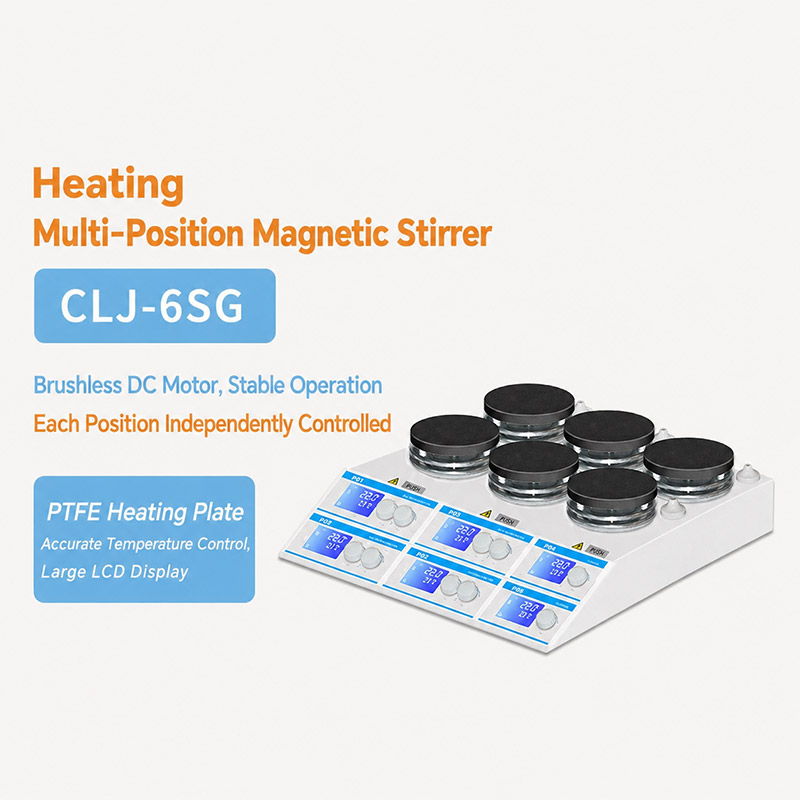
The product page is your friend here. Because configurations differ, confirm the exact technical parameters before you order: the number of stirring positions, the speed range, the maximum stirring volume per position, the plate dimensions, the control style, the housing material, and the power supply. A friendly blog can explain the trade-offs, but it cannot guess the specifications for your bench.
Position count and vessel spacing
Do not simply pick the model with the most positions. Measure the vessels you use most often, including their lids, clamps, and any tubing that sticks out. A crowded platform is a false economy. You need enough space to place and remove vessels without knocking the neighbor, and enough clearance to read a label or add a reagent without playing lab Twister. If your work involves odd-shaped flasks, check that they sit securely on the platform.
Speed control and stability
Good speed control is not about having the highest number on the dial. It is about making small, repeatable changes at the low end, where most gentle mixing happens. Ask whether the unit holds speed steadily as the load changes, and whether the platform stays put when several bars are spinning. Vibration is the quiet enemy of multi-position work. It can make bars migrate, vessels creep, and labels blur.
Materials, cleaning, and daily wear
The surfaces you touch should tolerate the way you clean. A smooth, chemical-resistant top plate is easier to wipe down than a textured one with deep seams. Check how the controls are sealed, how the feet grip the bench, and whether the housing can handle the occasional spill. You do not need a sterile cleanroom finish for every lab, but you do need a surface that will not turn a small drip into a long afternoon.
For the current product details, go straight to the Multi station magnetic stirrer page and compare the published specifications with your own vessel list.
Setting up for smoother stirring
Start with a clean vessel and a clean stir bar. This sounds obvious, but residue on a bar changes its balance and its grip on the magnetic field. Place the vessel on the center of the position, drop the bar in gently, and begin at a low speed. Let the bar find its rhythm before you turn up the dial. If you start fast, the bar may jump, chatter, or spin off to the side before the liquid has a chance to settle.
Think about the liquid, too. A tall, narrow vessel behaves differently from a wide beaker. Fill levels that are too low can make the bar splash; fill levels that are too high can reduce the visible motion at the surface. For samples that tend to foam, keep the speed modest and leave headspace. For samples that settle quickly, you may need a brief higher-speed pulse followed by a gentler holding speed. The goal is not constant drama; it is steady, useful motion.
A simple routine for repeatable stirring
Repeatability rarely comes from a fancy feature. It comes from doing the same small things in the same order. Decide on a standard vessel for routine jobs, a standard bar size, and a standard starting speed. Write those choices on a label or in your lab notes. When a new person takes over the bench, they should not have to rediscover the setup by trial and error.
For each batch, check the bar, center the vessel, start slow, and confirm that the whole sample is moving before you walk away. If the method allows, mark the dial or record the digital setting. At the end, remove the bar with a proper tool rather than a random spatula, clean it, and return it to the same place. These habits feel almost too simple, but they remove a surprising amount of variation from day-to-day work.
It also helps to separate “mixing” from “waiting.” If a sample needs ten minutes of gentle motion, set it up and use that time for labeling, note-taking, or preparing the next vessel. A multi station stirrer supports that kind of parallel work, but only if each position is set up deliberately. Treat every position as its own small experiment, even when they share a platform.
Common problems and calm fixes
Most stirring trouble is boring, which is good news. It usually comes down to a bar that is too small, a vessel that is off-center, a speed that is too high, or a liquid that is too thick. Work through the simple causes first.
- The bar will not spin. Check that it is centered, that the vessel is not too far from the platform, and that the speed is high enough to start. A bar with a chipped coating should be replaced.
- The bar jumps or chatters. Slow down, recenter the vessel, and try a bar that fits the vessel bottom better. Too much speed can throw the bar out of sync.
- The sample splashes. Reduce speed, lower the fill level, or use a taller vessel. Splashing is a sign that the energy is going into the air, not the liquid.
- One position behaves differently. Swap the bar and vessel to see whether the problem follows the sample or stays with the position. That simple test saves a lot of guessing.
- The liquid barely moves. The sample may be too viscous for magnetic stirring, or the bar may be too small for the volume. Try a larger bar only if it fits safely.
If a problem repeats, write it down. A small log of vessel type, bar size, volume, and speed setting can turn a vague “the stirrer is acting up” into a fix you can repeat. Labs run better when small observations are treated as useful data rather than background noise.
Stirring viscous samples, solids, and tricky mixtures
Magnetic stirring is at its best when the liquid can flow. Thick pastes, dense slurries, and mixtures with large settling solids can overwhelm a stir bar. The bar may spin, but the bulk of the sample stays put. That is not a failure of the stirrer; it is a mismatch between the tool and the job. If you need to move a heavy paste, look for a mixing method with more torque, and use the magnetic stirrer for the steps it handles well.
For suspensions, the trick is often to keep the solids moving without grinding them against the bottom. Start gently, observe whether the solids lift, and adjust the bar size before you chase the speed dial. If the sample is temperature-sensitive, remember that stirring can add a little heat through friction, especially in a small volume. That effect is usually modest, but it is worth knowing when you are comparing two runs.
One more practical tip: do not judge a suspension by the first ten seconds. Some solids need a little time to lift, and some liquids need a little time to settle into a steady roll. Watch for a full minute before you decide that the speed is wrong. If the bar is spinning smoothly but the bulk remains still, the issue is likely viscosity or bar size, not the control setting.
Safety habits and maintenance that pay you back
Keep the electrical parts dry, route cords away from spills, and give the unit enough clearance for air movement. If you work with volatile or flammable materials, check the product documentation and your lab rules before assuming a general-purpose stirrer is suitable. A magnetic stirrer is a helpful lab partner, not a license to skip a risk assessment.
Maintenance is mostly a matter of small habits. Wipe the platform after each session, remove dried residue before it becomes a crust, and store stir bars where they will not chip. Check the power cord and plug for wear. If the platform becomes noisy or a position loses its smooth pull, stop using that position and have the unit checked. A little care keeps the coupling strong and the results repeatable.
A five-minute weekly check
Once a week, unplug the unit and give it a quick look. Check the platform for residue, the cord for cracks, the feet for missing pads, and the controls for sticky spots. Spin each position empty for a few seconds and listen for unusual rattle. Clean what needs cleaning, note what needs attention, and put it back. Five minutes of prevention is cheaper than a failed batch or a rushed replacement order.
When a multi station stirrer is the right upgrade
You probably do not need one if you mix a single sample once a day. You probably do need one if your bench looks like a traffic jam of single stirrers, if you run replicates, or if you want a cleaner, more consistent setup for teaching and demonstration. The upgrade makes the most sense when the work is repetitive but still needs attention: several samples, similar vessels, moderate volumes, and a need to compare them side by side.
Be honest about the edge cases. If your samples are thick, if you regularly work with large volumes, or if you need strong shear, a magnetic stirrer will not become a high-torque mixer just because it has more positions. Use it for what it does well, and choose a different tool for the heavy lifting. That is not a compromise; it is good lab planning.
A practical pre-purchase checklist
Before you click “buy,” run through the details that actually affect daily use.
- List your common vessels, including lids and fittings, and check that they fit with comfortable spacing.
- Confirm the number of positions you can genuinely use at once, not just the number on the label.
- Check the speed range and control style against the gentle mixing you do most often.
- Review the platform material, cleaning method, and resistance to common spills.
- Make sure the footprint fits your bench, leaving room for cords, ventilation, and your hands.
- Ask what routine maintenance is recommended and whether replacement stir bars are easy to source.
- Compare the published technical parameters on the product page with your actual workflow.
That last point matters. A specification sheet is not a decoration; it is the difference between a stirrer that fits your bench and one that becomes a very expensive paperweight. Use the multi station magnetic stirrer product page to check the current details, then compare them with the vessels you already own.
Making the choice with confidence
A multi station magnetic stirrer is a quiet workhorse. It will not make a bad method good, and it will not turn a thick paste into a free-flowing liquid. What it can do is give several samples a fair share of gentle, consistent motion while keeping your bench organized and your attention free. That is a modest promise, but in a busy lab, modest promises kept every day are worth a lot.
Start with the work you actually do. Count the vessels, watch the clock, and notice where your current setup slows you down. Then choose a stirrer that matches that reality, not a fantasy version of your lab. If the numbers line up, you will wonder how you ever managed with a row of single-position units humming away at different speeds.
Related Products
Get In Touch
Our professional team will reply to you within one business day. Please feel free to contact us!