
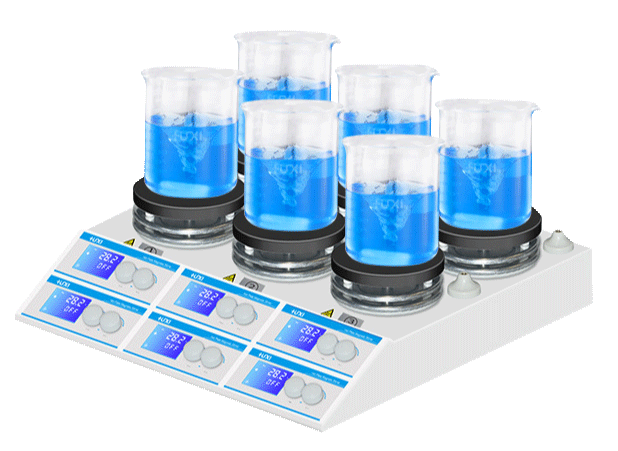
Multi Station Magnetic Stirrer: A Practical Guide for Faster, Consistent Mixing

When you have six samples to prep before lunch, a single-position stirrer stops being a tool and starts being a bottleneck. You finish one vessel, swap it out, wait for the vortex to settle, and repeat. A multi station magnetic stirrer changes that rhythm. Instead of one stirring position, it gives you several places to work at once, so you can run parallel samples, compare formulations, or keep several solutions moving while you do something else.
The idea sounds simple, and it is. But consistent mixing across several positions takes a little thought. Stir bars matter. Vessel shape matters. So does the way you place a flask on the plate. We will look at what a multi station magnetic stirrer does, where it fits in a powder and materials lab, how to set one up for repeatable results, and what to check before you buy. No formulas, no mystery, just the details that make a difference.
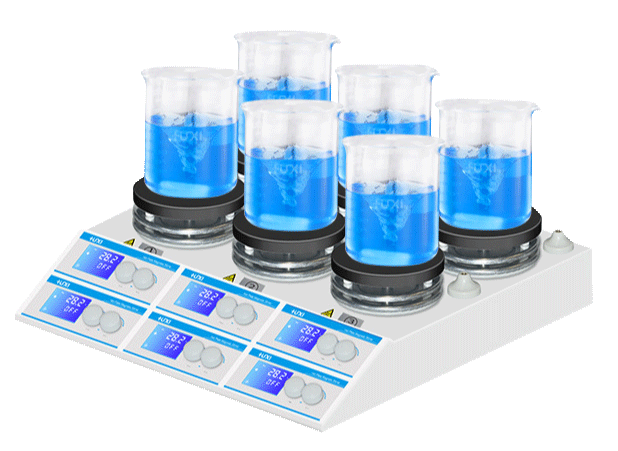
What a multi station magnetic stirrer actually does
A magnetic stirrer uses a rotating magnetic field to spin a small coated magnet inside a vessel. The moving bar pushes liquid around, creating a vortex or a gentler swirling motion depending on speed and vessel geometry. There is no shaft, no seal, and no motor inside the liquid. That is why magnetic stirring is so common in labs: it is clean, easy to clean, and works with most glassware.
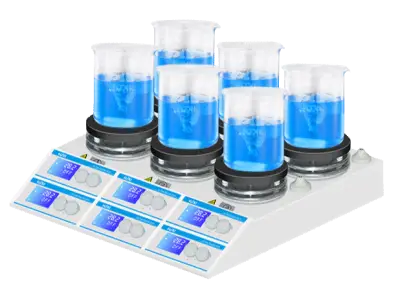
A multi station version repeats the same principle across a row or grid of stirring positions. One base carries multiple drive magnets, usually under a flat plate. You put a vessel on each position, drop in a stir bar, and set the speed. Some units share one control across all positions; others allow individual adjustment. The useful part is not just having more spots. It is having more spots that behave predictably, so sample three is not mixing wildly while sample one barely moves.
The rotating field, in plain language
Inside the stirrer, a motor turns a magnet or a set of magnets. The changing magnetic field pulls the stir bar around. The bar does not need a direct mechanical connection to the motor, which is why the vessel can sit on a sealed plate. If the bar is too long for the vessel, it may scrape or wobble. If it is too short, it may not couple well at higher speeds. The sweet spot is a bar that fits comfortably and spins smoothly without jumping or chattering.
Why multiple positions help more than you think
Parallel work is the obvious benefit. Less obvious is the improvement in experimental discipline. When all your samples sit on the same plate under the same conditions, you reduce the small differences that creep in when you stir one flask, then another, then another. You also save bench space compared with several separate stirrers. In a busy lab, that matters more than the spec sheet suggests.
Where it earns its bench space
A multi station magnetic stirrer is not the right tool for every mixing job, but it covers a surprising amount of daily lab work. Here are the places where it tends to earn its bench space.
Powder wetting, dispersion, and suspension
Powders are often the hardest part of mixing. Fine particles tend to float, clump, or sink, and a gentle swirl may not be enough to wet them out. A magnetic stirrer is not a high-shear mixer, so it will not break every agglomerate. But it is excellent for keeping a suspension moving while you add powder slowly, adjust pH, or wait for a stabilizer to hydrate. The trick is to start with a vortex that pulls the powder into the liquid, then back off to a gentle roll so you do not whip in air.
For powder work, use a vessel with enough freeboard. If the liquid is too close to the rim, the vortex can climb and splash. Add powder in small amounts, and keep the stir bar from sitting directly under the incoming powder stream. A small offset can prevent a clump from forming on the bar. If the powder is very light, a brief pause after adding it can help it settle before you increase speed.
Dissolution and sample preparation
Many lab tasks involve dissolving a solid, blending two liquids, or keeping a sample homogeneous before analysis. Magnetic stirring is ideal here because it is gentle and easy to control. A multi station unit lets you prep a batch of calibration standards or digest samples at the same time. The key is to give each vessel the same stir bar size, liquid volume, and position. Small differences can change how quickly a solid dissolves.
If you are working with a sparingly soluble material, do not assume that more speed means faster dissolution. A calm, consistent roll often works better than a deep vortex, especially when the solid tends to cake on the vessel wall. Warm the solvent only if the method allows it, and cover the vessel to limit evaporation.
Parallel experiments and method development
When you are testing three dispersants or four pH levels, you want the mixing variable to be as constant as possible. A multi station stirrer makes that easier. You can run the same stirring speed across all positions and compare the results. Just be realistic: positions at the edge of a large plate may behave slightly differently from the center, especially at high speed. For sensitive comparisons, rotate vessel positions between runs or use a unit with independent controls.
Parallel mixing is also useful for rinsing, washing, and pre-wetting steps that would otherwise tie up a single stirrer for an hour. You can keep several wash vessels moving while you prepare the next batch. That kind of quiet multitasking is where a multi position plate starts to feel less like equipment and more like extra hands.
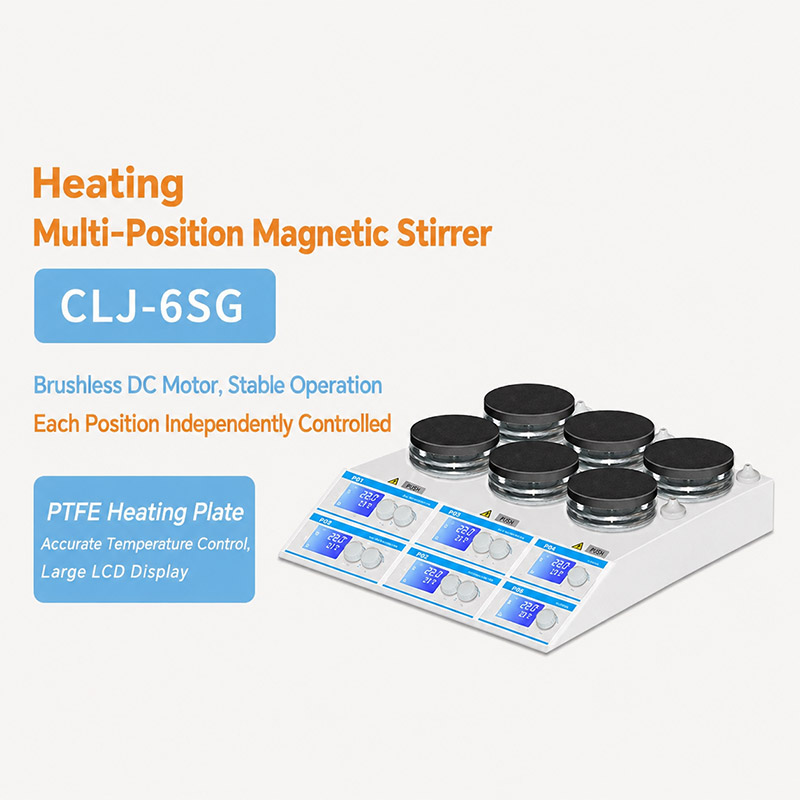
The parts that quietly decide your results
Stir bars: small part, big effect
Stir bars come in different lengths, shapes, and coatings. A cylindrical bar is the general-purpose choice. An oval or egg-shaped bar can work well in round-bottom flasks. A pivot ring can help a bar spin smoothly in a flat-bottom vessel. The coating matters too: PTFE is common because it is chemically resistant and easy to clean. Use a bar that is long enough to couple with the drive magnet but short enough to spin freely. If a bar rattles or jumps, try a different size before you blame the stirrer.
Keep one bar per vessel when you can. Matching a bar to a vessel makes it easier to repeat a method, and it avoids the classic mistake of using a long bar in a narrow flask because it was the only clean one left. A small tray or labeled dish for bars is cheap and surprisingly effective.
Vessel shape and placement
Flat-bottom beakers are forgiving. Round-bottom flasks create a different flow pattern, and tall narrow vessels can develop a strong vortex with very little speed. Whenever possible, keep vessel sizes consistent across positions. Place each vessel in the same spot relative to the center of each position. If the plate has marked circles, use them. If not, make a simple template from a sheet of paper or a thin silicone mat.
A vessel that is off-center may spin a bar unevenly, and a heavy vessel can reduce coupling if the plate is not flat. Avoid putting a thick insulating pad under a vessel unless the method requires it; the extra distance can weaken the magnetic connection. Also check that the outside of the vessel is dry. A few drops of water on the plate are not a disaster, but they can make a vessel slide.
Temperature, evaporation, and viscosity
Magnetic stirring does not heat a sample by itself, but the motor and the moving liquid can add a little heat over time. If temperature matters, measure it. If you are stirring a volatile solvent, cover the vessel or work in a hood. Evaporation changes concentration, and that can change your results. Viscosity is the other big factor. A stirrer that creates a nice vortex in water may do almost nothing in a thick slurry. For viscous materials, use a larger bar, a wider vessel, and a slower speed that keeps the bar coupled.
If you need heating, use a separate hotplate or a water bath rather than assuming the stirrer will warm the sample. And if you are stirring a reaction that generates heat, keep an eye on the first few minutes. A multi station plate can make several vessels warm at once, which is convenient until you forget that the middle position has been running for twice as long as the others.
A practical setup routine for repeatable mixing
Here is a routine that works well for a multi station magnetic stirrer in a powder or materials lab. It is not complicated, but doing it the same way each time saves a lot of head-scratching later.
- Clean the plate and check every vessel for chips or cracks. A cracked flask is not worth the risk, no matter how small the chip looks.
- Label the positions, not just the vessels. If you move a vessel during the run, you want to know where it started.
- Fill each vessel to the same volume and use the same liquid height. A half-full beaker and a nearly full one will not mix the same way.
- Choose a stir bar that fits the vessel, then add it before any powder. Dropping a bar into a thick slurry is a good way to trap air or splash.
- Center each vessel on its position. Use the marked circles or a simple template, and keep the bases dry.
- Start at a low speed, then increase until you see a gentle roll or a shallow vortex. Do not chase a deep funnel unless your method calls for it.
- Watch the first few minutes. If a bar jumps, a powder clumps, or a vessel starts to walk, fix it before you walk away.
- Write down the speed setting, bar size, vessel type, and liquid volume. A method you cannot repeat is just a one-off success.
Once the run is stable, resist the urge to keep adjusting the speed. Magnetic stirring is most repeatable when the setup is left alone. If you need to add a reagent, add it slowly and away from the bar so you do not break the vortex.
For a new method, run a quick trial with water or a clear model fluid before you use the real sample. You will see the vortex shape, the bar behavior, and any position-to-position differences without wasting material. That five-minute check can save an entire batch.
Common problems and how to solve them
Even a well-behaved stirrer can act up. Most problems come down to a mismatch between the bar, the vessel, the liquid, and the speed. Here are the usual suspects and the fixes that work.
| Problem | Likely cause | Practical fix |
|---|---|---|
| Bar spins weakly or not at all | Bar too long or heavy; vessel off-center; speed too low | Try a smaller bar, center the vessel, and raise speed slowly |
| Bar jumps or rattles | Bar too small for the drive; vessel base uneven; speed too high | Use a bar with better coupling, check the vessel, and reduce speed |
| One position mixes worse than others | Position is off the drive magnet; thick vessel; plate not level | Swap vessels between positions, use a flat-bottom vessel, and check the bench |
| Vortex climbs and splashes | Speed too high; vessel too narrow; too much liquid | Lower the speed, use a wider vessel, and leave more freeboard |
| Powder clumps or floats | Powder added too fast; poor wetting; bar buried under powder | Add powder in small portions, pre-wet if allowed, and keep the bar clear |
| Sample gets warmer than expected | Long stirring time; small volume; motor heat | Monitor temperature, shorten the run, or use a bath |
Position-to-position differences deserve a special mention. On a multi position plate, the outer positions may have a slightly different magnetic coupling than the center, especially with thick glassware. That does not mean the stirrer is broken. It means you should treat position as part of your method. Rotate vessels between runs, or keep the same sample in the same position when you are comparing results. If one position is consistently weak, check that the plate is level and that no stir bar has stuck underneath the plate.
Another common issue is a stir bar that disappears. It has not vanished; it is probably stuck to the underside of the plate or hiding in a beaker of rinse water. A quick count of bars before and after a run prevents a lot of unnecessary searching.
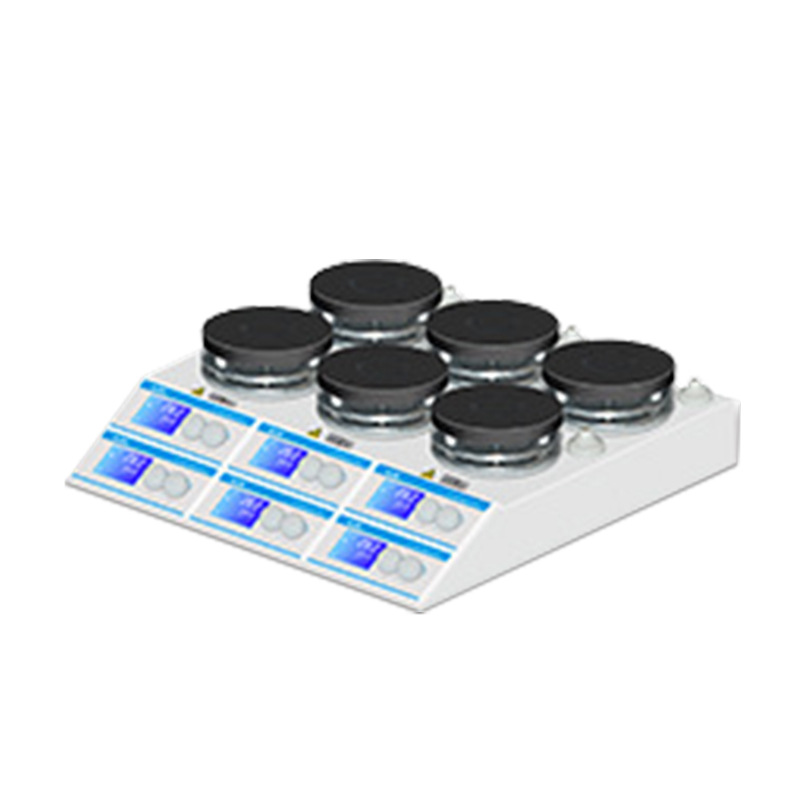
What to check before you choose a unit
Buying a multi station stirrer is mostly about matching the plate to your workflow. The catalogue may list a dozen features, but only a few will change your daily life. Start with these questions.
- How many positions do you actually need? Count your busiest parallel run, then add one or two spare positions if bench space allows.
- Do you want shared speed control or independent control? Shared control is simpler for routine work; independent control is better for method development.
- How much space is between positions? Tight spacing saves bench space, but it can make it hard to use wider vessels or add reagents without bumping a neighbor.
- What vessel sizes will you use? Check the plate diameter and the maximum load, not just the stirring volume.
- What is the speed range and starting torque? You need slow, stable stirring for powders and enough torque for viscous liquids.
- Is the plate easy to clean and resistant to spills? A flat, smooth surface with a raised edge is easier to wipe down than a plate full of crevices.
- How loud is it at low speed? A quiet stirrer is easier to live with when you are running several positions for hours.
The Multi station magnetic stirrer from TENCAN is one model to look at if you want a dedicated multi-position plate rather than a row of separate stirrers. The product page is the place to confirm the exact number of positions, speed range, and vessel compatibility for the configuration you are considering. TENCAN works in powder and lab equipment, so it is worth asking how the plate behaves with the vessels and sample volumes you actually use.
One more practical point: ask for the footprint and weight before you order. A multi station stirrer is meant to save bench space, but a large plate still needs room around it for vessels, labels, and your hands. Measure the bench, not just the plate.
Small habits that keep results clean
Keep the plate dry and free of powder. A dusting of fine powder can act like sand under a vessel, making it sit unevenly. Wipe the plate after each run, and check that no stir bar is stuck to it. Use a rinse beaker for bars, and keep a small tray for clean ones. Avoid stirring a vessel that has a crack or a star-shaped chip; the vibration can turn a small flaw into a leak. If you are working with volatile or hazardous materials, use secondary containment and keep the run in a hood. Finally, label the plate positions and your vessels the same way. A simple numbering system saves time when you are comparing six samples and trying to remember which one was the control.
A calmer, more repeatable bench
A multi station magnetic stirrer will not do the thinking for you, but it removes a lot of the busywork that makes lab work feel rushed. You can set up several vessels, keep the mixing conditions consistent, and spend your attention on the part that actually needs it: the sample. Start with good bars, sensible vessel placement, and a speed that creates a gentle roll rather than a fountain. Check the product page for the exact configuration, and choose a plate that fits your bench and your workflow. Do that, and the stirrer becomes what it should be: quiet, dependable equipment that lets you get on with the science.
Related Products
Get In Touch
Our professional team will reply to you within one business day. Please feel free to contact us!