
Rotary Tube Furnace for Uniform Powder Processing: A Practical Guide for Buyers

If you work with powders, you know the frustrating gap between a good recipe and a repeatable result. The powder looks fine in a beaker, but once it goes through heat, the outcome can be uneven. Some particles sinter while others stay loose. A layer sticks to the boat. The center of the sample behaves differently from the edge. A Rotary Tube Furnace is one way to close that gap. Instead of leaving powder sitting still in a hot zone, the furnace keeps the material moving inside a rotating tube. That simple motion changes how heat, gas, and powder interact.
This guide is for buyers, process engineers, and lab teams who want to understand the practical side of rotary tube furnaces without wading through a wall of jargon. We will look at what the equipment does, why rotation matters, where it fits in powder processing, and what to check before you choose a system. We will also cover operating habits that protect both your product and your equipment. No magic claims, just the details that tend to matter when the furnace is running day after day.
What a Rotary Tube Furnace Actually Does
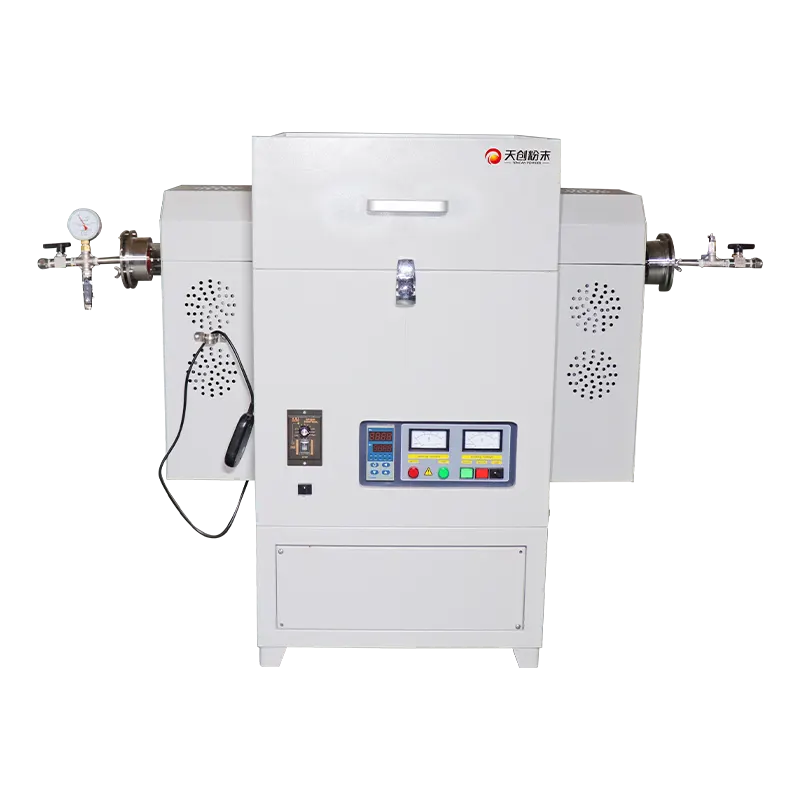
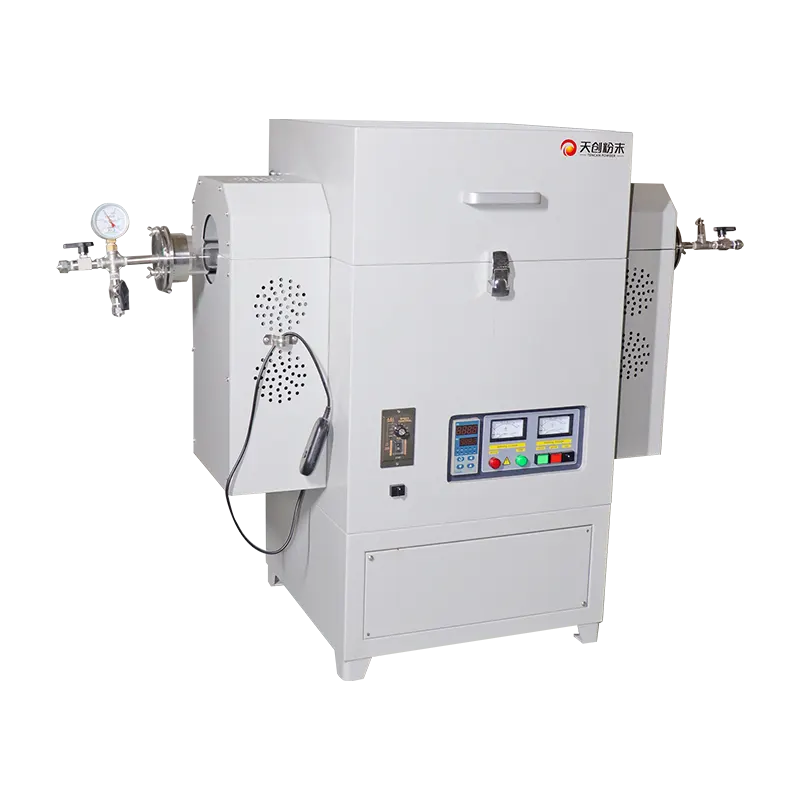
At its heart, a rotary tube furnace is a heated tube that turns. Powder or small parts sit inside the tube. The tube is supported on a frame, driven by a motor, and surrounded by a heating zone. As the tube rotates, the powder bed tumbles, slides, and mixes. Process gas can flow through the tube, and exhaust gas leaves through a controlled outlet. The result is a continuous or semi-continuous thermal process in which the material is always meeting a fresh hot surface and a fresh gas atmosphere.
That sounds simple, and in many ways it is. The value is not in complexity for its own sake. The value is in control. A static furnace gives you a fixed bed. Heat must soak through the powder from the outside in. Gas must diffuse into the bed. By the time the center reaches temperature, the outer layer may have seen much more heat history. A rotating tube keeps redistributing the powder, so the heat history is shared more evenly across the batch.
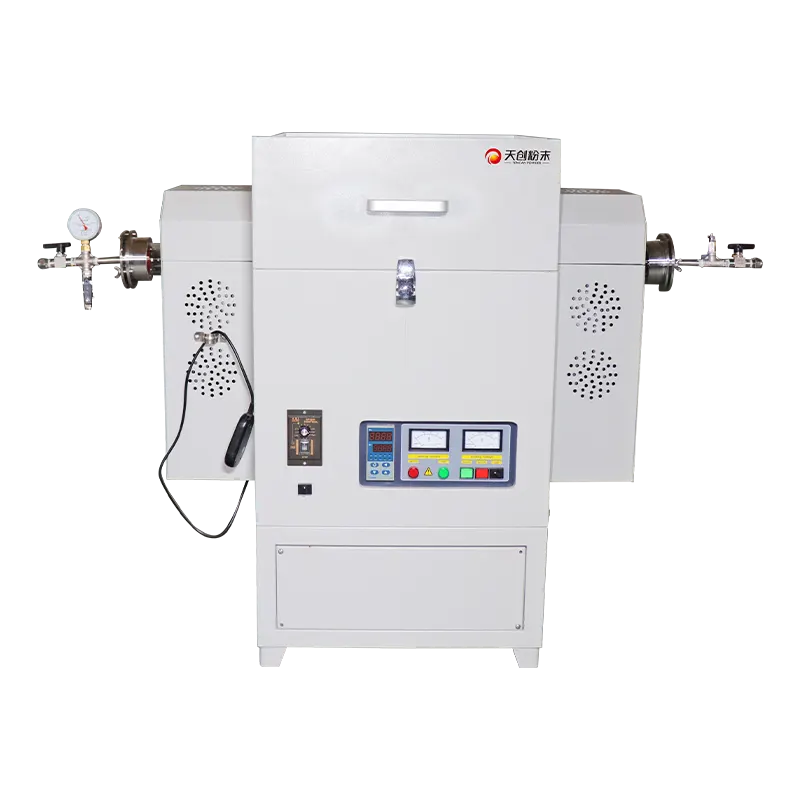
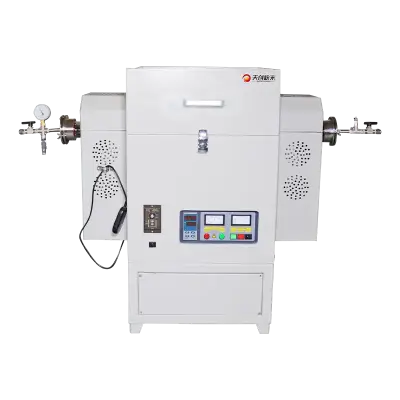
The furnace is also a system, not just a hot tube. It includes the tube, insulation, heating elements, temperature sensors, a drive train, seals, gas connections, and controls. Each part affects the final result. A well-matched system keeps the tube aligned, the rotation smooth, the seal reliable, and the temperature profile stable. A poorly matched system may run well for an hour and then drift when the tube expands, the seal warms up, or the powder begins to stick.
Why Rotation Changes the Powder Game
Rotation is not a gimmick. It changes the physical environment inside the tube. The powder is not a solid block. It is a collection of particles with air or gas between them. When the tube turns, those particles move relative to each other. New surfaces are exposed. The bed may form a rolling wave, a cascade, or a gentle slide depending on fill level, rotation speed, and the nature of the powder. That movement affects heat transfer, gas contact, and the risk of agglomeration.
More even heat history
In a static bed, the powder near the tube wall can heat faster than the powder in the center. The difference may be small in a thin layer and large in a deep bed. A rotary tube constantly folds the bed, bringing cooler material to the heated wall and moving warmer material back into the bulk. The goal is not to make every particle identical at every second. The goal is to narrow the spread of heat history across the batch. For processes where phase changes, reactions, or sintering behavior are sensitive to time and temperature, that narrower spread is often the difference between a consistent product and a batch that needs rework.
Less sticking and agglomeration
Powders can stick to a boat, a tray, or the wall of a static tube. Once sticking starts, it can snowball. The stuck layer may overheat, while the rest of the batch under-reacts. Rotation helps because the bed is gently disturbed. Particles are less likely to sit in one spot and fuse together. The tube wall is also continuously swept by the moving bed, which can reduce the buildup of soft agglomerates. This does not mean a rotary tube can handle every sticky powder without care. It means the motion gives you another lever to manage the problem.
Better gas contact
Many powder processes are not just about heat. They need a gas to react, protect, or carry away volatiles. In a static bed, gas must travel through the gaps between particles. The path can be uneven. A rotating bed opens new channels and exposes new surfaces. Fresh gas meets particles that were previously buried. Exhaust products are carried away more readily. The result can be a more uniform atmosphere through the bed, especially when the gas flow is matched to the tube size and the powder load.
From Powder to Product: Where It Fits
A rotary tube furnace is useful wherever powder needs a controlled thermal history and the powder can tolerate motion. That covers a lot of ground. The exact fit depends on the material, the atmosphere, and the downstream process. Here are the broad areas where the design earns its keep.
Calcination and thermal treatment
Calcination is a heat-driven change. It may remove moisture, burn off organics, decompose a precursor, or form a new crystal phase. In a static bed, the outside of the powder charge may see more heat than the inside. In a rotary tube, the bed is turned and mixed, so the whole charge spends time near the heated wall. This is helpful when the reaction needs a consistent temperature window. It is also helpful when the powder tends to form soft lumps during the early stages of heating.
Reduction and oxidation
Processes that add or remove oxygen depend on gas access. A rotating bed keeps exposing fresh particle surfaces to the process gas. That can improve the uniformity of the reaction and reduce the chance of a partly reacted core. The same logic applies to other gas-solid reactions. The furnace alone does not guarantee success. Gas purity, flow, seal quality, and temperature profile all matter. But rotation gives the gas a better chance to reach the particles that need it.
Specialty powders and small parts
Rotary tube furnaces are not only for fine powders. They can also handle granules, small pellets, and other flowable solids. The key question is whether the material can move without breaking, wearing the tube, or forming a hard deposit. Soft agglomerates may break down nicely. Brittle granules may attrit. A reactive powder may need a particular tube material. These are application questions, not just furnace questions. A good supplier will ask about them before recommending a configuration.
A Walk Through the Equipment
It helps to think of the furnace as a chain of functions. Material handling feeds the tube. The tube carries the material through the heated zone. The drive keeps the tube turning. The gas system sets the atmosphere. The exhaust system removes volatiles and protects the operator. The control system ties it all together. If any link is weak, the process suffers.
The tube and heating zone
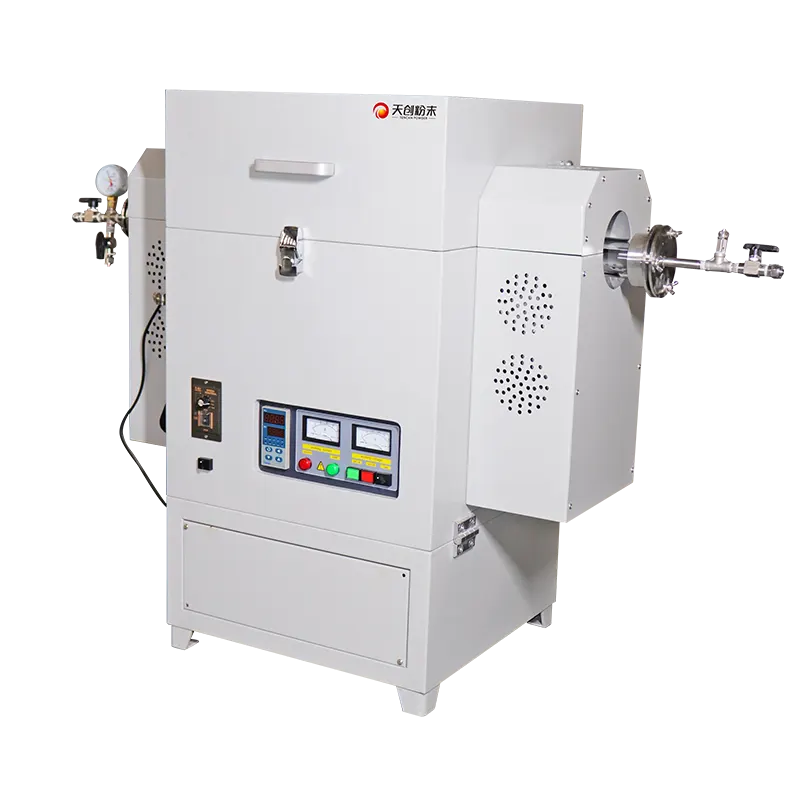
The tube is the working chamber. It must tolerate the process temperature, the atmosphere, and the mechanical load of rotation. It must also be straight and well supported, because a tube that flexes or misaligns will wear seals and create uneven heating. The heating zone should provide a stable profile along the length of the tube. In practice, that means good insulation, well-placed elements, and temperature sensors that represent the actual work zone rather than a convenient spot on the frame.
The drive and support
The drive does more than turn the tube. It sets the rhythm of the bed. Too slow, and the powder may sit in a static pile. Too fast, and the powder may centrifuge against the wall or generate excessive dust. The right speed depends on tube diameter, fill level, and powder behavior. Good support matters just as much. Rollers, bearings, and alignment features should keep the tube running smoothly without vibration. Vibration can cause powder segregation, seal wear, and inconsistent residence time.
Gas, seals, and exhaust
If the process needs a controlled atmosphere, the seal is a critical component. It must keep the process gas inside and the outside atmosphere out, while allowing the tube to rotate. It must also tolerate heat and whatever condensates or dust the process produces. The gas inlet and outlet should be arranged so that fresh gas reaches the powder bed and exhaust leaves without carrying excessive dust. A well-designed exhaust path protects the operator and keeps the furnace clean. A poor one can clog, corrode, or create pressure swings that disturb the process.
Choosing the Right Rotary Tube Furnace
Buying a rotary tube furnace is not about finding the biggest or the hottest model. It is about matching the machine to the powder, the atmosphere, and the way you work. The product page can give you the baseline configuration, but you should still walk through the application with the supplier. Here is a practical checklist.
- Material behavior: Does the powder flow, stick, dust, or agglomerate? Does it change size or shape during heating? These answers affect tube design, rotation speed, and feed method.
- Atmosphere: Do you need air, inert gas, reducing gas, or a vacuum? The gas choice affects seals, tube material, exhaust handling, and safety controls.
- Temperature profile: Do you need a flat zone, a gradient, or multiple zones? The answer shapes the heating chamber and control strategy.
- Throughput and residence time: How much material must pass through the tube, and how long should it stay in the hot zone? These two questions set the tube size and feed arrangement.
- Discharge and collection: How will you get the product out without exposing it to air or creating dust? Think about the whole path, not just the furnace.
- Cleaning and changeover: Can you access the tube for inspection and cleaning? If you run different materials, changeover time matters as much as heating speed.
- Controls and records: Do you need recipe management, data logging, alarms, or remote monitoring? Good records make it easier to repeat a successful run.
It is also worth asking how the supplier supports installation and training. A rotary tube furnace has more adjustment points than a simple box furnace. The tube alignment, rotation speed, gas flow, and temperature profile all need to work together. A supplier who understands powder processing can help you set a starting point instead of leaving you to guess. For a closer look at the configuration, see the Rotary Tube Furnace page and compare the available options with your process needs.
Operation Habits That Make a Difference
Once the furnace is installed, the daily habits of the operator have a large effect on results. The same machine can produce consistent powder or a string of puzzling failures. The difference is usually not one big mistake. It is a series of small ones: overfilling, rushing the heat-up, ignoring the exhaust, or changing two variables at once.
Start with a realistic fill level. A tube that is too full cannot mix well. The bed may become a solid slug that slides instead of rolling. A tube that is too empty may not form a stable bed, and the powder may dust or stick to the wall. The right fill level depends on the tube diameter and the powder, so establish it through trials and record it.
Respect the heat-up and cool-down. Many powders need time to release moisture, burn off binders, or pass through a phase change. Pushing through those stages can cause cracking, foaming, or uneven reaction. The furnace controls may allow a fast ramp, but the material may not. Use a program that matches the chemistry, not just the calendar.
Watch the gas path. Gas flow should be enough to maintain the atmosphere and remove reaction products, but not so high that it blows powder around or cools the tube unevenly. Check the seals, the exhaust, and any filters. A clogged exhaust can raise pressure and push gas where you do not want it. A leaking seal can quietly ruin an inert atmosphere.
Keep records that mean something. Record the material, batch size, fill level, rotation speed, gas flow, temperature program, and any visual notes. If a batch turns out well, you want to repeat it. If it fails, you want to find the variable that changed. A simple log is more useful than memory.
Do not chase one number. Temperature is important, but it is not the whole process. Residence time, rotation speed, gas contact, and cooling rate all shape the final powder. When you optimize, change one factor at a time. It takes discipline, but it saves time later.
Maintenance and Safety
A rotary tube furnace combines heat, moving parts, and possibly reactive gases. That combination deserves respect. Safety starts with the installation: proper ventilation, gas detection where needed, thermal protection, and a clear shutdown procedure. Operators should be trained on what to do if a tube breaks, a seal fails, or the gas supply is interrupted. The furnace should not be operated beyond the limits confirmed for the tube, seals, and heating elements.
Maintenance is mostly about preventing small issues from becoming process problems. Check the tube for cracks, warping, or buildup. Inspect seals for wear and flexibility. Listen to the drive for unusual noise or vibration. Verify that the exhaust path is clear and that filters are not overloaded. Confirm that temperature sensors are reading correctly. Clean the tube when changing materials, and store spare parts that are known to wear.
Do not overlook the powder side of safety. Fine powders can dust, and some dusts are flammable or harmful. Use appropriate handling equipment, avoid unnecessary transfers, and keep the work area clean. If the process produces volatiles or condensates, make sure the exhaust system is designed for them. A furnace that is safe for one powder may not be safe for another.
Common Questions Buyers Ask
Is a rotary tube furnace always better than a static furnace?
No. It is better when you need mixing, uniform gas contact, or protection against agglomeration. A static furnace can be simpler and perfectly adequate for thin layers, small batches, or materials that should not be tumbled. The right choice depends on the powder and the process goal.
Can it run continuously?
Some configurations support continuous or semi-continuous operation, while others are used in batches. The answer depends on the feed system, discharge system, and residence time you need. Ask the supplier to map the full material path before you assume continuous operation will fit.
What powder problems show up first?
Sticking, dusting, incomplete reaction, and uneven color or phase are common warning signs. They often point to fill level, rotation speed, gas flow, or temperature profile. Change one variable at a time and keep notes.
How do I compare models?
Compare the tube size, heating zone, atmosphere capability, seal design, drive control, exhaust handling, and data logging. Then compare the supplier's application support. A furnace is a long-term tool, so service and spare parts matter.
If you are ready to look at a specific configuration, start with the rotary tube furnace from TENCAN. Match it to your powder, your atmosphere, and your production rhythm. The more clearly you can describe those three things, the easier it is to specify a furnace that behaves well after the honeymoon period. Good powder processing is not about one heroic run. It is about many boring, repeatable runs that add up to a reliable product.
Related Products
Get In Touch
Our professional team will reply to you within one business day. Please feel free to contact us!