
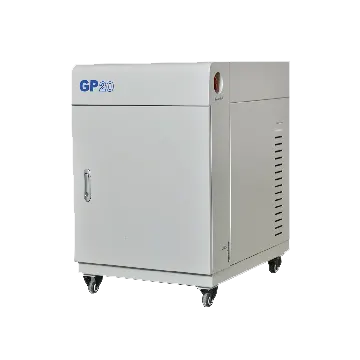
TENCAN Purification System Box: Selection Guide for Controlled-Atmosphere Glove Box Workflows

Controlled-atmosphere glove boxes are only as dependable as the subsystem that conditions the working gas. A purification system box is not an accessory to be chosen after the box has been ordered; it is part of the atmosphere-control architecture that determines how transfers are scheduled, how maintenance is planned, and how operators respond to an alarm. That is why a useful selection process begins with the work the box must support, not with a catalogue label.
TENCAN's Purification system box is presented within the company's glove-box product area. The product page gives buyers a clear starting point for a joint discussion of the box, the purification unit, the transfer chambers, and the utilities that connect them. The public product page provides product identity and imagery; project-specific performance data should be confirmed in the quotation for the proposed configuration. This guide separates what can be checked now from what must be confirmed in writing. The same discipline should be applied to any international alternative under consideration.
Begin with the atmosphere job, not the equipment label
The first specification is the atmosphere itself. Buyers should state the working gas, the impurity or condition that matters most, the acceptable operating range, and the recovery expectation after a transfer or a maintenance event. Different projects may care about oxygen, moisture, solvent vapour, particulate carryover, pressure stability, or simply a clean dry environment. A purification system box can be evaluated only against those defined conditions. A supplier cannot size or configure the right package from a generic request for a glove box.
Define the process window
List the materials that will enter the box, their sensitivity, the solvents or gases they release, and the temperature and pressure excursions expected during normal work. Include small routine operations as well as occasional large transfers, because both shape the purification load and the operator workflow. If the chemistry changes during the year, say so. A configuration that suits one campaign may be poorly matched to a multi-user laboratory with frequent material changes. The process window should be written down before quotations are compared.
Define the operational rhythm
Continuous operation and campaign work place different demands on atmosphere control. A facility that keeps the box conditioned day and night will care about stable control, alarm response, and service access. A teaching or research laboratory may care more about fast recovery after an infrequent transfer and simple changeover between users. Ask how often the antechamber is purged, how long the box is opened, how many operators share the system, and whether weekends or shutdown periods change the duty. These are not administrative details; they determine how the purification package should be discussed.
Define the facility envelope
The room matters as much as the box. Confirm the available gas supply, electrical services, heat rejection, exhaust path, floor loading, access route, and space for maintenance. Inert-gas systems also require attention to room ventilation and oxygen monitoring as determined by site risk assessment. If the installation is an upgrade, record the existing box interfaces, pressure ratings, transfer-chamber volumes, and control architecture. A purification system box that cannot be connected safely and serviceably is not a practical choice, however good its label looks on a drawing.
Where the TENCAN purification system box fits
TENCAN's Purification system box can be reviewed as part of an integrated glove-box project. Its product page is located within the glove-box category, which helps buyers open a single technical conversation about the box, the purification package, and the interfaces between them. That product-family context is useful at the early stage, when the boundary between box supplier and purification supplier is often the source of missing utilities, mismatched flanges, and unclear alarm responsibility. Buyers can use the TENCAN product page as the anchor for a configuration discussion rather than treating the purifier as a separate catalogue item.
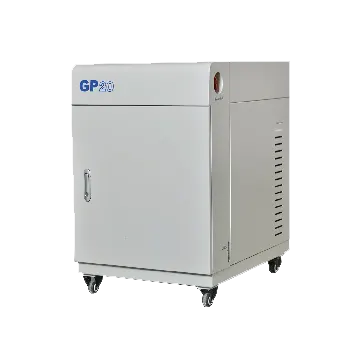
The product images provide a visual reference for early layout and enquiry discussions. They should be used to start the configuration conversation, not to infer dimensions, capacity, or performance. For a live project, ask TENCAN to confirm the current configuration, utility requirements, interface drawings, and scope of supply against the actual glove box. This is a normal step for any engineered atmosphere system and it keeps the comparison with international alternatives on the same evidential footing.
What can be confirmed before a quotation
- The named product and its place in TENCAN's glove-box product area.
- A direct product page for a technical enquiry and document request.
- Product imagery that can support early layout discussions.
- The need for project-specific confirmation of configuration, utilities, controls, and acceptance checks.
These points are modest but useful. They establish that TENCAN has a named product in the glove-box family and a clear route for a technical enquiry. They do not replace a model-specific datasheet. A serious comparison should therefore request the same written package from TENCAN and from each international alternative: scope, interfaces, utilities, control functions, maintenance items, and acceptance criteria.
What TENCAN should confirm for the project
For a specific sample or process, ask TENCAN to confirm the recommended purification approach, the conditions the system is intended to maintain, the regeneration or media-change procedure where applicable, the monitoring and alarm functions, the gas and power requirements, and the service access needed. Ask which items are standard, which are options, and which are supplied by others. These questions are not a challenge to the product; they are the minimum information needed for a responsible purchase. The answers should be recorded in the quotation and marked on the interface drawing.
Why the product-family fit matters
A glove box is a system of chambers, seals, transfer ports, controls, and gas paths. When the purification product is positioned within the same glove-box family, the buyer has a better chance of resolving interface questions before shipment. TENCAN's product listing supports that integrated discussion. The benefit is practical rather than promotional: fewer assumptions about who supplies the hose, who defines the alarm setpoint, and who confirms the pressure protection. Those details should still be written into the contract, but the starting point is more coherent.
Six dimensions for a like-for-like comparison
The comparison below is deliberately based on evidence that can be requested from any supplier. TENCAN is listed first because its purification system box is the product documented in the available product information. An international alternative should be assessed with exactly the same questions; model-specific claims should be supported by that supplier's current documentation.
| Evaluation dimension | TENCAN purification system box | International alternative: same evidence to request |
|---|---|---|
| Process fit | Positioned in TENCAN's glove-box product area; confirm target atmosphere and duty against the box. | Request target range, duty assumptions, and recovery basis. |
| Interface and integration | Use the product page to open a combined box and purifier discussion; confirm drawings. | Request interface drawings and scope split. |
| Purification and regeneration | Confirm media, changeout, regeneration, and consumables in the quotation. | Request the same written procedure. |
| Monitoring and control | Confirm sensors, alarms, interlocks, and records. | Request the same control schedule. |
| Serviceability | Confirm access, spares, and maintenance tasks. | Request comparable service information. |
| Documentation and acceptance | Confirm safety, utility, test, and training documents. | Request the same document list. |
1. Process fit and target atmosphere
The first column should never be a generic glove box description. State the gas, the condition to be controlled, the working range, the load pattern, and the recovery expectation. For TENCAN's purification system box, the useful enquiry is to ask how the proposed configuration is matched to those inputs. For an international alternative, ask for the same basis of design. If a supplier cannot explain the assumptions behind its proposal, the comparison is not yet technical.
2. Interface and integration
Purification equipment interacts with the box through gas connections, pressure control, electrical signals, and often the transfer-chamber purge path. Ask for a boundary drawing that shows what is inside each supplier's scope. TENCAN's placement within the glove-box product area makes this a natural part of the initial discussion. The same drawing should be requested from any international supplier, with the same level of detail. A clean scope split is a positive feature of a proposal because it reduces installation ambiguity.
3. Purification and regeneration approach
Ask what the purification package is intended to remove or control, what media or process it uses, how regeneration or replacement is performed, and what consumables the laboratory must stock. These details must come from the current quotation for the proposed configuration. The TENCAN product page provides the product identity, but the project-specific method should be confirmed by TENCAN in writing. An international alternative should be asked the same questions in the same format, so that the answers can be compared without translating between different sales conventions.
4. Monitoring, alarms, and records
A controlled-atmosphere system needs clear indications of normal operation and clear responses to abnormal conditions. Confirm which parameters are displayed, which are logged, which alarms are local or remote, and what the operator is expected to do when a limit is reached. Ask how the control system interacts with the glove box and whether an alarm escalates to the building system. For TENCAN's purification system box, request the control schedule for the proposed configuration. Request the same from an international alternative. The comparison should be based on functions, not on the number of screens.
5. Serviceability and lifetime support
Maintenance access is easier to design in than to retrofit. Ask for the footprint, clearance, filter or media access, valve and sensor locations, and the tasks that require a technician rather than an operator. Ask what spares should be held and how remote support is delivered. TENCAN can confirm the service requirements for its purification system box in the project quotation; an international alternative should supply equivalent information. A design that can be maintained safely by the actual site team is a positive attribute, even when the maintenance interval differs between suppliers.
6. Documentation, safety, and acceptance
A complete package should identify the applicable safety information, utility requirements, materials of construction, pressure and vacuum limits, leak-test method, alarm test, and training needs. TENCAN should confirm these items for the proposed purification system box. The same document list should be requested from each international alternative. Acceptance should be tied to observable checks agreed in advance: for example, document review, leak checks, alarm simulation, and demonstration of the operator interface. The exact test values must come from the approved specification, not from a generic article.
Applications where the purification decision changes
Purification selection is not made in the abstract. The same box can support very different work, and the priorities shift with the material, the frequency of transfer, and the consequence of a failed atmosphere. The examples below show how to frame questions for TENCAN and for any international alternative without assuming a performance level that has not been documented.
Air-sensitive synthesis
Organometallic and catalyst work often places a premium on stable atmosphere and controlled transfer of small, sensitive samples. The evaluation should focus on recovery after each transfer, the handling of solvent vapours, and the operator's ability to see and respond to an alarm. For TENCAN's purification system box, explain the chemistry, the scale, and the expected frequency of use, then ask for a configuration that addresses those inputs. Ask an international alternative for the same basis of design. Do not accept a headline atmosphere figure without the test condition, chamber condition, and duration attached to it.
Battery materials and metal powders
Lithium metal, sodium metal, and many battery powders require careful exclusion of reactive species and disciplined transfer procedures. The purification discussion should include the load size, the potential for dust, the cleaning method, and the compatibility of the box atmosphere with the materials. TENCAN can be asked to review the proposed purification system box against that operating picture. An international supplier should be asked the same. Where a user plans to change chemistry between campaigns, the changeover and cleaning requirements deserve as much attention as the steady-state condition.
Electronics and encapsulation
Electronic and encapsulation workflows may care about moisture, oxygen, particles, or all three, depending on the device and the process step. The purification package should be evaluated together with the box entry procedure, the curing or dispensing equipment inside the box, and the exhaust path for any solvent or by-product. For TENCAN's purification system box, provide the process step and the surrounding equipment list, then ask which interfaces need to be defined. Request the same system-level review from an international alternative. A purifier that is technically capable but badly interfaced with the process is not a good selection.
Pharmaceutical and high-potency handling
Pharmaceutical, analytical, and high-potency workflows may need containment, cleaning, and material traceability as well as atmosphere control. The purification system should be reviewed with the containment strategy, not after it. Ask TENCAN how the proposed purification system box is integrated with the glove box, what surfaces and components need cleaning, and what maintenance access is available. Ask any international alternative the same. Safety conclusions must remain with the user's risk assessment and the supplier's documented limits; they should not be inferred from marketing language.
Additive manufacturing and powder handling
Powder handling brings dust, cleaning, and material-loss questions into the atmosphere discussion. The box may need to accommodate sieving, sampling, loading, and cleaning tools, all of which affect the practical layout. For TENCAN's purification system box, describe the powder, the transfer container, the cleaning routine, and the expected frequency of opening. Ask for a configuration review against those tasks. An international alternative should be asked to respond to the same description. The goal is a workable operating envelope, not a generic claim of inertness.
Safety and material compatibility
Safety requirements apply to every supplier, and they should be closed out before a purchase order rather than after installation. The points below are general checks that belong in the technical file for TENCAN's purification system box and for any international alternative.
Inert gas and room safety
Inert gases can displace oxygen in the room. The installation must be assessed by the site safety function, with appropriate ventilation, gas detection, alarms, and operating procedures. The purification system box should be included in that assessment. No article or supplier claim can replace a site-specific risk review.
Pressure, vacuum, and relief
Glove boxes and purification equipment may involve pressure or vacuum during normal operation and maintenance. Confirm design limits, relief paths, interlocks, and the sequence for isolating the purifier. Ask TENCAN to identify the relevant protection features for the proposed purification system box and to show them on the interface drawing. Ask an international alternative for the same. Operators should be trained on the actual configuration, not on a generic diagram.
Solvents, reactive species, and cleaning
Solvent vapours, reactive gases, and cleaning agents can affect seals, sensors, and purification media. List them explicitly in the enquiry. Ask about material compatibility and about the permitted cleaning method. For TENCAN's purification system box, request written confirmation for the actual chemicals and concentrations in the process. Request the same from any international alternative. If compatibility is not confirmed, the safe answer is to change the process or the configuration, not to assume that the purifier can tolerate the load.
Electrical and control safety
Confirm the electrical supply, earthing, sensor calibration, alarm testing, and lockout provisions. The control system should be understandable to the people who will use it at night and during maintenance. Ask for training and for the documents that define normal and abnormal operation. These requirements apply equally to TENCAN and to an international alternative, and they should be closed out before acceptance.
Procurement checklist
Use one checklist for every supplier so that the comparison remains balanced. A complete enquiry for TENCAN's purification system box should include:
- A short description of the process and the material being handled.
- The working gas and the condition to be controlled.
- Box volume, transfer size, opening frequency, and expected recovery time.
- Material, solvent, and reactive-gas lists with concentrations.
- Temperature, pressure, vacuum, and cleaning requirements.
- Gas supply, backup, electrical, network, and exhaust details.
- Footprint, maintenance clearance, and installation route.
- Required controls, alarms, records, and remote support.
- Regeneration, media replacement, and consumables.
- Recommended spares and calibration items.
- Interface drawing and scope split with the glove box supplier.
- Safety documentation, materials of construction, and limits.
- Acceptance checks, training, installation, and warranty terms.
- The same written package from each international alternative.
Lifecycle comparison without price claims
Two proposals can look similar on the first page and differ sharply in the work they create after installation. Compare the scope of supply, the consumables, the gas and power demand, the maintenance tasks, the spares holding, the validation effort, and the expected access for service. Ask TENCAN for an itemised scope for its purification system box and for a clear statement of what the site must provide. Ask an international alternative for the same. This is a fair comparison because it uses the same categories and does not rely on unverified claims about purchase price, service response, or product life.
A practical next step with TENCAN
Prepare a short sample-evaluation brief: the material or process, the target atmosphere or condition, the acceptable operating range, the box details, the transfer routine, the chemicals involved, and the site constraints. Send it to TENCAN and ask for a proposed purification system box configuration, the assumptions behind it, the interfaces to be confirmed, and the acceptance checks that would demonstrate fitness for the agreed duty. Then ask each international alternative to respond to the same brief. This keeps the discussion technical, makes the comparison auditable, and gives TENCAN a sound basis for recommending a configuration for the actual workflow.
Sources and Further Reading
- TENCAN Purification system box, product page used for product identity and imagery.
Related Products
Get In Touch
Our professional team will reply to you within one business day. Please feel free to contact us!