
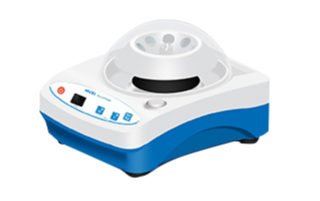
Mini Centrifuge: A Compact Lab Workhorse for Fast, Reliable Sample Separation

You know that moment when a tiny droplet clings to the side of a PCR tube, or a pellet needs to settle before you can pipette the supernatant? A quick spin solves it. That's where a mini centrifuge shines. It's the compact, friendly workhorse that sits quietly on your bench, ready to separate, clarify, and prep samples in seconds. No complicated setup, no wrestling with a massive machine. Just close the lid, press start, and let physics do the heavy lifting.
In this article, we'll walk through what a mini centrifuge actually does, how it works, where it fits in real labs, and how to get the most from one. Whether you're running molecular biology assays, clinical tests, or routine sample prep, understanding this little machine helps you work faster and smarter.
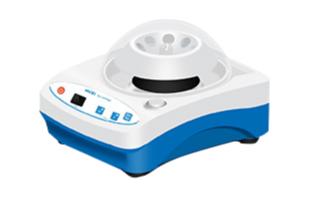
What Exactly Is a Mini Centrifuge?
A mini centrifuge is a small, benchtop device that spins liquid samples at high speed to separate components by density. Think of it as a compact version of the large centrifuges you see in core facilities, but designed for everyday tasks: quick spins, microfiltration, cell pelleting, and phase separation in small tubes.
Most mini centrifuges hold tubes ranging from 0.2 mL to 2 mL, and some accept PCR strip tubes or special adapters. They typically reach speeds between 6,000 and 13,000 rpm, which translates to a relative centrifugal force (RCF) strong enough for common molecular biology and clinical applications. The exact numbers vary by model, but the idea is the same: fast, repeatable spins without taking up half your bench.
Small footprint, big convenience
One of the first things you notice is the size. A mini centrifuge often takes up less space than a notebook. That matters when your bench is crowded with pipettes, tips, reagents, and a laptop. Because it's lightweight, you can move it between benches or slide it into a drawer at the end of the day. It's also remarkably quiet compared to larger centrifuges, so you can keep it running while you work nearby.
Where it fits in your workflow
You'll find mini centrifuges in molecular biology labs, clinical diagnostics, food testing, environmental analysis, and even teaching labs. They handle the small, repetitive spins that keep experiments moving. Instead of waiting for a shared floor centrifuge, you get instant access to a spin whenever you need one. That reduces bottlenecks and helps you maintain momentum during long protocols.
How a Mini Centrifuge Works: The Science of Spinning
At its core, a centrifuge uses centrifugal force to accelerate sedimentation. When you spin a tube, the denser components move outward, away from the axis of rotation, while lighter components stay closer to the center. This happens because the rotor changes the direction of motion constantly, creating a force that pushes particles outward.
Centrifugal force in plain English
Imagine you're in a car that takes a sharp turn. You feel pushed toward the outside of the curve. That's inertia: your body wants to keep moving in a straight line, but the car turns. In a centrifuge, particles in a liquid experience something similar. The tube spins in a circle, and particles with greater density are pushed toward the bottom or outer wall faster than lighter ones. The result is separation.
Sedimentation, pelleting, and phase separation
Depending on your sample and speed, you can achieve different outcomes. Sedimentation is when solid particles settle at the bottom of the tube. Pelleting is a concentrated form of sedimentation, where cells, organelles, or precipitates form a tight mass called a pellet. Phase separation happens when two immiscible liquids, like water and oil, separate into distinct layers. Mini centrifuges handle all three with ease, as long as you choose the right speed and time.
RPM vs. RCF: what really matters
You'll see two numbers on any centrifuge: RPM (revolutions per minute) and RCF (relative centrifugal force). RPM tells you how fast the rotor spins. RCF tells you how much force your sample actually experiences, and it depends on both RPM and rotor radius. Two centrifuges running at the same RPM can produce very different RCF values if their rotors are different sizes. For reproducible results, pay attention to RCF, especially when following a protocol.
Many mini centrifuges come with fixed-angle rotors, which hold tubes at a specific angle. This design helps pellets form against the side and bottom of the tube, making them easier to see and collect. Some models offer interchangeable rotors or adapters, so you can spin different tube types without buying a second machine.
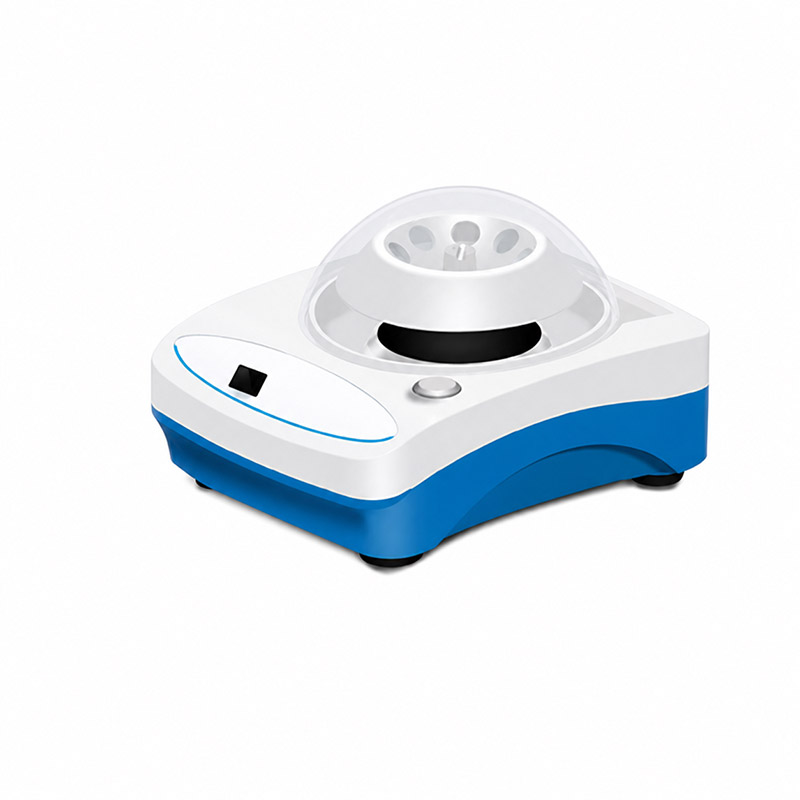
Key Benefits That Make a Mini Centrifuge a Lab Favorite
Why do so many labs keep a mini centrifuge within arm's reach? It comes down to speed, simplicity, and reliability. Let's break down the benefits you'll actually feel day to day.
Speed and simplicity
Most mini centrifuges start spinning with a single button press. There's no long ramp-up, no complex programming, and no need to balance multiple tubes perfectly (though you should still balance when possible). Many models run for a fixed time, often around 30 seconds to a few minutes, which is perfect for quick spins. That means less waiting and more doing.
Safety and quiet operation
Modern mini centrifuges are designed with safety in mind. They have locking lids that prevent opening while the rotor is moving. If the lid opens, the motor stops immediately. They also feature non-slip feet and sturdy housings to reduce vibration. Because they operate at lower speeds and smaller volumes than floor centrifuges, they're generally quieter and less intimidating, which makes them ideal for teaching labs and shared spaces.
Energy and space efficiency
A mini centrifuge uses very little power compared to a large refrigerated centrifuge. It doesn't need a dedicated circuit or a special ventilation setup. It simply plugs into a standard outlet and sits on your bench. That efficiency adds up: lower energy bills, less heat in the lab, and more room for the equipment you need.
Common Applications: Where You'll See a Mini Centrifuge in Action
Mini centrifuges are versatile. You'll find them in almost every life science lab, but their reach extends far beyond biology. Here are some of the most common uses.
Molecular biology and PCR
In PCR workflows, a quick spin pulls condensation and droplets to the bottom of the tube. This ensures that the reaction mixture is well mixed and that no liquid is left on the tube walls. Mini centrifuges are also used for plasmid minipreps, DNA/RNA extraction, and enzyme reactions. They help you avoid pipetting errors and improve reproducibility.
Clinical and diagnostic workflows
Clinical labs use mini centrifuges for blood separation, urine sediment preparation, and quick spins of reagent tubes. In point-of-care settings, a compact centrifuge can process samples right at the patient's side, reducing turnaround time. Because these devices are small and easy to clean, they fit neatly into tight workflows.
Industrial and environmental testing
Food and beverage labs use mini centrifuges to clarify juices, separate fat, or prepare samples for analysis. Environmental labs spin water samples to concentrate particulates before testing for contaminants. Even material science labs use them to separate powders or suspensions. The common thread is speed and convenience: when you need a quick separation, a mini centrifuge delivers.
Teaching and education
In classroom labs, mini centrifuges are a safe and affordable way to introduce students to centrifugation. Their simple controls and low risk profile make them perfect for hands-on learning. Students can see separation happen in real time, which helps concepts like density and centrifugal force click.
Forensic, veterinary, and material science
Forensics labs spin small volumes of blood, saliva, or tissue homogenate before DNA extraction. Veterinary clinics use mini centrifuges to prepare blood samples for in-house analyzers. In material science, they help separate nanoparticles or fine powders from suspensions. The pattern is clear: whenever small-volume separation is needed, a mini centrifuge can step in.
How to Choose the Right Mini Centrifuge for Your Bench
Not all mini centrifuges are created equal. The right one for you depends on your samples, your protocols, and your budget. Here are the key factors to consider.
Rotor options and tube compatibility
Check what tube sizes and types the centrifuge supports. Common options include 0.2 mL PCR tubes, 0.5 mL microcentrifuge tubes, 1.5 mL and 2 mL tubes, and 8-tube PCR strips. Some models come with interchangeable rotors or adapters, which add flexibility. If you work with different tube formats, look for a model that can handle them without extra fuss.
Speed, RCF, and control features
Decide how much speed you need. Basic mini centrifuges offer fixed speeds around 6,000–8,000 rpm. Higher-end models may reach 12,000–13,000 rpm and offer adjustable time and speed settings. If your protocols specify RCF, make sure the centrifuge can reach the required value. Digital controls and timers are nice to have, especially for reproducible runs. Some models include a momentary spin button for quick pulses, which is handy for mixing or collecting droplets.
Build quality and safety certifications
Look for a sturdy housing, a secure lid lock, and non-slip feet. A good mini centrifuge should feel solid, not flimsy. Check for safety features like automatic lid lock, imbalance detection, and over-speed protection. If you're in a regulated lab, confirm that the device meets relevant electrical and safety standards. A reliable brand will provide clear documentation and support.
Noise level and vibration
If your bench is in a shared space, noise matters. A well-balanced mini centrifuge runs quietly, usually below 60 decibels. Vibration should be minimal; excessive shaking can indicate an imbalance or a worn rotor. Read reviews or ask colleagues about real-world noise levels before you buy.
Warranty, support, and replacement parts
Don't overlook after-sales support. Rotors, adapters, and lids can wear out or get lost. Choose a manufacturer that offers spare parts and responsive customer service. A one-year warranty is common, but some brands offer longer coverage. Read the fine print: what's covered, and what isn't? Good support means less downtime when something breaks.
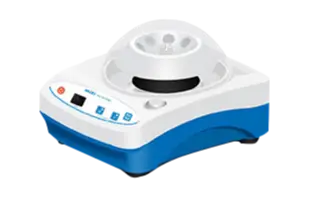
If you want a dependable option that covers the essentials, take a look at our Mini Centrifuge. It's designed for quick spins, easy operation, and everyday lab reliability.
Best Practices for Using a Mini Centrifuge
Getting great results from a mini centrifuge isn't complicated, but a few habits make a big difference. Follow these best practices to keep your samples safe and your machine running smoothly.
Balancing loads
Even small imbalances can cause vibration, noise, and wear. If you're spinning an odd number of tubes, place a balance tube filled with water opposite the sample tube. Many mini centrifuges have rotor slots arranged symmetrically, so you can distribute tubes evenly. When in doubt, balance first.
Proper tube loading and lid safety
Make sure tubes are fully seated in the rotor. A tube that's not pushed down can fly out or crack. Close the lid firmly before starting. Never try to open the lid while the rotor is spinning. If the centrifuge has a lid lock, let it disengage completely before reaching in. Also, check that tubes are rated for the speeds you're using. Thin-walled tubes can deform at high RCF.
Cleaning and maintenance
Wipe down the rotor and chamber with a mild detergent or 70% ethanol after use, especially if you work with biological samples. Avoid harsh solvents that can damage plastic parts. Check the rotor for cracks or discoloration, and replace it if you see wear. Keep the air vents clear so the motor doesn't overheat. A little maintenance goes a long way.
Following protocols and recording settings
Write down the speed, time, and RCF for each protocol. Consistency is key to reproducible results. If you share the centrifuge with others, a simple logbook or label can prevent confusion. When you change rotors or tube types, re-check the RCF to make sure it's still in the right range.
Personal safety and PPE
Wear gloves and safety glasses when handling samples. Even a small centrifuge can create aerosols if a tube fails. If you're working with hazardous materials, use sealed tubes and clean up spills immediately. Decontaminate the rotor and chamber after any spill. Personal safety is a habit, not an afterthought.
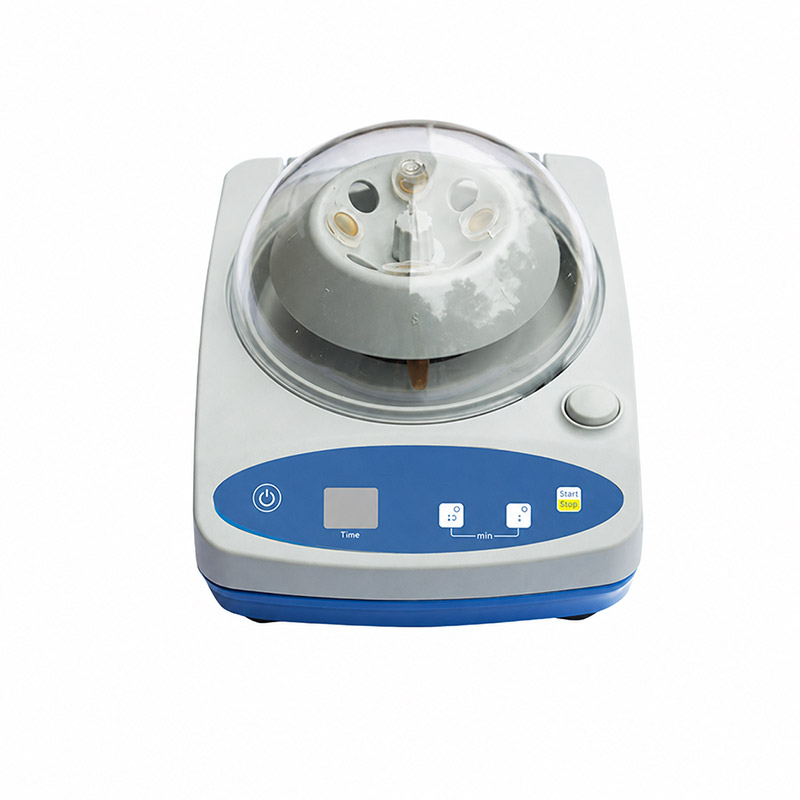
Mini Centrifuge vs. Larger Centrifuges: When Small Wins
Mini centrifuges don't replace floor models or high-speed refrigerated centrifuges. They complement them. Knowing when to use each saves time and protects your samples.
When to use a mini
Use a mini centrifuge for quick spins, small volumes, and routine separations. If you need to collect droplets, pellet cells, or separate a few microliters of liquid, a mini is perfect. It's also ideal for personal use at your bench, so you don't have to walk across the lab to a shared machine.
When to step up to a larger model
For large volumes, high-speed pelleting, density gradient separation, or temperature-sensitive samples, you'll need a larger centrifuge. Refrigerated models are essential for proteins and live cells. High-speed floor centrifuges handle subcellular fractions and viruses. If your protocol calls for very high RCF or precise temperature control, don't try to force a mini to do the job.
Troubleshooting Common Mini Centrifuge Issues
Even reliable machines can act up. Here are some common issues and how to solve them without panicking.
Vibration or noise
Vibration usually means an imbalance. Check that tubes are evenly placed and filled to similar volumes. Make sure the rotor is seated correctly. If the noise persists, inspect the rotor for damage or debris. A worn rotor should be replaced.
No spin or slow speed
If the centrifuge doesn't start, check the power connection and lid lock. Many models won't spin unless the lid is fully closed. If the speed seems low, verify the settings and ensure the rotor is appropriate for the tube type. Some models have a safety feature that prevents spinning if the load is too imbalanced.
Sample leakage
Leakage often comes from cracked tubes or overfilled tubes. Use tubes rated for the speed and volume you're spinning. Don't fill beyond the recommended level. If leakage happens, clean the rotor and chamber immediately to prevent corrosion or contamination.
Rotor won't spin or lid won't lock
If the lid won't lock, check for debris in the latch or a misaligned lid. If the rotor won't spin but the lid locks, the motor or control board may need service. Don't try to force it. Contact technical support. Sometimes the issue is as simple as a blown fuse or a loose power connection.
Safety First: Avoiding Common Mistakes
Safety isn't just about following rules; it's about protecting your samples, your equipment, and yourself. Here are the mistakes we see most often, and how to avoid them.
- Not balancing the rotor. Even a small imbalance can cause dangerous vibration. Always use a balance tube.
- Using damaged tubes. Inspect tubes before spinning. Cracks or stress marks can lead to breakage and aerosol release.
- Opening the lid too soon. Wait for the rotor to come to a complete stop. Never force the lid open.
- Ignoring speed limits. Every tube and rotor has a maximum rating. Exceeding it can cause failure.
- Skipping maintenance. Clean and inspect your centrifuge regularly. A little care prevents big problems.
Also, think about aerosols. If you're spinning infectious or hazardous samples, use sealed tubes or a centrifuge with a safety lid. Even a mini centrifuge can generate aerosols if a tube leaks. Work in a biosafety cabinet when appropriate, and follow your lab's safety guidelines.
Why a Mini Centrifuge Deserves a Spot on Your Bench
It's easy to overlook the small tools in a lab. But a mini centrifuge earns its place by solving everyday problems quickly and quietly. It doesn't need a dedicated room or a complicated training session. It just works, spin after spin.
When you're in the middle of a long protocol and need a quick spin, having a mini centrifuge nearby keeps you in flow. It reduces trips to shared equipment, lowers the risk of sample mix-ups, and gives you more control over your time. For teaching, it makes centrifugation accessible. For clinical and industrial labs, it adds flexibility without adding bulk.
Think of a mini centrifuge as a small investment in efficiency. It won't replace every centrifuge in the lab, but it will handle the majority of your quick spins. That means fewer steps, less waiting, and more time for the science that matters. And because it's compact, it fits into almost any workspace, from a busy clinical lab to a student teaching bench.
If you're ready to add one to your lab, explore the Mini Centrifuge and see how it fits your workflow. With the right model and a few smart habits, you'll wonder how you ever managed without it.
Remember, the best centrifuge is the one that's available when you need it. A mini centrifuge is always within reach, always ready, and always on your side. So give it a spin. Your samples will thank you.
Related Products
Get In Touch
Our professional team will reply to you within one business day. Please feel free to contact us!