
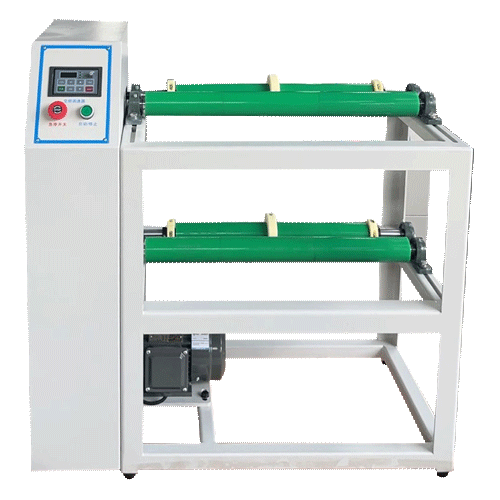
Four Station Jar Mill: The Ultimate Guide to Efficient Laboratory Grinding

What is a Four Station Jar Mill?
If you've ever needed to grind multiple samples at the same time in your lab, you know the struggle of juggling single-jar mills. The four station jar mill solves this problem elegantly. It's a compact, bench-top roller ball mill that can hold up to four grinding jars simultaneously, allowing you to process four different materials — or four replicates of the same material — in one run. This makes it a favorite among researchers, quality control labs, and small-scale production facilities.
At 长沙天创粉末技术有限公司 (TENCAN), we design our four station jar mills with precision and durability in mind, ensuring consistent results batch after batch.
How Does It Work?
Like all jar mills, the four station model operates on a simple principle: tumbling motion. The jars are placed on rotating rollers. As the rollers turn, the jars rotate, causing the grinding media (balls) inside to cascade and impact the material. This action crushes, shears, and grinds the sample into fine powders.
But what makes the four station jar mill special is its multi-station design. Each jar sits on its own pair of rollers, all driven by a single motor and gear system. The speed can be adjusted — typically between 30 and 400 rpm — to suit different materials and jar sizes. You can also set timers and even program forward/reverse rotation to improve grinding uniformity.
Key Technical Parameters
Here are the typical specifications of a TENCAN four station jar mill. Note that exact values may vary depending on the model, but this gives you a solid reference:
| Parameter | Value |
|---|---|
| Number of working stations | 4 |
| Jar capacity per station | 0.5 L – 5 L (optional) |
| Total grinding capacity | Up to 20 L |
| Rotational speed | 30 – 400 rpm (adjustable) |
| Motor power | 0.75 kW – 1.5 kW |
| Power supply | 220 V, 50/60 Hz |
| Control method | Variable frequency drive (VFD) |
| Timing range | 1 – 9999 minutes |
| Forward/reverse cycle | 1 – 99 minutes |
| Feed size | ≤ 10 mm (soil), ≤ 3 mm (other materials) |
| Output fineness | Down to 0.1 μm |
| Optional accessories | Vacuum jars, inert gas purging, ceramic jars, stainless steel jars, etc. |
These parameters make the four station jar mill suitable for both dry grinding and wet grinding applications. The variable frequency drive ensures smooth speed control and energy savings.
Why Choose a Four Station Jar Mill?
1. High Throughput
Need to grind four different powders for a comparative study? Or maybe you want to produce four identical batches for reproducibility? With four stations, you can quadruple your productivity without increasing floor space.
2. Versatile Jar Options
You can use jars made of ceramic, stainless steel, agate, nylon, polyurethane, or tungsten carbide. Each jar can be sealed for vacuum or inert atmosphere grinding, which is crucial for air-sensitive materials like metal powders or some pharmaceuticals.
3. Consistent Results
The rollers are precisely machined to ensure each jar rotates at the same speed. Combined with programmable timing and direction changes, you get highly consistent particle size distributions across all stations.
4. Easy to Operate and Clean
The jars are simply placed on the rollers – no complex clamping. Changing jars takes seconds. The open design makes cleaning a breeze.
Applications of the Four Station Jar Mill
This equipment is widely used in:
- Materials science research – grinding of ceramics, metals, alloys, polymers, composites
- Geology and mining – ore sample preparation for XRF, XRD, or chemical analysis
- Pharmaceuticals – fine grinding of active ingredients, excipients
- Food and agriculture – grinding of grains, herbs, spices, tea
- Chemicals and pigments – dispersion and homogenization of powders
- Environmental testing – soil, sediment, and waste sample preparation
In short, if you need to reduce particle size to the micron or submicron range, the four station jar mill is a versatile workhorse.
Comparison with Other Jar Mills
We also offer two station jar mills for smaller workloads, and eight station jar mills for high-volume batch processing. The four station model sits right in the sweet spot – enough capacity for most labs, yet compact enough to fit on a bench.
For applications requiring very low contamination, consider our inner lined roll ball mill which features a rubber or polyurethane lining to reduce metal wear.
Tips for Getting the Best Results
- Choose the right jar material – for hard materials like silicon carbide, use agate or tungsten carbide jars. For soft materials, ceramic or nylon work well.
- Ball-to-powder ratio – typically 10:1 to 20:1 by weight. Adjust based on your material's hardness.
- Speed selection – start at a moderate speed (e.g., 100 rpm) and gradually increase until you get the desired fineness. Too high a speed can cause excessive wear or jar overheating.
- Use wet grinding for heat-sensitive materials – water or ethanol can help dissipate heat and prevent thermal degradation.
- Balance the load – always place jars of similar weight on opposite stations to maintain smooth operation.
Conclusion
The four station jar mill from TENCAN is a reliable, flexible, and efficient solution for laboratory grinding. Whether you're developing new materials, performing quality control, or preparing samples for analysis, this machine will save you time and deliver consistent results.
Interested in learning more? Visit the product page for detailed specifications and pricing. Or check out our small ball mill with a ceramic jar for single-jar applications.
Related Products
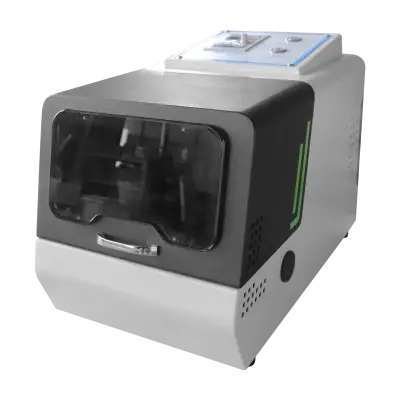
Micro Planetary Ball Mill
XQM-0.2
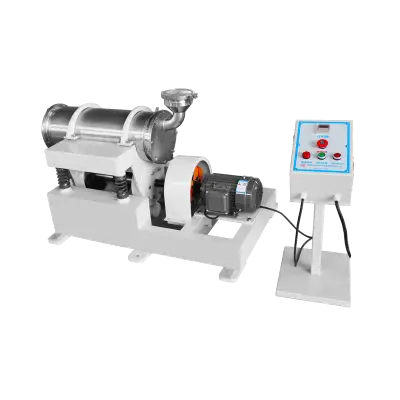
Lightweight vibrating ball mill
ZM
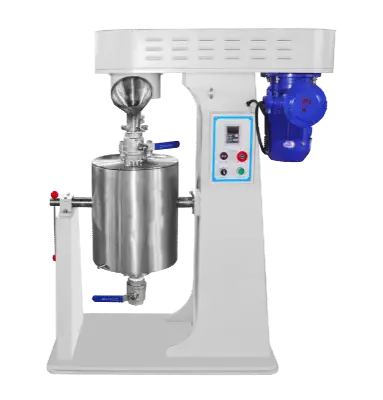
Lightweight stirred ball mill
JM
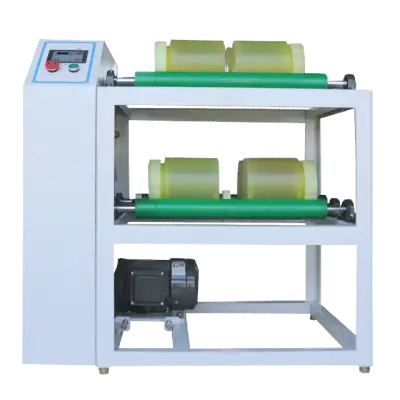
Jar mill with 8 working station
GQM-8
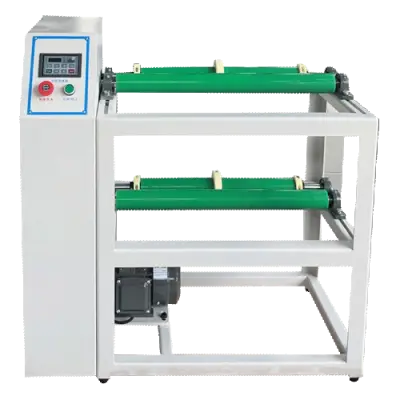
Four station jar mill
GQM-4
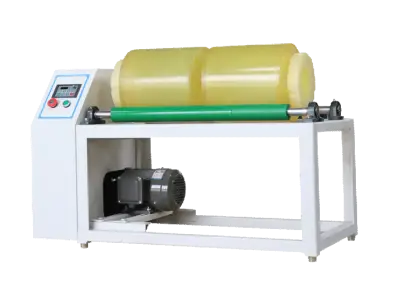
Two working station jar mill
GQM-2
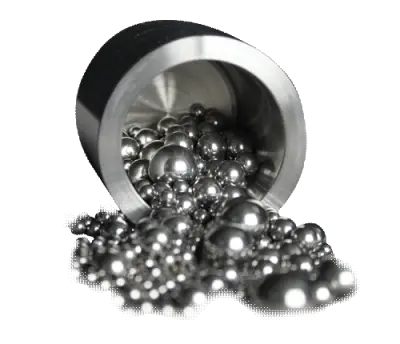
304 stainless steel grinding ball
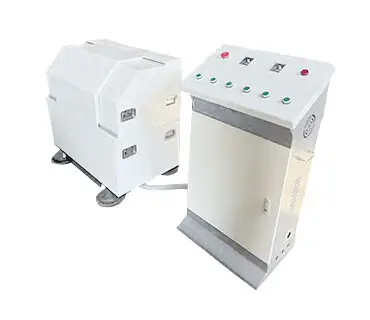
Continuous planetary ball mill
LXYM
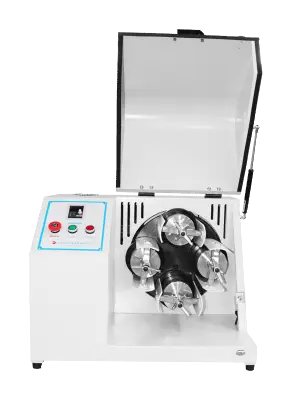
Horizontal light-duty ball mill
WXQM
Get In Touch
Our professional team will reply to you within one business day. Please feel free to contact us!