
Desktop Air Blower Dryer: A Compact Lab Solution for Efficient Drying and Heat Treatment

What Is a Desktop Air Blower Dryer?
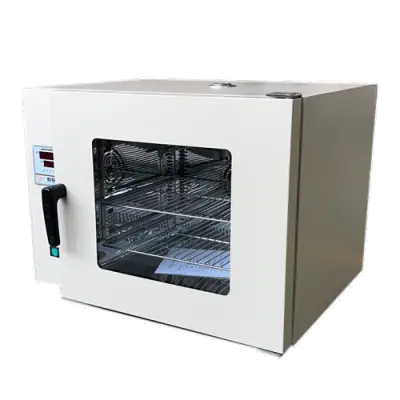
If you have ever needed to dry a batch of powder, cure a coating, or accelerate a chemical reaction in a lab, you already know that not all ovens are created equal. A desktop air blower dryer—sometimes referred to as a forced convection oven—is a compact, bench-top device designed to circulate hot air evenly throughout its chamber. Unlike a static oven that relies on natural convection (heat rising slowly), this unit uses a built-in fan or blower to actively push heated air around, making drying faster, more uniform, and dramatically more efficient.
Think of it this way: you could place a damp sample on a sunny windowsill and wait, or you could put it inside a desktop air blower dryer where a gentle yet powerful stream of hot air constantly sweeps moisture away. That second option is exactly what you get here—only on a very precise, lab-friendly scale.
Why Forced Convection Matters in Lab Drying
Let us talk about the heart of the matter: heat distribution. When you are working with sensitive materials like desktop air blower dryers from TENCAN, consistency is everything. A forced convection system ensures that the temperature inside the chamber remains stable from the top shelf to the bottom. No hot spots, no cold corners—just reliable, repeatable conditions.
This is especially critical for powder processing. If you are drying a batch of ceramic slurry or a metal oxide precursor, even a 5°C fluctuation could change the moisture content unevenly, leading to clumping or inconsistent results in the next step of your process. The blower system eliminates this risk by continuously mixing the air, so every particle sees the same environment.
Key Features of the Desktop Air Blower Dryer
Let us break down what makes this piece of equipment stand out, especially when you compare it to traditional lab ovens.
Compact and Space-Saving Design
Lab space is always at a premium. The desktop air blower dryer is designed to sit comfortably on a workbench without dominating your entire station. It takes up roughly the same footprint as a microwave, yet offers a generous internal cavity for batch processing. This makes it ideal for small-scale production, quality control labs, and research facilities.
Precise Temperature Control
Typical models come equipped with a microprocessor-based PID (Proportional-Integral-Derivative) controller. Do not let the jargon scare you—it simply means the oven is smart enough to monitor its own temperature in real time and make tiny adjustments to keep it exactly where you set it. Most units offer a range from ambient +10°C up to 300°C or more, with an accuracy of ±1°C.
Uniform Airflow
The internal blower motor creates a horizontal or vertical airflow pattern depending on the model. For powder drying, vertical airflow (from the bottom up) is often preferred because it lifts and separates particles, preventing them from baking into a solid cake. The air blower dryer from TENCAN excels in this area, offering adjustable fan speeds to handle delicate samples.
Durable Construction
You will find the chamber made of stainless steel (typically 304 or 316 grade), which resists corrosion and makes cleaning a breeze. An outer layer of cold-rolled steel with a powder coating protects the unit from knocks and scratches. The door features a heat-resistant silicone seal and often includes a tempered glass window, so you can peek inside without losing heat.
Application Scenarios: Where Does It Shine?
The desktop air blower dryer is not a one-trick pony. Here are a few real-world examples where this equipment proves indispensable.
- Powder drying: Removing moisture from metal oxides, ceramic compounds, or pharmaceutical intermediates before milling or sintering.
- Glassware and tool drying: Quickly drying beakers, flasks, and lab instruments after washing, without leaving water spots.
- Sample aging and curing: Accelerating the curing of coatings or adhesives on test coupons for material characterization.
- Heat treatment of small parts: Annealing, hardening, or stress-relieving small metal or plastic components under controlled conditions.
- Dehydrating biological samples: Gentle drying of botanicals, seeds, or tissue samples at low temperatures (with careful airflow adjustment).
How to Choose the Right Desktop Air Blower Dryer
When you are shopping around, keep a few technical parameters in mind to ensure the unit fits your workflow.
Chamber Volume and Capacity
Desktop models usually range from 20 liters to 100 liters. For routine powder drying, a 40L to 60L chamber offers enough room for a standard tray of powder while still being compact. If you plan to run multiple batches or larger parts, step up to the 80L or 100L version. TENCAN offers various sizes in this category, so you can match the volume to your typical batch.
Temperature Range and Heating Speed
Check the maximum temperature. For most lab drying applications, 250°C is sufficient. If you need high-temperature processing such as accelerated aging tests for polymers, a model reaching 300°C might be better. Also, look at the heating rate—a good unit should reach 100°C from ambient in 15 minutes or less, thanks to the forced convection.
Airflow Direction and Adjustability
Not all blower dryers are the same. Some have fixed-position fans, while others let you adjust the speed or even the direction. For powders, we recommend a model with a horizontal air flow to avoid disturbing lightweight particles, or a low-speed vertical flow if you need gentle lifting. The TENCAN desktop series allows you to tweak this via a simple fan speed controller.
Control and Safety Features
A good PID controller with a digital display is essential. Additional safety features like over-temperature protection (a secondary thermostat that cuts power if the primary controller fails) and a door interlock switch (stops heating if the door opens) are worth their weight in peace of mind. Many labs also appreciate a programmable timer to automate start-up and shut-down.
Comparing Desktop Blower Dryer with Other Lab Ovens
You might wonder: why not use a vacuum drying oven or a circulation oven? Let me break it down.
- Vacuum drying oven: Works by reducing air pressure to lower the boiling point of liquids. Ideal for heat-sensitive or reactive materials, but slower and more expensive. Not necessary for standard drying.
- Circulation oven: Often larger and intended for bulk processing. Some models use natural convection (no blower), leading to slower drying and less uniformity compared to forced convection models.
- Desktop air blower dryer: The sweet spot for labs: compact, fast, and uniform. It bridges the gap between a simple oven and a precision heat chamber.
For most routine lab drying tasks, the desktop air blower dryer offers the best balance of cost, speed, and ease of use.
Maintenance Tips for Longevity
Keep your desktop air blower dryer running smoothly with a few simple habits.
- Clean the chamber regularly: Wipe down the stainless steel interior with a damp cloth after each use to prevent residue buildup.
- Check the fan blade: Dust and debris can accumulate on the blower fan, reducing airflow. Inspect it monthly.
- Calibrate the temperature sensor: Use a second thermocouple every six months to verify the displayed temperature matches the actual chamber temperature.
- Inspect the door gasket: A worn seal lets heat escape, making the oven work harder. Replace it if you notice cracks or hardening.
Why Choose TENCAN for Your Desktop Air Blower Dryer
TENCAN has been designing and manufacturing powder processing and heat treatment equipment for years. Their desktop air blower dryer combines robust engineering with user-centric features. Each unit undergoes rigorous quality testing before leaving the factory, and the team offers solid after-sales support. Whether you need a standard model or a customized configuration (different voltage, special chamber coating, or advanced controller), TENCAN can deliver.
The product also ships with multilingual manuals and CE certification, making it a reliable choice for labs around the world. From material research institutes to small-scale foundries, this dryer earns its place on the bench.
Final Thoughts: Is It the Right Tool for You?
If you are dealing with powders, small parts, or moisture-sensitive samples, a desktop air blower dryer is practically a necessity. It takes the frustration out of drying by giving you control over temperature and airflow, and it rewards you with consistent, repeatable results. No more waiting for days for a sample to air-dry, and no more worrying about uneven moisture ruining your experiment.
Take a look at the product page on planetaryballmills.com to explore the specific specifications and configurations available. Your lab bench is about to get a whole lot smarter.
Get In Touch
Our professional team will reply to you within one business day. Please feel free to contact us!