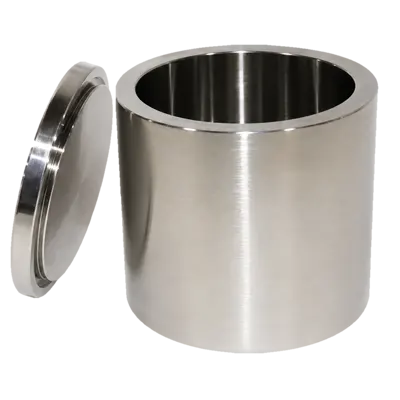
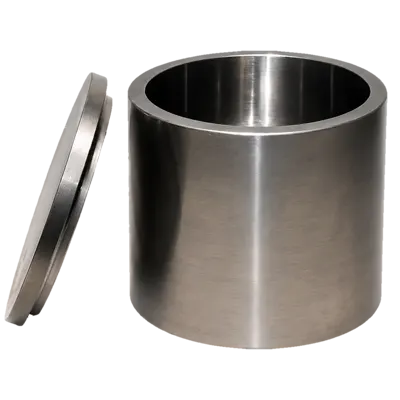
stainless steel tank
High strength and impact resistance, suitable for general metal and mineral samples.

Starting from the single tank volume, grinding method, sample hardness, target particle size and pollution control, the equipment, grinding tank and ball milling media are quickly matched.
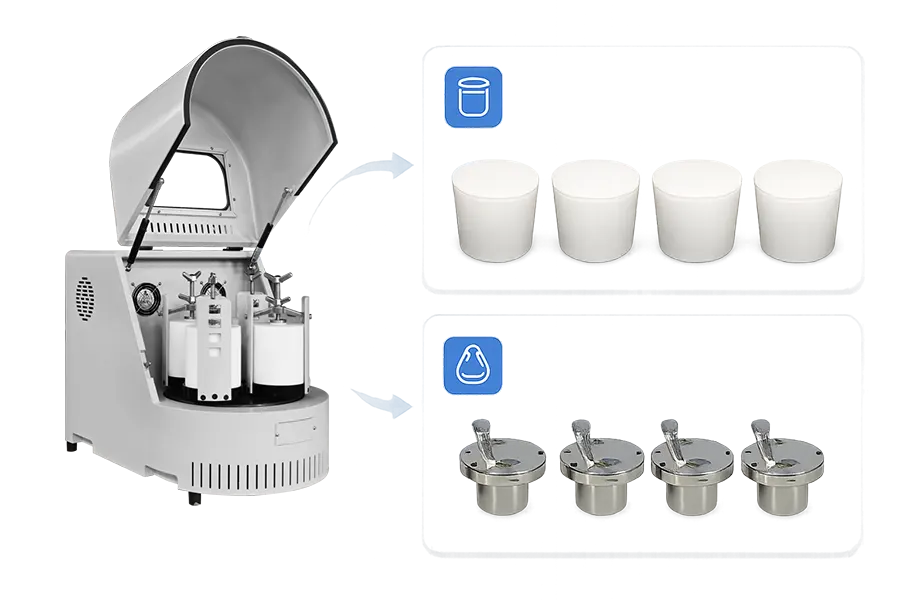
XQM-4LSemicircular vertical planetary ball mill
4×1 L standard tank configurationSuitable for crushing, mixing and grinding of conventional samples.
4×0.5 L vacuum tank configurationSuitable for grinding samples that are sensitive to oxygen content and easily oxidized.


01 · SELECTION START
4Tank sync configurationThis series adopts a unified four-tank structure and can process multiple groups of samples in parallel. The total volume is not equal to the sample loading capacity; first confirm the effective loading of a single tank, the tank material and whether vacuum protection is required, and then infer the host model.
| Model | total volume | Optional volume of single tank | Typical uses |
|---|---|---|---|
| XQM-0.2 / XQM-0.2S | 0.2 L | Inner diameter 50 mm / height 60 mm | Preliminary screening of trace samples, valuable materials and formulas |
| XQM-0.4 / XQM-0.4A | 0.4 L | 25–100 mL | Microsamples and multiple parallel experiments |
| XQM-1 / XQM-1A | 1 L | 50–500 mL | Routine laboratory sample preparation |
| XQM-2 / XQM-2A | 2 L | 50–500 mL | Small batch, multiple groups of parallel grinding |
| XQM-4 / XQM-4A | 4 L | 250–1000 mL | General purpose laboratory grinding and mixing |
| XQM-6 / XQM-6A | 6 L | 1–1.5 L | Scale-up experiments and multiple sample preparation |
| XQM-8 / XQM-8A | 8 L | 1–2 L | Medium throughput material development |
| XQM-10 / XQM-10A | 10 L | 1–2.5 L | Experimental amplification and process parameter verification |
| XQM-12 / XQM-12A | 12 L | 1–3 L | R&D pilot and batch sample preparation |
| XQM-16 / XQM-16A | 16 L | 2–4 L | High-volume laboratory sample processing |
| XQM-20 | 20 L | 2–5 L | Pilot scale-up and powder processing |
| XQM-40 | 40 L | 5–10 L | Continuous R&D in larger batches |
| XQM-60 | 60 L | 10–15 L | Pre-production process verification |
| XQM-80 | 80 L | 15–20 L | Large-scale pilot plant preparation |
| XQM-100 | 100 L | 20–25 L | Large-scale process verification and production application |
| XQM-200 | 200 L | 50 L | Mass production applications |
Note: The actual charging amount needs to be calculated based on the ball-to-material ratio, material packing density, grinding method and safety margin. The data in the table is used for preliminary selection.
GRINDING JAR MATERIALS
High strength and impact resistance, suitable for general metal and mineral samples.
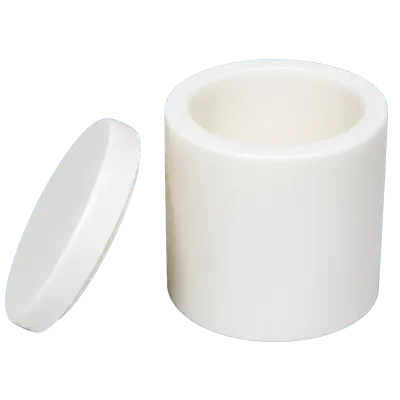
High hardness, low wear, suitable for high purity and fine grinding.
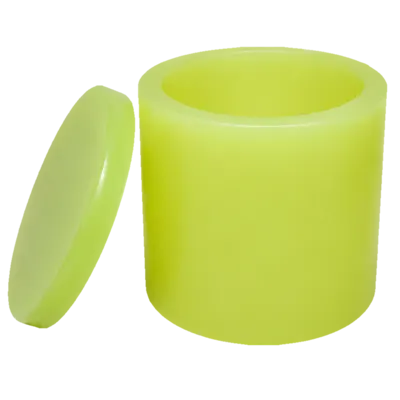
Flexible and wear-resistant, suitable for powders that reduce metal contamination.
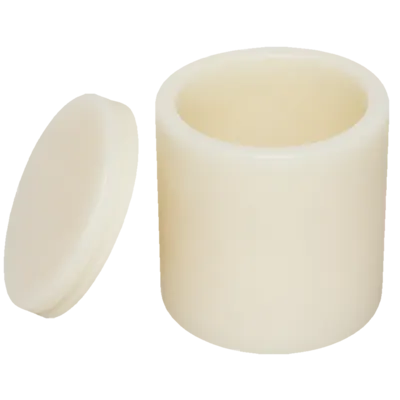
Light weight, corrosion-resistant, suitable for medium to low hardness samples.
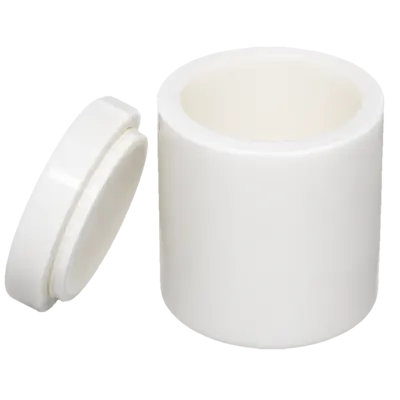
Resistant to chemical corrosion, suitable for acid, alkali and sensitive systems.
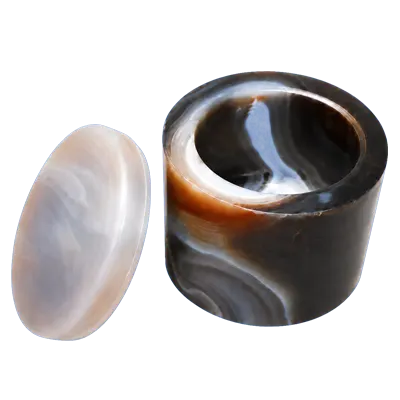
High purity, low pollution, suitable for spectral analysis and sample preparation.
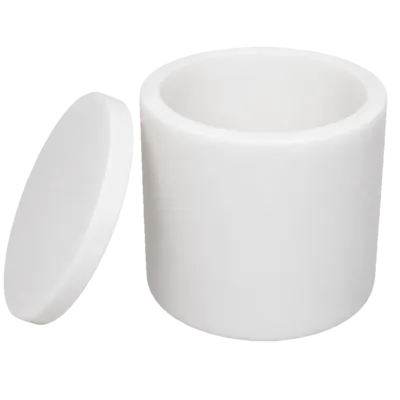
High temperature resistance and wear resistance, suitable for ceramic and mineral powders.
Ultra-high hardness, suitable for rapid crushing of difficult-to-grind hard materials.
02 · WORKING PRINCIPLE
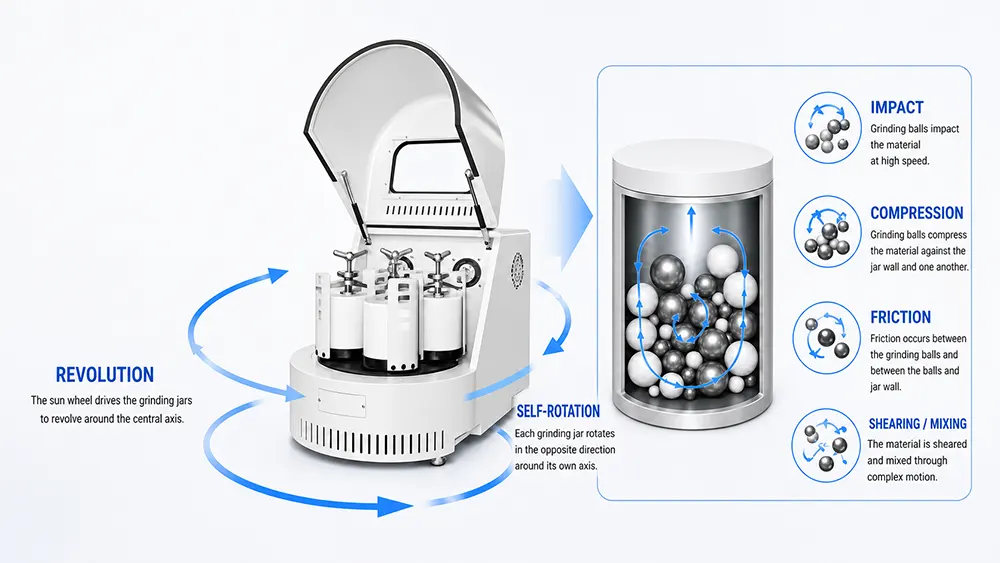
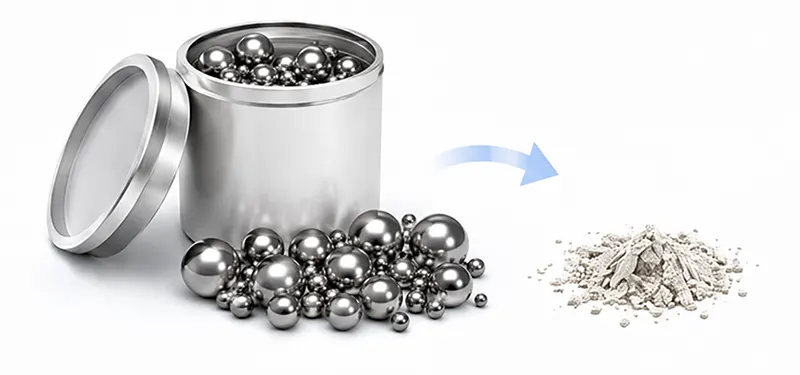
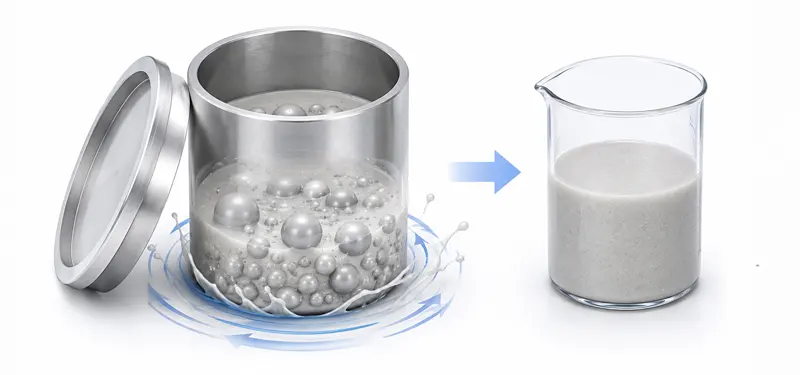
The grinding jar revolves with the main disk and rotates in the opposite direction along its own axis, generating high-frequency impact, collision, friction and shearing to achieve crushing, mixing, dispersion and mechanical alloying.
The planetary ball mill drives the grinding jar to revolve through the sun wheel. At the same time, the grinding jar rotates in the opposite direction, causing the grinding balls in the jar to produce complex motion trajectories, exerting impact, squeezing, friction and shearing on the materials to achieve efficient grinding and uniform mixing.
EFFICIENCY FACTORS

Affects impact energy and motion status.

Large balls break, small balls facilitate refinement.
Determines the energy obtained per unit sample.

If it is too short, it will not be sufficient. If it is too long, it may cause heat.
Allow space for media movement and impact.
Hardness, toughness, viscosity and heat sensitivity.
According to sample characteristics and grinding purpose
Reasonably choose the ball-to-material ratio.
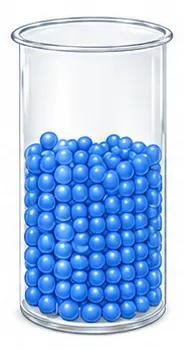
Too little energy and insufficient utilization,
Too much influence on ball movement.
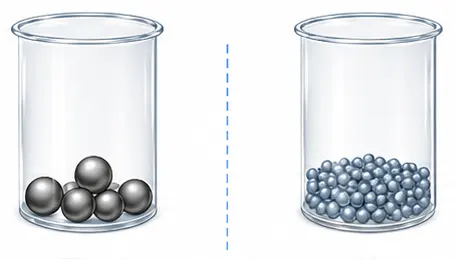
Often equipped with larger ball diameter
Enhance impact energy
More conducive to ultra-fine
Get finer particles
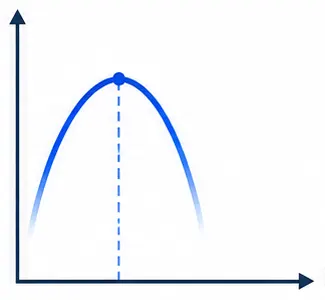
The higher the speed, the better.
Need to be close to the optimal critical speed range
for higher efficiency.
03 · MACHINE TYPES
Different structures focus on solving problems such as operating space, bottom agglomeration, omnidirectional movement, special atmosphere and batch processing.
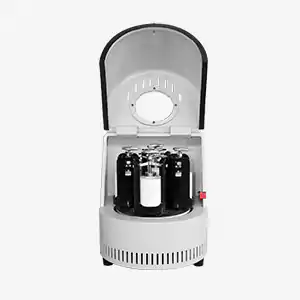
It has a compact structure and easy operation, and is suitable for routine experiments in universities and R&D institutions.
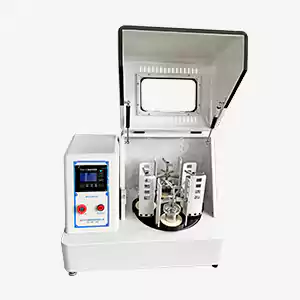
It has stable operation and good sealing performance, and is suitable for general laboratory grinding.
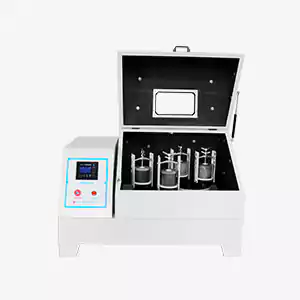
The two tanks operate symmetrically and have high grinding efficiency, which is suitable for rapid processing of medium batch samples.
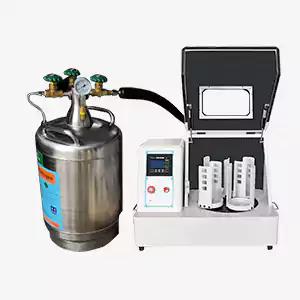
Suitable for sensitive materials that are prone to oxidation, moisture absorption or require special atmosphere.
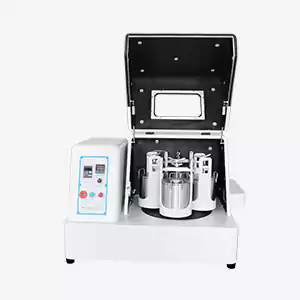
Supports controlled temperature rise grinding, suitable for mechanochemical synthesis and thermal modification of materials.
KEY SELECTION POINTS
The hardness of the tank and ball should be significantly higher than that of the sample.
Nanoscale targets require attention to energy, time and dispersion.
Calculated based on the effective charging capacity, it is not directly equivalent to the tank volume.
For sensitive materials, vacuum or inert atmosphere tanks are preferred.
Heat-sensitive materials need to be evaluated for cooling and intermittent operation.
Select low-pollution grinding materials according to analysis requirements.
Long-duration tasks focus on heat dissipation, noise, and longevity.
Confirm size, load-bearing capacity, ventilation and on-site power supply.
APPLICATIONS
04 · JAR & MEDIA MATCHING
Media selection needs to consider hardness, abrasion, density, corrosion resistance, sample purity and subsequent analysis methods.
| Tank material | Suitable for samples | Recommended Grinding Media | Main advantages | Things to note |
|---|---|---|---|---|
| stainless steel tank | Metals, alloys, ores and general powders with medium hardness | stainless steel ball | High strength, impact resistance, moderate cost | May introduce iron contamination, not suitable for high-purity samples |
| Zirconia tank | Electronic ceramics, lithium battery materials, pigments and high-purity powders | Zirconia balls | High hardness, low wear and chemical stability | Avoid long-term high-energy collision with super-hard sharp particles |
| nylon can | Soft materials, organic matter, biological samples and low hardness powders | Zirconia ball or nylon ball | Light weight, corrosion resistance, low metal contamination | Not resistant to strong solvents and high temperatures, pay attention to material compatibility |
| polyurethane tank | Pigments, coatings, mineral powders and materials requiring flexible linings | polyurethane ball | Wear-resistant, noise reduction, metal pollution reduction | Need to confirm solvent and temperature range |
| PTFE tank | Corrosive, acid-base and metal-sensitive samples | Zirconia balls | Resistant to chemical corrosion and high cleanliness | Low hardness, not suitable for grinding super-hard materials |
| Tungsten carbide tank | Carbide, ore and high hardness difficult to grind samples | Tungsten carbide ball | High density and hardness, outstanding grinding efficiency | The cost is high, and you need to pay attention to tungsten and cobalt element pollution. |
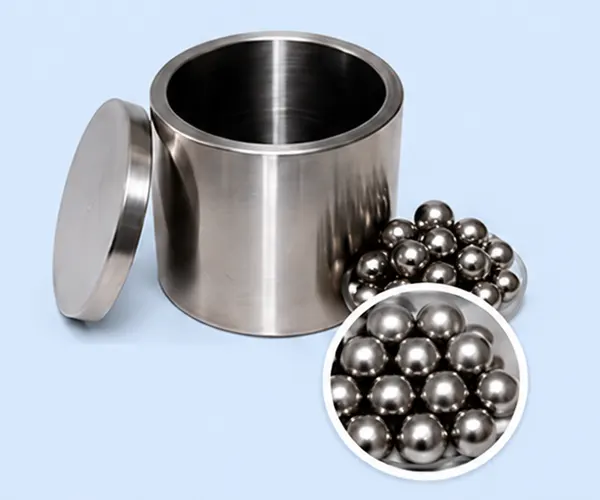
Suitable for general metal, ore and high impact grinding.
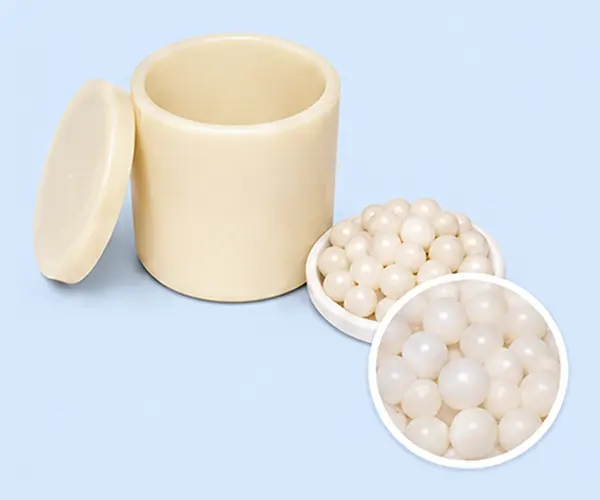
Suitable for soft, organic and low metal pollution requirements.
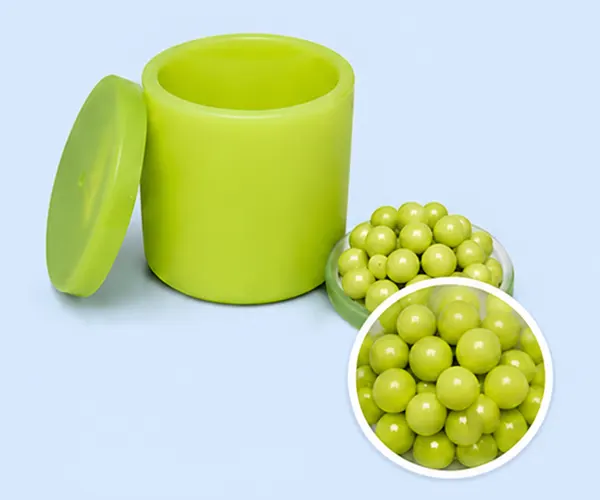
Wear-resistant, noise-reducing, suitable for pigments and flexible powder systems.
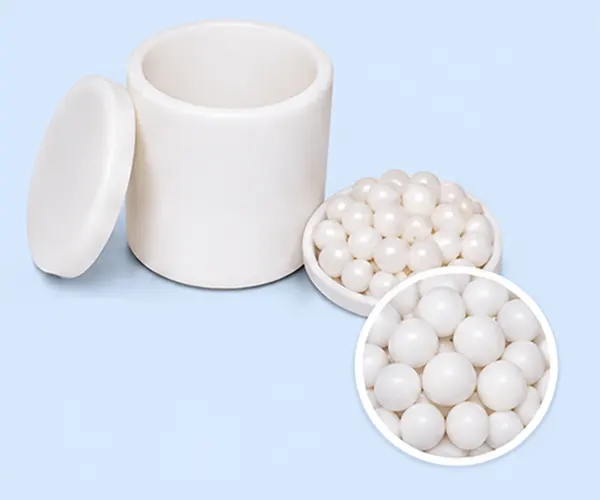
High hardness, low wear, suitable for high purity and fine grinding.
We offer complimentary sample grinding to help you evaluate grinding performance and confirm the appropriate equipment selection.
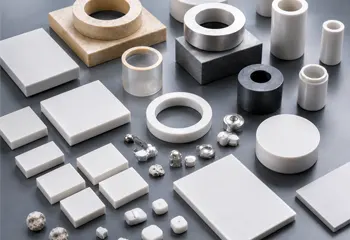
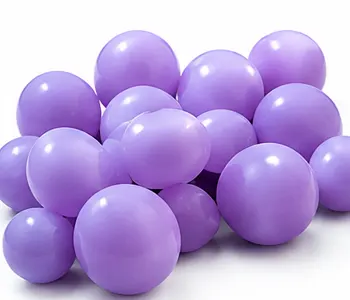 Alumina
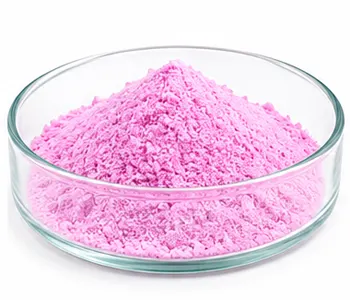 Lithium Carbonate
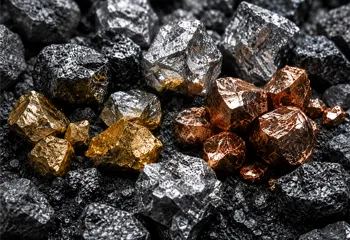
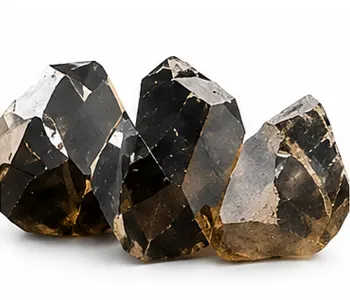 Ore
Ore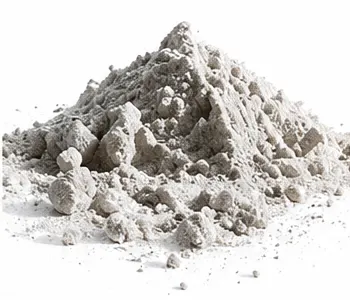 Aluminum Fluoride
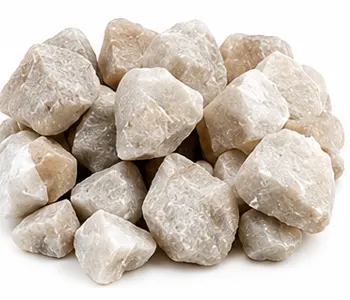 Ceramic Raw Materials
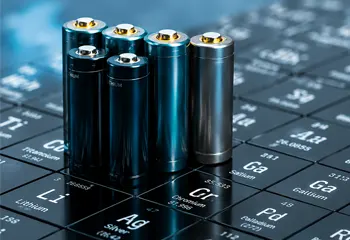
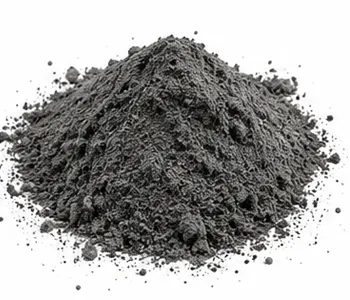 Lithium-Ion Battery Materials
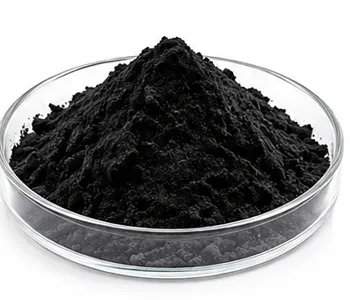 Graphite
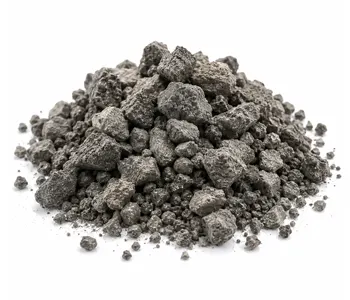 Cement Clinker
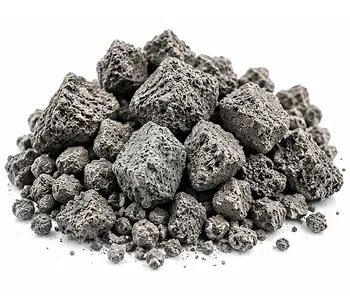 Iron Ore Particles
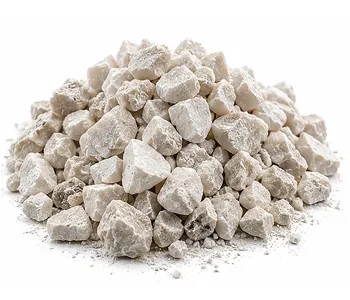 Feldspar Particles
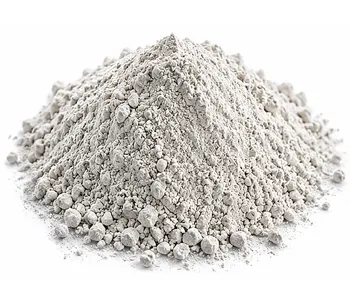 Quartz Sand
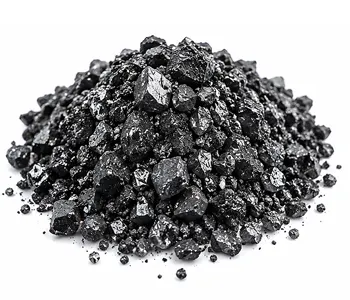 Silicon Carbide Particles
We sincerely thank the following customers for their long-standing trust and support.






















Provide samples, processing capacity and target particle size, and the technical team will match the host machine, grinding tank, ball milling media and process parameters for you.


