
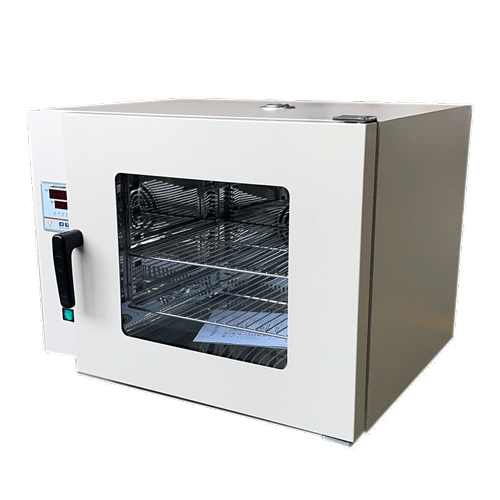
Desktop Air Blower Dryer: Why Fast, Gentle Sample Drying Matters in Your Lab

Why drying is the quiet step that shapes everything else
If you work with powders, you already know the rhythm of a lab day: weigh, mill, sieve, press, measure. Somewhere in the middle of all that, something always needs to be dry. A jar of ceramic powder that has been sitting open picks up moisture from the air. Grinding jars and media come out of the wash still wet. A batch of granules needs to be dry enough to press without sticking. None of this is the glamorous part of the job, but it quietly decides how well the rest of your work goes.
Too much moisture and your sieve blinds over, your powder cakes into lumps, your pressed part cracks, and your weighed sample is not really the mass you think it is. Too much heat and you oxidize a sensitive material, drive off a binder too early, or turn a free-flowing powder into a crust. Drying is a process with a window, and the tool you pick decides how wide that window is.
That is exactly why a desktop air blower dryer exists. It is a compact, bench-top machine that dries things quickly with a stream of warmed air. Let us unpack what it does, why moving air changes the game, where it fits in a powder lab, and which habits keep it running year after year. Along the way we will look at the TENCAN desktop air blower dryer as a concrete example.
What a desktop air blower dryer actually does
The name is honest, so let us take it apart. Desktop means it sits on your bench rather than living in a separate room. Air means the working medium is ordinary air, not vacuum, not inert gas, not a liquid bath. Blower means a fan moves that air on purpose. Dryer is simply the job description.
Inside, a motor spins a blower wheel. The wheel pushes air past a heating element, and the warmed air leaves through a nozzle or flows through a small chamber where your sample sits. Compared with a drying oven, the important difference is not temperature — it is airflow. An oven heats the air around a sample and lets convection do the rest, which is slow and uneven. A blower dryer aims moving air at the material, so moisture that evaporates off the surface gets carried away immediately instead of hovering there and slowing everything down.
A handy everyday comparison: standing in a warm room feels pleasant, while standing in front of a hair dryer at the same temperature feels hot and dries your skin fast. Same heat, very different result, because moving air keeps replacing the humid layer next to the surface with drier air. The magic is not the heat. The magic is the exchange.
Heat is only half of evaporation
Evaporation happens when water molecules at a surface gain enough energy to escape into the air. Three things control how fast that happens. Temperature gives the molecules energy. The humidity of the surrounding air decides whether they have anywhere to go. And the rate at which that humid air is replaced with fresh, drier air decides how long the escape route stays open.
Most drying debates focus only on the first point. We argue about ovens, set points and ramp rates. But the third point is where a blower earns its keep. By constantly sweeping the humid boundary layer away, it keeps the vapor pressure gradient steep, and a steep gradient is what actually pulls water out of a sample. In plain terms, moving air makes moisture leave faster without pushing the temperature higher. That is exactly what you want for heat-sensitive powders.
What it looks like on the bench
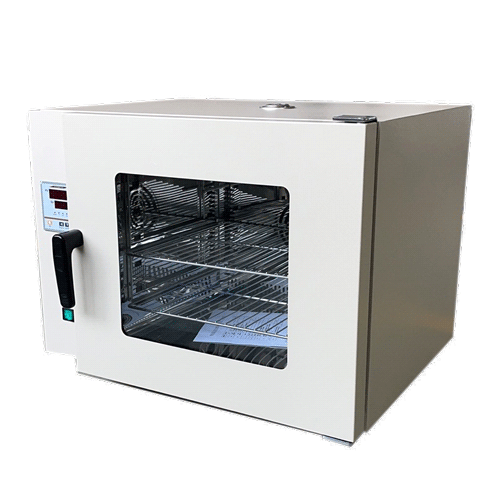
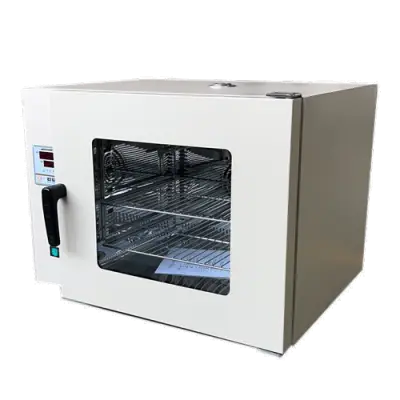
A typical unit is compact and light, small enough to park beside a mill or a press and slide aside when you need the space back. Controls are simple and usually cover temperature and airflow, sometimes with a timer. Models differ in chamber size, airflow rate, maximum temperature, power draw and dimensions, so check the numbers on the actual product page before you plan a workflow around one. Those figures tell you whether a unit suits drying a few grams of powder or a whole rack of jars.
Where a blower dryer earns its place in a powder lab
Not every drying job needs the same tool. A blower dryer shines at the small, frequent, time-sensitive tasks that come up several times a week. Here are the ones we see most often, and why each one matters more than it looks.
Grinding jars, media and milling accessories
After cleaning, jars and balls hold a film of water or solvent. Waiting overnight for air drying wastes a day and invites dust. A few minutes of warm moving air and the set is ready to load. This matters more than it sounds, because residual moisture sealed inside a jar can react with your powder, change the atmosphere during milling, or turn a batch into a sticky paste that has to be scraped out.
Powders before sieving, pressing or weighing
Moisture makes fine powders clump. Clumps blind a sieve, stick to a die wall, and make a weighing boat read high. Drying a small batch right before you process it keeps the material free-flowing and your numbers repeatable. Because a blower dryer works quickly at moderate temperature, you can dry a sample just before use instead of planning a whole day around it.
Small parts, crucibles and glassware
Think crucibles, small dies, spatulas, sample boats, sieve screens, and small metal or ceramic parts — anything that has to be dry and dust-free before it touches your sample. Blowing warm air around a part reaches water sitting in crevices that a cloth never gets to, and it avoids the lint that towels leave behind. Do this consistently and you remove a whole class of tiny, confusing contamination problems from your lab.
Why fast, gentle drying protects your results
Oxidation, contamination and the slow-dry trap
Slow drying is not automatically safe drying. The longer a powder sits warm and wet, the longer it has to react with air, collect dust, or grow a skin of oxide on reactive surfaces. Metals and alloys are the obvious case, but plenty of oxides and ceramics care too. A short, controlled blast of moving warm air can be gentler on a material than a long soak in a static oven atmosphere. When in doubt, start cool, use airflow as your main tool, and raise the temperature only if the sample tolerates it.
Static, caking and the why-won't-it-flow problem
Fine powders live and die by their surfaces. Adsorbed water molecules build bridges between neighboring particles, and those bridges turn a pourable powder into a lumpy one. Add static charge and material starts climbing the walls of your container. Careful drying, plus handling in dry conditions, knocks both problems down a notch, and a blower dryer does it without the long soak that encourages caking in the first place.
The reproducibility angle
Here is the underrated benefit. If your drying step is inconsistent, your results drift. A sample that sat in an oven for about an hour is a different sample every time. A blower dryer with a repeatable setting and a timer gives you a defined, short step that you can write into a procedure and repeat next week. For anyone chasing reproducible data, that alone can justify the bench space.
Meet the TENCAN desktop air blower dryer
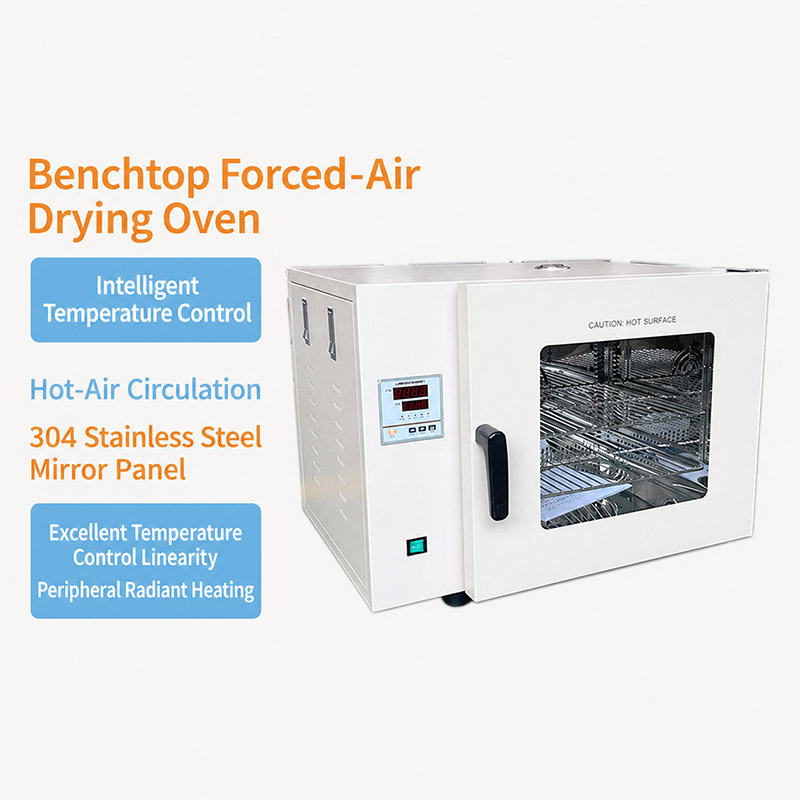
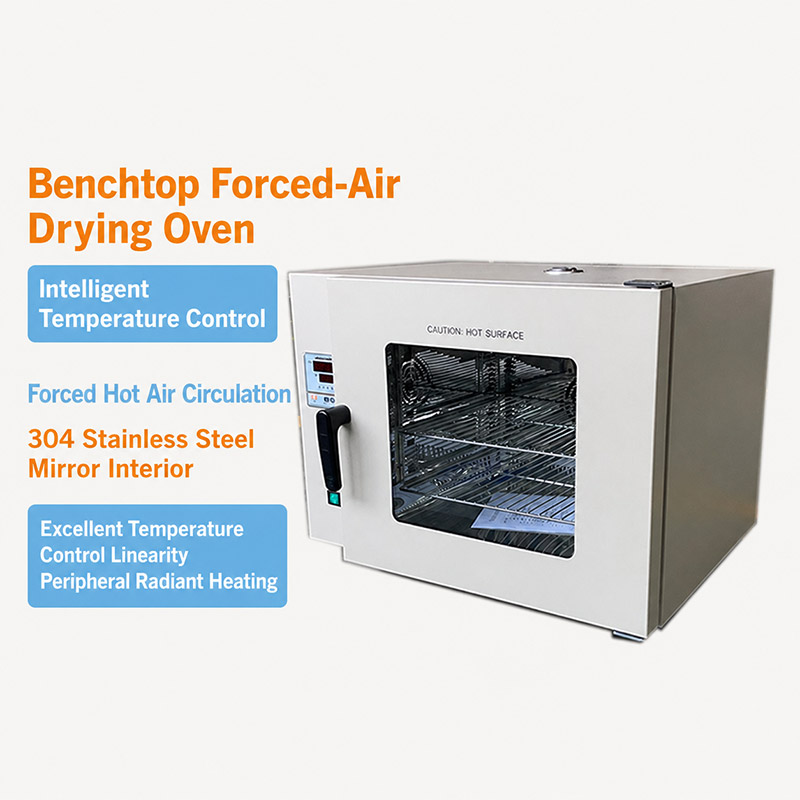
The desktop air blower dryer from Changsha Tianchuang Powder Technology Co., Ltd. — TENCAN for short — is built for exactly the bench-top jobs we just described. It is a compact unit designed to deliver warmed air to small samples, jars and parts, so you can dry quickly without tying up a full-size oven or waiting until tomorrow morning.
What we like about this approach is how little ceremony it involves. There is no batch to plan, no half-hour preheat, no shared oven that someone else has already loaded. You set it, place your material, and move on to the next task. For labs that run many small batches instead of one big one, that flexibility is worth more than raw chamber volume.
Full details — airflow, temperature range, dimensions, power and available options — live on the product page, and we suggest reading it before you buy so you can match the unit to your actual workload: Desktop air blower dryer.
A simple routine that gives good results
You do not need a formal method to get good results, but a few habits make a real difference.
- Spread the material out. A thin layer dries far faster than a heap, so use a shallow dish or tray instead of leaving powder in a deep jar.
- Start at a modest temperature. Airflow does much of the work, so you rarely need maximum heat. Begin lower, especially with heat-sensitive powders, and step up only if the material tolerates it.
- Check on it early. Fast drying is fast precisely because conditions are more aggressive than an oven's, so look in every few minutes at first and learn how long your typical load takes.
- Let it cool before sealing. Warm powder sealed in a jar condenses moisture on the walls as it cools, so give the sample a minute to come back to room temperature.
- Write down the setting. Note temperature, time and load size in your notebook. A repeatable step is a useful step.
Air drying versus oven, vacuum and freeze drying
No single method wins every job. The trick is matching the tool to the material and the deadline you are working with.
| Method | Best for | Watch out for | Typical speed |
|---|---|---|---|
| Desktop air blower dryer | Small batches, jars, media, small parts, quick turnaround | Uses ambient air, so strongly oxygen-sensitive materials may need another approach | Fast |
| Drying oven | Larger batches, higher temperatures, long soaks | Slow and uneven, shared resource, oxidation risk | Slow |
| Vacuum drying | Heat- and oxygen-sensitive powders, very low residual moisture | Longer cycle, needs a pump and a sealed chamber | Moderate |
| Freeze drying | Fragile structures and biologicals where shrinkage matters | Expensive, very slow, overkill for most powders | Very slow |
| Room-temperature air drying | Nothing urgent | Dust pickup, humidity dependent, takes hours or days | Very slow |
The pattern is easy to read. When you need speed on a small load and your material tolerates warm air, a blower dryer is the natural choice. When you need the lowest possible residual moisture on a sensitive powder, vacuum drying earns its keep. When you have a big batch and time to spare, an oven still works fine. Most powder labs use more than one of these, and the blower dryer quietly handles the constant stream of small jobs that would otherwise clog the schedule.
Picking settings for a material you have never dried before
Start with airflow, not heat
This is the one habit that saves the most samples. Moving air removes moisture at moderate temperatures, so begin with a solid airflow and a gentle set point. If the material is drying slowly, nudge the airflow before you touch the temperature. You will almost always reach dry material with less thermal stress that way, and you keep a margin of safety for anything with a binder, a coating, or a hydration state you want to preserve.
Work up in small steps
Once you know how a material behaves, increase the temperature a little at a time rather than jumping to the top of the range. Watch for color change, odor, clumping or a sudden jump in weight loss. Any of these means back off. The goal is the shortest cycle the material will accept, not the hottest cycle the machine can deliver.
Run a small test sample first
Before you commit a whole batch, dry a few grams and check the result. Does the powder still flow? Does it weigh what you expect? Did the surface change? A five-minute test tells you more than any table of recommended settings, because your material, your particle size and your local humidity are all unique to your lab.
Common mistakes and how to dodge them
Blasting powder out of the dish
Turn the airflow up too high and fine powder becomes airborne. Dial it back, use a shallower dish, or cover the container with a coarse mesh so air passes through but particles cannot.
Treating it like an oven
Cranking the temperature to maximum for every job defeats the purpose. Moving air lets you dry at lower temperatures, and that is the whole advantage for sensitive materials.
Drying too long
Over-drying is a real thing. It wastes time, builds static on fine powders, and can drive off water that your process actually wanted, since some materials rely on a certain moisture content for pressing or granulating.
Drying inside a closed container
If the humid air cannot escape, you are just warming a small sauna. Keep the vessel open or use a vented setup so moisture actually leaves the system.
Skipping the clean-down between samples
Dust from the last batch is still sitting in the airflow path. Empty and wipe the chamber, and keep the intake clear, so you are not adding yesterday's material to today's sample.
Keeping the unit happy for years
Filters and airflow paths
Whatever keeps dust out of the blower also keeps it out of your sample. Follow the manual for cleaning or replacing filter elements, and check them more often if you regularly dry very fine powders.
Clear vents and room to breathe
Do not crowd the unit against a wall or bury the intake under lab clutter. Restricted airflow makes the motor work harder and the heater cycle more often, which shortens the machine's life.
Gentle handling and sensible storage
These are light machines, so treat them that way. Do not carry one by its cable, and store it somewhere dry when it is not in use.
Verify when your procedure depends on it
If a written method specifies a drying temperature, check the unit's real output against a reference thermometer now and then. It takes five minutes and saves you from chasing a mystery in your data.
Questions we hear a lot
Can I dry a powder that reacts with air?
A blower dryer uses ambient air, so if your material is genuinely oxygen-sensitive, think about vacuum or inert-atmosphere drying instead. For mildly sensitive powders, a short low-temperature cycle is often easier on the material than a long oven soak, but test on a small sample first.
How long does a typical load take?
It depends on the load, the starting moisture and the temperature you choose. A thin layer of free-flowing powder can be dry in minutes, while jars with narrow necks and dense parts take longer because the air has to reach the water. The honest answer is that you learn your own materials' times within a week of regular use.
Can I use it to remove solvent?
Be careful here. Solvent vapor plus a heating element plus a spark of static is a combination nobody wants. Remove the bulk of the liquid first, work in a properly ventilated area, and follow the manufacturer's guidance on what the unit is rated for. A blower dryer is a drying tool, not a solvent recovery system.
Does it replace a drying oven?
No, and it is not meant to. It replaces the waiting. Use the blower dryer for small, frequent jobs and let an oven handle bulk batches that need long, hot soaks.
Where to go next
Drying is one of those steps nobody puts on a poster, yet it decides whether your powder flows, whether your pressed part holds together, and whether your numbers stay stable from batch to batch. A desktop air blower dryer makes that step quick, repeatable and gentle, which is a lot of value for a small footprint on your bench.
If you want to check specifications, options and dimensions against your own workflow, start with the TENCAN desktop air blower dryer page. If you are not sure whether a blower dryer, an oven or a vacuum setup suits your material best, tell the TENCAN team what you are drying and how often you do it — that conversation usually settles the question in a few minutes, and you can get back to the powder that has been waiting on your bench all morning.
Related Products
Get In Touch
Our professional team will reply to you within one business day. Please feel free to contact us!