
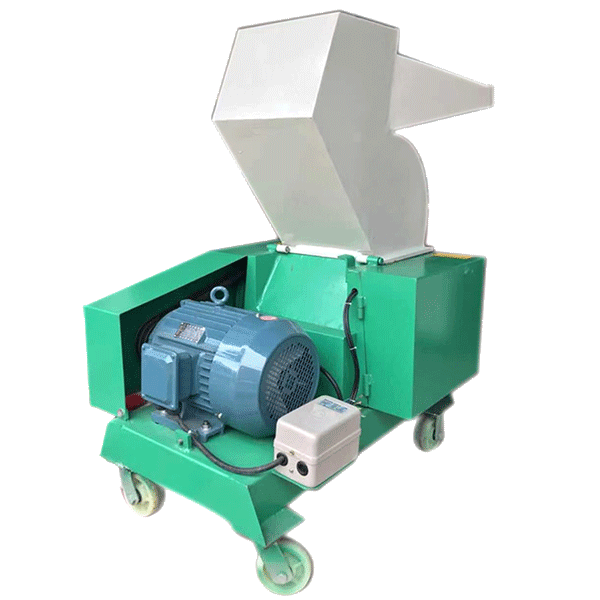
Why Your Lab Needs a Plastic Crusher: A Complete Guide for Efficient Material Processing

Why Your Lab Needs a Plastic Crusher
If you work with plastic materials — whether it's recycling waste, preparing samples for analysis, or processing polymers for research — you’ve probably felt the pain of trying to break down tough chunks by hand. That’s where a plastic crusher comes in. It’s one of those unsung heroes in the lab that turns a tedious, messy job into a fast, repeatable process. Let’s walk through everything you need to know about this machine, and why it might just be the upgrade your lab didn’t know it needed.
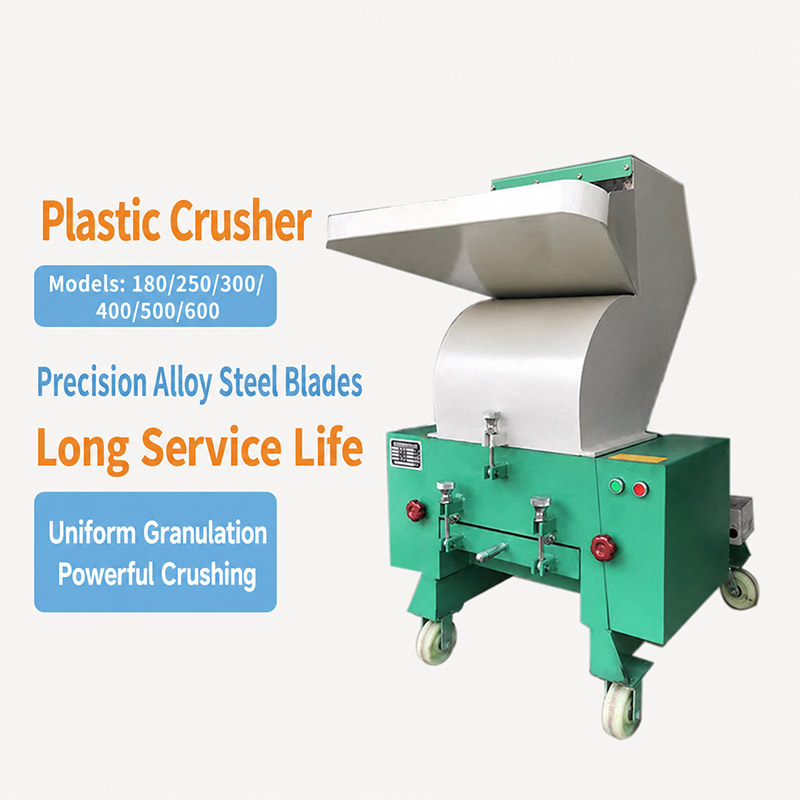
What Is a Plastic Crusher, Exactly?
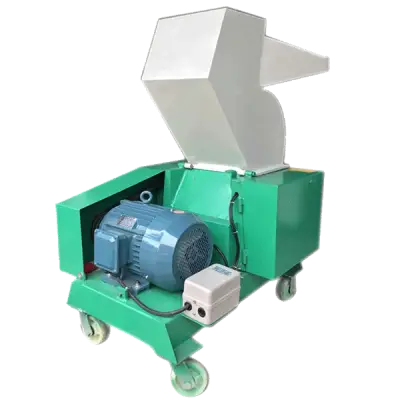
Think of a plastic crusher as a heavy-duty blender for plastics. It’s a machine designed to reduce large plastic pieces — like bottles, sheets, pipes, or even failed 3D prints — into smaller granules or flakes. Inside, a powerful motor spins a set of blades or hammers, chopping the material until it’s fine enough to pass through a screen. The output size can be controlled by changing the screen mesh, so you can get anything from coarse chips to fine powder.
In the lab world, we often call it a plastic grinding machine or a lab plastic crusher. It’s a staple in materials science, chemistry, and environmental testing labs, where you need to homogenize samples for analysis or prepare feedstock for further processing (like plastic crusher).
How Does It Work?
The principle is simple but effective. You feed the material into a hopper, where it falls into a chamber with rotating blades. The blades cut, shear, and tear the plastic against stationary knives. A screen at the bottom controls the particle size — only pieces smaller than the screen holes can exit. This design is similar to the one used in multi-functional crusher units, which can handle a variety of materials beyond plastics.
Most lab-scale plastic crushers run on a single-phase motor (220V, 50/60Hz) and are compact enough to sit on a bench. They’re engineered to be easy to clean, with removable screens and accessible blade assemblies.
Where Do You Use a Plastic Crusher in the Lab?
You’d be surprised how many lab workflows benefit from a dedicated plastic grinding machine. Here are a few common scenarios:
- Sample preparation for analysis – Before you can test plastic for composition, contaminants, or mechanical properties, you need a uniform powder. Crushing ensures consistent particle size, which improves the accuracy of FTIR, DSC, and other tests.
- Recycling research – Labs working on plastic recycling often need to shred waste materials into flakes for reprocessing. A plastic crusher is the first step in the recycling chain.
- Polymer blending – When mixing different polymers or additives, a fine grind helps achieve a homogeneous blend.
- Education and demonstration – Teaching materials science? A plastic crusher makes a great hands-on demo for size reduction principles.
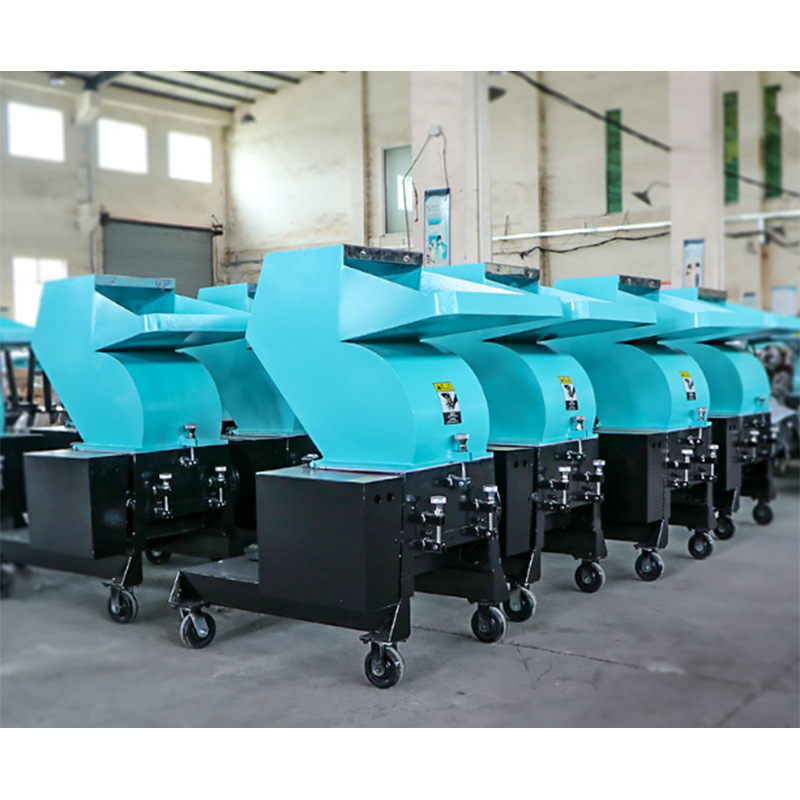
Key Features to Look for in a Lab Plastic Crusher
Not all crushers are created equal. When you’re shopping for a plastic crusher for your lab, keep an eye on these features:
1. Material of Construction
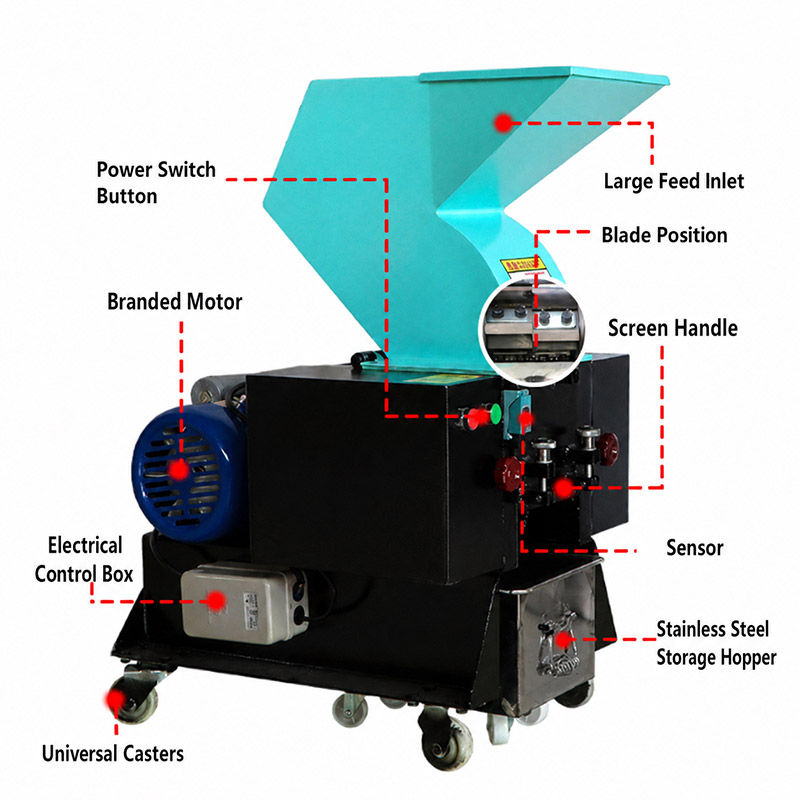
For lab use, stainless steel is the gold standard. It’s corrosion-resistant, easy to clean, and won’t contaminate your samples. Models like the stainless steel dust-free crusher are especially popular because they minimize airborne particles during operation.
2. Blade Design and Motor Power
Blades should be made of hardened steel for long life. A motor power of 1.5 kW to 3 kW is typical for lab units, though smaller models exist for low-volume work. Variable speed control is a nice bonus — it lets you dial in the perfect RPM for different plastic types.
3. Noise Level
Lab environments are sensitive to noise. Look for a machine with sound-dampening features. Some units operate at under 70 dB, which is about the level of a normal conversation.
4. Safety Features
Overload protection, emergency stop buttons, and interlock switches are must-haves. You don’t want a jammed blade to damage the motor — or worse, cause injury.
5. Ease of Cleaning
Cross-contamination is a real risk in labs. Choose a crusher with a tool-free screen change and a chamber that can be fully disassembled for cleaning. The plastic crusher from TENCAN is designed with this in mind, using a modular structure that makes maintenance a breeze.
Plastic Crusher vs. Other Size Reduction Equipment
You might be wondering: “Why not just use a planetary ball mill or a jaw crusher for plastics?” Good question. Here’s the deal:
- Planetary ball mills (like the planetary ball mill) are great for hard, brittle materials down to the nanoscale, but they’re overkill for soft, tough plastics. They also generate heat, which can melt the plastic.
- Jaw crushers (like the lab jaw crusher) are designed for rocks and minerals. They’ll crush plastic, but the output is often irregular and the machine can get clogged.
- Double roll crushers (like the double roll crusher) are good for sticky materials, but less effective for thick plastic sheets.
A dedicated plastic crusher is purpose-built for the job. It handles the flexibility and toughness of polymers without jamming or overheating, and it delivers a consistent, controllable particle size.
Choosing the Right Plastic Crusher for Your Lab
Here’s a quick checklist to help you decide:
| Factor | What to Consider |
|---|---|
| Throughput | How many kg per hour do you need? Lab units typically handle 10–50 kg/h. |
| Particle size | Do you need coarse chips (5–10 mm) or fine powder (under 1 mm)? Choose a screen accordingly. |
| Plastic type | Soft plastics (PE, PP) need a different blade geometry than hard plastics (ABS, PC). Some crushers come with interchangeable blades. |
| Dust control | If you’re working with fine powders, a dust-free or sealed design is essential. |
| Budget | Lab crushers range from a few hundred to a few thousand dollars. Balance cost with build quality and warranty. |
If you’re still not sure, I’d recommend checking out the plastic crusher from TENCAN. They offer a range of sizes and configurations, and their customer support team can help match the machine to your specific application.
Final Thoughts
A plastic crusher is one of those investments that pays for itself in time saved and sample quality improved. Whether you’re in a university lab, a corporate R&D center, or a small-scale recycling startup, having the right tool for size reduction makes all the difference.
Remember, the key is to match the machine to your material. Don’t just grab any crusher off the shelf — think about the plastic’s hardness, shape, and your desired final particle size. And if you’re looking for a reliable, lab-friendly option, the plastic crusher from TENCAN is a solid choice. They’ve been in the powder equipment business for years, and they know what labs need.
Happy crushing!
Related Products
Get In Touch
Our professional team will reply to you within one business day. Please feel free to contact us!