
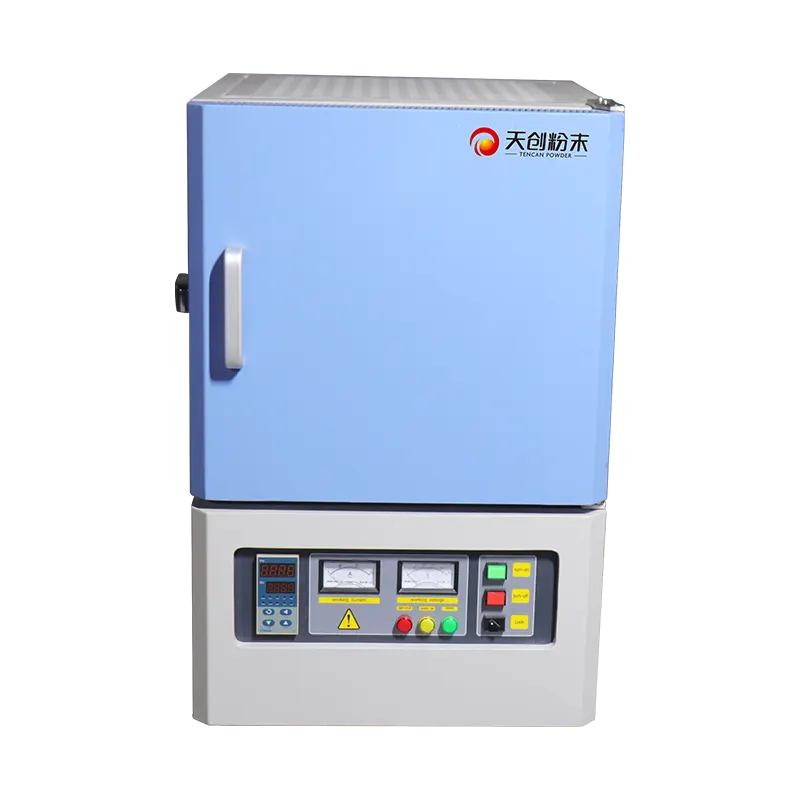
Muffle Furnace: The Reliable Workhorse for High-Temperature Lab and Industrial Thermal Processing

If you've ever needed to burn off organic material leaving only mineral ash, or sinter a ceramic powder into a solid shape, you've likely crossed paths with a muffle furnace. It's the quiet, reliable workhorse of countless labs and industrial settings. But what exactly is it, how does it work, and how do you choose the right one for your needs? Let's walk through it together.
What is a Muffle Furnace? The Core Idea
In simple terms, a muffle furnace is a high-temperature heating device that uses a thermocouple for precise temperature control. Think of it as a very powerful, very precise oven. The name comes from the word "muffle," which means to wrap or cover. In these furnaces, the heating elements are isolated from the chamber's interior, preventing direct radiant heat and contamination. This "muffled" design ensures a clean, uniform heat that's perfect for sensitive materials.
Its primary uses include ashing (determining the mineral content of a sample), sintering (fusing powders into a solid mass), melting, and heat treatment. You'll find it everywhere from quality control labs checking food product purity to materials science labs creating new alloys.
How Does a Muffle Furnace Work?
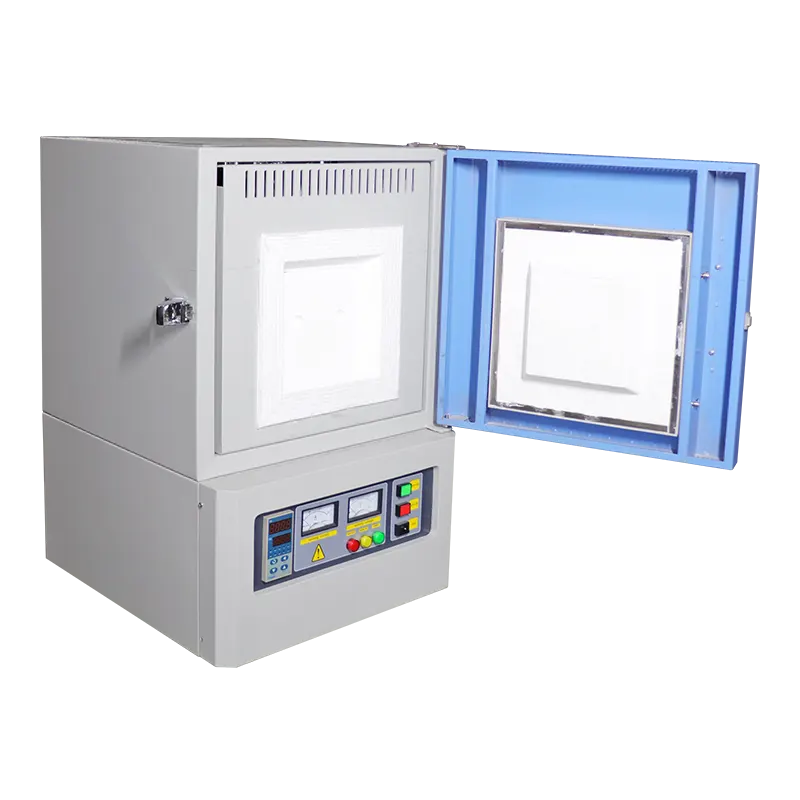
The magic is in the separation. In a standard oven, the heating element heats the air, which in turn heats the object. In a muffle furnace, the heating elements (which could be electric resistance wires like Kanthal, or more powerful silicon carbide or molybdenum disilicide rods for higher temps) are embedded in the insulation surrounding the chamber. The chamber itself is a material like ceramic fiber that holds heat incredibly well. Heat transfers from the elements through the chamber walls via conduction, then convects and radiates uniformly inside.
A thermocouple constantly measures the internal temperature and sends the data to a controller. This controller manages the power to the heating elements, maintaining your set temperature with remarkable accuracy. This system allows for consistent, repeatable results, which is absolutely critical for processes like calcination or loss-on-ignition analysis.
Key Types of Muffle Furnaces
While the basic principle is the same, you'll find a few distinct types tailored for different applications. Choosing the right one is crucial for your specific workflow.
Standard Electric Resistance Furnace
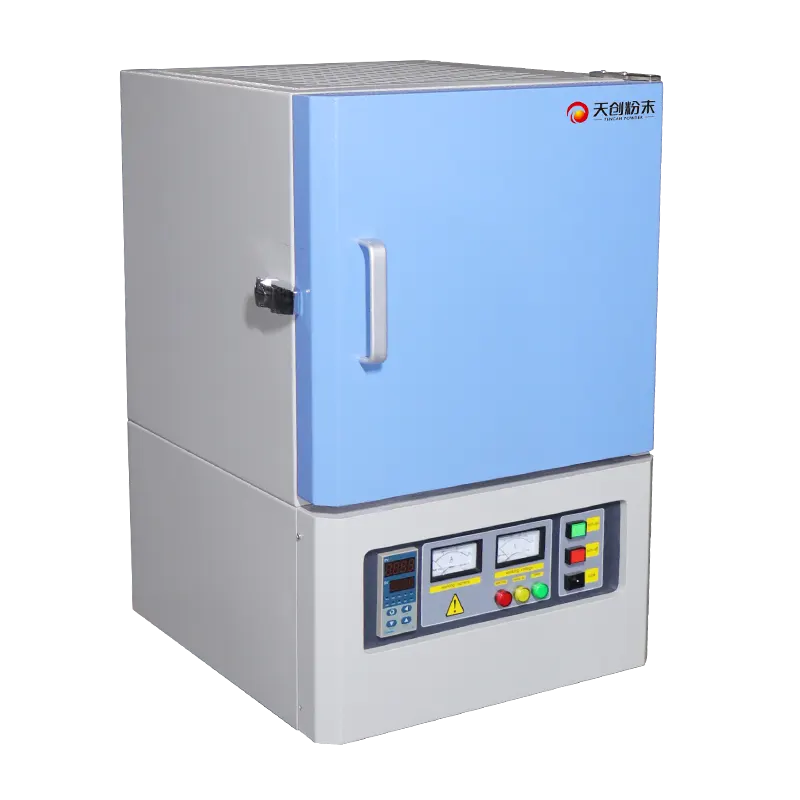
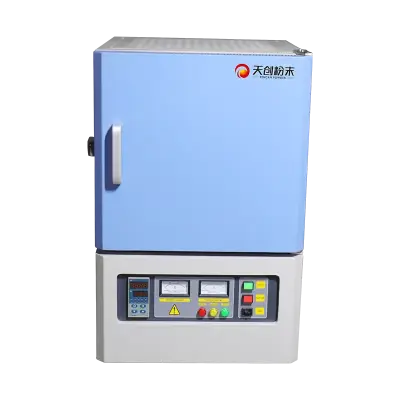
This is the most common type. It uses electric heating elements and is ideal for general-purpose work. Models from 长沙天创粉末技术有限公司 (TENCAN) are built with high-grade insulation and precise PID controllers to ensure temperature stability. They come in various sizes, from compact benchtop units for your lab bench to larger floor models for production.
Microwave Muffle Furnace
Now, this is where things get interesting. The microwave muffle furnace is a modern twist on the classic design. Instead of heating from the outside in using resistive elements, it uses microwave energy to directly heat the material itself. How? It works through the interaction of the microwave field with the material's own molecular structure, causing friction and generating heat from within.
What does this mean for you? Incredible speed and efficiency. A standard muffle furnace might take an hour to reach 1000°C; a microwave muffle furnace can hit the same temperature in under 20 minutes. It's also far more energy efficient, using up to 80% less energy than traditional resistive heating. This makes it a fantastic choice for labs processing high volumes of samples or working with materials that respond well to microwave coupling, like many ceramics, oxides, and battery materials.
The TENCAN microwave muffle furnace features an industrial-grade, continuously adjustable microwave source and an embedded PC control system with a touchscreen interface. You can program multi-segment temperature curves, and a high-precision infrared pyrometer directly measures the sample's temperature for accuracy within ±1°C. Safety is paramount, with multi-layer shielding keeping microwave leakage well below 5 mW/cm².
High-Temperature Furnaces (SiC & MoSi₂ Elements)
For applications requiring extreme heat—think over 1200°C up to 1800°C—you need a different heating element. Furnaces using silicon carbide (SiC) rods are excellent for processes like sintering advanced ceramics, while molybdenum disilicide (MoSi₂) elements are the choice for the very highest temperatures found in metallurgy and specialized materials research. These are built with specialized refractory materials to withstand the intense thermal stress.
Choosing the Right Muffle Furnace: A Practical Guide for You
So, you're in the market for a muffle furnace. Great choice! But how do you pick the right one? Here are the key factors you need to consider:
1. What is Your Maximum Temperature Requirement?
This is the most fundamental question. Are you doing standard ashing around 550°C? Or do you need to sinter zirconia at 1500°C? Your answer will immediately narrow your options. For 1100°C and below, a standard Kanthal-wire furnace is fine. Above that, you'll be looking at SiC or MoSi₂ models. The equipment from TENCAN offers a wide range, but always confirm the max operating temperature for your specific model.
2. What Materials Are You Processing?
The type of material matters enormously. If you're ashing coal or food samples, contamination from the chamber is less of a concern. But if you're preparing high-purity ceramic powders or sintering electronic components, you need a high-alumina or ceramic fiber chamber that won't shed particles and contaminate your work. For materials that oxidize easily, you might need a vacuum or inert gas atmosphere capability.
3. Speed and Efficiency: Is Time Money?
If your lab runs dozens of ashing tests a day, a microwave muffle furnace can be a game-changer. Cutting cycle times from hours to minutes translates directly into increased throughput and lower energy costs. On the other hand, for a small R&D lab that only fires a few samples a week, the standard resistance furnace is more than adequate and likely more cost-effective upfront.
4. Control and Programming Needs
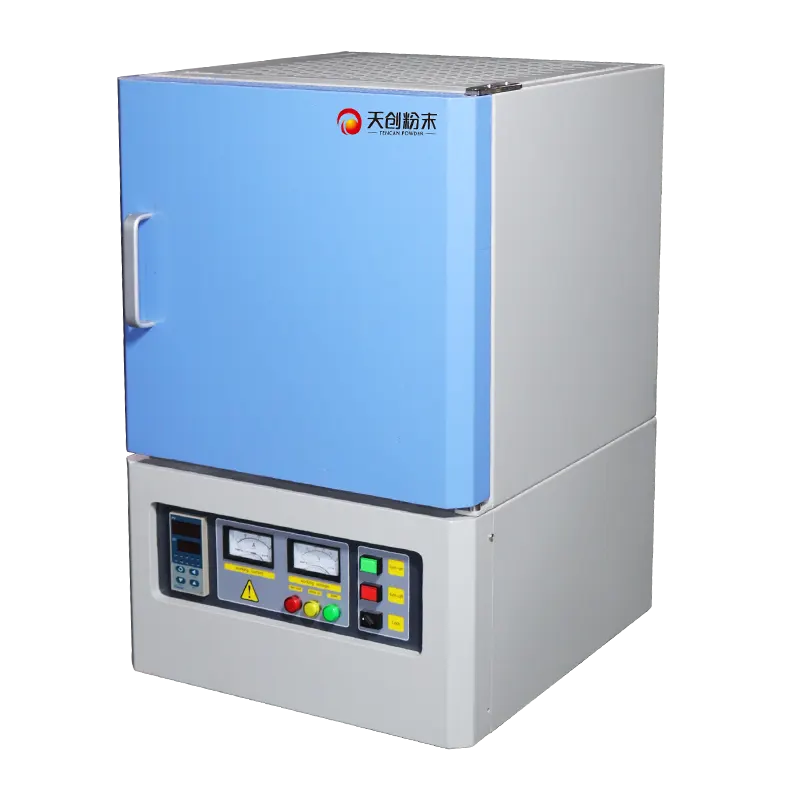
Basic on/off temperature control is a thing of the past. Modern muffle furnaces, including those from TENCAN, come with advanced PID controllers. These allow you to program complex temperature profiles (ramp rates, holds, cooling segments) and store multiple programs. If your process requires a very specific heating curve—like a slow ramp to prevent cracking in a ceramic part—this feature is non-negotiable. Look for models with a clear digital display and data logging capabilities.
5. Chamber Size and Capacity
Think about the volume of your samples. A few small crucibles fit in a 1-liter chamber. Larger batches or bigger components will need a 5-liter, 10-liter, or even larger unit. Don't forget to account for sample holders and adequate air circulation for even heating. A common mistake is buying a furnace that's too small for the job, leading to incomplete or uneven processing.
Practical Applications Across Industries
The versatility of the muffle furnace makes it a star in many fields:
- Materials Science: Sintering of ceramics (like Al₂O₃, ZrO₂, ZnO), synthesis of inorganic compounds, and crystal growth.
- Metallurgy: Heat treatment of metals (annealing, hardening), melting alloys, and performing loss-on-ignition tests.
- Chemical & Pharmaceutical: Ashing of pharmaceutical products, determination of sulfated ash, and catalyst calcination.
- Environmental Testing: Ashing of water treatment samples, soil analysis, and processing of filter residues.
- Battery Materials: The microwave muffle furnace is particularly effective for the rapid synthesis of lithium-ion battery cathode materials like LiCoO₂ and LiMn₂O₄, where fast and uniform heating can improve product consistency.
Final Thoughts
A muffle furnace is an investment in the quality and consistency of your work. Whether you decide on a classic electric resistance model for its simplicity and reliability, or a cutting-edge microwave muffle furnace for its incredible speed and efficiency, understanding the core principles and your own needs is the key to a wise purchase. Take your time to evaluate the factors we discussed, and you'll find the perfect high-temperature partner for your lab or production line.
If you have specific questions about which type of muffle furnace—or perhaps a TENCAN model—would suit your unique material or process, don't hesitate to reach out to our team. We're always happy to help you heat things up, the right way.
Related Products
Get In Touch
Our professional team will reply to you within one business day. Please feel free to contact us!