
The Ultimate Guide to Acrylic Glove Boxes: Benefits, Applications, and Buying Tips

What Is an Acrylic Glove Box and Why Do You Need One?
Have you ever worked with materials that instantly react with moisture or oxygen in the air? Maybe you’re handling air-sensitive chemicals, assembling lithium batteries, or preparing samples for spectroscopy. That’s where an acrylic glove box comes in. Think of it as a transparent, sealed workspace that lets you manipulate objects inside without exposing them to the outside environment. The magic is in the gloves—built into the front panel—so you can reach in and work while the interior stays perfectly controlled.
Acrylic glove boxes are popular because they offer excellent visibility and chemical resistance at a relatively lower cost compared to their stainless steel cousins. They’re perfect for labs that need a reliable inert atmosphere (like argon or nitrogen) but don’t require the extreme vacuum capabilities of metal chambers. In this guide, we’ll walk you through what makes an acrylic glove box special, how it works, and how to choose the right one for your work.
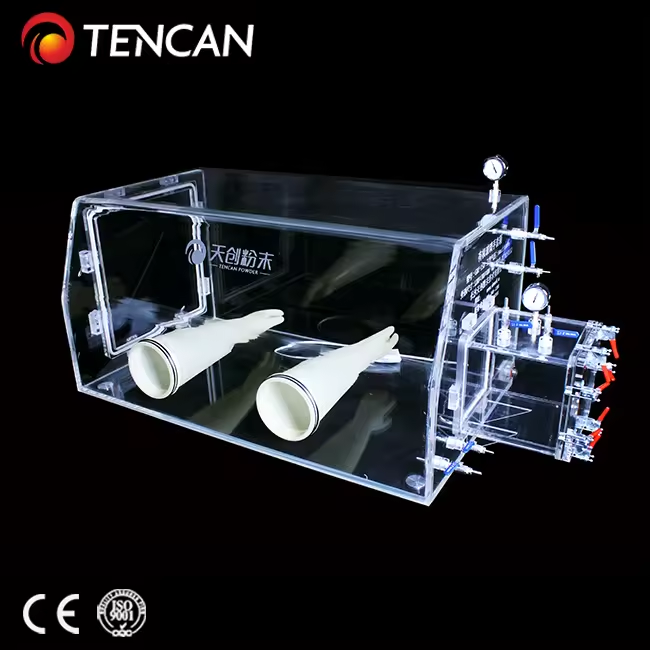
How Does an Acrylic Glove Box Work?
At its core, an acrylic glove box creates a sealed enclosure that can be filled with an inert gas (like argon or nitrogen) to displace oxygen and moisture. The key components include:
- Main chamber – made from transparent acrylic (PMMA) for full visibility.
- Glove ports – fitted with durable gloves so you can handle items inside.
- Antechamber (transfer port) – a small lock that lets you bring materials in and out without breaking the inert atmosphere.
- Gas purification system (optional) – circulates the internal gas through a regenerable filter to maintain <1 ppm O₂ and H₂O.
- Control unit – often a touch screen that monitors O₂, H₂O, and pressure, and automates purging and regeneration.
When you start up, the system first purges the chamber with inert gas until the oxygen and moisture levels drop to your target. Then the purification system continuously recirculates the gas, trapping any contaminants that leak in or are released from samples. The result? A stable, ultra‑low O₂/H₂O environment that can be kept running for weeks or months.
Key Advantages of an Acrylic Glove Box
1. Unmatched Visibility
Because the chamber is made from clear acrylic, you can see your work from every angle. This is a huge advantage when you’re doing fine manipulations like soldering, micro‑assembly, or crystal growth. No need to peer through a small window—you get a full panoramic view.
2. Lightweight and Affordable
Compared to stainless steel chambers, acrylic is lighter and less expensive to fabricate. This makes acrylic glove boxes a great entry‑level option for labs that need a controlled atmosphere but have budget constraints. Plus, the acrylic is resistant to many chemicals and won’t corrode.
3. Easy to Customize
Acrylic can be easily cut and drilled, so manufacturers like TENCAN offer a variety of sizes and port configurations. Need extra glove ports? Want a larger antechamber? Many acrylic glove boxes can be tailored to your specific needs without breaking the bank.
4. Good for UV Light Applications
Acrylic transmits ultraviolet light, which is useful if you need to cure adhesives or initiate photochemical reactions inside the box. Stainless steel boxes block UV completely.
Applications of Acrylic Glove Boxes
The range of uses is surprisingly broad. Here are just a few fields that rely on acrylic glove boxes:
- Organic metal chemistry – handling air‑sensitive catalysts and reagents.
- Lithium battery research – assembling cells without exposing electrodes to moisture.
- Medical device processing – sterilizing or packaging oxygen‑sensitive components.
- OLED and solar cell fabrication – depositing organic layers in a moisture‑free environment.
- Nuclear industry – handling radioactive powders safely.
- Pharmaceutical synthesis – preparing hygroscopic drug compounds.
No matter your field, if your work involves air‑sensitive materials, an acrylic glove box can be a game‑changer.
Acrylic vs. Stainless Steel Glove Boxes: Which One Is Right for You?
| Feature | Acrylic Glove Box | Stainless Steel Glove Box |
|---|---|---|
| Visibility | Excellent (full transparency) | Limited (small windows) |
| Chemical Resistance | Good (resists many solvents) | Excellent (corrosion proof) |
| Weight | Light | Heavy |
| Cost | Lower | Higher |
| Vacuum Capability | Limited (not for high vacuum) | Full vacuum compatible |
| UV Transmission | Yes | No |
If you need to do heavy vacuum work (e.g., < 1 mbar) or work with extremely aggressive chemicals, a stainless steel vacuum glove box might be better. But for most routine inert atmosphere work, an acrylic box is more than sufficient—and far more pleasant to use thanks to the crystal‑clear walls.
What to Look for When Buying an Acrylic Glove Box
Choosing the right glove box can feel overwhelming, but if you focus on a few key specs, it becomes much simpler. Here are the most important factors:
Chamber Size
Consider the largest items you’ll put inside. Standard sizes like 650 mm width are good for benchtop work, while 1500 mm width offers room for larger equipment. TENCAN offers both, and they can also make custom sizes.
Purification System
If you need O₂ and H₂O levels below 1 ppm, you’ll want a box with a built‑in purification system. Look for a model with an automatic regeneration feature—this saves you the hassle of manually replacing filters every few months. The glove box with purification system from TENCAN maintains <1 ppm for both O₂ and H₂O and regenerates the purifier automatically when needed.
Control and Monitoring
A color touch screen that shows real‑time O₂, H₂O, and pressure data makes your life a lot easier. Many modern boxes also have a sleep mode that cuts power consumption by up to 90% when the box isn’t actively in use.
Leak Rate
Low leak rate is critical for maintaining low contaminant levels. Look for a leak rate below 0.01 vol%/hour. TENCAN’s boxes are engineered to this high standard.
Glove Material and Ports
Make sure the gloves are compatible with the chemicals you’ll be handling. Hypalon, butyl, and neoprene are common options. Also check how many glove ports you need—two for solo work, four if two people need to operate simultaneously.
Technical Specifications of TENCAN Acrylic Glove Box
TENCAN’s acrylic glove box is a perfect example of a well‑designed system. Let’s look at its technical highlights:
| Parameter | Value |
|---|---|
| Chamber Material | Acrylic (PMMA) |
| Standard Dimensions | 650 mm (W) × 600 mm (D) × 700 mm (H) / 1500 mm (W) × 750 mm (D) × 900 mm (H) |
| Purity Achievable | O₂ < 1 ppm, H₂O < 1 ppm |
| Leak Rate | < 0.01 vol%/hour |
| Control System | Color touch screen + PLC |
| Automatic Purifier Regeneration | Yes (typically once per year) |
| Antechamber | Automatic door control |
| Vacuum Pump | NVD‑4 (for antechamber & purging) |
| Optional | O₂ and H₂O analyzers, additional glove ports, custom sizes |
This combination of features makes TENCAN’s acrylic glove box a versatile and reliable partner for both research and production.
How to Set Up and Maintain Your Acrylic Glove Box
Setting up a new glove box is straightforward:
- Place the box on a clean, level bench.
- Connect the inert gas (argon or nitrogen) to the inlet.
- Plug in the vacuum pump and control unit.
- Run the automatic purge cycle to remove air.
- Let the purification system stabilize—typically within a few hours.
Maintenance is mostly about checking the purifier status. When it’s time to regenerate, the system will alert you. Simply follow the on‑screen instructions to regenerate the purifier (usually takes a few hours, done once or twice a year). Keep the gloves clean and replace them if they show signs of wear. With proper care, your acrylic glove box will serve you for many years.
Common Questions About Acrylic Glove Boxes
Q: Can I put an oven or furnace inside an acrylic glove box?
Yes, but you’ll need to ensure the acrylic doesn’t get too hot (softens above 80 °C). Many researchers place small hot plates or tube furnaces inside, but they must be well‑insulated. For high‑temperature work, consider a stainless steel glove box instead.
Q: How long does it take to reach <1 ppm O₂/H₂O after opening the chamber?
With a good purification system, it typically takes 30–60 minutes after closing the door and initiating a purge cycle. The exact time depends on the box volume and the efficiency of your purifier.
Q: Can I use an acrylic glove box with corrosive gases like HCl or Cl₂?
No. Acrylic is attacked by strong acids, halogens, and some solvents. Stick with stainless steel for aggressive chemicals. Acrylic works fine for most inert gases, organic solvents (if used carefully), and many fine chemicals.
Q: Do I need a purification system, or can I just keep flowing inert gas?
You can use a continuous flow of inert gas to keep O₂ levels around 10–100 ppm, but for true <1 ppm purity you absolutely need a recirculating purification system. The upfront cost is higher, but it saves a huge amount of gas in the long run.
Why Choose TENCAN for Your Acrylic Glove Box?
At 长沙天创粉末技术有限公司 (TENCAN), we have been designing and manufacturing high‑quality glove boxes for years. Our acrylic glove boxes are built with precision, feature robust controls, and are backed by a one‑year warranty and lifetime technical support. We also offer customization—whether you need a special chamber size, extra ports, or integration with other lab equipment. Thousands of labs around the world trust TENCAN for their inert atmosphere needs, and we’d love to help you too.
To explore our full range, check out the Acrylic Glove Box product page. If you have specific requirements, don’t hesitate to reach out—our team will work with you to find the perfect solution.
Final Thoughts
An acrylic glove box is more than just a sealed box; it’s a window into a world without oxygen and moisture. Whether you’re a seasoned chemist or a materials scientist starting out, having a reliable inert atmosphere workstation can open up new possibilities for your experiments. With the right choice—like the acrylic glove box from TENCAN—you’ll get clear visibility, excellent purity, and long‑term value. We hope this guide has helped you understand what to look for and why an acrylic glove box might be exactly what your lab needs.
Happy experimenting!
Related Products
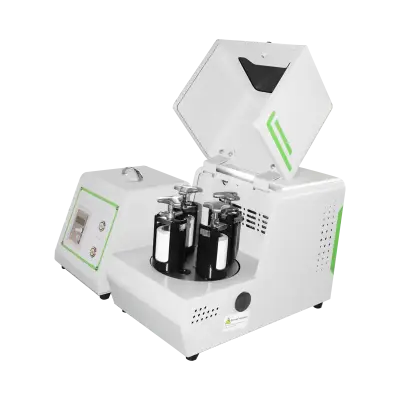
Micro Planetary Ball Mill
Micro planetary ball mill for mixing, fine grinding, and sample preparation. Compact, efficient, low noise. Ideal for research labs & universities. Supports vacuum grinding with dedicated jars.
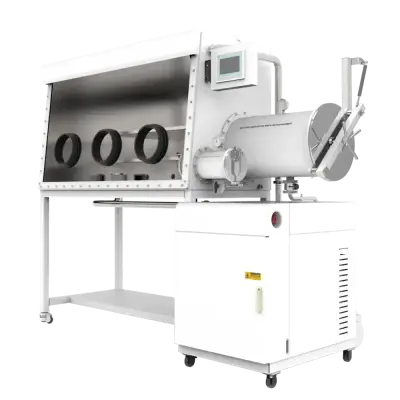
glove box with purification system
Sealed glove box integrated with gas purification system for inert atmosphere. Effectively removes O2 and H2O to under 1 ppm. Ideal for sensitive material handling, battery research, and semiconductor manufacturing.
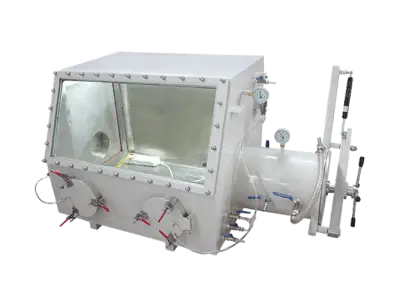
Stainless steel vacuum glove box
Stainless steel vacuum glove box for high-purity inert gas environments. Circulates and filters active substances, ideal for lab research, battery assembly, and material handling.
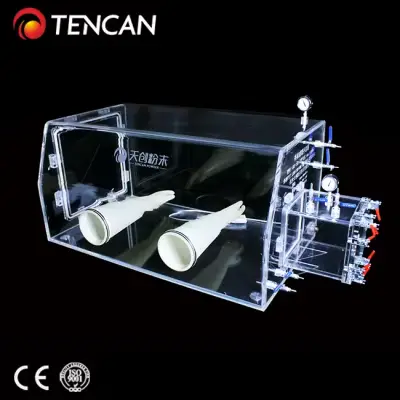
Acrylic glove box
Acrylic vacuum glove box enables safe sample handling and operation in an inert, oxygen-free, moisture-free environment for precise scientific experiments.
Get In Touch
Our professional team will reply to you within one business day. Please feel free to contact us!