

What is a Small Grinder? A Versatile Grinding Equipment for Laboratory Sample Preparation and Small-Batch Material Processing
Introduction
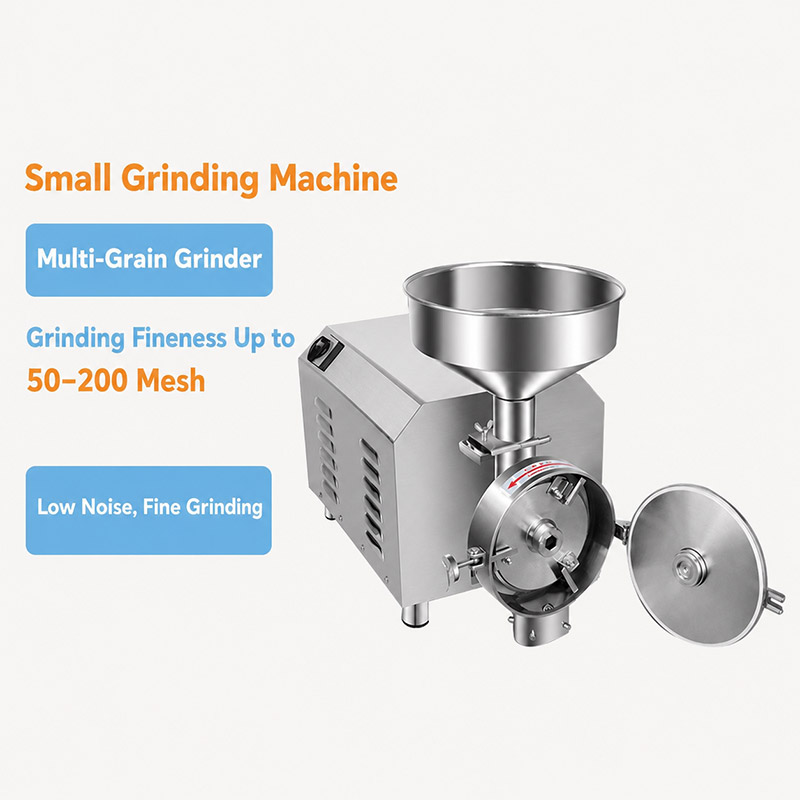
From its core, a small grinder is a compact yet powerful grinding equipment designed for laboratory sample preparation, small-batch material processing, and research applications. Laboratories, universities, and pilot-scale production facilities use it to reduce bulk solid materials into finer particles, powders, or homogeneous mixtures. Unlike large-scale industrial mills, the small grinder offers precise control over particle size distribution, minimal sample loss, and easy cleaning between batches, making it indispensable for quality control, formulation development, and material characterization.
Core Function and Working Principle
The primary function of a small grinder is to transform solid materials from a coarse or lumpy state into a fine powder or slurry. The working principle typically involves a combination of impact, shear, and friction forces. Inside the grinding chamber, a rotating rotor or shaft driven by a motor agitates the material against stationary surfaces or grinding media (such as balls, beads, or blades). The speed of rotation, the geometry of the grinding elements, and the residence time can be adjusted to achieve the desired fineness.
For example, in a blade-type small grinder, high-speed rotating blades cut and shear the material until it passes through a mesh screen. In a ball mill type, the chamber rotates or vibrates, causing the grinding media to collide with the material. Many modern small grinders also feature adjustable speed controls and programmable timers, allowing users to replicate processes and maintain consistency between batches. The final particle size can range from a few millimeters down to sub-micron levels, depending on the machine design and operational parameters.
Main Types and Configurations
Small grinders come in several configurations, each suited to different material characteristics and processing requirements:
Blade / Hammer Mills
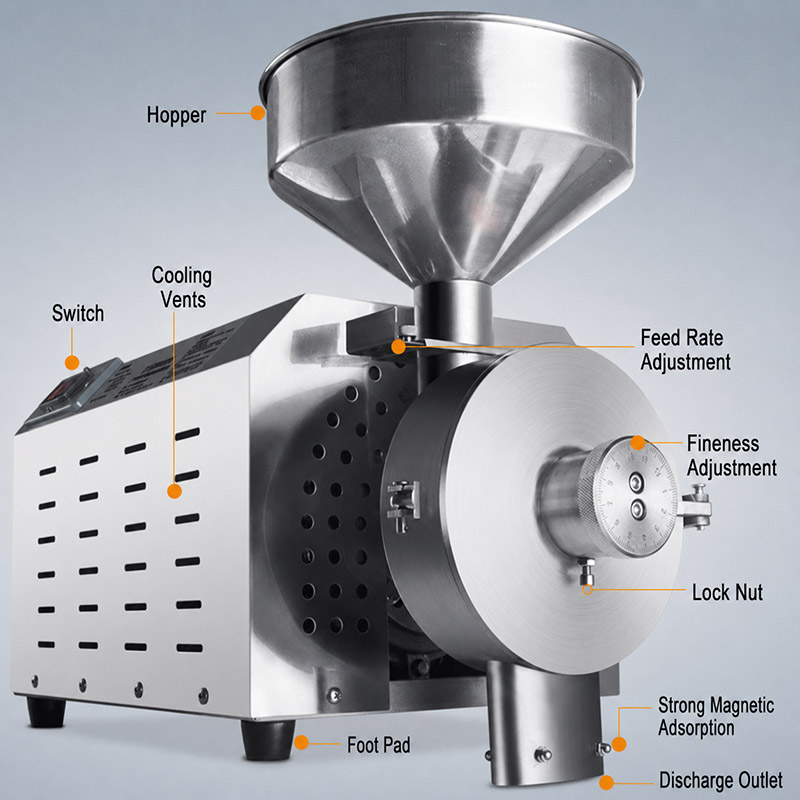
These utilize sharp blades or hammers to cut and impact brittle, fibrous, or soft materials. They are ideal for grinding grains, herbs, plastics, and chemicals. The particle size is controlled by interchangeable screens at the discharge outlet.
Disc / Plate Mills
Two grooved discs rotate relative to each other, shearing and crushing the material as it passes between them. Disc mills are excellent for dry and wet grinding of minerals, ores, and coal, offering adjustable gap settings for fineness control.
Ball Mills (Planetary / Roller)
For ultra-fine grinding and mixing, small planetary or roller ball mills use spherical grinding media. They are widely used in nanotechnology, ceramics, and battery material research. The grinding jars can be made of agate, zirconia, stainless steel, etc., to avoid contamination.
Mortar Grinders
An automated version of the traditional mortar and pestle, these grinders apply pressure and friction between a rotating pestle and a stationary bowl. They are gentle on samples and suitable for soft, sticky, or heat-sensitive materials.
Key Performance Indicators and Selection Criteria
When selecting a small grinder for your application, consider the following factors:
- Throughput: The sample volume per batch or continuous feed rate. Typical laboratory small grinders process from a few grams to several kilograms per hour.
- Particle Size Control: The achievable fineness and the ability to adjust the output. Look for machines with variable speed, interchangeable screens, or gap adjustments.
- Material Compatibility: The grinder must handle the hardness, abrasiveness, moisture content, and temperature sensitivity of your material. For corrosive samples, stainless steel or ceramic contact parts are recommended.
- Energy Efficiency & Noise: Compact motors and optimized chamber designs reduce power consumption and noise levels, important for laboratory environments.
- Automation & Programmability: Features like digital timers, speed presets, and automatic reversal improve reproducibility and ease of use.
- Cleaning & Maintenance: Quick-release chambers, detachable grinding parts, and smooth surfaces facilitate rapid cleaning between different samples to avoid cross-contamination.
Application Fields and Selection Advice
Small grinders are widely used in:
- Pharmaceutical & Biomedical: Grinding tablets, herbs, tissues, and excipients for formulation and analysis.
- Chemical & Materials Science: Preparing catalysts, pigments, ceramics, and composite powders.
- Food & Agriculture: Milling grains, spices, seeds, and soil samples.
- Geology & Mining: Crushing ores and rocks for assay and mineral processing tests.
- Environmental & Forensics: Homogenizing soil, waste, and forensic evidence.
For users who need routine grinding of dry, brittle materials, a blade or disc mill offers speed and simplicity. If you require ultra-fine particles (sub-micron) or work with suspensions, a small ball mill or planetary mill is more suitable. Always consider the material volume: if you only handle batches under 100 grams, a compact mortar grinder or micro mill is cost-effective. For larger throughput, choose a model with a higher capacity hopper and motor power.
References
Related Products
Get In Touch
Our professional team will reply to you within one business day. Please feel free to contact us!