

What is a Manual Tablet Press? A Laboratory Press for Powder Pellet Preparation
What Is a Manual Tablet Press?
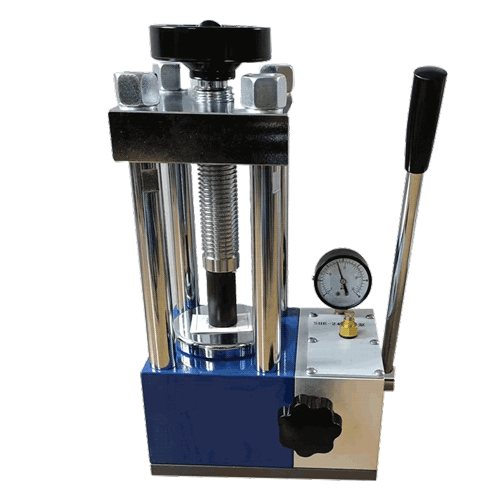
From its core, a Manual Tablet Press is a laboratory press-forming device that compacts loose powder into a cohesive tablet, pellet, or disc. It is used in materials research, ceramics, battery development, spectroscopy, and small-scale sample preparation when a user needs a compact, reproducible specimen rather than high-volume production output. Unlike an automatic rotary press, it relies on an operator to fill the die, apply pressure, hold the load, and release the compact. This makes it flexible for small batches, difficult powders, and frequent changes in sample size or composition.
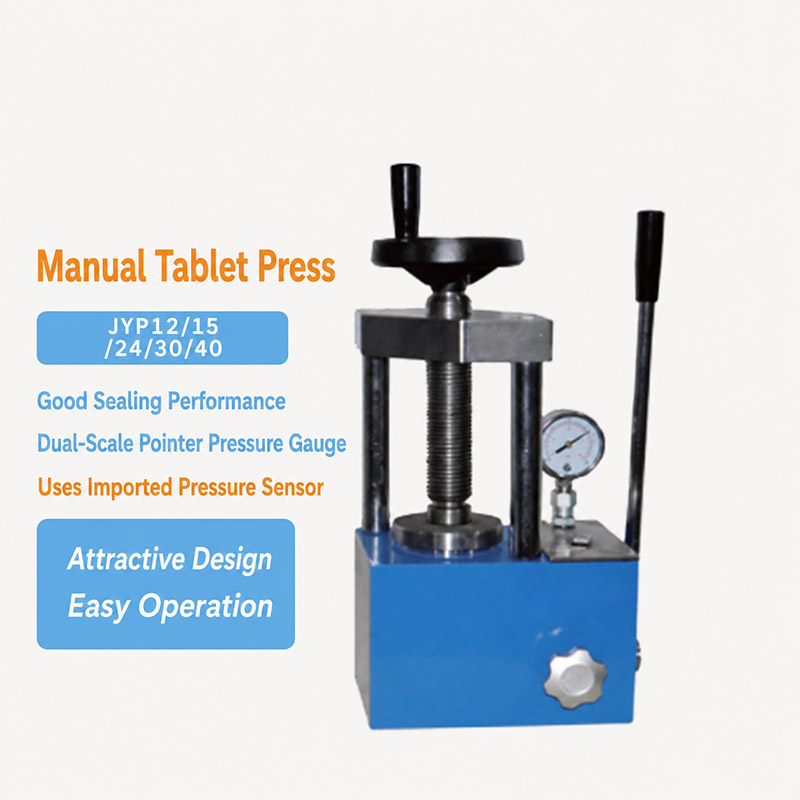
The word manual describes the operating principle, not a lack of engineering. A typical unit combines a stable frame, a guided punch-and-die set, a pressure-generating mechanism, and a means of reading or controlling the applied load. The TENCAN Manual Tablet Press appears in the press-forming product category, and its product documentation should be consulted for the exact configuration, tooling, and operating limits. Because manual presses can differ in force mechanism, gauge type, and die format, buyers should confirm those details before selecting a model.
Core Function: From Loose Powder to a Coherent Compact
A powder is not a solid in the usual sense. It is a collection of particles with voids between them, and those voids can occupy a large share of the apparent volume. When a manual tablet press compresses the powder, the punch reduces the volume inside the die. Particles rearrange into a denser packing, then fracture, deform, and press against one another. The result is a compact whose density, strength, and surface quality depend on the powder and on how the load is applied.
The press does not melt, sinter, or chemically transform the material in the way a furnace would. It creates a green compact, meaning a shaped body held together by mechanical interlocking, cold welding, and the deformation of particles. That compact may be strong enough for handling, measurement, or further processing, but its final properties usually depend on later steps such as sintering, curing, or analysis. Fine particles, a suitable binder or lubricant, and controlled moisture can improve compact quality, while very hard, elastic, or sticky powders may require special tooling or conditioning.
Three process conditions matter most in manual pressing: powder preparation, die filling, and load application. A press can only compact what has been placed in the die, so agglomerates should be broken down and the sample should be mixed consistently. Uneven filling produces density gradients, and those gradients can lead to weak edges, cracks, or inconsistent thickness. The applied force, the dwell time at maximum load, and the release rate all influence how the compact responds when the pressure is removed.
How the Pressing Cycle Works
Step 1: Powder Preparation and Die Filling
The cycle begins before the handle, lever, or pump is touched. The operator weighs or measures the sample, breaks up lumps, and conditions the powder if needed. For some materials, a small amount of lubricant is blended in or applied to the die wall to reduce friction. The powder is then poured into the die cavity and leveled so that the fill depth is consistent. Fill depth is important because it sets the amount of material and the initial volume; an overfilled die may produce a tablet that is too thick or too dense, while an underfilled die may not develop enough strength.
Good filling practice reduces segregation. If coarse and fine particles separate during pouring, one part of the tablet may press differently from another. Tapping the die gently or using a controlled filling method can help, but excessive vibration may cause finer particles to settle at the bottom. In laboratory work, it is useful to record the sample mass and fill depth so that the same conditions can be repeated later.
Step 2: Compression and Dwell
During compression, the punch moves into the die and the powder volume decreases. Air escapes through the clearances and pores, particles slide and rearrange, and the load begins to build. As pressure rises, particles may fracture into smaller fragments, deform plastically, or deform elastically. Plastic deformation helps create contact area and bonding, while elastic recovery can cause the compact to expand slightly when the load is removed. A short hold at maximum load, called dwell, gives the material time to densify and helps reduce spring-back.
Manual operation requires a steady hand. The load should be increased smoothly rather than in abrupt steps, because a sudden force can trap air and create internal cracks. The operator should also avoid exceeding the rated capacity of the press or tooling. A pressure gauge or force indicator, if present, provides a reference, but the reading must be interpreted with the die area in mind. The same gauge pressure applied to a small die and a large die produces very different stresses in the powder.
Step 3: Release, Ejection, and Inspection
After the dwell, the load is released slowly. A fast release can allow elastic recovery to outrun the compact's strength, producing capping, lamination, or edge cracks. The punch is then withdrawn and the compact is ejected. Ejection should be smooth and supported, because a tablet that is pushed out unevenly may be damaged even if it was formed correctly. Some dies use a lower punch or base plate that lifts the compact; others require careful removal with the punch.
Inspection follows. The operator checks mass, thickness, diameter, shape, and surface appearance. A tablet with cracks, chips, or a powdery surface may need a different load, a slower release, more lubricant, or better powder conditioning. If the compact is too soft, the cause may be insufficient force, too little dwell, poor particle bonding, or a fill depth that is too low. If it is too dense or shows dark bands, the load may be excessive or the powder may be trapping air.
What the Operator Controls
Four controls define most manual pressing runs: fill depth, applied force, dwell time, and release rate. Fill depth controls the amount of powder and the final thickness. Applied force controls density and strength, within the limits of the press and tooling. Dwell time allows the compact to stabilize under load. Release rate influences whether the compact survives elastic recovery. Skilled operators develop a consistent rhythm, but written settings and sample records are more reliable than memory, especially when several people share the equipment.
Types and Configurations of Manual Tablet Presses
Manual tablet presses are commonly grouped by how they generate force. A lever- or toggle-assisted press uses mechanical advantage, so the operator can apply a substantial load with a relatively short handle movement. A handwheel or screw-driven press uses rotation to advance the punch, which can provide fine control over travel and thickness. A hydraulic hand-pump press uses fluid pressure to build force and may include a gauge that makes the load easier to monitor. Each style has trade-offs in effort, speed, maximum force, and sensitivity to powder behavior.
Tooling format is the second major distinction. A single-punch press with interchangeable dies can produce round, square, rectangular, or custom shapes, while a dedicated pellet die is optimized for one diameter or one type of sample. Split dies can make ejection and cleaning easier, and polished die walls reduce friction. The right choice depends on the sample, the required compact geometry, and the number of samples per day. Buyers should confirm that the die diameter, fill depth, and punch shape they need are supported by the press frame and by the manufacturer's tooling range.
Key Components and Tooling
The frame and guide system keep the punch aligned with the die. Misalignment can damage tooling and produce tablets with uneven density, so a rigid frame and smooth guide are important even on a manual press. The punch and die set forms the cavity and transfers force to the powder. A pressure gauge or force readout, when supplied, gives the operator a reference for repeatability. Ejection features, such as a lower punch or base plate, help remove the compact without damage. A guard or shield protects the operator if a brittle compact or die component fails under load.
Tooling material and finish also matter. Hardened steel is common for general laboratory work, while stainless steel or carbide may be preferred for abrasive, corrosive, or high-purity samples. Surface finish affects friction and ejection, and clearances affect air escape and wear. Die diameter, fill depth, and punch geometry should be selected together rather than independently. Very small dies concentrate force over a small area, while large dies require more total force to reach the same pressure. Cleaning and storage deserve attention as well: punches should be protected from nicks, dies should be dried after cleaning, and the press mechanism should be kept free of abrasive dust.
Key Performance Indicators and Selection Criteria
Compression Force and Pressure
The force rating of a manual press is a primary selection point, but it should not be read alone. Force is the total load applied by the punch, while pressure is force divided by the compact's cross-sectional area. A press with a modest force rating may still reach high pressure in a small die, and a large die may need much more force to reach the same pressure. Ask for the force rating, the recommended working range, and the maximum pressure for the specific die being considered. Also confirm how the gauge is calibrated and whether the press has a mechanical stop or relief feature that protects it from overload.
Tablet Size, Fill Depth, and Tooling Range
The usable tablet size depends on die diameter, fill depth, compact thickness, and ejection height. A press that is excellent for small spectroscopic pellets may not have enough fill depth for a thick ceramic green body. Conversely, a large-frame press may be inconvenient for tiny samples if the tooling and gauge are not sensitive enough. Check the minimum and maximum die sizes, the available punch shapes, and whether custom tooling can be supplied. If the application requires a specific diameter or a rectangular part, confirm the tooling before ordering the press.
Reproducibility and Operator Control
Manual presses depend on operator technique, so reproducibility comes from controlled settings and consistent practice. Positive stops, a readable gauge, a dwell timer, and a smooth release mechanism can reduce variation. For quality-control work, the ability to record force, fill depth, and cycle time may be as important as the maximum load. If many identical samples are needed, an automatic or semi-automatic press may be a better fit, while a manual press is often preferred for research where the sample changes frequently. The key question is whether the operator can repeat the same cycle closely enough for the application.
Throughput, Ergonomics, and Maintenance
Throughput on a manual press is limited by the operator's pace, the number of samples, and the effort required per cycle. A press that is comfortable for a few pellets may become tiring over a full day of repetitive work. Handle height, bench space, weight, and the force needed to reach the working load all affect usability. Maintenance should be simple: accessible guides, replaceable wear parts, and clear cleaning instructions. Buyers should also ask about spare punches, die availability, lubrication requirements, and operator training. A well-documented press is easier to maintain and safer to use over its service life.
Applications and Selection Advice
Manual tablet presses are used where small, well-defined compacts are needed for testing, analysis, or further processing. In materials science and ceramics, they form green bodies for density measurements, sintering trials, and property testing. In battery and catalyst research, they prepare test pellets under controlled conditions. In spectroscopy and analytical laboratories, they can produce transparent or uniform discs for measurement when the sample and method are suitable. They are also useful in teaching and method development because the operator can see and feel how powder behavior changes with load, fill depth, and dwell.
Selection should start with the sample and the target compact, not with the largest force rating available. Define the required diameter, thickness, and shape, then estimate the pressure needed for the powder. Confirm that the press and tooling can deliver that pressure safely. Consider powder flow, abrasiveness, moisture sensitivity, and cleaning needs. For occasional samples, a simple manual press with a clear gauge and interchangeable tooling may be sufficient. For repetitive laboratory work, a hydraulic model with controlled release and stable force indication may be more comfortable. For high-volume production, a manual press is usually not the right choice; automatic presses are designed for that duty.
Frequently Asked Questions
Can every powder be pressed on a manual tablet press?
No. Free-flowing, deformable, and properly conditioned powders are easier to press. Hard abrasive powders increase tooling wear, sticky powders may adhere to the die, and elastic powders may crack after release. Fibrous or very low-density materials may need a binder, a lubricant, or a different forming method. A small trial is the best way to confirm whether a powder is suitable.
How do I know how much force to use?
There is no single force value that works for every powder. Start at a low load, increase gradually, and inspect the compact after each change. The target is usually the lowest force that gives acceptable strength, density, and surface quality without cracking or excessive wear. Record the gauge reading and die size so the result can be repeated. Always stay within the press and tooling ratings.
Why do pellets crack or cap?
Cracking and capping often come from trapped air, fast release, excessive force, low binder content, elastic recovery, or friction against the die wall. Try a slower load and release, a longer dwell, better powder conditioning, or a suitable lubricant. If the problem continues, reduce the fill depth or check whether the die and punch are properly aligned and clean.
Is a manual press suitable for production?
Generally, no. A manual tablet press is best suited to research, sample preparation, method development, and small batches. Its output depends on the operator and can vary from cycle to cycle. Production usually requires an automatic press with consistent filling, controlled force, and higher cycle rates.
How should the press and tooling be maintained?
Clean the die and punches after each use, dry them thoroughly, and protect the working surfaces from nicks and corrosion. Keep abrasive dust out of the guides and pressure mechanism, and lubricate only where the manufacturer recommends. Check alignment, gauge condition, and wear parts regularly. Follow the operating manual for load limits, cleaning agents, and storage.
Where to Learn More
For product details, available tooling, and operating information, visit the Manual Tablet Press product page. A manual tablet press is a simple idea executed with precision: fill a die, apply a controlled load, release carefully, and inspect the result. When the press, tooling, and powder are matched correctly, it remains a practical tool for laboratories that need flexible, small-scale powder compaction.
Related Products
Get In Touch
Our professional team will reply to you within one business day. Please feel free to contact us!