

What is a Laboratory Planetary Grinder? A High-Energy Grinding Device for Ultra-Fine Powder Preparation in R&D Laboratories
What is a Laboratory Planetary Grinder? A High-Energy Grinding Device for Ultra-Fine Powder Preparation in R&D Laboratories
At its core, a laboratory planetary grinder is a specialized, compact high-energy ball mill designed for the ultra-fine grinding, mixing, and mechanical alloying of solid materials. Laboratories and research institutions use it to transform coarse powders (typically up to 10 mm feed size) into submicron or even nanometer-level fine particles, with exceptional efficiency and reproducibility. Unlike conventional ball mills, a planetary grinder generates extremely high centrifugal forces through a unique planetary motion, enabling rapid particle size reduction that is essential for advanced materials development, pharmaceutical formulation, and chemical synthesis.
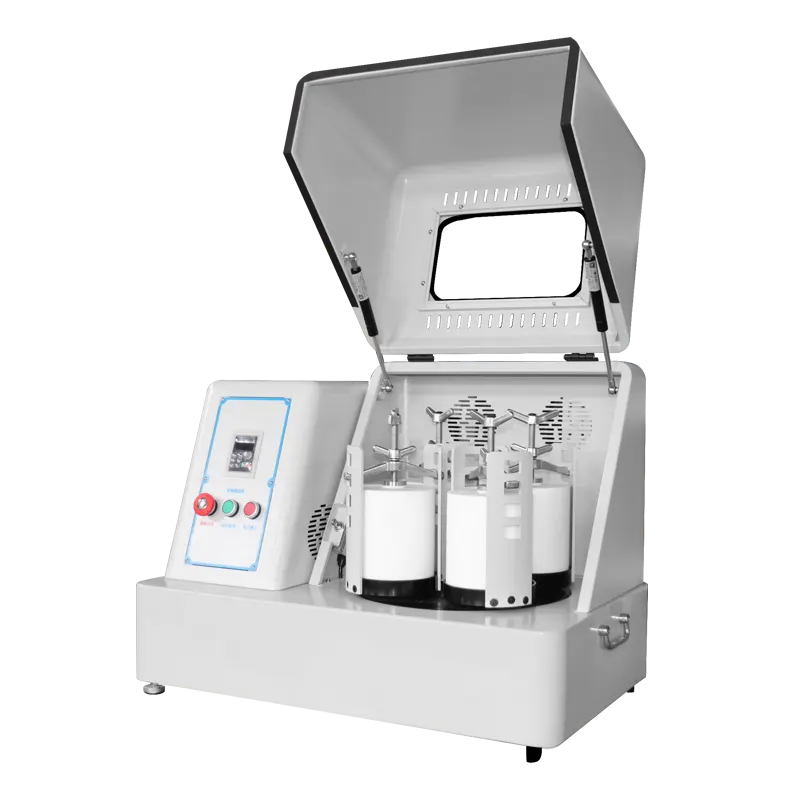
Core Function and Working Principle
The laboratory planetary grinder reduces material from coarse granular or powder form to a fine or ultra-fine powder. Its distinguishing feature is the planetary motion: the main rotating disk (sun wheel) carries multiple grinding jars (planets) that not only revolve around the center but also rotate on their own axes in the opposite direction. This dual motion creates a complex three-dimensional trajectory, subjecting the grinding balls and material to intense centrifugal and Coriolis forces. The acceleration can reach up to 64 times the force of gravity (64 g), which is far higher than traditional ball mills.
Inside the sealed grinding jar, the balls (made of materials like zirconia, agate, stainless steel, or tungsten carbide) collide, shear, and rub against the powder particles. The combined impact and friction break down the particles into finer sizes. The process can be performed dry or wet, and the final particle size can be controlled by adjusting rotation speed, grinding time, ball-to-powder ratio, and the size/material of the balls. For wet grinding, a liquid medium (e.g., water, ethanol, or isopropanol) is added to prevent agglomeration and achieve dispersions down to the nanoscale.
Key process parameters that influence the final product include:
- Rotation speed: Higher speeds increase energy input and finer grinding, but may cause excessive heating.
- Grinding time: Extended time yields finer particles, but beyond a certain point, reverse agglomeration may occur (known as "inverse grinding").
- Ball-to-powder ratio: Typically 10:1 to 20:1 by weight; higher ratios increase collision frequency.
- Grinding atmosphere: Many planetary grinders support inert gas purging or vacuum grinding to prevent oxidation.
Main Types and Configurations
Laboratory planetary grinders come in several configurations to suit different research needs. The most common types include:
Vertical Planetary Ball Mill
The standard design where the sun wheel rotates horizontally, and jars are mounted vertically. Models like the vertical square planetary ball mill offer a compact footprint and easy operation. These are ideal for routine grinding tasks.
Full-Directional Planetary Ball Mill
Also known as 360-degree rotating mills, such as the Laboratory Full-Directional Planetary Ball Mill. The entire grinding platform rotates in multiple axes, eliminating dead zones and ensuring uniform grinding. This design is particularly effective for sticky or fibrous materials.
Low-Temperature and Cryogenic Planetary Grinders
For heat-sensitive materials (e.g., polymers, biological samples), models with liquid nitrogen cooling or integrated refrigeration are available, such as the low temperature planetary grinding machine and the Liquid Nitrogen Planetary Ball Mill. These maintain low temperatures to prevent thermal degradation.
Micro and Miniature Planetary Grinders
For small sample volumes, the Micro Planetary Ball Mill handles as little as 0.2 L per batch, perfect for precious or scarce materials. These are often used in glove box environments for air-sensitive samples.
Continuous and Dual Planetary Mills
For larger throughput, the Continuous Planetary Ball Mill allows feeding and discharging without stopping, while the Dual Planetary Ball Mill uses two sun wheels for higher capacity.
Key Performance Indicators and Selection Criteria
When choosing a laboratory planetary grinder, consider the following critical parameters:
- Processing capacity: From 0.2 L to 500 mL per jar. Choose based on typical batch size. The Laboratory planetary grinder typically supports 12–500 mL jars.
- Final particle size: Most models can reach down to 0.1 μm (100 nm) with proper settings. For true nanoscale (<100 nm), look for high-speed models (up to 800 rpm) and use wet grinding with appropriate dispersants.
- Speed and acceleration: Higher g-force (up to 64 g) enables faster grinding and finer results, but also generates more heat.
- Number of grinding stations: Typically 2 or 4 stations. Some allow stacking of smaller jars to increase throughput, e.g., 12–80 mL jars can be stacked in pairs.
- Automation and programmability: Touch-screen control, SOP storage, cycle programs, reverse rotation, and interval operation improve reproducibility and convenience.
- Material compatibility: Jars and balls must be chemically inert to the sample. Common materials: agate (for silica), zirconia (for hard materials), stainless steel (for general use), tungsten carbide (for very hard samples), and PTFE (for corrosive samples).
- Safety features: Locking mechanisms for jars, safety sensors, and stable base (FFCS technology) prevent accidents.
Application Areas and Selection Advice
Laboratory planetary grinders are indispensable in:
- Materials science: Mechanical alloying, synthesis of nanocomposites, and preparation of advanced ceramics.
- Pharmaceuticals: Cocrystal screening, particle size reduction for bioavailability enhancement, and formulation development.
- Chemistry: Mechanochemistry (mechanosynthesis, catalytic reactions), and preparation of catalysts.
- Geology and mining: Grinding ores, minerals, and soil samples for analysis.
- Biology and food science: Cell disruption, homogenization, and extraction of active ingredients.
For general R&D, a standard vertical planetary grinder with 2 grinding stations and 100–250 mL jars is sufficient. If you work with heat-sensitive or explosive materials, invest in a low-temperature model or one with an inert gas seal. For high-throughput or production-scale experiments, consider a continuous or dual planetary mill. Always match the jar and ball material to your sample to avoid contamination.
References
Related Products
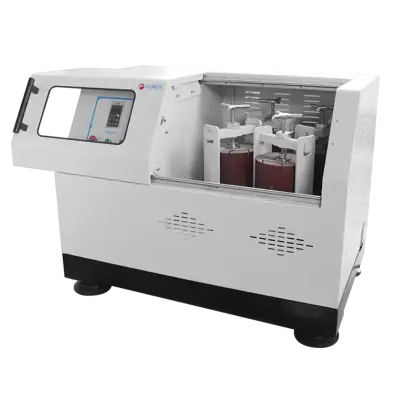
XQM-20 20L Vertical Production Planetary Ball Mill
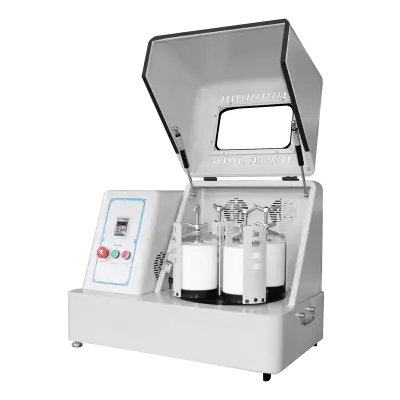
Laboratory planetary grinder
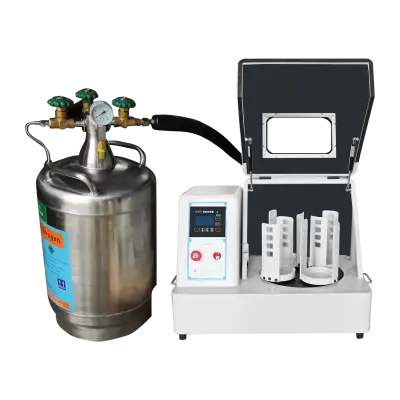
Liquid Nitrogen Planetary Ball Mill
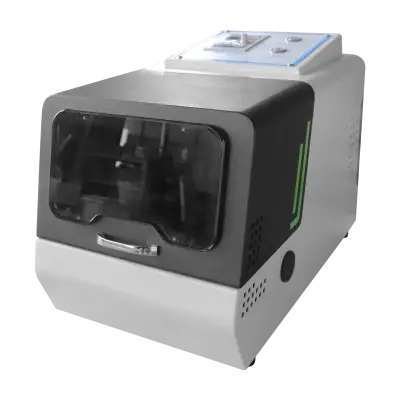
Micro Planetary Ball Mill
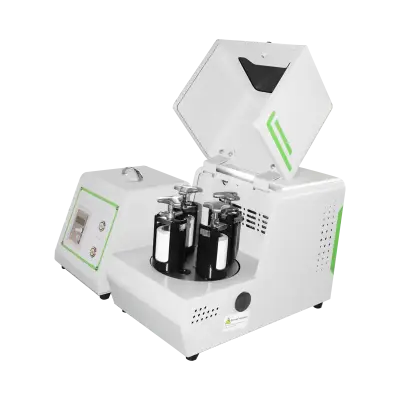
Micro Planetary Ball Mill
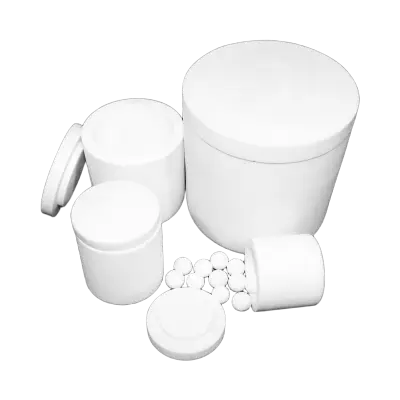
A grade Corundum planetary Mill Jar
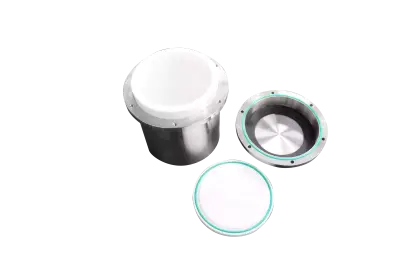
304 stainless steel lined with zirconia mill jar
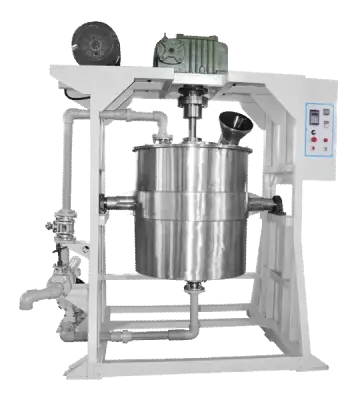
Production type stirred ball mill
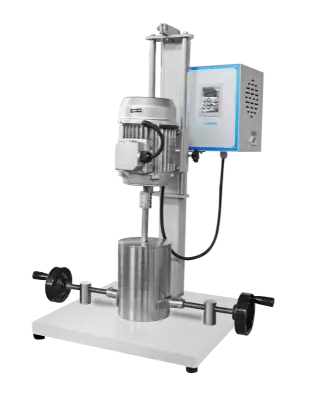
lab stirred ball mill
Get In Touch
Our professional team will reply to you within one business day. Please feel free to contact us!