

What Is a Circulation Oven? A Forced-Air Thermal Unit for Powder Processing
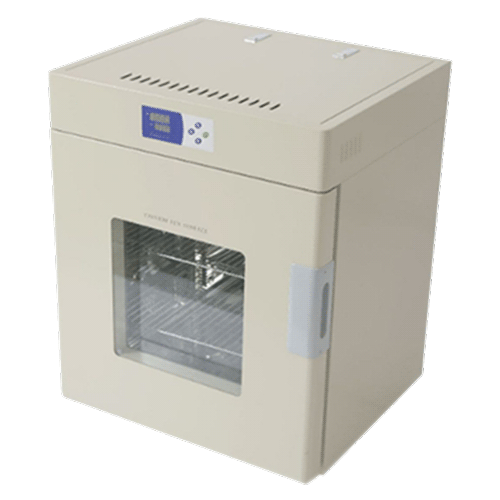
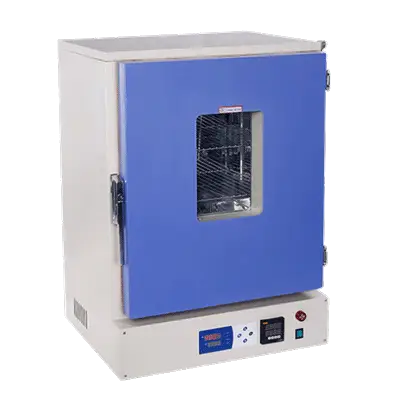
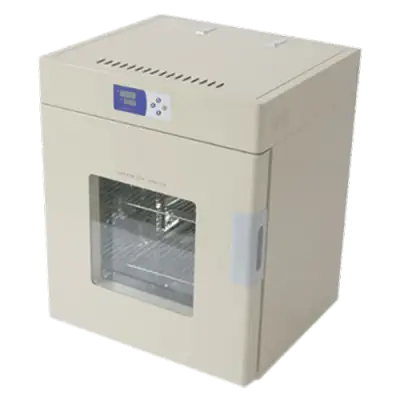
From a practical standpoint, a circulation oven is a thermal processing unit that uses fan-driven heated air to dry, cure, preheat, age, or otherwise treat materials inside a controlled chamber. In powder engineering, materials research, and laboratory operations, it is often the unit that removes moisture after washing or filtering, stabilizes a sample before testing, or brings a load to a controlled temperature before the next process step. The term is also used for forced-air ovens and convection ovens, although the exact name varies by supplier. The essential idea is simple: instead of relying on still air or direct radiation, the oven moves heated air across and around the load so that heat reaches surfaces more evenly. For one representative product example, see the circulation oven page.
A circulation oven is not a mill, crusher, mixer, or press. It does not reduce particle size or blend powders. Its role is thermal: it changes the temperature and moisture condition of a material. That distinction matters in powder processing because drying and heat treatment can influence flowability, agglomeration, residual moisture, and the reproducibility of later testing. A well-controlled oven supports those steps; a poorly controlled one can create hot spots, overdry edges, or leave moisture trapped in a load. The rest of this guide explains the working principle, core components, performance indicators, applications, and selection questions in a FAQ style.
What Does a Circulation Oven Do?
Its basic function is to convert a load from an uncontrolled or wet condition into a drier, more thermally stable condition. Heated air is circulated through the chamber, passes over trays, shelves, or containers, and returns to the heater for reheating. As the air gives up heat to the load, it also picks up moisture and carries it toward an exhaust or vent path. This continuous exchange is what separates a circulation oven from a simple enclosed hot box: the moving air helps reduce temperature differences and helps remove water vapor from the working zone.
The oven is used for drying, curing, preheating, aging, conditioning, and other moderate-temperature thermal steps. In a powder laboratory, for example, it may dry a washed precipitate, remove moisture from a granular sample, or preheat a mold or substrate before a pressing or coating step. It can also condition parts or materials that must reach a stable temperature before measurement. The exact allowed temperature and atmosphere depend on the oven design and the material being processed, so the product documentation should always be checked before setting a recipe.
Compared with direct-fired or radiant heating, the forced-air approach emphasizes uniformity rather than localized intensity. That makes it useful when the entire load should experience a similar thermal history. It is not always the best choice for every duty: very high temperatures, reactive atmospheres, or processes that require tightly controlled gas composition may call for a different furnace type. A circulation oven is therefore best understood as a controlled convection-heating platform for applications where air movement, temperature stability, and repeatable drying or conditioning are the main goals.
How a Circulation Oven Works
From Wet Feed to a Stable, Uniformly Heated Product
The process begins when the operator loads material into the chamber and selects a temperature program. A heater raises the temperature of the air, and a fan or blower drives that air through ducts, plenums, or baffles. The conditioned air enters the working chamber, passes across the load, and then returns to the heater. This loop repeats continuously. At the same time, moisture driven off the load must be able to leave the chamber. If the vent path is inadequate, the air becomes humid and drying slows down, even if the heater is still supplying energy.
For a wet powder or filter cake, the change is both thermal and physical. Heat raises the vapor pressure of water in the material, and the moving air carries the vapor away. As moisture leaves, the material becomes lighter and its surface condition changes. In some cases, the load may form a dry crust while moisture remains inside; that is why tray loading, bed thickness, and airflow direction matter. A thin, evenly spread layer usually responds more predictably than a deep, densely packed bed, because air can reach more of the material and the diffusion path for moisture is shorter.
Heat Transfer, Airflow, and Moisture Removal
Heated air transfers heat to the load mainly by convection. The air gives up sensible heat at the material surface, and that heat conducts inward through the particle or piece. Moisture then moves to the surface and evaporates. The rate of the overall process depends on the temperature difference between air and load, the air velocity, the exposed surface area, the moisture content, and the humidity of the air. In practical terms, the oven does not simply heat the air; it manages a balance between heat input and moisture removal.
Airflow design is central to this balance. Well-designed circulation uses supply and return paths that discourage dead zones and short-circuiting, where air bypasses the load and returns to the heater without doing useful work. Baffles, perforated plates, shelves, and load spacing all influence the pattern. If trays are stacked too closely or placed against a supply outlet, some areas may receive much more air than others. The result can be uneven drying, color variation, or inconsistent final moisture. Good operating practice is therefore not only about setting a temperature but also about arranging the load so that air can move around it.
Process Parameters That Shape the Result
Temperature is the most visible parameter, but it is not the only one. The heating rate affects how quickly the surface dries relative to the interior; a very fast ramp can harden a surface and slow later moisture removal. The dwell time determines how long the load remains at the set point. Airflow and fan speed influence heat-transfer efficiency and temperature uniformity. Vent opening and exhaust strategy influence humidity in the chamber. Loading density, tray type, and spacing influence the local airflow each part of the load receives. These parameters work together, so changing one may require adjusting another.
A useful way to think about a recipe is to separate the target from the path. The target may be a final moisture level, a cured coating, or a stable preheat temperature. The path is the combination of ramp, hold, airflow, and venting used to get there. For heat-sensitive powders, a gentler path may protect the material; for robust inorganic powders, a faster path may improve throughput. Because different materials respond differently, the safest approach is to start with a conservative recipe, verify the result, and then optimize. The product documentation and material data should guide the allowable temperature and atmosphere.
Core Components and Design Choices
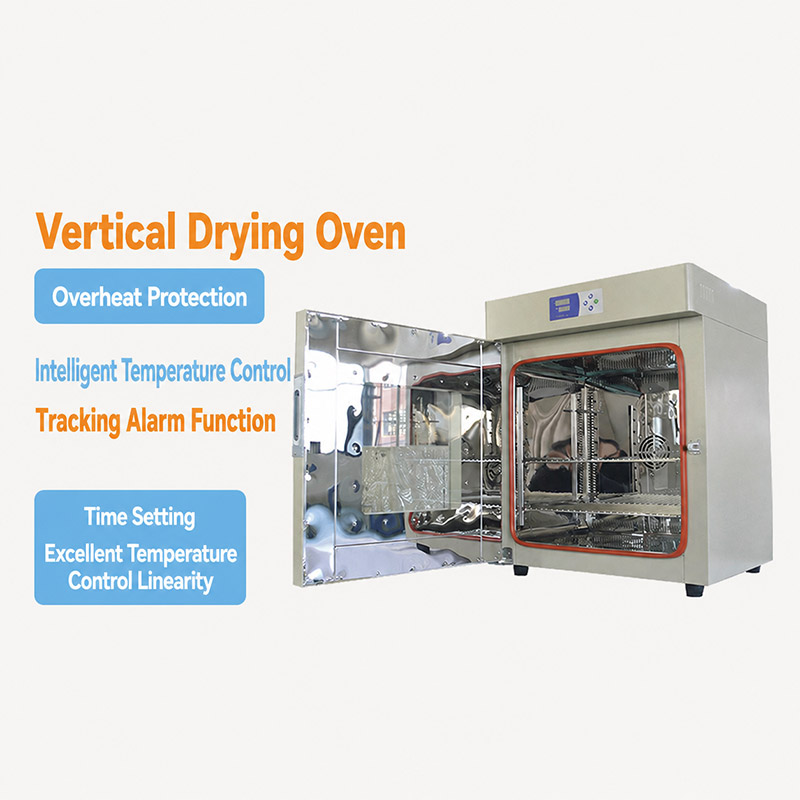
Because the circulation oven is a configuration rather than a single fixed type, it is more useful to examine its core components than to force it into artificial categories. The main systems are the heating and air-circulation loop, the insulated chamber and load-handling hardware, and the control and safety package. The quality of these systems determines how evenly the oven heats, how quickly it recovers after the door is opened, how easy it is to maintain, and how repeatable the process can be.
Heating and Air-Circulation System
The heater raises the air temperature, while the fan or blower provides the motive force. The two must be matched: a powerful fan with an undersized heater may move air quickly but struggle to reach the set point, while an oversized heater with weak circulation may create local hot zones. Ducting, plenums, and baffles distribute the air across the chamber. In a well-designed unit, the return path is also planned so that air does not simply rush from supply to return along the path of least resistance. The result should be a stable flow pattern that reaches the load rather than the walls alone.
Chamber, Insulation, and Load Handling
The chamber defines the usable working volume and the way trays, shelves, or containers are arranged. Insulation reduces heat loss and helps maintain a stable wall temperature. Door seals, viewing windows, access ports, and shelf supports all affect convenience and performance. A chamber with adjustable shelves may accept different load heights, but the shelves themselves can obstruct airflow if they are solid rather than perforated. Users should consider how the load will be supported, how it will be loaded and unloaded, and whether the available space allows air to circulate around the material.
Control, Safety, and Documentation
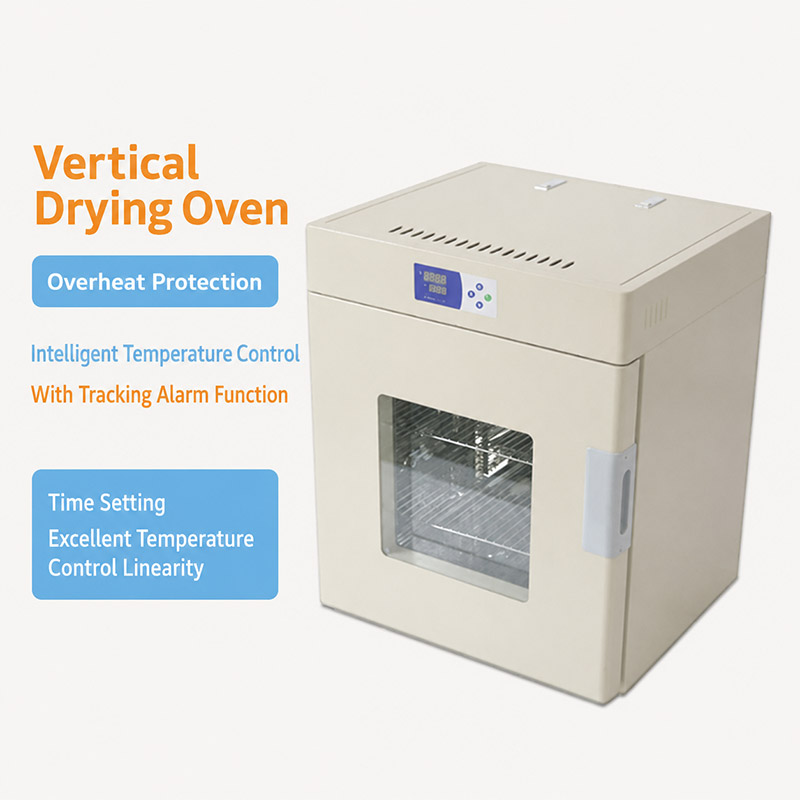
The control system translates a process recipe into heater and fan action. Basic controls may offer a set point and a simple timer; more capable controls may support multi-step programs, alarms, and data records. Safety features may include over-temperature protection, door interlocks, and fan or airflow monitoring. Documentation is equally important: a clear manual, a wiring diagram, and maintenance guidance help users operate the oven correctly and troubleshoot problems. For regulated or quality-critical work, the ability to record temperature and alarm events may be as important as the heater power itself.
Key Performance Indicators and Selection Points
Selecting a circulation oven is not a matter of choosing the largest chamber or the highest temperature on a label. The better approach is to match the oven to the load, the process window, and the environment in which it will operate. The following indicators are useful for comparing options and for asking better questions before purchase.
Temperature Uniformity and Control Stability
Uniformity describes how similar the temperature is at different points in the chamber under defined conditions. Stability describes how well the oven holds a set point over time. Both matter for repeatable drying, curing, and conditioning. A large chamber with poor airflow may show significant differences between the center and the corners, especially when fully loaded. Users should ask how uniformity is defined, whether it is measured with an empty or loaded chamber, and how the result changes when trays are added. Control stability should also be considered during ramps and door openings, not only at steady state.
Working Volume, Loading, and Throughput
Working volume is the usable space after shelves, containers, and airflow clearances are taken into account. A chamber that looks large may hold less material than expected once proper spacing is allowed. Throughput depends on batch size, heating rate, dwell time, cooling time, and loading labor. For a laboratory, flexibility may matter more than maximum capacity; for a production-support role, repeatable batch cycles and quick recovery may be more important. The right choice is the one that fits the real load geometry, not simply the nominal volume.
Energy Use, Recovery, and Maintenance
Energy use is influenced by insulation, heater control, fan efficiency, door openings, and the exhaust strategy. A well-insulated oven with good door seals loses less heat and recovers faster after loading. Maintenance access matters too: filters, fans, sensors, and door seals should be serviceable without dismantling the whole unit. Users should ask about replacement parts, cleaning methods, and the recommended inspection interval. A simple design that is easy to maintain can be more valuable than a complex one that is difficult to service.
Automation and Data Traceability
Automation can range from a basic digital controller to programmable recipes, alarms, and data logging. The right level depends on the process. A teaching laboratory may need only simple, safe controls, while a quality-control environment may need documented set points and traceable records. Programmable ramps and holds improve repeatability, but they are useful only if the oven can actually follow them with the load in place. Data traceability should be evaluated alongside the sensors and calibration method, because a record is only as good as the measurement behind it.
Applications and Selection Advice
Where Circulation Ovens Fit in Powder and Materials Work
In powder and materials laboratories, circulation ovens are commonly used for drying, preheating, conditioning, and curing. They can remove moisture from filtered precipitates, dry washed powders before weighing or sieving, preheat molds and substrates, cure coatings or binders, and stabilize samples before testing. They may also support aging studies, shelf-life trials, and general thermal treatment where a controlled air environment is acceptable. The key is that the application matches the oven: the material must tolerate the temperature, the air atmosphere must be suitable, and the load must be arranged so that circulation can do its job.
These ovens are also used in quality control, small-scale production, and pilot work. In those settings, repeatability and documentation often become more important than raw heating speed. A process that works once in a laboratory may fail in a larger batch if the airflow pattern changes or the load is packed too tightly. Users should test the recipe with a representative load and verify temperature distribution and final moisture, rather than assuming that a set point alone guarantees the same result at every scale.
How to Match the Oven to Your Process
Start with the material and the required result. Define the acceptable temperature range, the target moisture or cure level, the maximum batch size, and any restrictions on air quality or contamination. Then consider the oven: chamber size, shelf arrangement, airflow path, control capability, and safety features. A unit that is too small creates bottlenecks; a unit that is too large may be difficult to control at low loads. The best match is usually the smallest oven that can handle the required load with adequate spacing and still meet the process window.
It is also wise to plan for verification. Ask how the user will confirm uniformity, how the sensor will be calibrated, and how the load will be monitored. If the process is sensitive to humidity, consider how the vent will be managed. If the process is sensitive to contamination, consider the chamber materials and cleaning method. These practical questions often reveal more than a single headline specification. For model-specific details, the circulation oven product page is the appropriate starting point, because final ratings and options must come from the manufacturer rather than from general assumptions.
A Simple Selection Checklist
- Confirm that the material and process are compatible with forced-air heating.
- Define the required temperature range, ramp, dwell, and cooling needs.
- Calculate the real load size, including trays, containers, and airflow clearance.
- Check temperature uniformity data and how it was measured.
- Review airflow design, venting, and humidity control for drying duties.
- Compare controls, alarms, data records, and maintenance access.
Frequently Asked Questions
Is a circulation oven the same as a muffle furnace?
Not exactly. Both can heat materials, but a muffle furnace typically emphasizes high-temperature heating with a heated chamber and may not use the same forced-air circulation strategy. A circulation oven emphasizes moving heated air to improve uniformity and moisture removal at moderate process temperatures. The correct choice depends on the required temperature, atmosphere, and material sensitivity.
Can a circulation oven dry powders?
Yes, it can be used for drying powders and granular materials when the process temperature and air atmosphere are suitable. The powder should be spread in a way that allows air to reach the material, and the vent should allow moisture to escape. Thick beds or sealed containers can slow drying and produce uneven results. Always verify the final moisture and check that the material does not degrade at the chosen temperature.
What matters most when choosing an oven?
The most important factors are usually the process temperature, temperature uniformity, usable chamber volume, airflow pattern, and control capability. Safety, maintenance access, and documentation also matter, especially for quality-critical work. A clear understanding of the load and the required result should come before comparing catalog specifications.
How should a new recipe be validated?
Begin with a conservative temperature and time, use a representative load, and measure the result rather than relying only on the display. Check temperature distribution at several positions if the process is sensitive, and confirm final moisture or cure. Then adjust ramp, hold, airflow, and loading pattern one variable at a time. This approach makes the process easier to reproduce and easier to troubleshoot.
Related Products
Get In Touch
Our professional team will reply to you within one business day. Please feel free to contact us!