
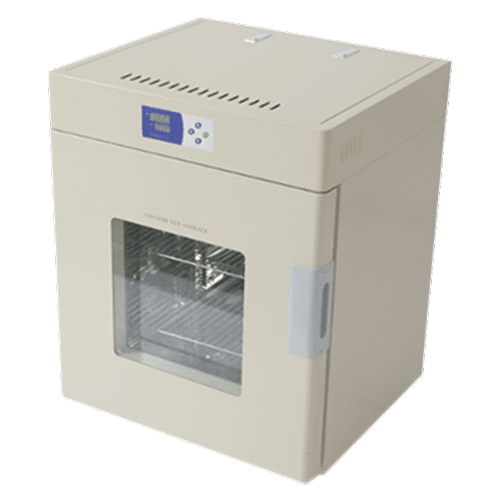
What is a Circulation Oven? A Reliable Drying Solution for Laboratory and Industrial Material Processing

What is a Circulation Oven?
At its core, a circulation oven is a specialized thermal processing device used in laboratories, pharmaceutical factories, chemical plants, and food processing facilities to dry, cure, sterilize, or heat-treat materials under precisely controlled temperature conditions. It is also commonly referred to as a hot air circulating oven or forced convection drying oven. The equipment employs a powerful fan to circulate heated air uniformly throughout the chamber, ensuring consistent temperature distribution and efficient moisture removal from the samples.
Core Function and Working Principle
The primary function of a circulation oven is to transform wet or moist materials into dry, stable products by applying controlled heat and forced air convection. The working principle is based on the coordinated action of a heating element (usually electric resistance wires) and a centrifugal fan. The fan draws air from the chamber, passes it over the heating elements, and then distributes the hot air evenly through ductwork or baffles back into the chamber. This continuous circulation ensures that every part of the load receives the same temperature, eliminating hot spots and cold zones.
Key process parameters that affect drying quality include temperature set point, air velocity, and duration. The oven is typically equipped with a digital PID controller that maintains the temperature within ±1°C or better, making it suitable for both routine drying tasks and sensitive thermal processes like binder removal or resin curing. The ability to program multi-step heating profiles further enhances process repeatability.
Key Components and Technologies
Although circulation ovens are conceptually simple, their performance depends on the quality of several core components:
Heating System
Most circulation ovens use electric heating elements (e.g., stainless steel sheathed heaters) placed in a separate heating chamber or directly in the air duct. The power rating determines the heating speed and maximum achievable temperature. Typical maximum temperatures range from 200°C to 300°C for standard models, with higher-temperature versions available for specialized applications.
Air Circulation Fan
A centrifugal fan or axial fan is the heart of the oven. It must provide sufficient static pressure to overcome duct resistance and ensure uniform airflow across all shelves. High-quality ovens use backward-curved impellers for quiet operation and long service life.
Insulation and Chamber Construction
The chamber is usually made of stainless steel (SUS304 or SUS316L) to resist corrosion and facilitate cleaning. Thick mineral wool or ceramic fiber insulation minimizes heat loss to the environment, improving energy efficiency and operator safety. The exterior is typically powder-coated steel.
Control System
Modern circulation ovens feature microprocessor-based controllers with digital displays, programmable timers, and alarm functions. Some advanced models include data logging, remote monitoring via RS485 or Ethernet, and compliance with 21 CFR Part 11 for pharmaceutical applications.
Key Performance Indicators and Selection Criteria
When selecting a circulation oven, users should evaluate the following parameters:
- Temperature Range and Uniformity: The required maximum temperature and the allowable temperature deviation across the working space. Typical specifications: ±2°C at 100°C, ±3°C at 200°C.
- Chamber Volume and Loading Capacity: The internal dimensions and number of shelves determine how many samples can be processed per batch. Common sizes range from 30 liters (laboratory) to 1000 liters or more (industrial).
- Air Exchange Rate: For drying applications, a high air exchange rate (e.g., 10–20 air changes per hour) accelerates moisture removal. Some ovens offer adjustable vents or dampers to control fresh air intake.
- Energy Efficiency: Look for ovens with good insulation, low standby power consumption, and efficient fan motors (e.g., EC motors) to reduce operating costs.
- Automation and Programmability: Multi-step temperature programming, ramp/soak functions, and safety interlocks are essential for reproducible processes.
- Maintenance and Compliance: Easy access to heating elements and fan for cleaning, and certifications such as CE, UL, or GMP compliance for regulated industries.
Application Areas and Selection Recommendations
Circulation ovens are widely used in:
- Pharmaceutical industry: Drying of granules, powders, and tablets; sterilization of glassware; curing of coating films.
- Chemical and material science: Drying of catalysts, pigments, and polymers; heat treatment of electrode materials; aging tests.
- Food and agriculture: Drying of herbs, spices, and grains; moisture content determination.
- Electronics and semiconductor: Pre-baking of substrates, curing of adhesives, and removal of moisture from components.
- Research and education: Sample preparation, thermal stability studies, and process development.
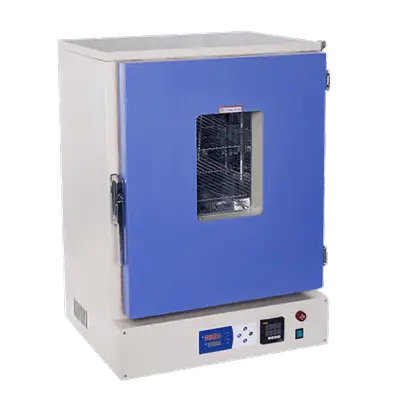
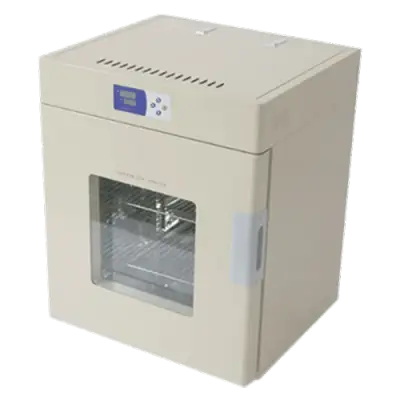
For laboratory users who need a compact unit for small batches, a desktop air blower dryer is a cost-effective choice. For production environments requiring high throughput and precise temperature control, a precision air blower dryer offers advanced features like programmable logic controllers and HMI touchscreens. If the process involves vacuum or inert atmosphere, consider a vacuum drying oven or box-type atmosphere furnace.
References
Product page: Circulation Oven
Related Products
Get In Touch
Our professional team will reply to you within one business day. Please feel free to contact us!