
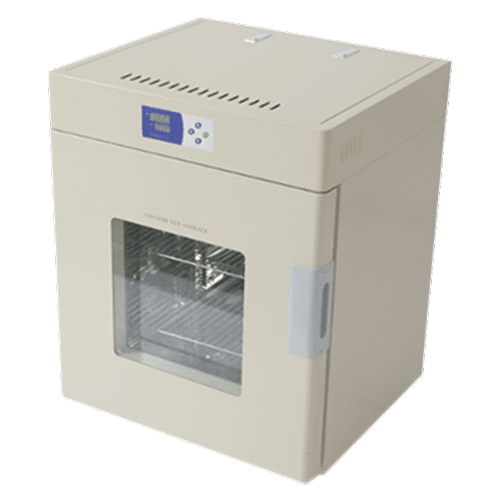
What is a Circulation Oven? A Drying Equipment for Uniform and Efficient Material Drying

What is a Circulation Oven?
At its core, a circulation oven is a professional drying device that uses forced hot air convection to remove moisture from materials quickly and evenly. Laboratories, research institutes, and industrial powder processing facilities use it to dry powders, granules, slurries, and other heat-sensitive or non-heat-sensitive materials without the risk of local overheating or uneven drying. Unlike static ovens that rely on natural convection, a circulation oven actively circulates heated air, drastically improving heat transfer efficiency and drying uniformity.
Core Function and Working Principle
The basic function of a circulation oven is to transform wet or moist materials into a dry, stable state by evaporating water or solvents. The key working mechanism involves a heating element (usually electric resistance wires) and a powerful fan mounted inside the chamber. The fan draws air over the heating elements, heats it, and then forces the hot air through the chamber and across the material surfaces. The air absorbs moisture and is then exhausted through a vent or recirculated after reheating, depending on the design.
One of the most critical parameters is the airflow pattern. In a vertical forced air circulation oven, the airflow moves vertically from bottom to top or top to bottom, ensuring that every shelf receives the same temperature and air velocity. This eliminates hot spots and cold zones, which are common in gravity-convection ovens. The drying temperature can be precisely controlled from ambient to typically 300°C, with some models reaching 500°C, and the temperature uniformity is often within ±1°C to ±3°C across the entire working volume.
Key Components and Technologies
While the basic design is similar, a circulation oven contains several critical components that determine its performance:
- Fan and Motor System: The centrifugal or axial fan creates the forced air circulation. A high-quality motor ensures stable operation and low noise, often with variable speed control for different material sensitivities.
- Heating Elements: Typically stainless steel sheathed tubular heaters located in a separate heating chamber to avoid direct radiation on the material. The power rating directly affects the heating rate and maximum temperature.
- Temperature Control System: A microprocessor-based PID controller with a high-precision platinum resistance thermometer (Pt100) or thermocouple sensor. Advanced models offer programmable multi-step temperature ramps and timers.
- Air Circulation Path: The design of air ducts, baffles, and exhaust vents determines how evenly the air flows. Some ovens feature horizontal airflow for better cross-flow, while vertical airflow is preferred for stacked trays.
- Chamber Material: Stainless steel (304 or 316) is standard for corrosion resistance and easy cleaning. Some ovens have an inner glass door for observation without heat loss.
For specialized applications, a vacuum drying oven or a microwave vacuum drying oven may be used, but the circulation oven remains the workhorse for routine drying under normal atmosphere.
Key Performance Indicators and Selection Criteria
When selecting a circulation oven, users should evaluate the following metrics:
- Processing Capacity and Volume: Chamber sizes range from 20 liters (desktop models) to over 1000 liters (floor-standing models). The number of shelves and max load per shelf are important for batch production.
- Temperature Range and Uniformity: A wider range (e.g., RT+10°C to 300°C) and tighter uniformity (±1°C) are preferred for critical drying. Check the manufacturer's specifications at different set points.
- Heating Rate and Recovery Time: Faster heating and recovery after door opening reduce cycle time. Look for high power-to-volume ratios.
- Airflow Control: Adjustable fan speed allows gentle drying for fragile materials or high-speed drying for robust ones.
- Automation and Programmable Features: Touch-screen controllers with pre-set programs, data logging, and remote monitoring capabilities enhance reproducibility and traceability.
- Safety and Maintenance: Over-temperature protection, door lock, and easy-to-clean interior are essential. Removable shelves and accessible filter make maintenance simpler.
Application Areas and Selection Suggestions
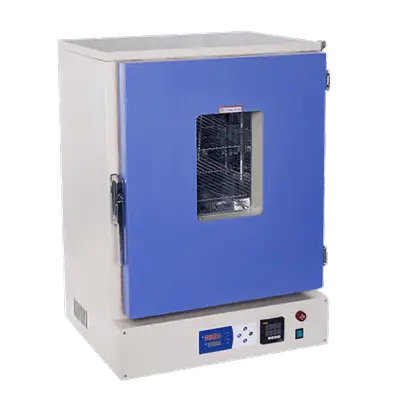
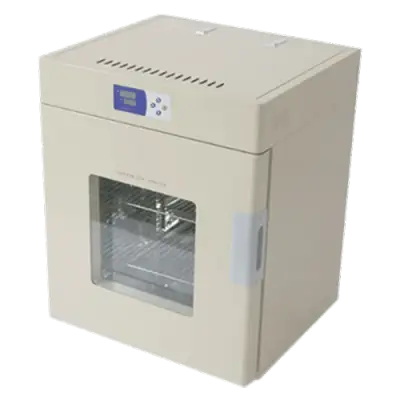
Circulation ovens are widely used in powder metallurgy, ceramics, chemical engineering, pharmaceuticals, food processing, and material research. For example, they are ideal for drying metal powders after grinding, drying ceramic slurries, and removing moisture from pharmaceutical granules. For laboratories handling small batches, a desktop air blower dryer offers compact size and economy. For precision drying of temperature-sensitive materials, a precision air blower dryer with superior uniformity is recommended. Industrial users may opt for large-capacity floor-standing models with heavy-duty construction.
References
- Circulation Oven product page: https://www.planetaryballmills.com/products/sintering-series/circulation-oven.html
- Desktop air blower dryer: https://www.planetaryballmills.com/products/sintering-series/desktop-air-blower-dryer.html
- Precision air blower dryer: https://www.planetaryballmills.com/products/sintering-series/precision-air-blower-dryer.html
Related Products
Get In Touch
Our professional team will reply to you within one business day. Please feel free to contact us!