

What is a Circulation Oven? A Forced Convection Drying Equipment for Uniform Heat Treatment in Laboratories and Industries
What is a Circulation Oven? A Forced Convection Drying Equipment for Uniform Heat Treatment in Laboratories and Industries
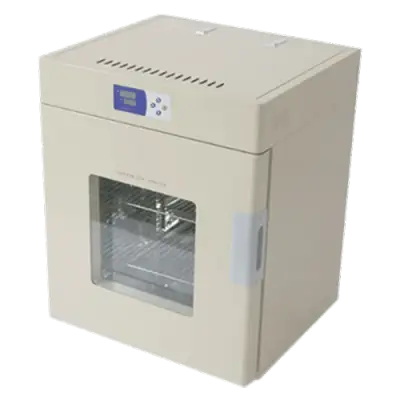
At its core, a circulation oven is a professional thermal processing device that uses a motor-driven fan to forcibly circulate hot air within an insulated chamber, ensuring uniform temperature distribution for drying, baking, curing, and sterilizing a wide variety of materials. Unlike simple gravity convection ovens that rely on natural air movement, circulation ovens provide faster heat transfer and more consistent results, making them indispensable in laboratories, research facilities, and industrial production lines.
Core Function and Working Principle
The fundamental function of a circulation oven is to transform a material from a wet or uncured state into a dry or thermally processed state by controlled exposure to heated air. The working principle is straightforward yet highly effective: an electric heater raises the air temperature inside the oven, while a powerful fan (often a centrifugal or axial blower) continuously moves the air over the heating elements and through the chamber. This forced convection dramatically reduces the time needed to reach the set temperature and eliminates hot and cold spots, achieving temperature uniformity of ±1.5% or better across the entire workspace.
Key process parameters that influence the final product quality include temperature setpoint, hold time, air velocity, and the number of air exchanges per minute. For example, during the drying of powder materials, a higher air velocity accelerates moisture removal, but excessive velocity may cause particle entrainment. Similarly, precise temperature control is critical for heat-sensitive materials like pharmaceuticals or electronics. Modern circulation ovens are equipped with digital PID controllers that manage these parameters automatically, allowing users to program multi-step temperature profiles for complex processes.
Key Components and Technologies
A circulation oven consists of four major systems that work together to deliver reliable performance:
Heating System
The heating elements are typically made of high-grade stainless steel or nickel-chromium alloy, arranged to maximize heat transfer to the circulating air. The design ensures that the heating power is matched to the chamber volume, allowing rapid heat-up and recovery after door openings.
Air Circulation System
The forced convection fan is the heart of the oven. In horizontal airflow designs, air is blown from the side walls across the shelves; in vertical airflow units, air moves from top to bottom through perforated shelves. The choice depends on the loading pattern and material characteristics. Some advanced ovens offer adjustable airflow direction for specific applications.
Temperature Control System
Modern circulation ovens use microprocessor-based PID controllers with thermocouple sensors (e.g., Type K or Pt100) to maintain precise temperatures. Features like self-tuning, ramp/soak programming, and over-temperature protection are standard in industrial-grade units. The control accuracy can reach ±0.5°C or better in precision models.
Chamber and Insulation
The chamber is usually made of stainless steel for corrosion resistance and easy cleaning, while the outer shell is powder-coated steel. High-density ceramic fiber or mineral wool insulation minimizes heat loss and keeps the exterior surface safe to touch. Door seals are designed to withstand repeated cycling without degradation.
Key Performance Indicators and Selection Guide
When selecting a circulation oven, users should evaluate the following critical parameters:
Temperature Range and Uniformity
Standard circulation ovens operate from ambient +10°C up to 300°C or 400°C. High-temperature models can reach 500°C or more. Temperature uniformity is specified as ±X°C at a given setpoint; for sensitive applications, choose units with uniformity better than ±2°C. The circulation oven from TENCAN offers excellent uniformity suitable for both R&D and production.
Chamber Volume and Shelving
Capacity ranges from small benchtop units (20–50 liters) to large floor-standing models (over 1000 liters). Adjustable shelving allows flexible loading. Consider the maximum weight per shelf and the total load capacity.
Airflow and Ventilation
Some processes require fresh air intake to remove solvents or moisture. Adjustable dampers allow control of the air exchange rate. For explosive or volatile materials, explosion-proof versions with reinforced ventilation are mandatory.
Programmability and Data Logging
Advanced controllers offer recipe storage, multi-segment programming, and RS-485 or Ethernet connectivity for remote monitoring. Data logging capabilities are essential for validation in pharmaceutical and food industries.
Safety Features
Key safety features include over-temperature protection, door lock, audible alarms, and current leakage protection. For continuous operation, look for heavy-duty components and redundant safety circuits.
Application Areas and Selection Advice
Circulation ovens are used across numerous fields:
- Materials Science & Chemistry: Drying powders, glassware, and catalysts; curing polymers and composites.
- Electronics & Semiconductor: Baking PCBs, curing adhesives, and stress-relieving components.
- Pharmaceutical & Biotechnology: Sterilization, depyrogenation, and stability testing.
- Food & Agriculture: Drying grains, herbs, and snacks; moisture analysis.
- Environmental Testing: Aging tests, heat resistance, and preconditioning of samples.
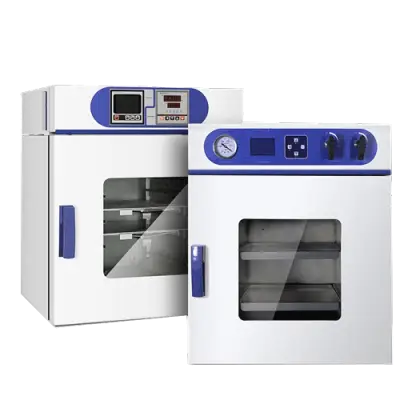
For a laboratory or small-scale production, a benchtop model with a 50–150 liter capacity and basic PID control is sufficient. For industrial applications requiring high throughput or stringent uniformity, consider a precision airflow dryer or a large-capacity floor-standing unit. For heat-sensitive materials, a vacuum drying oven may be more appropriate. Always consult the product page for detailed specifications and customization options.
References
Related Products
Get In Touch
Our professional team will reply to you within one business day. Please feel free to contact us!