

What is a Circulation Oven? A Professional Drying Equipment for Uniform Heat Treatment
What is a Circulation Oven? A Professional Drying Equipment for Uniform Heat Treatment
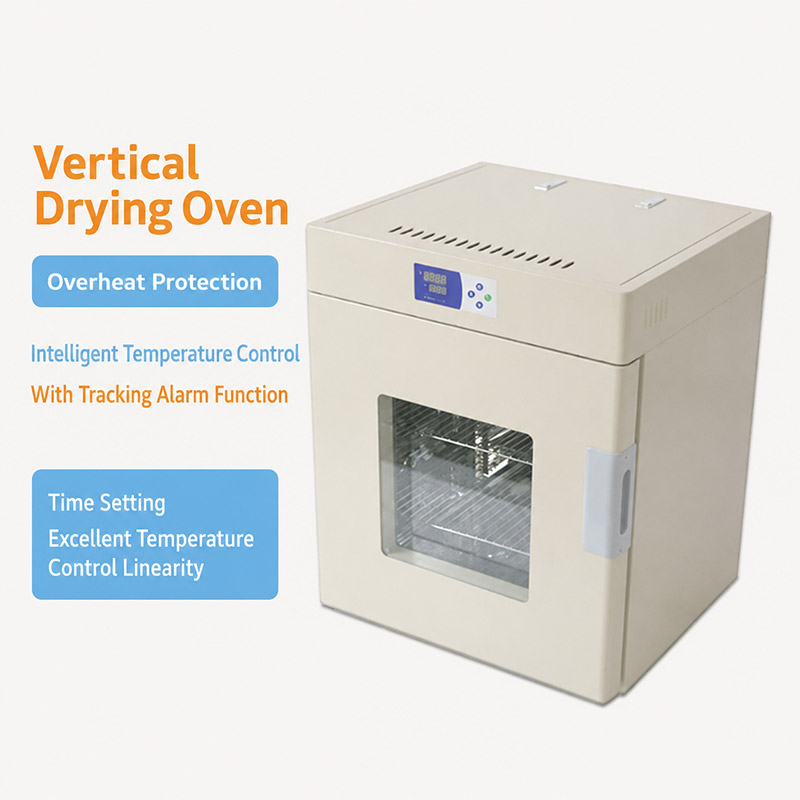
At its core, a circulation oven is a specialized drying and heating device that industries and laboratories use to achieve uniform temperature distribution across a workspace. Unlike conventional ovens that rely solely on radiant heating from top and bottom elements, a circulation oven incorporates a fan (or multiple fans) to actively circulate hot air, eliminating hot and cold spots. This makes it ideal for applications requiring consistent and repeatable thermal processing, such as drying powders, curing coatings, heat-treating samples, and sterilizing equipment.
Core Function and Working Principle
The primary function of a circulation oven is to transform materials from a wet or uncured state into a dry or thermally treated state through controlled forced convection heating. The oven consists of an insulated chamber, heating elements (electric or gas), and a circulation fan system. When the oven is turned on, the heating elements raise the air temperature inside the chamber. The fan then draws air from the chamber, passes it over the heating elements, and circulates the heated air evenly throughout the entire space.
Key parameters that influence the final product quality include temperature (typically ranging from ambient to 300°C or higher), air velocity, and treatment time. Precise control of these parameters ensures uniform drying, prevents surface cracking, and maintains material integrity. Modern circulation ovens often feature digital PID controllers that allow users to set exact temperature and time profiles, ensuring reproducibility across batches.
Key Components and Technology
Although the basic design of a circulation oven is relatively simple, several key components define its performance and reliability:
Heating System
Electric resistance heaters (sheathed or open coil) are the most common, allowing rapid heating and precise temperature control. Gas-fired versions are also available for high-volume industrial applications.
Air Circulation Fan
A backward-curved centrifugal fan or axial fan is typically used to generate high-velocity airflow. The fan design determines the uniformity of temperature distribution and the ability to handle heavy loads without stratification.
Insulation and Chamber Material
High-density mineral wool or ceramic fiber insulation minimizes heat loss and improves energy efficiency. The inner chamber is often made of stainless steel (304 or 316) for corrosion resistance and easy cleaning, especially in pharmaceutical or food applications.
Control System
Microprocessor-based PID controllers with programmable setpoints, timers, and alarms ensure safe and accurate operation. Data logging and remote monitoring capabilities are available in advanced models.
Key Performance Indicators and Selection Criteria
When selecting a circulation oven, users should focus on the following metrics:
- Temperature Range and Uniformity: Most laboratory ovens offer a range from ambient +10°C to 300°C, with uniformity of ±1°C to ±3°C at the setpoint. For critical applications, better uniformity (±0.5°C) is required.
- Airflow Rate and Volume: Higher airflow (measured in CFM or m³/h) improves heat transfer and reduces drying time, but excessive airflow may disturb lightweight samples. Adjustable fan speed is a valuable feature.
- Chamber Size and Capacity: From small benchtop units (20-50 liters) to large floor-standing models (500 liters or more), the choice depends on the volume of material to be processed.
- Energy Efficiency: Look for efficient insulation and low standby power consumption. Some models feature inverter-driven fans for variable airflow.
- Safety Features: Over-temperature protection, door interlock, and independent limit thermostats are essential for safe operation.
- Ease of Maintenance: Removable panels, accessible filters, and smooth interior surfaces simplify cleaning and service.
Applications and Selection Advice
Circulation ovens are used across a wide range of industries:
- Pharmaceuticals & Biotechnology: Drying of active ingredients, sterilization of glassware, and stability testing.
- Electronics: Curing of conformal coatings, drying of PCBs, and pre-heating of components.
- Materials Science: Heat treatment of polymers, ceramics, and composites, as well as sample preparation for analysis.
- Food Processing: Drying of herbs, spices, and grains, and baking of snack foods.
For laboratories requiring precise temperature control and small batch processing, a benchtop circulation oven (such as the Desktop Air Blower Dryer or Precision Air Blower Dryer) is an excellent choice. For industrial production, larger floor-standing models with enhanced airflow and programmable controls are recommended. Always consult the manufacturer's specifications to match the oven's capabilities with your specific process requirements.
References
Related Products
Get In Touch
Our professional team will reply to you within one business day. Please feel free to contact us!