
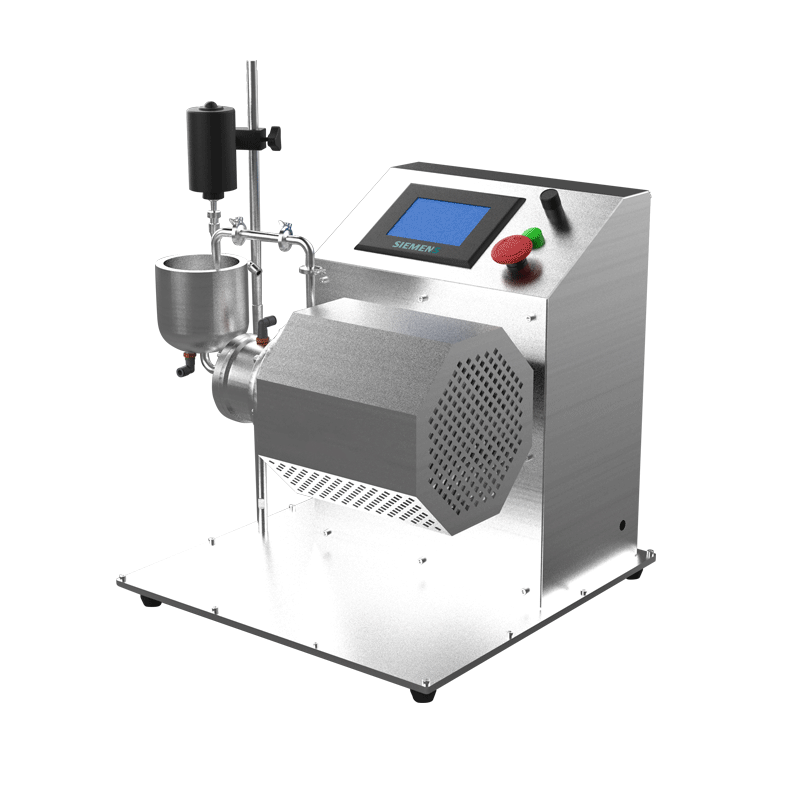
Lab Horizontal Bar Pin Nano Sand Mill: A Complete Guide for Researchers

Why Choose a Lab Horizontal Bar Pin Nano Sand Mill?
If you're working on formulating cutting-edge inks, high-performance coatings, or advanced battery materials, you know that particle size is everything. Getting your particles down to the nanometer range can be the difference between a product that works and one that wows. That's where the lab horizontal bar pin nano sand mill from Changsha Tianchuang Powder Technology Co., Ltd. (TENCAN) steps in. It's a compact, high-energy mill designed just for research and small-batch production.
Think of it as a precision tool for breaking down agglomerates and grinding particles until they're uniformly fine – often reaching below 100 nanometers. And because it's a horizontal design with bar pins, it delivers a combination of high throughput and excellent fineness that traditional jar mills or planetary mills can't match when it comes to wet grinding of viscous slurries.
What Exactly Is a Bar Pin Nano Sand Mill?
Let's break it down. A sand mill (also called a bead mill) uses small grinding beads – usually zirconia or glass – inside a stationary grinding chamber. A rotating shaft with agitators (in this case, bar pins) stirs the beads, creating intense shear forces and compression. The material, in liquid form (slurry), is pumped through the chamber, and the beads collide with the particles, fracturing them into finer sizes.
The "bar pin" design means the agitator elements are shaped like pins or bars, arranged on a central shaft. This layout provides more impact points and better energy distribution compared to simple disc-type mills. The horizontal orientation keeps the beads evenly distributed, reduces wear on the bottom of the chamber, and allows for a higher packing density of beads – all contributing to a more efficient grinding process.
Key Technical Parameters (Model Example)
The lab sand mill from TENCAN typically comes in a model with a 0.3-liter chamber volume – perfect for sample sizes from a few hundred milliliters to a couple of liters per batch. Here are the specs you'd care about:
| Parameter | Value |
|---|---|
| Chamber Volume | 0.3 L |
| Motor Power | 1.5 kW (variable frequency drive) |
| Shaft Speed | 0 – 2800 rpm (adjustable) |
| Grinding Media Size | 0.3 – 2.0 mm (zirconia beads recommended) |
| Final Fineness | D50 ≤ 100 nm (depending on material) |
| Cooling System | Integrated water cooling jacket |
| Material Contact Parts | Stainless steel 304 / polyurethane / ceramic options |
| Sealing | Double mechanical seal with solvent barrier |
Why These Numbers Matter
A variable frequency drive (VFD) gives you fine control over the tip speed. For fragile pigments or heat-sensitive materials, you can run at lower rpm. For hard minerals, crank it up. The cooling jacket is a lifesaver – it keeps the slurry temperature down even during long grinding cycles, preventing degradation.
How It Works: Step by Step
- Prepare the slurry: Mix your powder and liquid (usually a solvent or water) into a pumpable paste.
- Load the beads: Fill the chamber about 70-80% with grinding beads (e.g., 0.5 mm YTZ zirconia beads).
- Start pumping: A peristaltic pump or air-driven pump circulates the slurry through the mill.
- Grind: The rotating bar pins agitate the beads, creating shear forces that smash particles down to nanometer scale.
- Separate: A dynamic gap separator (usually a slotted screen or centrifugal separator) keeps the beads inside while letting the product out.
- Circulate: For very fine results, you can run multiple passes or use a circulation loop until you reach the target particle size.
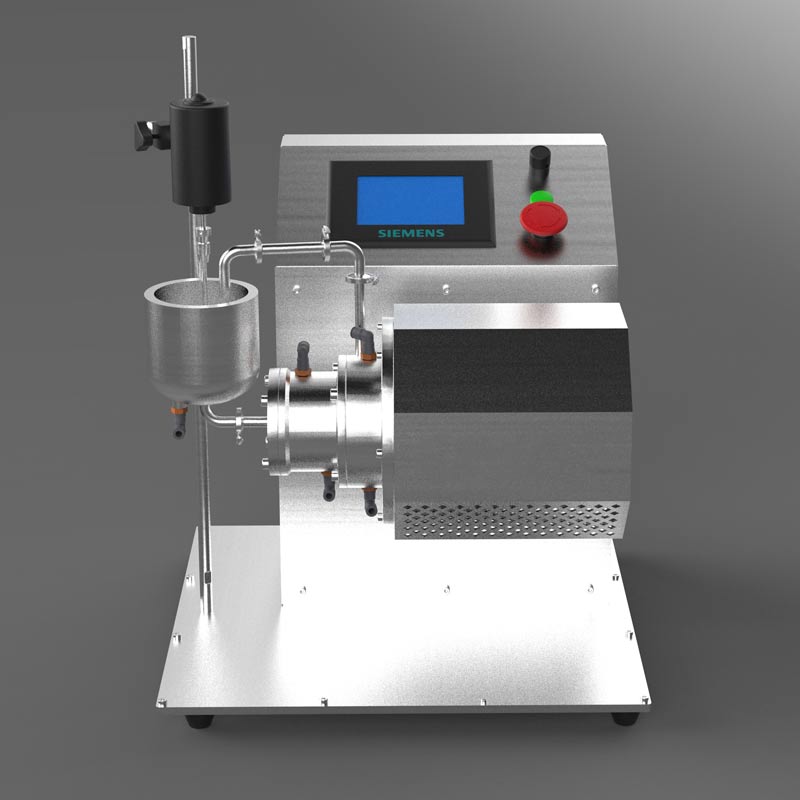
The entire process is monitored by a touch-screen control panel, where you can set speed, batch timer, and even save recipes for repeatability.
Applications: Where This Mill Shines
This lab nano sand mill isn't a one-trick pony. It's used across numerous industries:
- Inks & Pigments: Produce vibrant, transparent inkjet inks and organic pigments with narrow particle distribution.
- Coatings & Paints: Achieve excellent gloss and color strength in automotive paints and industrial coatings.
- Pharmaceuticals: Reduce active pharmaceutical ingredients (APIs) to nano-size for improved bioavailability.
- Agricultural Chemicals: Grind pesticide suspensions to enhance coverage and efficacy.
- Battery Materials: Wet grind cathode materials (like NMC, LFP) and conductive carbon additives for lithium-ion batteries.
- Ceramics & Electronics: Process ferrites, dielectric powders, and ceramic glazes.
- Cosmetics: Create smooth, creamy formulations with ultra-fine particles.
Comparing Lab Nano Sand Mills: Bar Pin vs. Disc vs. Planetary
You might be wondering how a bar pin sand mill stacks up against other lab mills. Here's a quick head-to-head:
Bar Pin Sand Mill vs. Disc Sand Mill
Disc mills use flat discs as agitators. They're simpler and cheaper, but bar pins provide a higher number of active grinding zones per volume, leading to smaller particle sizes and narrower distribution. Bar pin mills also handle high-viscosity slurries better because the pins create a pumping effect.
Bar Pin Sand Mill vs. Planetary Ball Mill
Planetary ball mills are great for dry grinding and small quantities, but they're inefficient for wet grinding of sticky, pasty materials. The horizontal sand mill's continuous flow design makes it ideal for process development and scale-up. Plus, sand mills produce less heat buildup because of the cooling jacket.
Lab vs. Production Scale
TENCAN offers a production-type sand mill for larger batches. The lab version (0.3L) is a perfect scale-down model – results translate directly to the bigger machine, making R&D to production easier.
Key Advantages of the TENCAN Lab Bar Pin Nano Sand Mill
- Ultra-fine grinding: Achieve D50 below 100 nm consistently.
- High energy density: Bar pin design maximizes bead-to-particle collisions.
- Excellent reproducibility: Digital control allows you to lock in parameters.
- Easy cleaning: Quick-release clamps and separate chamber design let you change products in minutes.
- Low maintenance: Double mechanical seal resists leakage, and the direct-drive motor needs no belt changes.
- Small footprint: Sits comfortably on a lab bench.
Tips for Getting the Best Results
- Pre-disperse your powder: Use a high-speed mixer to make a pre-mix – it reduces mill time and improves efficiency.
- Choose the right bead size: For nano grinding, 0.3-0.5 mm beads are typical. Smaller beads give finer results but need higher speeds.
- Control viscosity: If the slurry is too thick, beads can't move freely; too thin, and they won't transfer enough energy. Usually, aim for 1000-5000 cP (adjust with solvent or dispersant).
- Use a circulation mode: For ultra-fine grinding, recirculate the product back to the feed tank. This allows multiple passes without manual handling.
- Monitor temperature: If your material is heat-sensitive, keep the cooling water running and periodically measure the outlet slurry temperature.
Frequently Asked Questions
Q: Can I use glass beads instead of zirconia?
Yes, but glass beads wear faster and may contaminate the product. For nano grinding, zirconia (YTZ) is recommended for low wear and high density.
Q: What is the maximum inlet particle size?
Typically ≤ 100 µm. If your particles are larger, consider a pre-mill like a planetary ball mill or a three-roller mill.
Q: How do I seal the mill to avoid solvent evaporation?
The mill comes with a double mechanical seal and a solvent barrier tank. The seal is flushed with a compatible solvent to prevent the slurry from drying out.
Q: Can I run the mill continuously for hours?
Absolutely. The lab sand mill is designed for long runs – 8 hours or more – as long as the cooling system is active and the seal flush reservoir is topped up.
Why TENCAN?
Changsha Tianchuang Powder Technology Co., Ltd. (TENCAN) has been a trusted name in powder equipment for years. Every lab sand mill is tested before shipping, and we offer technical support to help you optimize your process. Whether you're developing a new ink or scaling up a battery material, this mill gives you the reliability and performance you need.
Ready to Take Your Research to the Nano Level?
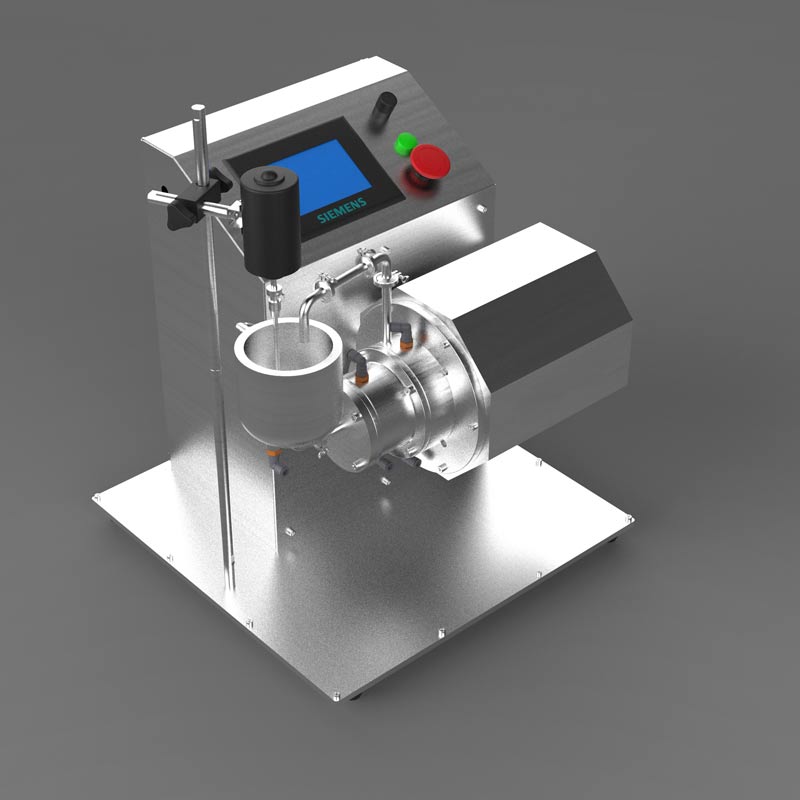
The lab horizontal bar pin nano sand mill is a workhorse for any lab that deals with wet grinding of fine particles. Its combination of efficiency, control, and scalability makes it a smart investment. Check out the product details on the TENCAN website: Lab Horizontal Bar Pin Nano Sand Mill.
If you're planning to move to production later, remember that TENCAN also carries a range of larger sand mills that use the same grinding principle – so your R&D data will scale seamlessly.
Related Products
Liên hệ
Đội ngũ chuyên nghiệp của chúng tôi sẽ phản hồi trong vòng một ngày làm việc. Vui lòng liên hệ với chúng tôi bất cứ lúc nào!