

What is a Vacuum Drying Oven? A Chamber System for Gentle Low-Pressure Drying
From the core, a vacuum drying oven is a specialized thermal processing system that removes moisture or volatile solvents from materials under reduced pressure. Industries such as powder metallurgy, ceramics, battery materials, pharmaceuticals, chemicals, and advanced research use it to dry heat-sensitive powders, granules, components, and composite precursors without exposing them to the full thermal load of atmospheric drying. Instead of relying only on high temperature, the oven combines gentle heating with a vacuum environment, allowing evaporation to occur at a lower temperature and giving operators better control over final dryness, oxidation risk, and material quality.
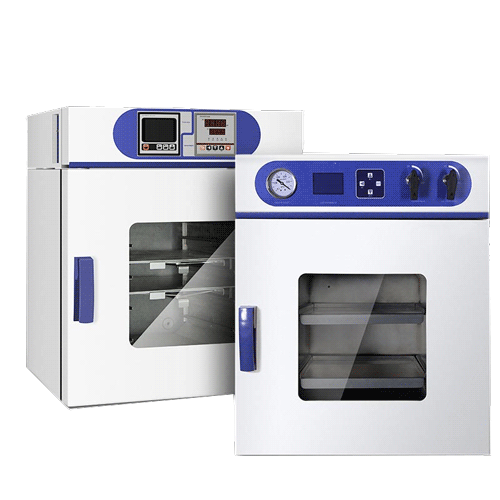
What Is a Vacuum Drying Oven and Why Use Vacuum?
A vacuum drying oven is more than a heated cabinet. It is a closed chamber in which air and vapor are removed by a vacuum pump while heat is applied in a controlled way. The reduced pressure lowers the boiling point of water and many solvents, so drying can proceed at a lower temperature than it would at atmospheric pressure. That matters for materials that may oxidize, degrade, crack, or change phase when exposed to hot air. The oven is therefore used when temperature sensitivity, residual solvent control, or surface quality is important.
The word drying can be misleading because the process is not simply about making a material look dry. The goal is controlled removal of a liquid from the open pores, particle surfaces, and internal structure of the load. In powders, liquid may sit between particles, inside agglomerates, or within porous granules. In components, it may be trapped in narrow channels or absorbed on surfaces. A vacuum drying oven helps draw that liquid out by lowering the pressure around the material and supplying heat to drive evaporation, while the vacuum carries vapor away from the load.
Vacuum also helps remove air from the spaces between particles. Reduced oxygen availability can limit oxidation during drying, although a vacuum oven is not automatically an inert-atmosphere furnace. If a process is highly sensitive to oxygen, the chamber may need purging with an inert gas or a more specialized atmosphere system. This distinction is important: vacuum supports gentle drying, but it does not replace a properly designed atmosphere or safety strategy. The combination of moderate heat and reduced pressure is what makes the vacuum drying oven useful for heat-sensitive materials and solvent-wet powders that cannot be dried quickly in a conventional oven.
How a Vacuum Drying Oven Works
Loading, Sealing, and Evacuation
The material is placed on trays, shelves, or suitable containers inside the chamber. The door is closed and sealed, and the vacuum pump reduces the internal pressure. In many processes, the chamber may first be purged with air or an inert gas to remove oxygen or to sweep out solvent vapor before evacuation. The vacuum level is selected according to the material, the liquid being removed, and the allowable temperature. A lower pressure is not always better; if the pressure falls too quickly, the load may cool, foam, or release vapor faster than the system can manage.
Low-Pressure Heating and Vapor Transport
Heat is supplied by heated shelves, trays, chamber walls, or a jacket, depending on the design. In a vacuum, convection is weak because there is little gas to carry heat. Heat transfer therefore depends heavily on direct contact between the load and the heated surface, as well as on conduction through the material itself. This is why loading method matters. A thin, even layer of powder on a tray dries differently from a deep bed or a tightly packed container. The heated surface raises the temperature of the liquid, the reduced pressure lowers its boiling point, and the pump or condenser removes the resulting vapor from the chamber.
Process Parameters and End Point
Four parameters dominate the process: temperature, pressure, time, and load geometry. Temperature controls the energy available for evaporation, pressure controls the boiling point and vapor removal, time allows the liquid to migrate from the interior to the surface, and load geometry determines how easily heat and vapor can move. Heating rate is also important. A slow, staged ramp can protect sensitive materials, while an aggressive ramp may cause surface crusting, cracking, or uneven drying. The end point may be judged by process time, weight loss, vacuum hold, residual solvent testing, or a combination of methods. For critical products, a simple timer is rarely enough.
Core Components and Design Features
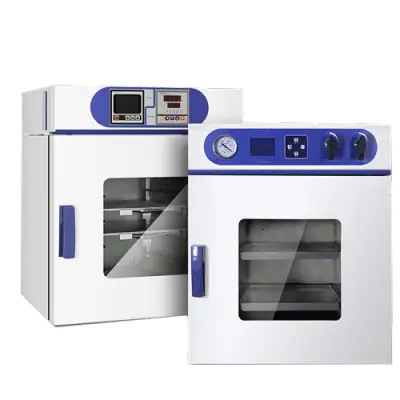
A vacuum drying oven is a system of coordinated parts rather than a single heated box. The main components include:
- Vacuum chamber: a sealed vessel, usually cylindrical or rectangular, designed to withstand external pressure and provide a clean drying space.
- Door and seal: a robust closure with a gasket that maintains vacuum integrity and allows repeated access to the load.
- Heating system: shelves, plates, jackets, or wall heaters that supply controlled heat to the material.
- Vacuum pump and valves: equipment that evacuates the chamber and controls the rate of pressure change.
- Vapor trap or condenser: an optional but important feature for capturing solvents and protecting the pump.
- Sensors and controller: instruments that monitor temperature, pressure, and sometimes load weight or solvent concentration.
- Safety devices: over-temperature protection, pressure relief, leak detection, and compatible materials for solvent service.
- Shelves and trays: removable supports that determine loading capacity, heat contact, and cleaning convenience.
The specific configuration of a production unit determines which features are standard or optional. For a product-level overview, the vacuum drying oven product page is the appropriate starting point.
Common Types and Configurations
Although the basic principle is shared, vacuum drying ovens are built in several configurations to suit different loads, solvents, and production scales. The choice affects drying speed, cleaning, solvent handling, and the amount of operator attention required.
Standard Chamber Ovens
Standard units focus on controlled heating and vacuum drying for water-based moisture or small amounts of solvent. They are common in laboratories, quality control, and small production. Their strength is simplicity: material is loaded, the chamber is sealed, and the process follows a temperature and pressure program. They are well suited to powders, granules, and components that do not release large volumes of flammable or corrosive vapor.
Solvent-Recovery and Condensation Systems
When the load contains organic solvents, a cold trap or condenser can capture vapor before it reaches the pump. This protects the vacuum system, reduces emissions, and can allow solvent recovery. Such systems are preferred for chemical, pharmaceutical, and coating-related drying where solvent volume or cost matters. The materials of construction, seals, and pump type must be compatible with the solvent; otherwise, performance and safety can suffer.
Shelf-Heated, Jacket-Heated, and Combined Designs
Shelf-heated ovens transfer heat directly through trays or plates in contact with the load. Jacket-heated ovens warm the chamber walls and often provide more uniform surroundings for complex parts. Combined designs use both approaches. For powders, direct shelf contact is usually important because it provides a reliable heat path. For bulky or irregular components, wall heating and radiant transfer may matter more.
Laboratory and Production-Scale Units
Laboratory ovens prioritize flexible programming, small batches, and easy observation. Pilot and production units emphasize load capacity, repeatable recipes, service access, and integration with solvent handling or material transfer systems. A larger chamber does not automatically mean faster drying; if heat cannot reach the interior of the load, a large batch may dry more slowly and less evenly than a small, well-spread batch.
Key Performance Indicators and Selection Criteria
Selecting a vacuum drying oven requires looking beyond chamber volume. The right unit must match the material, the liquid being removed, the required final dryness, and the available utilities. Important indicators include:
- Temperature range and uniformity: the oven must reach the required drying temperature without overheating sensitive material, and the load should experience consistent conditions.
- Vacuum performance and leak integrity: the system must reach and hold the intended pressure. A slow leak can extend drying time and increase energy use.
- Chamber volume and loading pattern: usable space matters more than nominal volume. Shelf spacing and tray area affect how much material can be dried evenly.
- Heating rate and control: staged heating and stable holding are important for powders that crust, foam, or crack.
- Solvent compatibility: seals, liners, windows, pumps, and traps must tolerate the liquids and vapors involved.
- Automation and data records: programmable recipes, alarms, and data logging support repeatability and quality documentation.
- Maintenance access: seals, shelves, sensors, and pumps should be easy to inspect and clean.
- Safety and emissions: pressure relief, over-temperature protection, and vapor containment are essential for solvent service.
Selection also depends on throughput and validation needs. A research group may prioritize small batches and flexible programming, while a production team may need consistent loading, solvent recovery, and documented cycles. The best choice is the one that matches the material and the process window, not simply the largest or most highly featured chamber.
Applications in Powder Processing and Materials Research
Vacuum drying ovens appear in many powder and materials processes. In powder metallurgy and ceramics, they remove moisture from milled powders, granulates, and green parts before pressing or sintering. In battery and electronic materials, they help dry precursors and components where residual moisture can affect performance. In pharmaceuticals and fine chemicals, they support gentle drying of intermediates and heat-sensitive solids. In food and natural-product processing, they can preserve color, aroma, or structure better than high-temperature air drying. Research laboratories use them for sample preparation, degassing, and controlled drying before analysis.
The common thread is not a single industry but a process requirement: the material cannot tolerate aggressive heat, or the product needs a low residual liquid content, or the surface must remain clean and oxidation-limited. Vacuum drying is also used to remove air and moisture before sealing, coating, or encapsulation. In each case, the oven is part of a larger process chain, and drying conditions must be compatible with the steps before and after it.
How to Choose the Right Vacuum Drying Oven
A practical selection process starts with the material and works outward to the equipment. First, identify the liquid to be removed and its approximate content. Second, define the maximum safe product temperature and the desired final moisture or solvent level. Third, estimate the batch size and the allowed drying time. Fourth, review solvent compatibility and safety requirements. Finally, match these needs to chamber size, heating method, vacuum performance, and control features.
- For small research batches: prioritize flexible temperature and pressure programs, easy cleaning, and a compact chamber.
- For heat-sensitive powders: use gentle staged heating, good shelf contact, and conservative pressure control.
- For solvent-wet materials: specify compatible seals and a suitable trap or condenser, and plan for safe ventilation.
- For scale-up: test loading depth and shelf spacing, because drying behavior can change significantly with batch size.
- For quality-critical work: choose controls that record temperature, pressure, and cycle time, and define a clear end-point method.
It is also wise to test the actual material rather than relying only on general rules. A powder that dries well in a thin layer may form a hard crust in a deeper tray. A solvent that is easy to remove in small amounts may require condensation and recovery at larger scale. For a specific configuration, refer to the TENCAN vacuum drying oven page and compare the available features with the process requirements.
Operational Best Practices and Common Questions
How Dry Is Dry Enough?
Dryness should be defined by the product specification, not by appearance alone. A powder may look free-flowing while still holding moisture inside agglomerates. Useful checks include weight loss under a defined cycle, vacuum hold tests, residual moisture analysis, or solvent-specific testing. For critical materials, establish a drying curve and verify that the interior of the load reaches the required condition, not just the surface.
Why Does Vacuum Drying Sometimes Take Longer?
Vacuum lowers the boiling point, but it also reduces convective heat transfer. If heat cannot reach the load efficiently, evaporation slows. Deep beds, poor tray contact, cold shelves, or excessive vacuum at the start can all extend the cycle. In many cases, the solution is not a higher temperature but better loading, improved contact, or a staged pressure profile.
Can Every Solvent Be Handled Safely?
No. Solvents differ in flammability, corrosivity, toxicity, and compatibility with seals and pumps. A vacuum oven must be configured for the specific solvent, and the surrounding area must be suitable for the vapor involved. When solvent volume is significant, condensation, recovery, and ventilation should be part of the process design. If compatibility is uncertain, consult the equipment supplier and the material safety data.
What Maintenance Matters Most?
Door seals, vacuum lines, valves, sensors, and pump oil or filters require regular attention. A worn seal can cause slow leaks and inconsistent drying. Contaminated traps can reduce pumping efficiency. Dirty shelves can cause uneven heat transfer. A simple maintenance schedule and a record of vacuum hold tests help catch problems before they affect product quality.
Is a Vacuum Drying Oven the Same as a Freeze Dryer or Furnace?
No. A freeze dryer removes water by sublimation from a frozen product, while a vacuum drying oven uses low-pressure heating to evaporate liquid. A furnace is designed for high-temperature thermal treatment such as sintering or calcination. The vacuum drying oven is a gentler tool for removing moisture or solvent; it is not a substitute for a high-temperature furnace when the process requires sintering, annealing, or phase transformation.
Conclusion: A Controlled Drying Tool
A vacuum drying oven is best understood as a controlled environment for removing liquid from sensitive materials. Its value comes from the combination of moderate heat, reduced pressure, and careful vapor management. When the chamber, heating method, vacuum system, and operating recipe are matched to the material, the result can be more uniform drying, lower thermal damage, and better control over residual moisture or solvent. When they are mismatched, the same equipment can produce slow cycles, crusting, or inconsistent batches. The practical approach is to define the material and process window first, then select the oven configuration and operating procedure that support that window.
Related Products
Get In Touch
Our professional team will reply to you within one business day. Please feel free to contact us!