

What is a Plastic Crusher? A Crushing Equipment Used for Recycling Plastic Waste and Processing Scrap Materials
What is a Plastic Crusher?
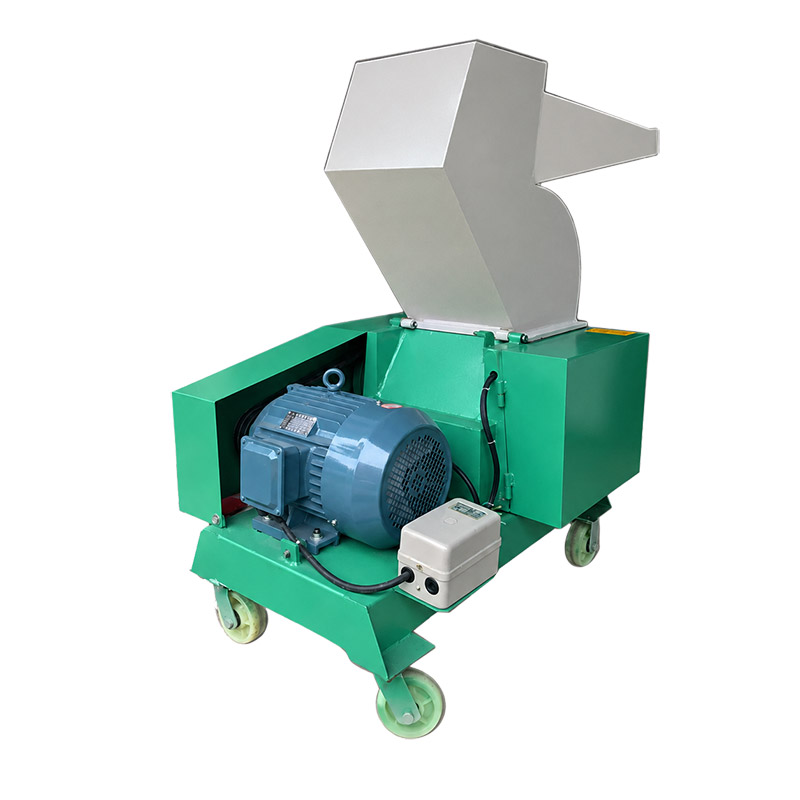
At its core, a plastic crusher is a specialized crushing machine used in the plastics industry to reduce the size of various plastic materials—such as injection molded runners, sprues, defective parts, pipes, films, sheets, and recycled materials—into smaller granules or flakes. These granules can then be directly reused in extrusion or injection molding processes, or further processed for recycling. The plastic crusher is an essential piece of equipment in any plastic processing facility aiming to improve material utilization and reduce waste.
Core Function and Working Principle
The primary function of a plastic crusher is to convert large, irregular plastic scrap into uniformly sized granules. The machine typically consists of a hopper, a crushing chamber, rotating blades (knives), stationary blades, and a screen mesh. The material is fed into the hopper, where it enters the crushing chamber. Inside the chamber, a high-speed rotor equipped with multiple moving blades rotates at a high velocity, while stationary blades are mounted on the housing. The plastic material is continuously cut, sheared, and impacted between the moving and stationary blades until it is reduced to small particles that can pass through the screen mesh at the bottom of the chamber.
The final particle size is controlled by the diameter of the screen holes. A smaller screen yields finer granules but may reduce throughput due to increased recirculation. The crushing process also generates heat, especially for soft or heat-sensitive materials like PE or PP, which can lead to blade sticking or melting. Therefore, some models are equipped with water cooling systems to maintain optimal operating temperatures.
Key parameters affecting the crushing result include rotor speed, blade geometry, blade material, screen aperture, and feed rate. Proper adjustment of these parameters is crucial for achieving the desired granule size and quality while minimizing energy consumption and blade wear.
Main Types of Plastic Crushers
Plastic crushers can be classified into several types based on the material characteristics and application scenarios:
1. Hard Plastic Crusher
Designed for crushing rigid and hard plastic materials such as ABS, PE, PP sheets, and plates. It features a rectangular feed opening that facilitates the feeding of long, flat boards. The machine uses heavy-duty blades and a robust construction to handle the impact and stress of hard plastics.
2. Strong Plastic Crusher
A versatile type suitable for crushing a wide range of plastic products including sheets, pipes, profiles, plates, and packaging materials. It uses a blade design that is a hybrid between claw-type and flat-type blades, offering good cutting efficiency for both soft and semi-rigid materials. This is the most common type used in injection molding and extrusion plants.
3. Pipe Plastic Crusher
Specifically designed for crushing plastic pipes and tubes, such as PE, PVC, and silicone core pipes. It has a circular or specially shaped feed opening that allows long pipes to be fed easily. The crushing chamber is optimized to handle the cylindrical shape of pipes without jamming.
In addition, there are crushers for film materials, which often require special anti-wrapping designs and lower speeds to prevent thermal fusion. The choice of type depends on the specific waste material, its shape, size, and hardness.
Key Performance Indicators and Selection Points
When selecting a plastic crusher, the following factors should be carefully evaluated:
- Throughput Capacity: The amount of material processed per hour (kg/h). This is influenced by motor power, blade design, screen size, and material characteristics. It is essential to match the crusher's capacity with your production volume.
- Particle Size Control: The ability to produce consistent granule size depends on the screen mesh. A smaller screen yields finer particles but may reduce throughput. Determine the required granule size for your downstream process.
- Motor Power and Speed: Power is not simply bigger is better. It should match the hardness and quantity of the material. For high-hardness materials like PA66+GF30, a 22-37 kW motor with frequency control is recommended. For soft materials, lower power (15-22 kW) with lower speed reduces heat generation.
- Blade Material and Maintenance: Blades are typically made of alloy steel or high-speed steel. The blade's hardness, wear resistance, and ease of replacement are critical for long-term operation. Some crushers offer adjustable blade gaps to compensate for wear.
- Noise Level: Many crushers feature soundproof enclosures (double-layer construction with sound-absorbing material) to reduce noise during operation, which is important for workplace safety.
- Ease of Cleaning: For applications where frequent material changes occur, a crusher with a separable design (hopper, chamber, screen base) that can be quickly disassembled and cleaned is advantageous.
- Automation and Safety: Features like overload protection, power interlock, and automatic feeding systems improve operational safety and efficiency.
Remember that the theoretical capacity listed in the specification is only a reference. The actual throughput depends on the shape, size, wall thickness, and sharpness of the blades. Always test with your actual material to confirm performance.
Application Fields and Selection Suggestions
Plastic crushers are widely used in the following industries:
- Injection Molding and Extrusion Plants: To recycle sprues, runners, defective parts, and edge trims directly at the machine (often called "granulators" or "regrind machines").
- Plastic Recycling Facilities: For processing post-consumer or post-industrial plastic waste into clean flakes for washing and pelletizing.
- Pipe and Profile Manufacturers: To crush off-cuts and rejected pipes.
- Film and Sheet Producers: To reduce film scrap, edge trim, and rolls.
For small-scale operations, a compact crusher with a power range of 2.2-5.5 kW is often sufficient. For medium to large recycling lines, crushers with 15-37 kW motors and high throughput are recommended. If you process a variety of materials, consider a multi-functional crusher with adjustable speed and interchangeable screens. For tough materials like glass-filled nylon or large pipes, a heavy-duty crusher with reinforced blades and a robust frame is necessary.
Always consult with the manufacturer to match the crusher to your specific material type, size, and output requirements. A reputable supplier like TENCAN's plastic crusher can provide tailored solutions based on your production needs.
References
Related Products
Get In Touch
Our professional team will reply to you within one business day. Please feel free to contact us!