
What is a Plastic Crusher? A High-Efficiency Size Reduction Machine for Plastic Recycling and Processing

What is a Plastic Crusher?
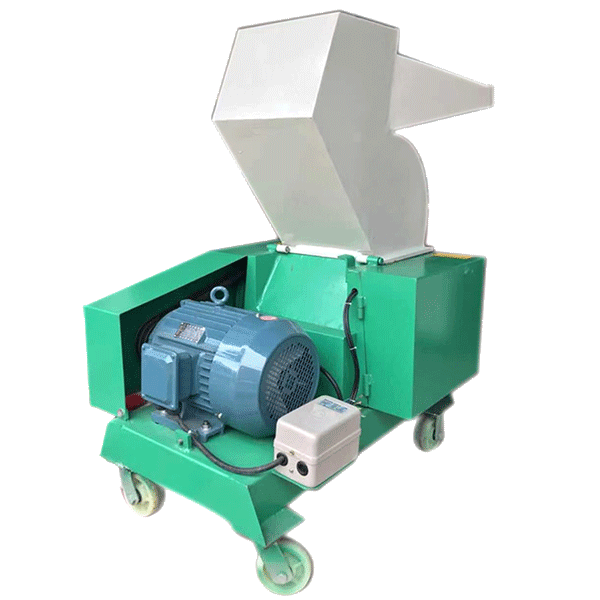
At its core, a plastic crusher is a professional size reduction machine that the plastic recycling and processing industries use to break down large plastic waste, scrap, and defective products into smaller, uniform granules or flakes. This equipment is essential for preparing materials for subsequent washing, melting, granulation, or compounding in both laboratory and industrial settings.
Core Function and Working Principle
The primary function of a plastic crusher is to convert bulky plastic materials, such as injection molded parts, film, pipes, bottles, and lumps, into particles typically ranging from 3 mm to 20 mm. The working principle relies on high-speed shearing and impact between rotating blades (rotor) and stationary blades (stator). The rotor, driven by an electric motor, spins at speeds of 300–800 rpm, forcing the plastic against the stationary blades. A screen mesh at the bottom of the crushing chamber determines the final particle size; only particles smaller than the mesh openings can pass through, while larger pieces continue to be cut until they meet the size requirement.
Key process parameters affecting the output include blade type, rotor speed, screen aperture, and feed rate. A finer screen produces smaller granules but reduces throughput, while a coarser screen increases capacity but yields larger particles. The machine can handle both rigid and flexible plastics, though the blade geometry and motor power must be matched to the material's hardness and toughness.
Key Components and Technologies
Modern plastic crushers consist of several critical components:
- Blades (Rotor and Stator): Made from high-alloy tool steel or hardened stainless steel, these blades are designed for long wear life and sharp cutting edges. The number of blades (typically 2-5 rows) and their arrangement influence the crushing efficiency and particle uniformity.
- Screen Mesh: Interchangeable screens with round or square holes determine the final particle size. Common apertures range from 4 mm to 20 mm.
- Motor and Drive System: Direct-drive or belt-driven motors provide the necessary torque and speed. Power ratings vary from 0.75 kW for small laboratory units to 30 kW for industrial machines.
- Hopper and Discharge: A feed hopper ensures safe material loading, while a discharge chute or collection bin receives the crushed material.
- Safety Features: Overload protection, emergency stop buttons, and interlocking switches are standard to prevent accidents.
Some advanced models also include a dust collection port, soundproof enclosure, or automatic reverse function to clear jams.
Key Performance Indicators and Selection Criteria
When selecting a plastic crusher, consider the following indicators:
- Throughput Capacity: Measured in kg/h, this depends on motor power, rotor speed, screen size, and material type. Laboratory units typically handle 10–50 kg/h, while industrial models can exceed 500 kg/h.
- Output Particle Size: A narrow size distribution is desirable for consistent downstream processing. The crusher should be able to achieve the target granule size with minimal fines.
- Power Consumption: Energy efficiency is important for continuous operation. Look for machines with high-efficiency motors and optimized blade designs.
- Noise Level: Plastic crushing generates significant noise (80–110 dB). Enclosed designs or soundproof cabins can reduce noise to acceptable levels.
- Maintenance Convenience: Quick-change blade and screen assemblies reduce downtime. Easy access to the crushing chamber for cleaning is essential for multi-material applications.
For laboratory use, portability, low noise, and easy cleaning are priorities. For industrial recycling, rugged construction, high throughput, and long blade life are more critical.
Application Areas and Selection Recommendations
Plastic crushers are widely used in:
- Plastic Recycling Plants: Processing post-consumer waste (bottles, containers, film) and industrial scrap (sprues, runners, defective parts).
- Injection Molding and Extrusion Facilities: On-site size reduction of scrap and off-spec products for immediate re-processing.
- Laboratories and R&D Centers: Preparing small batches of plastic samples for testing, compounding, or formulation.
- Waste Management: Reducing the volume of plastic waste before transportation or landfill.
For customers new to plastic crushing, start by identifying the material type (soft, hard, fiber-reinforced, etc.) and the desired output size. Small-scale operations can benefit from compact, easy-to-use plastic crusher models offered by TENCAN, which are designed for both laboratory and light industrial use. For larger throughput, consider double roll crushers or multi-functional crushers for more versatile size reduction.
References
Product page: https://www.planetaryballmills.com/products/broken-series/plastic-crusher.html
Related Products
Get In Touch
Our professional team will reply to you within one business day. Please feel free to contact us!