

What Is a Laboratory Planetary Grinder? A Benchtop Mill for Fine Powder Milling
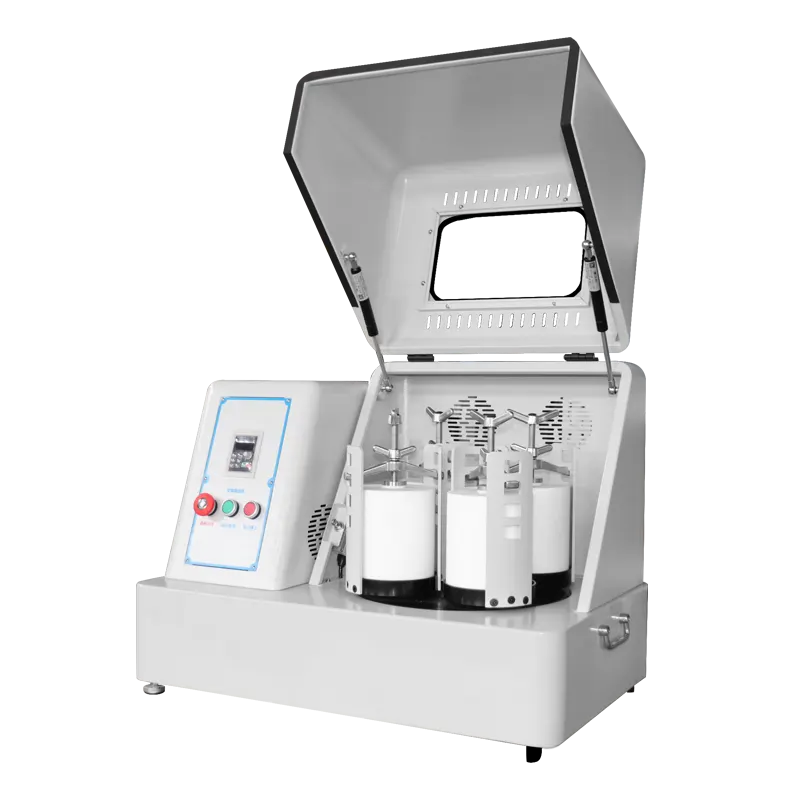
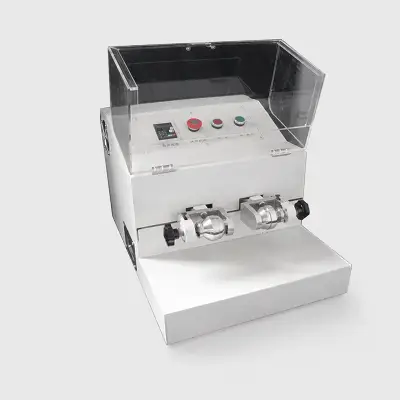
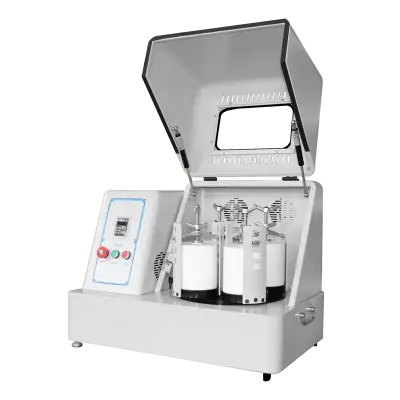
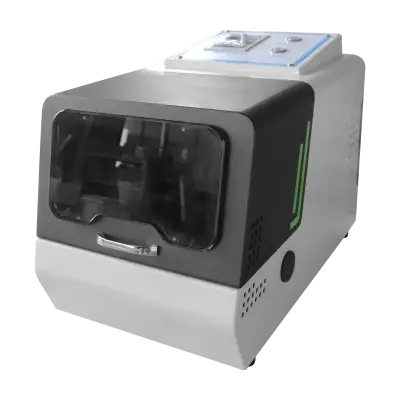
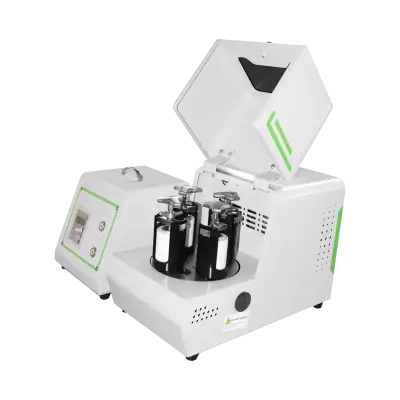
From the core, a laboratory planetary grinder is a benchtop milling machine that laboratories use to reduce small quantities of solid material to fine or ultrafine powder. It is not a production-scale crusher or a conventional rotary ball mill. Instead, it creates a compact, high-energy grinding environment in which one or more sealed jars revolve around a central axis while also spinning about their own axes. This compound motion—the reason for the word 'planetary'—transfers energy to grinding balls inside each jar. The balls collide with the sample and rub against it, breaking particles down by impact, attrition, and shear. The result is a versatile sample-preparation tool for materials that must be homogenized, pulverized, mixed, or mechanically activated before analysis or further processing. Typical users include materials science laboratories, geology and mining laboratories, ceramics and glass researchers, battery and energy-materials groups, pharmaceutical development teams, and quality-control departments. The machine is especially useful when the sample is valuable, the available quantity is small, or contamination control matters. Because the sample is enclosed in a removable jar, the operator can choose a jar material that suits the chemistry of the sample and clean the grinding chamber between batches. The laboratory planetary grinder is therefore best understood as a flexible laboratory platform rather than a single fixed process.
How a Laboratory Planetary Grinder Works
From Coarse Feed to Fine Powder
A planetary grinder does not usually receive a large run-of-mine lump. It is a laboratory tool, so the feed is normally material that has already been crushed, cut, or otherwise reduced to a size that fits comfortably inside the grinding jar. The exact feed size depends on the jar diameter, the ball diameter, the density and toughness of the sample, and the target fineness. As a rule, smaller jars and smaller balls require a finer feed, while larger jars can accept somewhat coarser fragments. The operator also has to leave enough free volume for the balls to move; overfilling a jar can suppress the very collisions that make grinding effective. Grinding then proceeds through repeated fracture, attrition, and mixing until the powder reaches the required fineness or the process reaches its practical limit.
The Planetary Motion and Energy Transfer
The word 'planetary' describes the geometry. Each grinding jar is mounted on a rotating carrier, often called the sun wheel, and each jar also rotates about its own axis. The two rotations are normally in opposite directions. As a result, the balls inside the jar are subjected to changing centrifugal and gravitational forces. Instead of simply tumbling at the bottom of a large drum, they are repeatedly carried up the curved wall, released, and driven back into the sample. The combined action gives a laboratory planetary grinder a high energy density relative to its small footprint.
Most size reduction comes from impact and from attrition. Impact occurs when a moving ball strikes a particle or a compacted bed of powder. Attrition and shear occur as balls rub past one another and drag powder along the jar wall. Hard, brittle crystals tend to respond well to impact; fibrous, soft, or layered materials may need more sliding and shearing action, which can be encouraged by changing ball size, ball density, liquid medium, or rotation speed. The relative importance of these mechanisms is one reason why two laboratories can obtain different results from the same nominal material and the same machine model.
Grinding Media, Jars, and Material Contact
Every surface that touches the sample is part of the process. The jar and the grinding balls can wear, and that wear becomes contamination. A hard, dense medium such as tungsten carbide or zirconia is often chosen when the sample is tough and contamination by iron or other elements must be limited. Agate is useful when a relatively inert, low-contamination surface is needed for softer materials, while stainless steel is common for general-purpose work where its wear products are acceptable. Polymeric jars and media can suit soft or reactive samples, but they may not supply enough energy for hard minerals. The correct combination depends on sample hardness, chemistry, permitted contamination, and the desired particle size. Ball size is another compromise: larger balls carry more mass and deliver stronger impacts, while smaller balls create more contact points for fine grinding. The ball-to-powder ratio, fill level, and number of balls all influence how often the sample is struck and how much void space remains for movement.
Key Components and Configurations
Jars and Sealing Systems
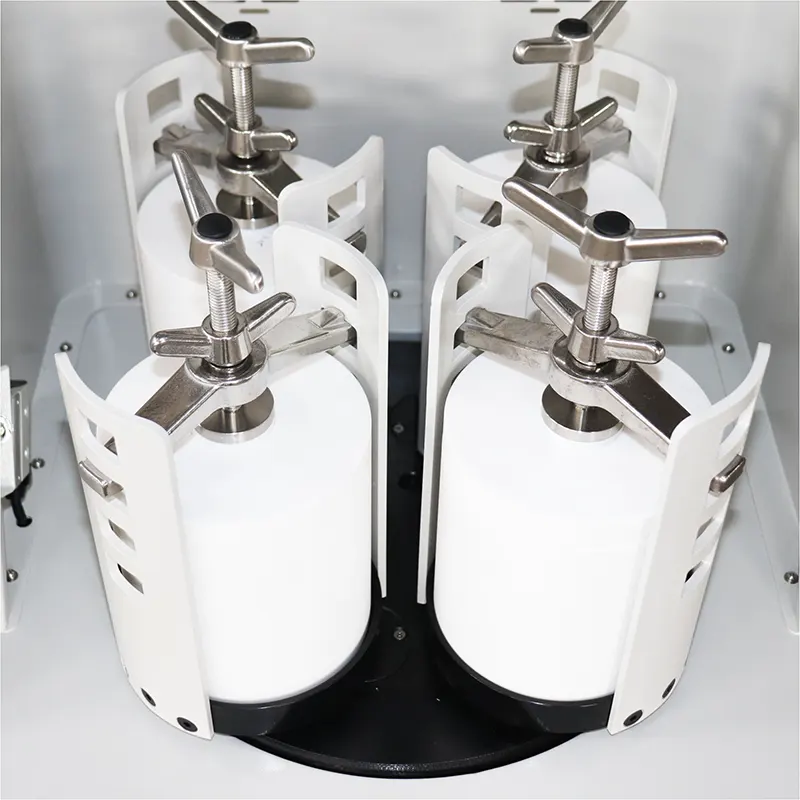
A laboratory planetary grinder is built around its jar stations. The jar is not a casual accessory; it is the grinding chamber, the containment vessel, and sometimes the atmosphere-control boundary. A well-designed jar closes firmly, resists the internal pressure and temperature changes of milling, and can be handled without contaminating the sample. Lids may include sealing rings, clamping systems, or ports for gas exchange. For air-sensitive materials, an inert-gas-filled jar or a glove box may be needed; for wet samples, the seal must be compatible with the solvent. Jar geometry also matters. A cylindrical jar with a matching ball charge produces a different flow pattern from a jar with a rounded interior, and the internal volume must leave room for ball motion without creating a dead zone where powder packs and escapes grinding.
Drive, Control, and Safety
The drive system converts electrical power into controlled rotation of the sun wheel and jars. A laboratory machine needs smooth acceleration, stable speed under load, and a stopping sequence that does not throw powder or damage the jar. The control panel may offer timed runs, adjustable speed, direction changes, and stored programs. These features are useful because reproducible milling depends on repeating the same motion profile, not only on reaching the same nominal speed. Safety features deserve attention during selection. The jars are spinning with significant energy, so the working chamber should be enclosed and interlocked. The machine should be stable on the bench, with enough clearance for ventilation and jar removal. Over-temperature protection, motor overload protection, and clearly marked emergency stops are basic expectations. For long or unattended runs, confirm that the control system can handle the intended duty cycle and that the jar seals are rated for the process.
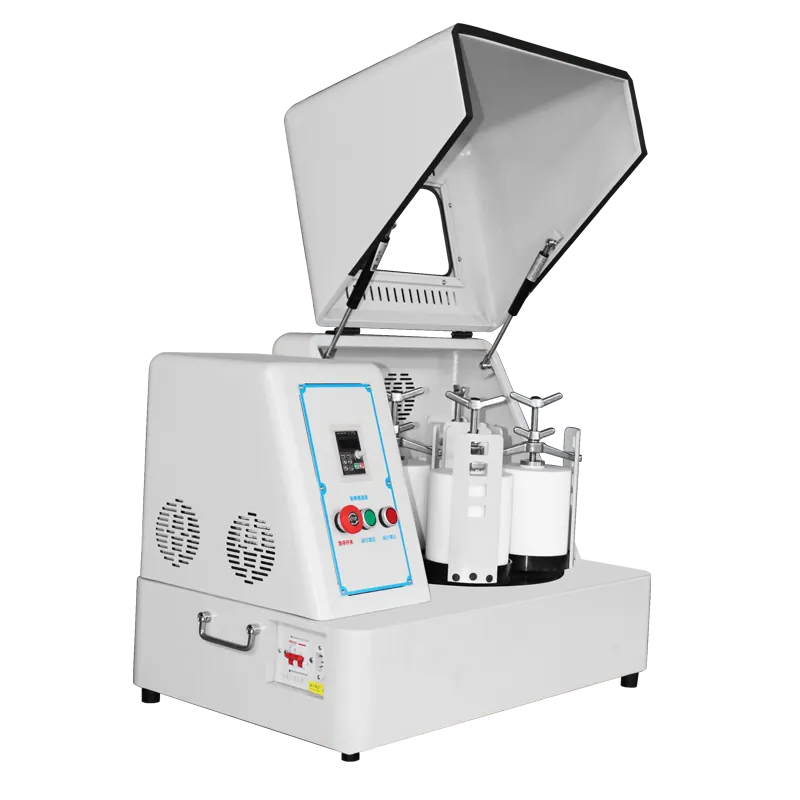
Single-Station and Multi-Station Layouts
Laboratory planetary grinders are available in different station arrangements. A single-station machine holds one jar and is a straightforward choice for method development, teaching, or low-throughput work. A multi-station machine holds several jars on the same carrier, allowing parallel runs under similar motion conditions. Parallel processing is useful for comparing formulations, running replicates, or preparing several samples for analysis. It does not necessarily multiply the available energy per jar, because the drive and carrier are shared; the practical benefit is throughput and consistency across jars rather than a larger batch in one container. The choice depends on workload and experimental design. A laboratory that mostly runs one-off samples may prefer the simplicity and bench space of a single-station unit. A laboratory that routinely handles batches or multiple materials may gain more from a multi-station configuration, provided it has enough jars and enough trained operators to keep the stations properly loaded and cleaned. The laboratory planetary grinder product family is one place to compare these practical arrangements.
Key Operating Parameters and Their Effects
Rotational Speed and Energy Input
Speed is the most visible parameter, but it is not a simple 'faster is better' setting. Higher speed generally increases the kinetic energy of the balls and the frequency of impacts, which can shorten grinding time and produce finer particles. It can also raise the temperature inside the jar, accelerate jar and media wear, and increase the risk of agglomeration or chemical change. Some soft or heat-sensitive materials need lower speed, shorter runs, or interrupted operation. The useful speed range depends on jar diameter, ball mass, and the mechanical design of the machine. Operators should establish a starting point from the manufacturer's instructions and then adjust it against measured results rather than assuming that the maximum setting is the most efficient. Recording the set speed, actual run time, number of intervals, and any direction changes turns a vague procedure into a transferable method.
Grinding Time and Interval Programming
Grinding time is the easiest variable to change and the easiest to misinterpret. A longer run does not automatically produce a finer powder. After a certain point, fine particles may re-agglomerate, the sample may coat the balls and cushion further impacts, or the powder may become so fine that it is difficult to recover. Heat buildup can also alter the sample. Many laboratories therefore use short cycles with pauses, sometimes reversing direction between cycles, to let the jar cool and to refresh the surfaces of the charge. The best duration is the shortest one that reaches the required fineness and homogeneity without unnecessary wear or contamination. A time study is a sensible first experiment for a new material. Run several small batches for different durations, measure the particle size or examine the powder microscopically, and compare the results with the analytical requirement. This approach uses less sample than a single long run and shows whether the material is responding by fracture, deformation, or agglomeration.
Ball-to-Powder Ratio, Fill Level, and Ball Size
The ball-to-powder ratio describes how much grinding media is present relative to the sample. A higher ratio provides more collision sites and usually more energy per unit of powder, but it also reduces the sample capacity of the jar and increases wear. A lower ratio allows more sample per batch but may leave particles unground or produce a broader distribution. There is no universal ratio; it depends on jar volume, media density, and the toughness of the feed. What matters is that the ratio is recorded and kept constant when a method is transferred. Fill level follows a similar logic. The jar should not be packed so full that the balls cannot move, and it should not be so empty that the charge has little contact. A practical starting point is to leave a substantial free volume above the settled charge, then observe whether the balls are actually cascading and impacting rather than simply sliding. Ball size should be matched to the feed: coarse or hard material benefits from a stronger impact, while fine grinding benefits from more contact points.
Atmosphere, Temperature, and Sample Chemistry
Many materials change when they are exposed to air, moisture, or heat. A sealed jar can limit exchange with the surroundings, but it cannot remove the air already inside unless the jar is purged or filled in a controlled atmosphere. Oxygen-sensitive metals, battery materials, and some organic compounds may need an inert-gas glove box or a specialized jar. Temperature is equally important: the mechanical energy that breaks particles also becomes heat. If the sample is a polymer, a hydrate, or a biological material, excessive heating can cause melting, dehydration, or decomposition. Low-temperature configurations and interrupted runs are ways to manage this risk, but the simplest safeguard is to use the minimum energy that achieves the analytical goal. Chemical compatibility should be checked before every new material. The sample may react with the jar, balls, or sealing ring; a small trial run with careful before-and-after observation is better than discovering a problem after a valuable batch has been processed.
Performance Indicators and Selection Criteria
Capacity and Useful Throughput
Capacity should be read carefully. A jar's nominal volume is not the amount of powder that can be processed effectively. The sample occupies only part of the jar, and the ball charge occupies another part. Effective batch size is therefore much smaller than the jar volume, and it falls further when a high ball-to-powder ratio is required. Buyers should ask how much material can be processed per jar in a realistic method, not only what the largest jar can hold. Throughput also includes setup, cleaning, and analysis time; a machine that runs quickly but is difficult to clean may be slower in practice than a more modest unit with easy jar handling.
Fineness, Reproducibility, and Contamination
The achievable particle size depends on the material, not only on the machine. Hard brittle crystals may reach submicron sizes in a high-energy planetary grinder, while soft, sticky, or fibrous materials may stop at a coarser size or require a different approach. A supplier's claim should be matched to the user's material and analytical target. Reproducibility is equally important: the same sample, jar, media, speed, and time should give a comparable result across runs. This is why programmable controls, clear jar labeling, and documented methods matter. Contamination is the third leg of the triangle. If the jar wears, the powder gains material that may interfere with X-ray diffraction, elemental analysis, or electrochemical testing. The best choice is the jar and media combination that reaches the required fineness with the least acceptable contamination. A blank run with the same jar and media can reveal what the process contributes to the powder.
Automation, Energy, and Maintenance
Energy use in a laboratory grinder is modest compared with production equipment, but efficiency still matters. A well-matched process reaches the target in a short run rather than wasting time and wearing out jars. Automation can improve consistency through stored programs, timed pauses, and controlled acceleration. It cannot replace method development; a program is only as good as the parameters it contains. Maintenance is similarly practical. Check whether jars, seals, and media are easy to inspect and replace, whether the working chamber can be cleaned without tools, and whether the drive has adequate overload protection. A machine that is simple to maintain is more likely to remain reproducible over its service life.
| Selection area | What to verify | Why it matters |
|---|---|---|
| Batch size | Effective sample mass per jar | Nominal volume is not usable capacity |
| Fineness | Trial with the actual material | Response varies by hardness and structure |
| Contamination | Jar and media wear; blank run | Protects analytical accuracy |
| Atmosphere | Sealing, purging, or glove-box use | Protects air-sensitive powders |
| Workflow | Stations, jar handling, cleaning time | Determines realistic throughput |
| Maintenance | Seals, drive, chamber access | Supports long-term reproducibility |
Applications and Selection Advice
Laboratory planetary grinders are used across many fields because the same basic motion can be adapted with different jars and media. In geology and mining, they prepare rock, ore, and mineral samples for chemical analysis, X-ray diffraction, or microscopy. In ceramics and glass research, they reduce clays, oxides, and frits and mix additives into a homogeneous batch. In battery and energy materials, they blend active materials and conductive additives and reduce particle size under controlled conditions. In pharmaceutical and biological work, they homogenize small samples, although heat and contamination control are especially important. Environmental laboratories use them for soil, sediment, and waste samples; materials science groups use them for alloys, polymers, composites, and mechanical activation studies.
Selection should begin with the sample, not the brochure. Define the feed size, sample mass, target fineness, permitted contamination, temperature sensitivity, and whether the powder must remain dry or can be processed as a slurry. Then match the jar material, ball material, and machine configuration to those constraints. A teaching laboratory may need a simple, robust single-station unit with a few common jars. A research group comparing many formulations may value multi-station operation and programmable cycles. A quality-control laboratory may prioritize repeatable methods, easy cleaning, and documented maintenance. When the material is new or valuable, run a small feasibility test before committing to a large jar set. The questions above will narrow the choice and make the final selection easier to justify.
Frequently Asked Questions
Is a planetary grinder the same as a ball mill?
It is a type of ball mill. The difference is the planetary motion: the jars rotate around a central axis and about their own axes, producing a compact, high-energy action rather than the simple tumbling of a conventional drum mill. This makes it well suited to laboratory sample preparation, where small batches and fine powders are more important than bulk output.
Can one machine process both hard and soft samples?
Often it can, but not with the same jar and media. Hard minerals may need dense media and stronger impacts; soft or ductile samples may need gentler action, smaller media, or a different jar material to avoid smearing and contamination. The operating method should be developed for the material rather than copied without adjustment.
Where to Learn More
For configuration details and jar options, see the laboratory planetary grinder product page.
Related Products
Get In Touch
Our professional team will reply to you within one business day. Please feel free to contact us!