

What Is a Laboratory Planetary Grinder? A Benchtop Mill for Nano Powder Grinding
What Is a Laboratory Planetary Grinder?
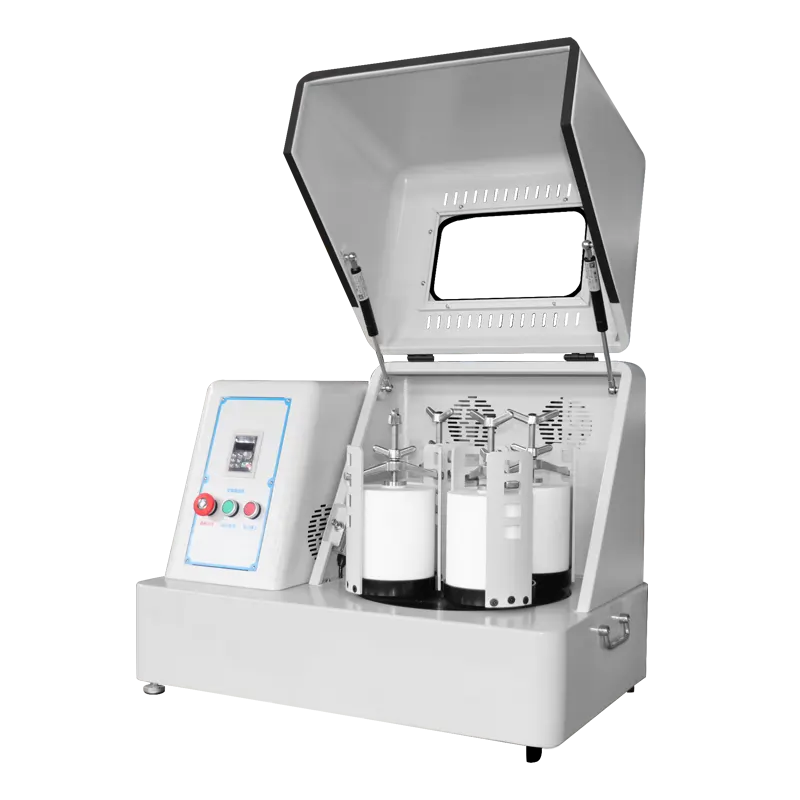
From the core, a laboratory planetary grinder is a compact, benchtop grinding machine that laboratories use to reduce small batches of solid material to fine and ultrafine powder. It belongs to the planetary ball mill family, and its name describes the motion of the grinding jars: each jar spins around its own axis while the disc carrying it rotates in the opposite direction, the way planets orbit the sun. Because the sample is processed between hard balls inside a sealed jar, the grinding is fast, repeatable and suitable for materials that are expensive, rare, hazardous or sensitive to air.
The equipment answers a very practical question: how do you produce a few grams to a few hundred grams of a well-defined powder without contaminating it? A laboratory planetary grinder is used to prepare mineral, ceramic, cement, metal, polymer and biological samples before X-ray diffraction, X-ray fluorescence, spectroscopy, particle size analysis, microscopy or mechanical testing. Its jars can be sealed inside a glove box for oxygen-free work, filled with a solvent for wet grinding, or chilled for soft and elastic materials that refuse to break at room temperature. In short, it is the standard benchtop tool for turning a coarse, heterogeneous sample into a homogeneous powder that an analytical instrument can trust.
Working Principle: How Coarse Particles Become Fine Powder
Planetary motion and the origin of grinding energy
The grinding jars are clamped onto a rotating carrier, usually called the sun disc. When the disc turns, every jar revolves around the centre of the machine and, at the same time, spins around its own axis through a belt or gear transmission. The two rotations run in opposite directions, so the movement of the jar is a combination of revolution and rotation; this is exactly the geometry that gives the device its planetary name.
Because the jar is being carried around a circle while it turns on its own axis, the centrifugal field inside it changes continuously in both direction and magnitude. Balls that are pressed against the outer wall of the jar at one moment are later thrown towards the inner side, and the interaction between the jar wall and the balls keeps the charge in constant turbulent motion. Compared with a simple tumbling jar mill of the same size, this double motion transfers considerably more kinetic energy to the grinding media per unit of time, which is why a planetary grinder can reach micrometre-scale powders within minutes instead of hours.
Impact and friction: the two grinding mechanisms
Inside the jar, the milling balls are lifted by the rotating wall, carried along the curved surface and then released or rolled against the opposite side. Material that is caught between a ball and the jar wall is stressed by compression; material that is squeezed between two balls moving at different speeds is stressed by shear and friction. Both mechanisms operate simultaneously, and their ratio depends on the speed of rotation, the size and density of the balls and the filling level of the jar.
Hard, brittle materials such as quartz, corundum, cement clinker, glass and silicon break mainly through impact, producing sharp-edged fragments that are progressively refined as grinding continues. Softer or more ductile materials — metals, polymers, plant tissue — deform rather than shatter, so they rely more on friction and shear; if they are ductile enough, they may cold-weld into flakes instead of breaking, which is why cryogenic or wet grinding is often required for them. Whichever mechanism dominates, the practical objective is the same: create fresh fracture surfaces faster than the fine particles can re-agglomerate.
Process parameters that control the final powder
Five parameters decide what comes out of the jar. The first is rotational speed: the energy transferred to the balls rises sharply with speed, so doubling the speed can shorten grinding time dramatically, but it also raises the temperature inside the jar and increases wear on jars and balls. The second is the ratio between the rotation of the sun disc and the rotation of the jars, which changes the trajectory of the balls and therefore the balance between impact and friction.
The third is the ball-to-powder ratio, usually expressed by weight. A ratio between roughly 5:1 and 20:1 is typical for laboratory work; a higher ratio grinds faster but leaves less room for sample. The fourth is the size distribution of the balls: large balls break coarse particles efficiently, while small balls create the finest powder, so a mixture of diameters is often the best compromise. The fifth is the filling degree of the jar — a common rule of thumb is one third balls, one third sample and one third free space, so that the charge has enough room to move.
Also important is whether the process is dry or wet. Dry grinding is simple and keeps the powder free of solvent, but fine particles tend to coat the walls and balls and to re-agglomerate. Wet grinding with water, ethanol, isopropanol or another suitable liquid disperses the particles, prevents agglomeration, improves the achievable fineness and reduces dust, although it adds a drying step. For heat-sensitive samples, short grinding intervals with cooling pauses — a programmable feature on most modern laboratory planetary grinders — are more effective than a single long run.
Core Components and Configurations
Grinding jars
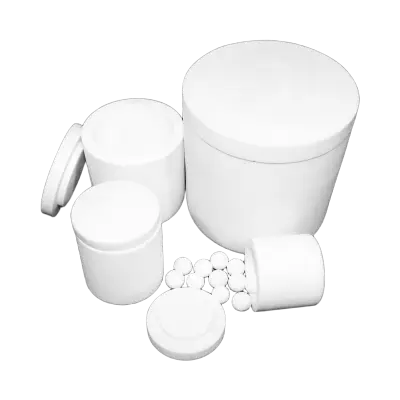
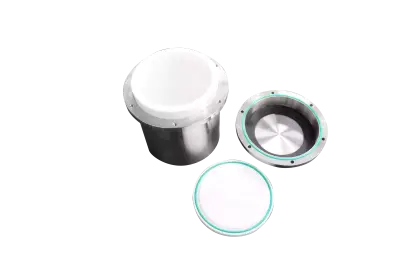
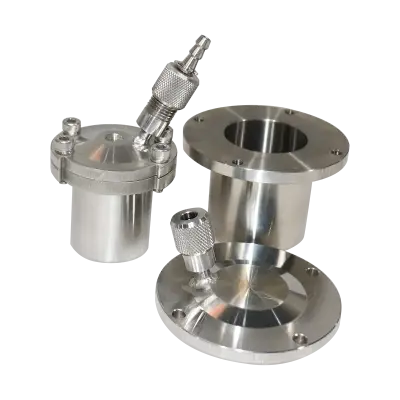
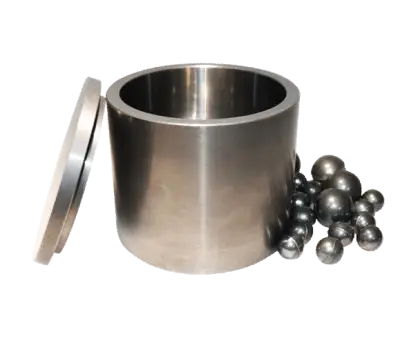
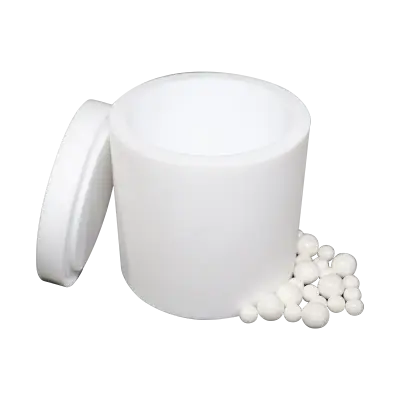
The grinding jar is both the process chamber and a major consumable. It must be harder than the sample to avoid excessive wear, chemically compatible with the sample and the solvent, and thermally stable. Agate jars are the classic choice for contamination-sensitive spectroscopic work; zirconia and corundum (alumina) jars offer higher density and hardness for ceramics and minerals; stainless steel jars are durable and impact-resistant for metals and general use; and nylon, PTFE or polyurethane jars are used for soft, sticky or biological samples and for gentle homogenisation. Vacuum jars allow grinding without air.
Grinding balls and the grinding media
Balls are selected to match the jar material and the target particle size. Zirconia, agate, corundum and tungsten carbide balls are preferred where contamination must be minimised, while stainless steel grinding balls, including 304 stainless steel grades, are widely used for general grinding because they are tough, dense and economical. Ball diameters typically range from 3 mm to 20 mm, and a typical charge mixes two or three sizes. Because the balls continuously collide with each other and with the jar wall, both media and jar wear over time; the wear material ends up in the powder, so choosing a jar that is harder than the sample is the first rule of media selection.
Sun disc, drive and control system
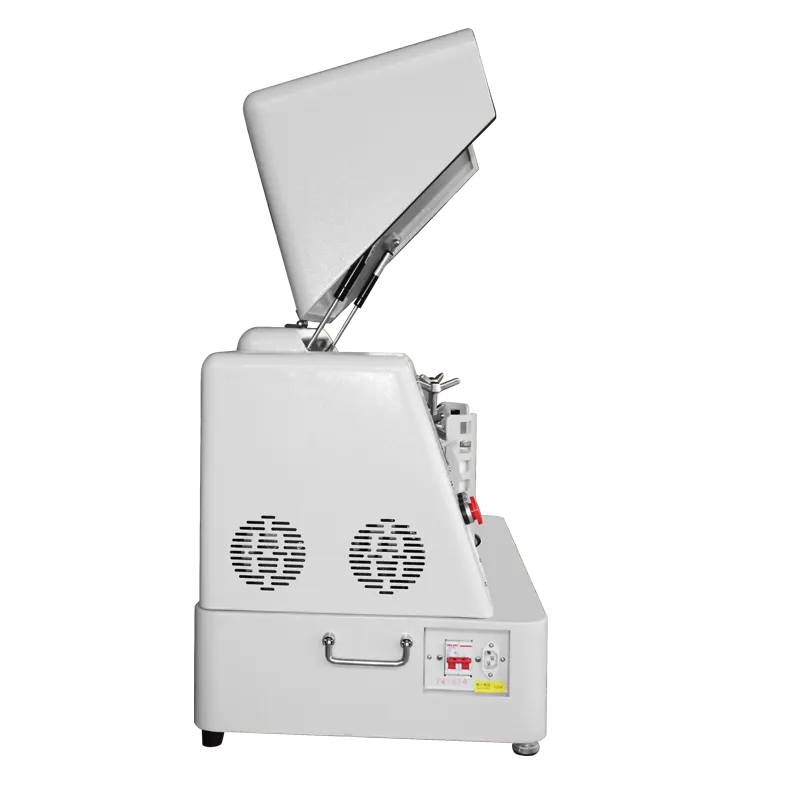
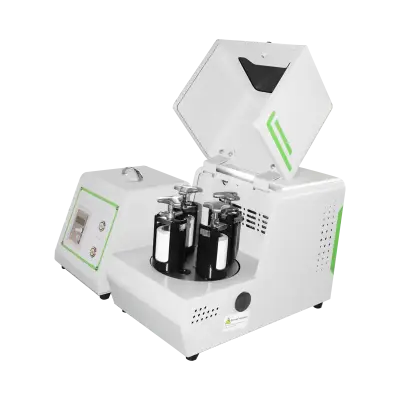
The mechanical heart of the machine is the sun disc and its drive. A motor turns the disc through a belt or gear train, and the same transmission makes the jars counter-rotate. The disc must be dynamically balanced, because an unbalanced load at several hundred revolutions per minute produces vibration, noise and premature bearing failure. Above the jars sit clamping devices, a safety lid and an interlock switch that stops the machine if the lid is opened during a run. The control panel — increasingly a touch screen — sets the speed, the running time, the direction, pause intervals and repeat cycles, and stores programs so that the same recipe can be reproduced months later.
Common configurations of the laboratory planetary grinder
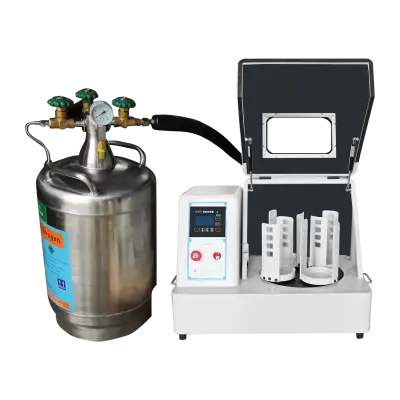
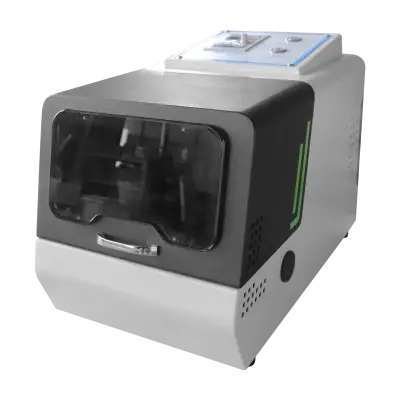
The laboratory planetary grinder is available in several practical configurations rather than as a single fixed model. Vertical benchtop units with two or four grinding stations are the most common in research laboratories, since they allow two or four samples to be processed in parallel under identical conditions. Full-directional models add a three-dimensional movement of the sun disc, which improves mixing and helps with samples that tend to settle or cake. Low-temperature and liquid-nitrogen versions are designed for polymers, biological tissue and other heat-sensitive or elastic materials, while micro models with small jars suit quantities of only a few grams.
Key Performance Indicators and Selection Points
Capacity and batch size
Capacity is normally quoted as jar volume per grinding station — for example 50 mL, 100 mL, 250 mL, 500 mL or 1 L. The usable sample is much smaller than the jar volume, roughly one third of it, because the balls and the free space also have to fit. A four-station machine with 250 mL jars therefore processes four samples of about 60–80 mL each per run. Which station count is right depends on the workload: a single-station unit is enough for occasional grinding, while a four-station machine is a genuine throughput multiplier in a busy analytical laboratory.
Achievable fineness and reproducibility
The feed material should normally be pre-crushed to a few millimetres. From there, a laboratory planetary grinder can readily reach 10–100 µm, and with optimised speed, media and time it can produce powders around 1 µm; truly sub-micron results are achievable for brittle materials, especially in wet mode. More important than the single best result is reproducibility: the same jar, media, ratio, speed and time must give the same particle size distribution every time. This is why programmable control and a stable jar-clamping system matter as much to a quality-control laboratory as maximum speed does to a research group.
Speed, energy and efficiency
Maximum rotational speed, motor power and the transmission ratio are the numbers to compare. Higher speed means shorter grinding times and finer powder, but it also means more heat, more wear and more noise, so a machine that reaches a very high speed is not automatically the better choice for a heat-sensitive sample. The practical efficiency question is how much electrical energy and how much operator time are needed to obtain a given fineness with acceptable contamination — and here jar material, ball size distribution and the dry/wet decision often matter more than a few extra revolutions per minute.
Programmability and automation
Modern laboratory planetary grinders use digital or touch-screen controllers that store speed, time, direction and pause settings as named programs. For routine analysis this removes operator variability; for research it allows cycles with alternating direction and cooling intervals to be tested and repeated. Automatic lid interlocks, run timers and error messages for overload or imbalance reduce the risk of damage and of an interrupted run that has to be repeated.
Maintenance and cross-contamination
The wearing parts are few: drive belts, clamps, bearings and, above all, jars and balls. Belts and clamps are simple to inspect, and jars can be cleaned in an ultrasonic bath or washed and dried. Cross-contamination is controlled by dedicating a set of jars and balls to a material family — one set for soils, another for ceramics, another for battery materials — and by choosing a jar material that is harder than the sample. Sealed jars also keep dust inside, which is a real advantage when the powder is toxic, radioactive or simply valuable.
Applications and Selection Advice
Laboratory planetary grinders appear wherever small amounts of powder must be prepared to a defined fineness. In geology and mining they prepare rock and ore samples for assay and mineralogy; in the cement and ceramics industry they grind clinker, frits and raw mixes; in metallurgy and powder metallurgy they mill alloys and produce mechanically alloyed powders; in chemistry they support catalysis, pigment and polymer research; in energy research they process cathode and anode materials for batteries, and in environmental and agricultural laboratories they homogenise soil, sediment, plant and feed samples. Pharmaceutical, food, forensic and biological laboratories use the same platform, sometimes with soft jars or low-temperature operation, for tissue and fibre homogenisation.
Choosing a machine is therefore a matter of matching four things to the workload. For a general analytical laboratory, a four-station benchtop unit with mid-size jars (100–250 mL) and a set of agate, zirconia and stainless steel jars covers most routine samples. For spectroscopic work where contamination is critical, prioritise agate, zirconia or tungsten carbide jars and matching balls, and accept a lower grinding speed. For nano-scale research, a high-speed model with small jars, 1–3 mm balls and wet grinding with a dispersant is usually the most productive route. For soft, fibrous or heat-sensitive materials, look for a low-temperature or full-directional configuration and agate or PTFE jars. In every case, budget for jars and balls as consumables — they are the parts that determine both the achievable fineness and the purity of the final powder. A detailed overview of jar and ball options for the laboratory planetary grinder is available on the product page.
Frequently Asked Questions
How long does grinding usually take?
Most routine samples reach the required fineness in 5 to 30 minutes. Soft or ductile materials may need longer cycles with cooling pauses, and sub-micron wet grinding of hard ceramics can take one to several hours. Grinding time should be set by particle size checks, not by habit, because over-grinding wastes energy and can cause agglomeration or contamination.
Should I grind wet or dry?
Dry grinding is faster to prepare and requires no drying step, but fine powders tend to coat the jar and re-agglomerate. Wet grinding with a suitable solvent improves fineness and reproducibility, keeps the powder dispersed and controls dust; the trade-off is an extra drying and solvent-handling step.
How fine can a laboratory planetary grinder grind?
From a pre-crushed feed of a few millimetres, powders of 10–100 µm are routine, around 1 µm is realistic with optimised parameters, and sub-micron results are possible for brittle materials in wet mode. The practical limit for a given sample is set by its hardness and by how much contamination from jars and balls is acceptable.
Can it handle heat-sensitive samples?
Yes, with the right approach. Low-temperature and liquid-nitrogen configurations, or simply short grinding intervals separated by cooling pauses, keep the jar from overheating. Soft, elastic materials that deform at room temperature often become brittle when chilled and then grind normally.
What is the difference between a planetary grinder and a jar mill?
A jar mill simply rotates jars on their side, so the balls tumble and fall under gravity; it is gentle, quiet and suited to large-volume or long-duration mixing and grinding. A planetary grinder adds the counter-rotation of the jars, which multiplies the energy transferred to the media and produces much finer powders in much less time, at the cost of higher noise, heat and wear.
Reference
Product information, jar options and technical specifications for this machine are available on the laboratory planetary grinder product page.
Related Products
Get In Touch
Our professional team will reply to you within one business day. Please feel free to contact us!