
What is a Fast Ball Mill? A High-Speed Grinding Device for Rapid Sample Preparation and Nanomaterial Synthesis

What is a Fast Ball Mill? A High-Speed Grinding Device for Rapid Sample Preparation and Nanomaterial Synthesis
At its core, a Fast Ball Mill is a specialized laboratory grinding device that researchers and material scientists use to achieve rapid size reduction, homogenization, and mechanical alloying of powders. Unlike conventional ball mills that operate at relatively low rotational speeds, the Fast Ball Mill is engineered to deliver significantly higher energy input, enabling the milling process to be completed in a fraction of the time. This makes it an indispensable tool for applications requiring quick turnaround, such as nanomaterial synthesis, catalyst preparation, and battery material development.
Core Function and Working Principle
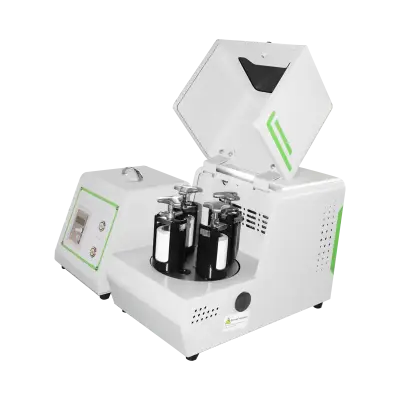
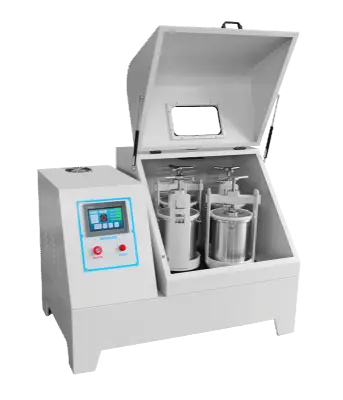
The fundamental function of a Fast Ball Mill is to transform coarse particles (typically in the range of 0.5–3 mm) into ultrafine powders down to the nanometer scale. The device consists of a rotating drum or jar containing grinding media (balls) made of materials such as zirconia, agate, or stainless steel. When the mill operates at high rotational speeds, the grinding media are subjected to strong centrifugal forces, causing them to impact and shear the material repeatedly. This high-energy action breaks down particles through a combination of impact, attrition, and shear forces.
The key parameter that sets the Fast Ball Mill apart is its rotational speed, which can reach up to 1600 rpm or even higher, depending on the model. The high speed generates intense mechanical energy, allowing the mill to achieve the desired fineness in minutes rather than hours. Additionally, the mill can be programmed for specific grinding cycles, including forward and reverse rotation, pause intervals, and variable speed settings, providing precise control over the milling process. The final particle size is influenced by factors such as ball-to-powder weight ratio, grinding time, ball size, and the material of the jar and balls.
Key Features and Technical Advantages
The Fast Ball Mill incorporates several design features that enhance its performance and usability. Firstly, it is equipped with a powerful motor and a robust drive system capable of maintaining high speeds under load without overheating. Secondly, many models include a digital control panel with a touch screen or programmable logic controller (PLC), allowing users to set and monitor parameters such as speed, time, and direction. Thirdly, the mill often supports both dry and wet grinding, as well as milling under inert gas or vacuum conditions, making it versatile for a wide range of materials, including metals, ceramics, polymers, and organic compounds.
Another important feature is the ability to use different jar materials and sizes. For example, jars made of zirconia, agate, or stainless steel can be selected to avoid contamination and match the chemical compatibility of the sample. The grinding media can also be customized in size and material to optimize the milling efficiency for specific applications.
Key Performance Indicators and Selection Considerations
When selecting a Fast Ball Mill, several performance indicators should be evaluated:
- Processing Capacity: Typically measured in terms of the volume of the grinding jar, ranging from a few milliliters to several liters. For laboratory use, capacities of 50 mL to 500 mL are common.
- Particle Size Control: The ability to achieve final particle sizes down to <0.1 µm (100 nm) is a hallmark of high-energy ball mills. The mill should provide consistent and reproducible results.
- Speed Range: The maximum rotational speed directly affects the milling energy. Higher speeds enable faster grinding but may generate more heat, which can be problematic for temperature-sensitive materials.
- Energy Efficiency: High-speed operation consumes more power, but the reduced milling time often compensates. Look for models with efficient motor and drive systems.
- Automation and Programmability: Advanced models offer programmable cycles, data logging, and remote monitoring via PC or mobile devices, which enhance reproducibility and ease of use.
- Maintenance and Durability: The mill should be constructed with high-quality materials to withstand continuous high-speed operation. Easy access to replaceable parts like seals and belts is important for long-term reliability.
Applications and Selection Advice
The Fast Ball Mill is widely used in research fields such as materials science, chemistry, geology, and pharmaceuticals. Common applications include:
- Nanomaterial synthesis: Preparation of nanoparticles, nanocomposites, and 2D materials like graphene.
- Mechanical alloying: Production of alloy powders with fine microstructures for aerospace, automotive, and energy sectors.
- Battery material development: Grinding and mixing of cathode and anode materials for lithium-ion batteries.
- Catalyst preparation: Activation and size reduction of catalytic materials.
- Sample preparation for analysis: Homogenization of geological, environmental, and biological samples.
For users who require rapid processing of small batches with high energy input, a Fast Ball Mill is an excellent choice. If your primary need is for routine grinding of large volumes, a laboratory rod grinder or a three roll mill might be more suitable. Always consider the material properties, desired throughput, and contamination sensitivity when making your selection.
References
Related Products
Get In Touch
Our professional team will reply to you within one business day. Please feel free to contact us!