

What Is a Fast Ball Mill? A Rapid Grinding Device for Lab Powder Processing
A Practical Definition of the Fast Ball Mill
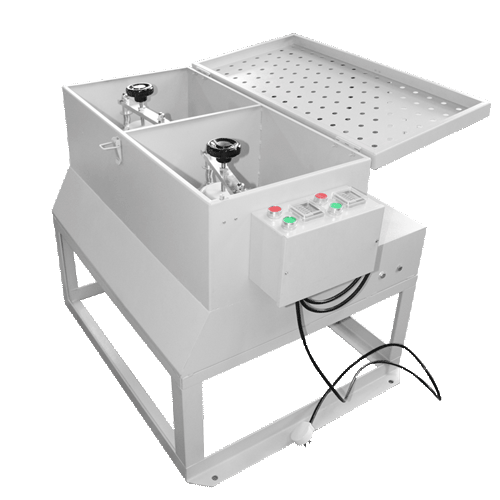
From its core, the TENCAN Fast Ball Mill is a laboratory-oriented ball-milling device in the grinding equipment family. It is used to reduce small batches of solid material to finer powder by combining the movement of a grinding jar with the impact and friction of grinding media. In practical terms, it gives operators a controlled way to reduce particle size, blend components, or prepare samples for the next stage of testing. The word fast should be read as a design priority: the machine is intended for users who value short processing cycles and responsive control rather than plant-scale tonnage. It is therefore best understood as a sample-preparation and research tool whose exact capability depends on its jar, media, and operating settings.
Core Function: Turning Feed Material into Fine Powder
The basic function of a fast ball mill is straightforward: it takes a feed material that may be granular, crystalline, fibrous, or already partly powdered and converts it into a finer, more uniform powder. Size reduction happens inside a closed jar or chamber. Grinding media, usually balls made from a selected material, collide with the sample and with one another. Each collision can break a particle, create a fresh surface, and mix the powder. Over many collisions, the initial particle-size distribution shifts toward finer sizes. The same action can also disperse additives, blend multiple powders, or support mechanical activation. The result is not only a smaller particle size but often a more homogeneous sample, which is useful before analysis, shaping, sintering, or further chemical processing.
How a Fast Ball Mill Works
Motion, impact, and friction
Inside the mill, the drive system moves the grinding jar. Depending on the design and the selected program, the motion may be rotational, oscillatory, or a combination that keeps the media energized. The media are lifted, redirected, and allowed to interact with the powder. Three mechanisms usually matter. Impact occurs when a ball strikes a particle with enough force to fracture it. Attrition occurs when particles rub against media, jar walls, or other particles and lose material from their surfaces. Compression and shear can also play a role when the media bed is packed or when the jar geometry forces material through narrow regions. In a fast milling cycle, the machine is arranged to deliver these actions efficiently in a short time, but the balance among them still depends on the material and the chosen accessories.
Key process parameters
Several parameters control the outcome. Milling time is the most obvious: longer runs usually produce finer powder, but very long runs can cause over-grinding, agglomeration, or contamination. The rotation or oscillation speed changes the energy of the media and therefore the breakage rate. The ball-to-powder ratio affects how often the sample is struck; a high ratio can accelerate grinding but may also increase wear and heat. Media size and density influence impact energy and the range of particle sizes that can be reduced. Jar fill level matters because too little material wastes collisions and too much material cushions the media. Finally, the material of the jar and media must be compatible with the sample. These variables interact, so a good result comes from matching the whole set rather than optimizing one number in isolation.
What fast means in practice
In product naming, fast usually signals a focus on short cycles, quick sample turnaround, and responsive control. That does not mean that every material will grind quickly. Soft and brittle materials may reach a fine state in a short run, while tough, elastic, sticky, or heat-sensitive materials may need a different strategy, lower energy, or a different mill type. The practical benefit of a fast mill is that it allows users to test several conditions, repeat a method, and move on to analysis with less waiting. For a laboratory, this can matter as much as absolute throughput. The correct expectation is therefore not a fixed grind time for all samples, but a flexible platform that can be tuned to the material and the target particle size.
Heat, atmosphere, and material limits
Milling transfers energy not only to breakage but also to heat. A fast cycle can raise the temperature of the jar and sample, which may be acceptable for ceramics and minerals but undesirable for polymers, pharmaceuticals, or other heat-sensitive materials. In those cases, shorter runs with pauses, lower energy settings, or a temperature-controlled configuration may be needed. Atmosphere also matters. Some powders oxidize or absorb moisture during handling, so the choice of jar, sealing, and loading environment can influence the result. The mill should therefore be selected with the material limitations in mind, not only with the target fineness. When a process requires an inert atmosphere or a controlled environment, the user should confirm the available configuration with the supplier.
Core Components and Key Technologies
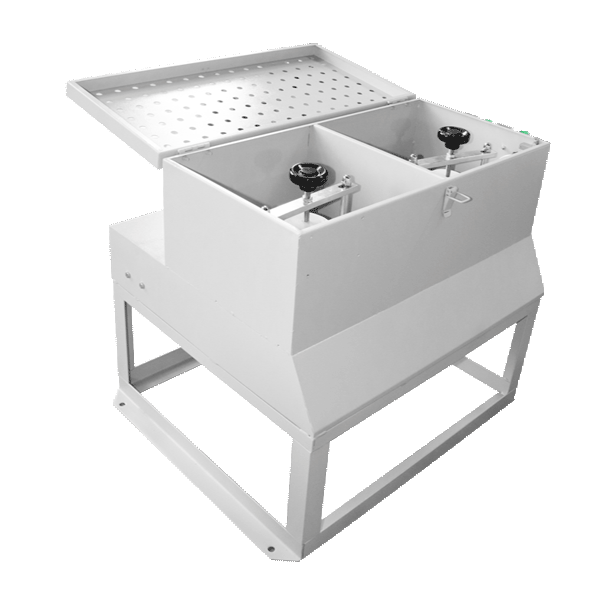
Because the product is a focused laboratory machine rather than a large family of mill types, it is more useful to look at its core components than to invent arbitrary sub-models. The main subsystems are the grinding jar, the grinding media, the drive and motion control, and the user-safety features. Each part influences the final powder and the operating experience.
The grinding jar or chamber
The jar contains the sample and the media. Its volume sets the practical batch size, while its material affects contamination, cleaning, and chemical compatibility. A hard, wear-resistant jar is generally preferred when abrasive powders are processed, while a jar that is easy to clean is valuable when methods change frequently. The interior shape and surface finish also influence how the media bed moves. A jar that is too large for a small sample may waste energy, and a jar that is too small may not provide enough room for media movement. Users should therefore treat jar selection as part of method design, not as an afterthought.
The grinding media
Grinding media do the actual work of breaking particles. Their size, density, shape, and material determine impact energy, wear rate, and contamination risk. Larger or denser balls can deliver stronger impacts, which helps with coarse or hard feed, but they may leave a narrower fine-grinding window. Smaller balls provide more contact points and can be useful for fine grinding, although they may lack the energy to break tough particles. Media material must also be matched to the sample: a media that is too soft may wear quickly, while a media that is chemically incompatible may alter the powder. The right choice is a compromise among grinding speed, final fineness, and acceptable contamination.
Drive, motion control, and user interface
The drive system converts electrical power into controlled jar motion. A stable drive and well-designed motion profile help maintain repeatable results from run to run. The user interface may allow the operator to set time, speed, and sometimes direction or programmed sequences. For method development, the ability to store and repeat a setting is valuable because it reduces operator-dependent variation. For routine work, a clear display and simple start-stop control can be more useful than a long list of features. When comparing machines, users should ask how the motion is controlled, whether settings can be reproduced, and whether the control system protects the motor during demanding runs.
Safety and sample handling
A ball mill stores energy in moving media, so safe operation deserves attention. A secure jar closure, a stable base, and appropriate guarding or interlocking are important. The machine should be operated according to the manufacturer instructions, with particular care when flammable, reactive, toxic, or heat-sensitive materials are involved. Sample loading should leave enough free volume for media movement, and the jar should be checked for wear before use. Cleaning between samples matters not only for safety but also for data quality, because cross-contamination can invalidate a trace analysis or a formulation study. For any special atmosphere, temperature, or containment requirement, the user should confirm the available configuration with the supplier rather than assume it.
Key Performance Indicators and Selection Points
Selecting a fast ball mill is not a matter of choosing the largest or most powerful unit. The right choice depends on the samples, the target fineness, the number of runs, and the level of repeatability required. The indicators below are useful for comparing options and for asking better questions before purchase.
Capacity and batch size
Capacity should be expressed in a way that matches real use. A laboratory may need only small batches, but it may need many of them. The usable batch size is not the same as the jar volume, because space must be left for media and movement. Users should estimate the mass of powder needed per test, the number of tests per day, and the cleaning time between tests. A machine with a modest batch size but quick changeover can be more productive than a larger machine that is difficult to clean. If scale-up is planned, the selected method should also be transferable to a larger mill, which means recording the key parameters from the start.
Fineness and particle-size control
Fineness is usually the central quality requirement. It depends on the feed material, milling energy, time, media, and jar. A fast mill can be very effective for reducing brittle materials, but it cannot guarantee a narrow distribution for every sample. Users should define the target as a range, not a single number, and should plan to verify it with a suitable particle-size method. For some applications, the goal is the smallest possible particle size; for others, it is a stable median size with low contamination. Over-grinding can be a real problem because fine particles may re-agglomerate or become more reactive. The best method is therefore one that reaches the target and stops, rather than one that runs for the longest possible time.
Energy use and grinding efficiency
Energy efficiency in a laboratory mill is less about electricity cost and more about useful energy delivered to the sample. A machine that spends energy moving a large jar with a small sample may be less efficient than a better-matched setup. Grinding efficiency also includes time, media wear, and the number of failed runs. A method that uses a moderate speed and an appropriate ball-to-powder ratio may be more reliable than a high-energy recipe that overheats the sample or damages the jar. Users should look for a machine that allows controlled energy input and should compare results on the basis of powder produced per unit time, not just motor rating.
Automation, repeatability, and data
Automation is valuable when it improves consistency. Programmable time and speed, repeatable settings, and clear run information help different operators produce comparable samples. For research groups, the ability to save a method and return to it months later is a practical advantage. Full automation is not automatically better, especially in a laboratory where samples change often. The useful question is whether the control system reduces human error without making simple tasks complicated. A short training period, clear labels, and a logical menu structure often matter more than advanced features that are rarely used.
Maintenance, cleaning, and contamination
Maintenance should be considered before the first run. Jars and media wear, seals may need inspection, and surfaces must be cleaned between samples. A design that is easy to open and clean saves time and lowers the risk of cross-contamination. Users should ask which parts are consumables, how replacement parts are supplied, and what cleaning methods are recommended. For sensitive work, the choice of jar and media material can be more important than the mill drive itself. A well-matched accessory set reduces contamination and extends service life, while a poorly matched set can create extra maintenance work and unreliable results.
Applications and Selection Advice
Fast ball mills are commonly used where small samples must be prepared quickly and reproducibly. Typical settings include materials laboratories, ceramic and glass research, mineral and geology sample preparation, chemical and pharmaceutical development, battery and energy-materials research, and quality-control laboratories. The machine is not limited to one industry, but the best configuration is always application-specific. A lab that grinds hard minerals has different needs from a lab that blends soft organic powders. Users should start with the material, the target particle size, the required batch size, and the acceptable level of contamination, then choose the jar and media to match.
For teaching and method development
In teaching labs, the priority is often visibility, safety, and ease of use. A fast ball mill with clear controls and straightforward jar handling helps students see how milling time, speed, and media affect the product. For method development, the priority shifts to repeatability and record keeping. Users should be able to change one variable at a time and compare results. A machine that is simple to set and clean is an advantage because it allows more experiments in the same session.
For materials research and development
Research groups often need flexibility. One week may require a fine ceramic powder; the next may require a blended composite or a mechanically activated precursor. The jar and media system should therefore be chosen for the range of materials, not just the first sample. Researchers should establish a baseline method, record all parameters, and check contamination after each material change. If the work involves air-sensitive or reactive powders, the user should confirm whether a suitable glove box, jar, or atmosphere option is available before planning the experiment.
For quality control and incoming inspection
In quality control, consistency matters more than maximum speed. The same method should produce a comparable sample every time so that analytical results can be compared. A fast mill can support this by offering repeatable settings and a short cycle that fits into a busy laboratory schedule. The operator should follow a written procedure, including sample mass, media charge, time, speed, and cleaning. Reference samples and periodic checks help confirm that the method has not drifted.
Common Questions Buyers Ask
Do I need a fast mill or a larger ball mill? If the work involves small batches, frequent method changes, and rapid turnaround, a laboratory fast mill is usually the more practical starting point. If the requirement is continuous production or very large batches, a different scale of equipment should be considered.
Can one mill handle many materials? Often yes, but not with one fixed setup. Different materials may need different jars, media, fill levels, and run times. The mill is a platform; the accessories and method are what make it suitable for a given powder.
What information should I request? Ask for the current product specification, available jar and media options, recommended operating range, safety information, cleaning guidance, and spare-parts support. A sample test with the actual material is more informative than a generic capacity claim.
How do I know the method is repeatable? Record every parameter, keep the same jar and media condition, and check particle size and contamination at regular intervals. Repeatability is built from documentation and control, not from the machine alone.
Where to Check Current Product Details
Because configurations and accessory options can change, the most reliable source for the current TENCAN Fast Ball Mill specification is the official product page. It provides the product context needed to confirm the available setup before purchase. Users should compare that information with their own sample requirements, then request application advice for the specific material and target fineness.
Related Products
Get In Touch
Our professional team will reply to you within one business day. Please feel free to contact us!