
What is a Fast Ball Mill? A High-Speed Grinding Equipment for Rapid Sample Preparation

What is a Fast Ball Mill? A High-Speed Grinding Equipment for Rapid Sample Preparation
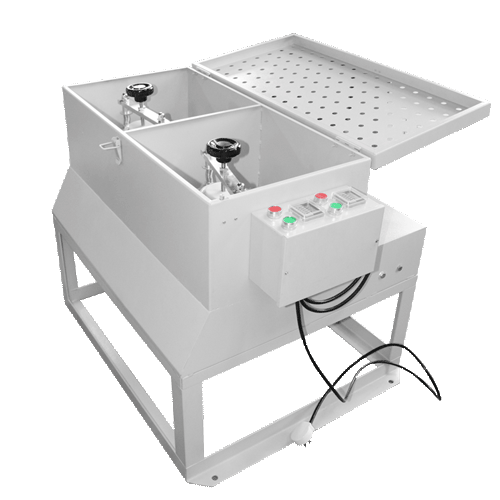
At its core, a fast ball mill is a specialized high-speed grinding device designed for rapid and efficient pulverization of materials in laboratory and small-scale production environments. Researchers and quality control professionals use it to quickly reduce the particle size of solids, such as chemicals, minerals, ceramics, and pharmaceutical ingredients, to fine powders or uniform slurries. Unlike conventional ball mills that may take hours, a fast ball mill achieves the desired fineness in minutes, making it indispensable for time-sensitive experiments and process development.
Core Function and Working Principle
The primary function of a fast ball mill is to transform coarse or granular materials into fine powders through high-energy impact and friction. The machine consists of a rotating cylindrical chamber (jar) filled with grinding media, typically balls made of steel, ceramic, or agate. When the jar spins at high speed, the grinding media are lifted and then thrown against the opposite wall, generating powerful impact forces. Additionally, the relative motion between the balls and the jar wall creates shear and compression, effectively breaking down the particles.
The key to the fast ball mill's speed lies in its high rotational speed and optimized geometry. Operating at speeds often exceeding 1000 rpm, the mill generates intense centrifugal forces that accelerate the grinding process. The grinding time can be as short as 1–5 minutes for many materials, compared to 30–60 minutes in a conventional ball mill. Critical parameters affecting the final product include rotation speed, grinding media size and material, ball-to-powder weight ratio, and grinding duration. Controlling these parameters allows operators to achieve specific particle size distributions, from coarse micron-sized powders down to submicron levels.
Key Components and Technologies
While the fast ball mill shares the basic structure of a traditional ball mill, several design features distinguish it for high-speed operation:
High-Speed Drive System
A powerful motor and robust transmission system enable the jar to rotate at speeds up to 1500 rpm or more. This high-speed drive is essential for generating the kinetic energy needed for rapid grinding. Many models feature variable speed control, allowing users to adjust the speed according to material hardness and desired fineness.
Durable Jar and Lid
The grinding jar is typically made from wear-resistant materials such as stainless steel, tungsten carbide, or zirconia. The lid is sealed with a gasket to prevent leakage of fine powders and to allow operation under inert atmosphere if needed. Some fast ball mills come with interchangeable jars of different capacities and materials to suit various applications.
Safety Interlocks and Timers
Given the high speeds, safety is paramount. Fast ball mills are equipped with lid locks that prevent operation when the jar is open, and automatic shut-off timers to avoid over-grinding and overheating. A built-in timer allows precise control of grinding duration, ensuring reproducibility.
Key Performance Indicators and Selection Criteria
When selecting a fast ball mill, users should consider the following performance metrics:
Processing Capacity and Speed
Laboratory fast ball mills typically handle sample volumes from a few grams to several hundred grams per batch. The grinding time is usually between 1 and 10 minutes. For higher throughput, production-scale models are available, but the focus here is on laboratory and pilot-scale equipment.
Final Particle Size and Uniformity
Most fast ball mills can achieve a final particle size down to 10–20 microns, and with extended grinding, submicron particles can be obtained. The uniformity of the product depends on the ball size distribution and the mixing action inside the jar. Some models incorporate eccentric rotation or planetary motion to improve homogeneity.
Energy Efficiency and Heat Generation
High-speed operation generates heat, which may affect heat-sensitive materials. Some fast ball mills incorporate cooling fans or water jackets to dissipate heat. Energy consumption is generally low for small batches, but the efficiency is high due to the short processing time.
Automation and Programmability
Modern fast ball mills offer programmable timers, speed ramps, and pause cycles. Some can be controlled via touchscreen or connected to a computer for data logging. These features are particularly useful for method development and quality control.
Maintenance and Durability
Key components like the drive belt, bearings, and jar seals may require periodic replacement. Choosing a model with easy access to these parts reduces downtime. Jars made of wear-resistant materials last longer and reduce contamination.
Application Areas and Selection Advice
Fast ball mills are widely used in materials science, chemistry, pharmaceuticals, geology, and food testing. Typical applications include:
- Sample preparation for XRF, XRD, and ICP analysis – rapid grinding to achieve a homogeneous powder.
- Mechanical alloying and mixing – blending multiple components into a composite powder.
- Nanomaterial synthesis – reducing particle size to the nanoscale for research.
- Pharmaceutical formulation – micronization of active ingredients.
For users who need fast turnaround and high throughput in a laboratory setting, a fast ball mill with a capacity of 50–200 mL and a speed range of 1000–1500 rpm is ideal. For heat-sensitive materials, choose a model with cooling capability. For heavy-duty grinding of hard materials, select a jar made of tungsten carbide or zirconia. Always consider the required final particle size and the material's hardness when selecting the grinding media.
References
Related Products
Get In Touch
Our professional team will reply to you within one business day. Please feel free to contact us!