

What Is a Dual Planetary Ball Mill? A High-Throughput Fine Grinding Machine
What Is a Dual Planetary Ball Mill?
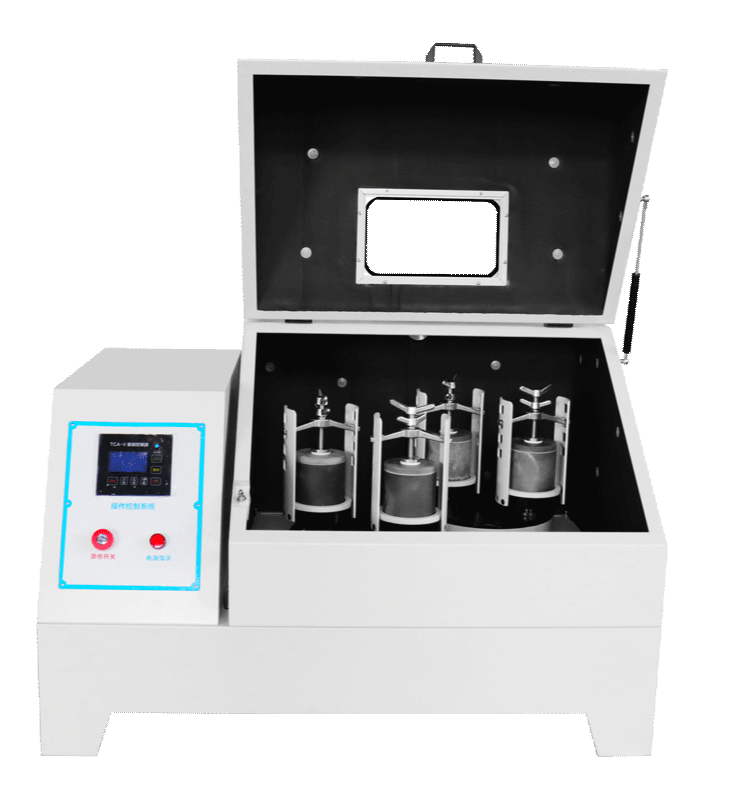
In its essence, a dual planetary ball mill is a high-energy grinding machine that uses two jar stations to turn coarse, uneven powders into fine, uniform particles. Laboratories working in materials science, geology, metallurgy, ceramics, battery research, and pharmaceutical development use it to reduce sample size, homogenize mixtures, and prepare the fine powders needed either for analysis or for the next stage of processing. The word dual points to the two grinding positions on the machine: instead of a single jar circling on a rotating disc, two jar stations are carried on the same structure, so two samples can be milled at once — the same material for higher output, or different materials for parallel experiments under identical conditions.
That difference matters in daily practice. A single-station mill forces users to queue their samples one after another, and every change of material means unloading, cleaning, and reloading. A dual machine keeps two independent batches running side by side, which shortens the working day, improves comparability between runs, and makes better use of the laboratory bench. For readers who want the basic specification, illustrations, and configuration details of this model, they are collected on the Dual Planetary Ball Mill product page.
Core Function and Working Principle
From Coarse Feed to Fine Powder
The fundamental job of the machine is a change of state: solid material enters as granules, chips, or coarse powder and leaves as a fine, well-mixed powder. The transformation happens inside sealed grinding jars that are partially filled with grinding media — small balls made of stainless steel, zirconia, agate, corundum, tungsten carbide, or similar hard materials. When the machine runs, the jars rotate while the disc they sit on also rotates, and this compound motion throws the grinding media against the jar walls and against each other. The powder caught between colliding balls is fractured, cold-welded, re-fractured, and gradually refined. Because the jars are closed, the process is essentially dust-free, and it can be carried out in air, in an inert atmosphere, or in a liquid medium when wet grinding is preferred.
Why the Motion Is Called Planetary
The jars do not simply spin on their own axis. They are mounted on a rotating main disc, so each jar travels around the centre of the machine like a planet orbiting a sun, while simultaneously rotating around its own centre. This superimposed motion creates a strong centrifugal field. The grinding balls are pressed outward against the jar wall on one side, then released and swept across the jar as the rotation continues, producing a combination of impact and shear. The result is far more energy per unit of time than a simple tumbling ball mill can deliver, which is why planetary mills can reach very fine particle sizes — often into the micrometre range and, with the right jar and media, below it — in relatively short grinding sessions.
The Dual Station Advantage
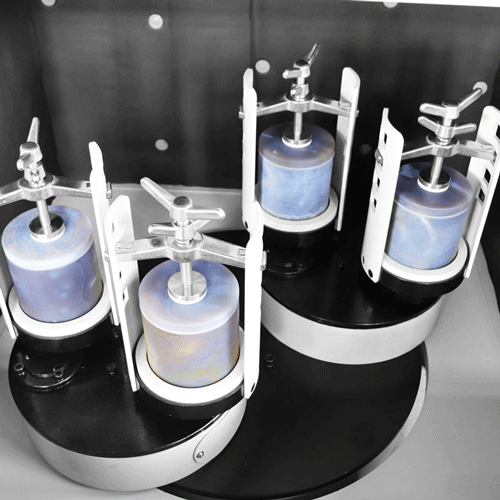
In a dual configuration the two jar stations are arranged so that both are driven by the same main drive. This keeps the mechanical design compact while doubling the number of samples processed per run. Two practical consequences follow. First, throughput rises without a proportional increase in bench space or in the number of control systems. Second, experimental control improves: a reference sample and a treated sample can be milled under exactly the same speed, time, and atmosphere, which removes a common source of variability in comparative studies. Many users also take advantage of the second station to run a different jar material, so that contamination-sensitive samples never share a jar with harder or chemically different powders.
Key Process Parameters
Grinding results are not a matter of chance; they are the product of a small number of controllable variables. Adjusting them is the main way users steer particle size, purity, and repeatability.
- Rotation speed: higher speed increases impact energy and shortens grinding time, but also raises jar temperature and wear. Speed is usually set as a percentage of the machine maximum and should be matched to the jar and media.
- Grinding time: longer milling produces finer powder up to a practical limit, after which particles may re-agglomerate and the size distribution can widen again.
- Media size, density, and filling ratio: larger, denser balls deliver more impact energy, while smaller balls increase the number of contact points and favour finer, more uniform grinding.
- Ball-to-powder ratio: the mass ratio between media and sample strongly influences how quickly the powder is refined and how much contamination is introduced.
- Jar material: the jar must be harder and more chemically inert than the sample, otherwise the powder will be contaminated by the jar lining.
- Atmosphere and medium: dry, inert-gas, or wet solvent-assisted grinding each changes the outcome, especially for reactive or oxidisable powders.
Because these variables interact, the usual approach is to fix most of them and change one at a time, recording the resulting particle size distribution. A programmable controller makes this systematic work much easier, since a validated recipe can be stored and reused exactly.
Core Components and Key Technologies
Jar Stations and the Main Drive
The heart of the machine is the sun disc — the rotating plate that carries the jar stations — together with the belt or gear transmission that spins each jar. Both jar seats are machined to hold the jars firmly and to keep them centred during high-speed operation, because even a small imbalance becomes a strong vibration at high rotation rates. The drive motor, the transmission, and the disc therefore form a single balanced assembly that largely determines the maximum usable speed of the mill.
Grinding Jars and Grinding Media
The jars and balls are consumables, but they define what the mill can and cannot do. Stainless steel jars and balls are tough and inexpensive and suit hard, non-reactive samples; zirconia offers high density with very low wear; agate is chemically clean and ideal for avoiding metal contamination; corundum and tungsten carbide cover the hardest applications; and polymer jars such as nylon, PTFE, or PU are chosen when metal contamination must be avoided entirely. Jars are normally supplied in a range of volumes so that the same machine can handle a small analytical sample or a larger batch. Matching jar volume, ball size, and ball count to the sample is the single most effective way to improve grinding efficiency.
Control, Clamping and Safety
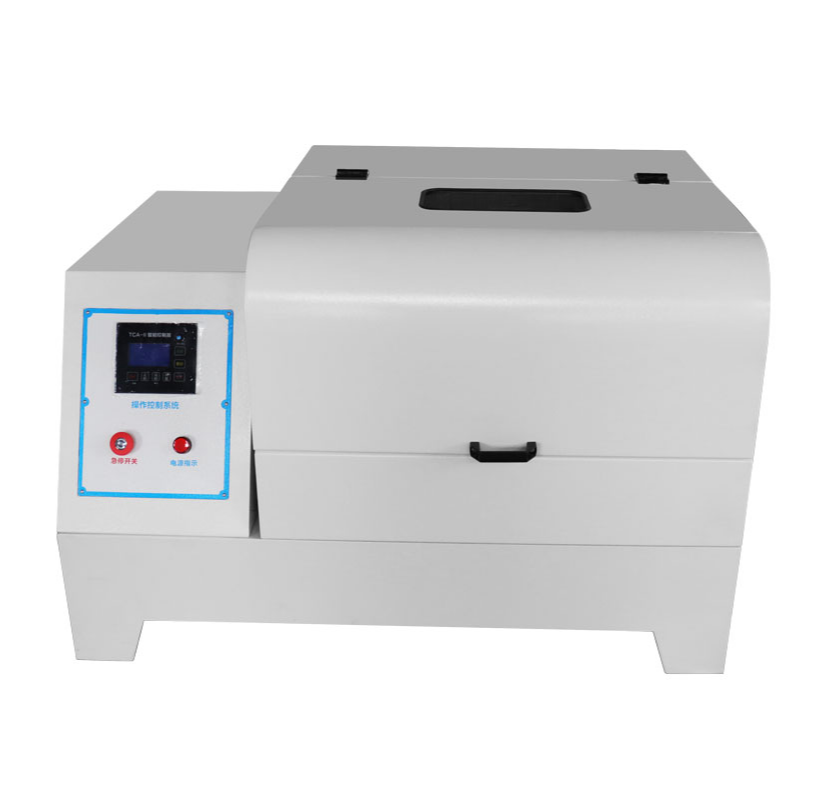
Modern dual planetary ball mills are controlled through a digital panel that sets speed, running time, pause intervals, and direction reversal. Alternating the direction of rotation — running forward for a period, pausing, then running in reverse — prevents the powder from compacting against one side of the jar and helps keep the grind uniform. Safety features matter just as much as the electronics: a locked lid or interlock prevents the mill from running while jars are unsecured, and a solid enclosure contains the machine if a jar should ever fail. Clamping mechanisms that hold both jar stations rigidly are essential for quiet, low-vibration operation.
Optional and Special Configurations
Although the dual planetary mill is a well-defined machine, it can be configured for particular duties. Versions with vacuum or inert-gas jars are used for oxygen-sensitive powders; low-temperature or liquid-nitrogen-assisted versions help with heat-sensitive polymers and biological samples; and touch-screen versions add stored programs and finer control of multi-step cycles. The choice between these options should follow the material, not the other way round.
Key Performance Indicators and Selection Points
Throughput and Batch Capacity
The first question a buyer should ask is how much powder must be produced per day. Throughput is governed by jar volume, the number of stations, and the length of a typical grinding cycle. A dual machine with two jars of moderate volume will generally process more material per working day than a single-station mill of the same class, and it also offers flexibility: two small batches in parallel, or one large batch when a single jar is used alone. Buyers should estimate not only the mass per run but also the number of runs per shift, since loading, cleaning, and cooling time often dominate the schedule.
Particle Size and Reproducibility
Grinding capability is usually described by the fineness that can be reached and the narrowness of the resulting size distribution. Both depend on the energy delivered to the powder and on the jar and media combination. Just as important, however, is reproducibility: the ability to obtain the same result from the same recipe on a different day or with a different operator. This is where programmable control, consistent clamping, and identical jar stations pay off, because all of the parameters that influence the outcome are stored rather than set by hand.
Energy, Speed and Grinding Efficiency
Planetary mills are high-energy devices; the useful measure is not the power drawn but the energy actually transferred to the powder. Higher speed and heavier media shorten the time required, but excessive speed heats the jar and accelerates wear, which can both alter the sample and shorten the life of consumables. An efficient setup uses the lowest speed and shortest time that reach the target fineness, with media chosen for density and hardness rather than simply for size.
Automation and Programmability
For laboratories that run many samples, programming is a productivity feature rather than a luxury. Stored recipes with speed, time, pause, and direction-reversal steps allow operators to reproduce a validated method exactly, and unattended cycles let the machine work while other tasks continue. A clear display and simple parameter entry also reduce the risk of operator error, which is one of the largest hidden costs in sample preparation.
Maintenance, Consumables and Cost of Ownership
An honest cost comparison includes the machine, the jars, the grinding media, and the electricity used over several years. Jars and balls wear out, and soft or brittle jar materials wear faster than dense ceramics or stainless steel. Ease of cleaning is another practical factor, since cross-contamination between samples can invalidate results. Machines designed with accessible jar seats, removable components, and clearly specified spare parts are easier and cheaper to keep in service.
Applications and Selection Advice
Dual planetary ball mills appear wherever a small or medium quantity of powder must be reduced, mixed, or mechanically activated. Typical settings include university and industrial research laboratories preparing samples for X-ray diffraction, spectroscopy, or particle size analysis; geological and mining laboratories crushing rock and ore samples; ceramics and glass producers refining raw materials and developing new compositions; battery and energy-material groups producing electrode powders; and metallurgy, environmental science, and pharmaceutical laboratories working with small, valuable, or hazardous materials. The second jar station is especially valued in academic work, where a control sample and a treated sample need to be ground under identical conditions.
Choosing by User Profile
A teaching laboratory with a modest sample flow will usually be well served by a straightforward dual machine with a digital timer and speed control, plus a set of agate or zirconia jars. A research group running many parallel experiments should look for programmable operation, direction reversal, and the ability to hold two different jar sizes or materials. A pilot or small production environment should weight throughput, duty cycle, and the availability of larger jars more heavily than convenience features. Full specifications for the dual-station model are listed on the dual planetary ball mill specifications page.
Choosing by Sample Material
The material decides the jar and media. Hard and abrasive samples such as minerals, ceramics, and slags need dense media and hard jar linings; soft or fibrous materials benefit from shorter cycles and, sometimes, wet grinding; reactive or air-sensitive powders call for inert-gas or vacuum jars; and biological or polymeric samples may need low-temperature accessories to prevent degradation. Where metal contamination would compromise the analysis, non-metallic jars and balls should be chosen even at a higher unit cost.
Frequently Asked Questions
What is the difference between this machine and a standard planetary ball mill?
The working principle is the same; the difference is the two jar stations. A standard single-station mill grinds one jar at a time, while a dual machine runs two, increasing output and allowing two samples to be processed under identical conditions.
Can the two jars hold different materials?
Yes, in most dual machines each station is independent as far as the jar and the sample are concerned. They share the same drive and the same speed setting, so if identical running conditions are needed for comparison, both jars should be loaded with a similar mass and media charge.
How fine can the powder become?
Practical fineness depends on the material, the jar and media, the speed, and the time allowed. Many brittle materials can be reduced into the micrometre range, and further refinement is possible with dense media and long, well-controlled cycles — but every material has a practical limit beyond which particles re-agglomerate.
Is wet or dry grinding better?
Both have a place. Dry grinding is simpler and avoids the drying step afterwards, while wet grinding with a suitable solvent reduces dust, limits heat build-up, and often gives a narrower particle size distribution for fine powders. The choice should be tested on the actual sample.
How do I avoid contaminating my sample?
Choose a jar and media that are harder and more chemically inert than the powder, and keep a dedicated set for sensitive work. Cleaning between samples, and avoiding shared jars for trace-analysis work, matters as much as the material choice itself.
How much maintenance does a dual planetary ball mill need?
Routine attention is simple: check the clamping mechanism, listen for unusual vibration, inspect jars and media for wear, and replace consumables before they fail. Regular checks of the transmission and an annual review of the drive assembly are typical good practice for a machine running frequently.
Related Products
Get In Touch
Our professional team will reply to you within one business day. Please feel free to contact us!