

What Is a Colloid Mill? A Wet Grinding Machine for Fine Emulsion Processing
What Is a Colloid Mill?
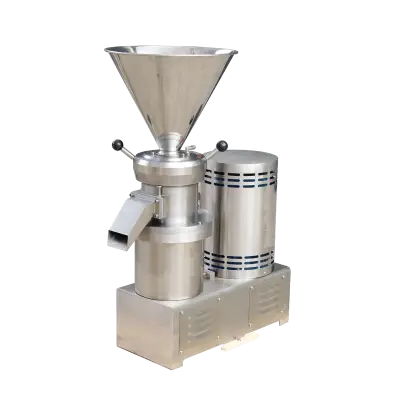
From the core, a colloid mill is a wet grinding and homogenizing machine that uses a rapidly rotating rotor and a closely fitted stator to reduce the size of solid particles or liquid droplets suspended in a carrier liquid. Food, cosmetic, pharmaceutical, chemical, and material-processing operations use it to turn coarse slurries, mixtures, and pre-emulsions into finer, more uniform dispersions or emulsions. Unlike a dry mill, it works in a liquid medium; unlike a simple mixer, it applies intense localized shear in a narrow working gap, which is the feature that gives the machine its name and its practical value.
The word colloid is often misunderstood. A colloid is not a specific ingredient; it is a state in which one phase—solid particles, oil droplets, or gas bubbles—is dispersed throughout another phase at a scale small enough to remain suspended for a useful period. A colloid mill does not automatically create a permanently stable colloid. It provides the mechanical energy and uniform mixing needed to reduce droplet or particle size, distribute additives, and support the work of emulsifiers and stabilizers. The final result depends on the formulation, the number of passes, temperature, and the mill settings as much as on the machine itself.
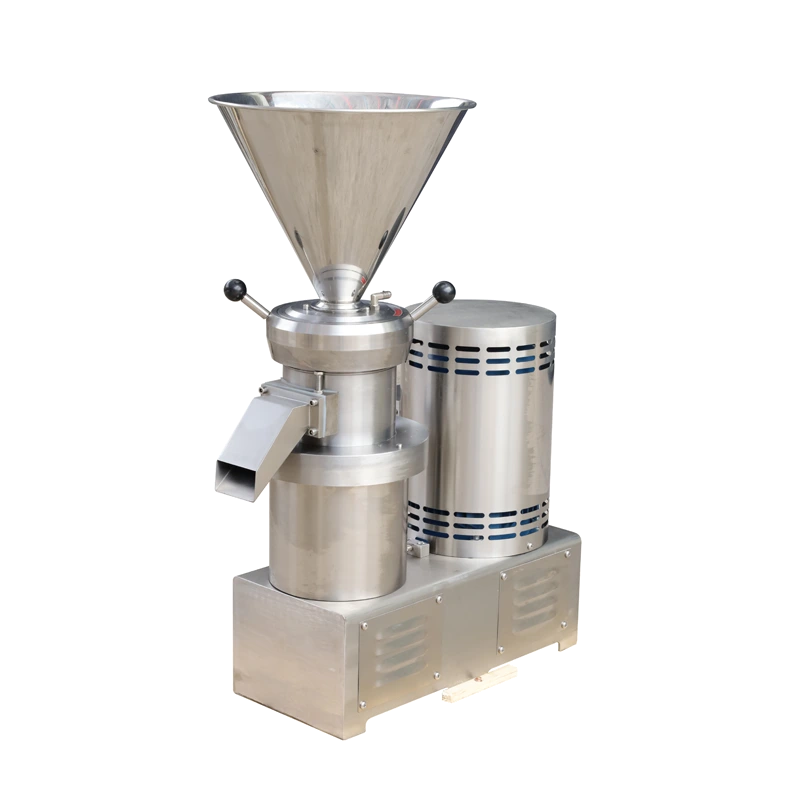
In practical terms, a colloid mill sits between a conventional agitator and a high-pressure homogenizer. It is more aggressive and more controllable than a simple tank mixer, yet it is generally simpler and more accessible than a high-pressure homogenizer for many wet-processing tasks. It can operate as a batch unit, as an inline unit in a continuous line, or as part of a recirculation loop. This flexibility explains why colloid mills appear in both small laboratories and full production plants, and why the same basic principle can be scaled across very different duties.
How a Colloid Mill Works
Feeding, wetting, and pre-mixing
Material normally enters through a hopper or an inlet connection and flows into the working zone. In many processes, the feed is already a pre-mixed slurry or coarse emulsion. That pre-mixing step matters: a colloid mill is a finisher and a stabilizer, not usually a primary crusher for large dry lumps. If the feed contains agglomerates that are too large or too hard, the rotor-stator gap may become blocked, wear may accelerate, or the motor may be overloaded. Good practice is to screen or pre-disperse the feed so that the mill receives a pumpable, reasonably uniform stream.
As the product enters the gap, the liquid phase wets the particles or droplets and carries them into the high-shear field. The rotor accelerates the fluid, while the stationary stator resists it. The resulting velocity gradient—often described as shear rate—is concentrated in a very small space. The machine therefore does two jobs at once: it transports the material through the working zone and it subjects the material to repeated shearing, tearing, and impact. The combination is more effective than either stirring alone or pumping alone.
The rotor-stator working zone
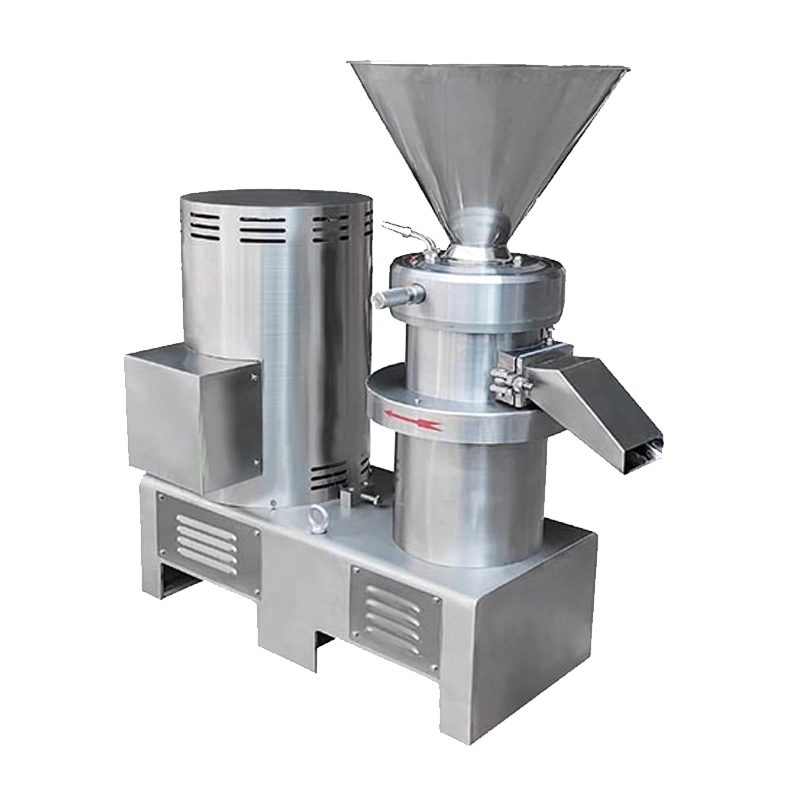
The heart of the colloid mill is the rotor-stator assembly. The rotor turns at high speed inside a stator, and the clearance between them can usually be adjusted. Depending on the design, the faces may be smooth, grooved, toothed, or conical. A narrow gap increases the shear rate and generally produces finer results, but it also increases hydraulic resistance, heat generation, and wear risk. A wider gap gives higher flow and lower temperature rise, but may require more passes to reach the target fineness. The gap is therefore one of the most important operating variables, not a setting to be left unexamined.
As the suspension passes through the gap, several mechanisms act together. The fluid is accelerated and then decelerated, creating shear forces that can deform and break droplets. Particles collide with one another and with the rotor and stator surfaces. Local turbulence and cavitation-like effects may also contribute, although their relative importance depends on speed, viscosity, and geometry. The result is a reduction in the characteristic size of the dispersed phase and a more even distribution of that phase through the continuous liquid. For an oil-in-water emulsion, for example, large oil droplets are divided into smaller ones; for a pigment suspension, clusters are broken down and distributed more uniformly.
Passes, residence time, and temperature
A single pass through the mill exposes the product to high shear for only a short time. Many formulations therefore benefit from recirculation or multiple passes. Each pass can reduce the coarse fraction further, but each pass also adds energy and heat. Above a certain point, additional shear may not improve stability and may even damage heat-sensitive ingredients or promote re-agglomeration. The practical optimum is usually found by trials that compare droplet or particle size, visual appearance, viscosity, and stability against the number of passes and the gap setting.
Temperature control is closely linked to this balance. Mechanical energy dissipates as heat in the working zone, and viscous products can warm quickly. A jacketed housing, cooled seal area, or a chilled feed can help protect sensitive materials. Temperature also affects viscosity and interfacial behavior, so two runs at the same nominal gap and speed can behave differently if the feed temperature is not controlled. For products containing proteins, volatile flavors, or heat-sensitive actives, temperature monitoring should be treated as part of the process specification rather than an afterthought.
What Process Parameters Influence the Result?
Colloid mill performance is not described by a single number. It is the outcome of a combination of machine settings, product properties, and operating discipline. The most important variables are rotor speed, rotor-stator gap, throughput or recirculation time, feed viscosity, feed composition, and temperature. A change in any one of them can shift the result, so a reliable process recipe should record them together.
Rotor speed controls the velocity gradient and the energy input per unit volume. Higher speed generally means more intense shear, but it also means more heat, more wear, and potentially more air entrainment. The gap sets the geometry in which that shear is applied. Throughput determines how long the product remains in the high-shear zone and how many times it is recirculated. Viscosity changes both the pumping load and the way shear is transmitted through the fluid. Formulation variables—emulsifier type, solids loading, pH, and the ratio of dispersed phase—determine how easily the product can be broken down and how quickly it may recombine.
A useful way to think about the process is to separate size reduction from stabilization. The mill creates smaller droplets or particles and distributes them, but the formulation must then keep them dispersed. If the emulsifier is insufficient or the surface charge is unfavorable, a fine emulsion produced by the mill may still separate during storage. Conversely, a well-formulated product can sometimes be over-processed, leading to excessive temperature rise, viscosity change, or foaming. The best procedure is to define the target quality attribute first—droplet size, smoothness, gloss, stability, or texture—and then adjust the machine around that target.
Main Configurations and Component Choices
Colloid mills are commonly offered in several mechanical arrangements, and the right choice depends on the process rather than on a universal ranking. A vertical configuration often uses gravity to assist feed flow and can be convenient for batch or recirculation duties. A horizontal configuration may suit inline installation and certain high-viscosity or sanitary layouts. Batch mills process a defined batch in a tank or vessel, while inline mills are installed in a pipe or recirculation loop and process a flowing stream. Neither arrangement is automatically better; each affects cleaning, floor space, piping, and how easily the product can be sampled.
The rotor-stator geometry is another major choice. Smooth conical or cylindrical faces are often associated with emulsification and fine dispersion. Toothed or grooved designs can provide more turbulent action and may suit de-agglomeration or heavier dispersions. Sanitary designs use crevice-free product-contact surfaces, appropriate seals, and cleanable connections for food, cosmetic, and pharmaceutical work. Abrasive slurries may call for wear-resistant materials or replaceable wear parts. Corrosive products may require particular stainless steels, elastomers, and surface finishes. These are design choices that should be matched to the actual fluid, not selected only from a product photograph.
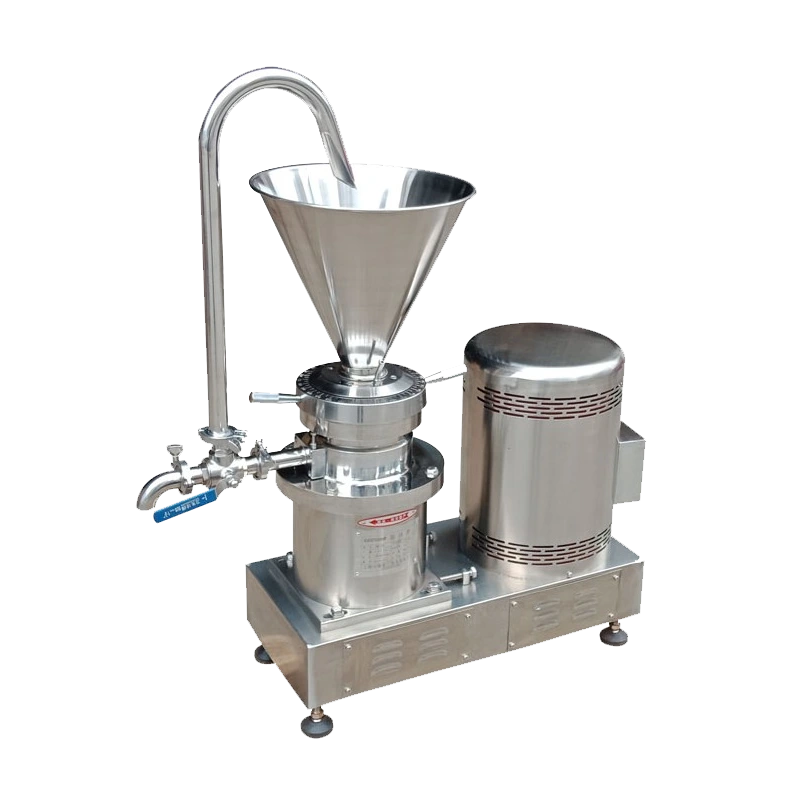
The drive package is equally important. A mill may use a fixed-speed motor, a variable-frequency drive, or a more elaborate control system. Variable speed is valuable during development because it allows one machine to be explored across a range of shear conditions; in production, it can help compensate for batch-to-batch viscosity differences. Mechanical seals, bearing protection, and a robust shaft assembly matter because the rotor runs at high speed and any misalignment or seal failure can interrupt production. Cooling provisions, drainability, and access for inspection should also be reviewed early, since they influence both cleaning time and maintenance cost.
Key Performance Indicators and Selection Criteria
Capacity and product compatibility
Capacity should be evaluated in the context of the real product, not only as a nominal flow rate. A mill that handles a thin slurry at a given rate may handle a viscous paste at a much lower rate, or may require a different feed system entirely. Users should ask how capacity changes with viscosity, solids content, gap setting, and the required number of passes. For batch operation, the useful measure may be batch size and turnover time; for inline operation, it may be flow rate at a specified pressure and temperature rise. A laboratory trial with the actual formulation is usually more informative than a single capacity figure.
Fineness, repeatability, and quality
The ability to control fineness is central, but fineness can mean different things for an emulsion and a suspension. For emulsions, the relevant measure may be droplet size distribution; for suspensions, it may be particle size, agglomerate size, or dispersion quality. The mill should be able to reproduce the target result from batch to batch after the settings are fixed. Repeatability depends on gap adjustment, speed stability, feed uniformity, and temperature control. A machine with a very fine capability but poor adjustment resolution may be less useful than one with a slightly coarser but highly repeatable working range.
Energy, heat, and efficiency
High shear is energy-intensive by nature. The relevant question is not only motor power but energy per unit of acceptable product. Over-processing wastes energy and can degrade quality, so the goal is the minimum processing that meets the specification. Temperature rise is a useful indicator of where that energy is going. If the process needs long recirculation at high speed, cooling capacity and the thermal sensitivity of the formulation should be checked together. A well-selected mill, properly piped and controlled, can reduce the number of passes and shorten batch time.
Materials, cleaning, and maintenance
Product-contact materials, surface finish, seal design, and cleanability are major selection criteria in hygienic industries. The user should confirm compatibility with cleaning agents, operating temperature, and the required level of hygiene. Abrasive or corrosive products may shorten the life of rotors, stators, and seals; replaceable wear parts and easy inspection access can lower long-term cost. Maintenance requirements should be understood before purchase: bearing lubrication, seal replacement, gap calibration, and rotor balancing all affect uptime. A design that is easy to open, clean, and reassemble is often more valuable in daily operation than a marginal difference in nominal performance.
Common Questions from Buyers
Is a colloid mill the same as a homogenizer?
They overlap in purpose but not in mechanism. A colloid mill creates shear in a narrow rotor-stator gap at relatively moderate pressure, while a high-pressure homogenizer forces product through a valve or nozzle at very high pressure. Colloid mills are often easier to clean and more tolerant of viscous or fibrous feeds; homogenizers may achieve finer droplets in some low-viscosity emulsions. The right choice depends on the target droplet size, formulation, pressure sensitivity, and throughput. A trial with both technologies, where available, is more reliable than a nominal comparison.
Can one colloid mill handle both emulsifying and dispersion?
Often it can, but the optimum setup may differ. Emulsification generally benefits from a fine, uniform shear field that creates small droplets without excessive air entrainment. Dispersion of powders may require enough turbulence and residence time to wet out agglomerates and break clusters. Rotor-stator geometry, gap, speed, and feed preparation should be matched to the duty. A machine that performs well on a thin oil-in-water emulsion may not be the best choice for a dense pigment slurry, so the application should be tested rather than assumed.
How many passes are needed?
There is no universal number. One pass may be enough for a simple pre-emulsion, while a stable fine emulsion or a well-dispersed pigment may require recirculation. Each additional pass raises energy input and temperature, and beyond a certain point the quality gain may be small. The practical approach is to sample after each pass and measure the quality attribute that matters: droplet size, particle size, gloss, texture, or stability. The optimum is the lowest processing level that reliably meets the specification.
Applications and Selection Advice
Colloid mills are used wherever a liquid formulation must be made more uniform, finer, or more stable. In food processing, they can prepare sauces, dressings, nut pastes, and beverage emulsions, where smooth texture and droplet uniformity matter. In cosmetics and personal care, they help produce creams, lotions, gels, and pigmented products. In pharmaceuticals and biotechnology, they may be used for ointments, suspensions, and emulsion-based formulations where repeatability and cleanability are critical. In chemical and material production, they support paints, inks, adhesives, lubricants, ceramic slurries, and other dispersed systems. The common thread is a pumpable feed that benefits from intense wet shear.
Selection should begin with the product, not the machine size. Define the target droplet or particle size, the acceptable temperature rise, the required batch or flow rate, and the cleaning standard. Then confirm the feed's viscosity, solids content, abrasiveness, and sensitivity to air or heat. A small trial can reveal whether a colloid mill is the right tool at all; if the feed is too dry, too coarse, or too viscous, a different pre-treatment step may be needed. For scale-up, compare shear intensity, residence time, and gap geometry rather than relying only on tank volume or motor power. Users evaluating a specific unit can review the colloid mill product page for the available configuration and then discuss the application with the supplier.
For laboratory and pilot work, flexibility is usually more important than maximum output. Variable speed, an adjustable gap, interchangeable rotor-stator sets, and easy cleaning allow formulators to explore a design space before committing to production. For production, stability, uptime, and maintenance access become more important. A larger motor does not automatically mean better processing; the machine must match the product's rheology and the required quality. It is also wise to plan the feed and discharge system together with the mill, because poor pumping, air entrainment, or an oversized pipe run can undermine the performance of an otherwise suitable unit.
Installation, Operation, and Maintenance Essentials
Correct installation starts with a stable base, proper alignment, and a feed system that delivers a consistent, air-free stream. The mill should not be started with a hard or dry pack in the working zone, and the manufacturer's start-up sequence should be followed. Operators should know the maximum allowable temperature, pressure, and viscosity for the installation. Instrumentation for speed, temperature, and pressure is not decorative; it provides the evidence needed to repeat a successful batch and to detect a clog or seal problem before it becomes a failure.
Routine maintenance usually includes checking the rotor-stator gap, inspecting wear surfaces, verifying seal condition, and confirming that the drive and bearings are operating within specification. Cleaning procedures should match the product and the hygiene level required. After cleaning, the gap and all connections should be returned to the validated settings. If performance drifts—higher temperature, lower flow, coarser product, or unusual noise—the cause should be investigated rather than compensated for by simply increasing speed. A log of settings, products, and maintenance actions makes troubleshooting far more efficient.
Finally, remember that a colloid mill is a process tool, not a guarantee of stability. It provides mechanical energy, but the formulation, the order of ingredient addition, the holding time, and the downstream handling all influence the final product. Teams that treat milling as one part of a controlled process—rather than as a standalone fix—usually achieve more consistent emulsions and dispersions. That is also why application testing and clear communication with the equipment supplier are worthwhile before a production unit is specified.
For a closer look at the equipment described in this guide, visit the TENCAN colloid mill page and compare the available machine arrangement with your feed, target fineness, and cleaning requirements.
Related Products
Get In Touch
Our professional team will reply to you within one business day. Please feel free to contact us!