

What Is a Colloid Mill? A Precision Grinding Machine for Fine Wet Dispersions
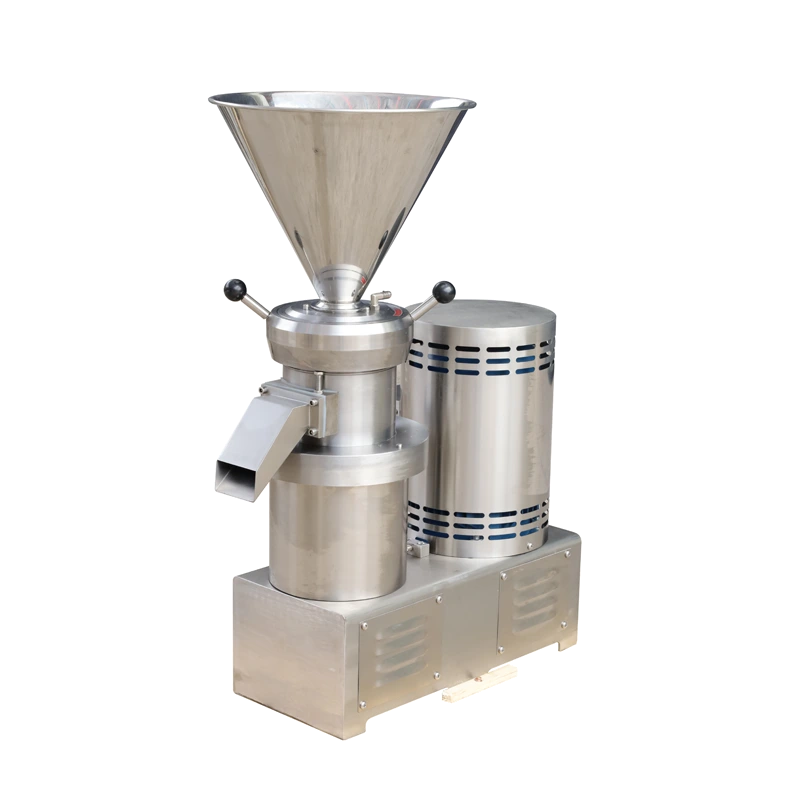
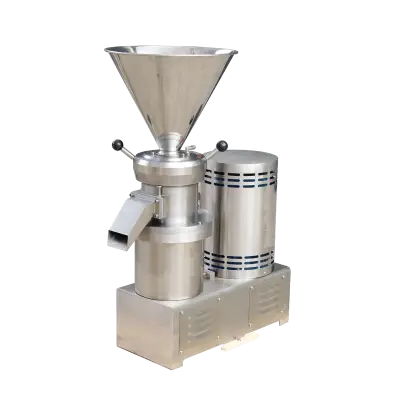
From a practical standpoint, a colloid mill is a precision wet-processing machine that uses a narrow rotor-stator gap to grind, disperse, emulsify, or homogenize a pumpable material. It is not simply a blender. A blender creates bulk flow; a colloid mill concentrates energy into a small working zone where the material experiences intense shear, friction, turbulence, and repeated acceleration. The result is a finer suspension or a more uniform emulsion, with improved texture and stability when the formulation and process are properly matched. It is used in food, chemical, pharmaceutical, cosmetic, and material-processing settings where a coarse premix must be converted into a smooth, stable product. The equipment category is often chosen when ordinary stirring cannot break down agglomerates or droplets enough. For readers who want to see a representative machine, the TENCAN colloid mill page provides a useful starting point.
Core Function and Working Principle
The core function of a colloid mill is to take a prepared feed and subject it to controlled, localized shear. The machine does not create a liquid phase from a dry powder; the feed must already be flowable enough to enter the working zone. Its value lies in what happens inside that zone.
From a Coarse Premix to a Fine Dispersion
In many processes, the colloid mill is placed after a pre-mixer or homogenizer. The pre-mix may contain solid particles, droplets of oil or water, or a combination of both. At this stage the mixture can look uniform to the eye while still containing relatively large clusters. The mill reduces those clusters and forces the phases into closer contact. For a suspension, the action breaks down agglomerates and distributes the solid more evenly. For an emulsion, it reduces droplet size and helps the continuous phase stabilize the dispersed phase. The term colloid mill is conventional rather than literal: not every product becomes a true colloidal system, and the final result depends on formulation, residence time, and the number of passes. A single pass may be enough for a simple dispersion, while a more demanding product may require recirculation or a second stage. The important point is that the mill works on a pumpable stream; it is a finishing and refining device, not a dry grinder.
The Rotor and Stator Shearing Zone
Inside the milling chamber, a rapidly rotating rotor turns close to a stationary stator. The gap between them is the heart of the machine. Material enters the center or inlet side, is accelerated by the rotor, and is forced through the narrow clearance. Within that clearance, velocity changes sharply across a short distance, producing high shear. The fluid also experiences turbulence, pressure variation, and repeated impacts or elongational forces, depending on the tooling. Many designs use toothed or grooved surfaces to increase the number of shear events; smooth-faced tools may be preferred for easier cleaning or gentler treatment. The residence time is short, so the result is often controlled by flow rate, rotor speed, gap setting, and the number of passes. Because mechanical energy is converted into heat, temperature control can matter for heat-sensitive products. The stator also helps direct flow and prevents the material from simply rotating with the rotor. Effective milling therefore requires more than a fast motor: the geometry of the working zone, the alignment of the parts, and the stability of the gap all influence the result.
Process Parameters That Shape the Result
The most obvious variable is rotor speed, which affects the velocity gradient and the energy delivered to the product. Higher speed generally increases shear, but it can also raise temperature, wear, and air entrainment. The gap setting is equally important. A smaller gap intensifies shear but reduces open area and may limit flow, while a larger gap gives higher throughput with less intense treatment. Feed rate and residence time interact with both: pushing material through too quickly can leave agglomerates intact, while excessive recirculation can overheat the product or create an overly narrow distribution. Product viscosity, solids loading, and the presence of abrasive particles change the practical operating window. Formulation is not separate from machine behavior; surfactant choice, phase ratio, and order of addition all influence what the mill can achieve. For these reasons, a useful process description should state the complete set of conditions, not only the mill model. A change in any one parameter can shift particle size, emulsion stability, texture, or temperature, so controlled trials are the reliable way to establish a repeatable recipe.
Core Components and Key Technologies
The working principle is simple to describe, but the hardware must be robust. Clearances are small, speeds are high, and the product may be abrasive, hot, or sensitive to contamination. A useful evaluation therefore looks beyond the motor rating to the wetted parts, the adjustment system, and the cleaning route.
Feed System and Milling Chamber
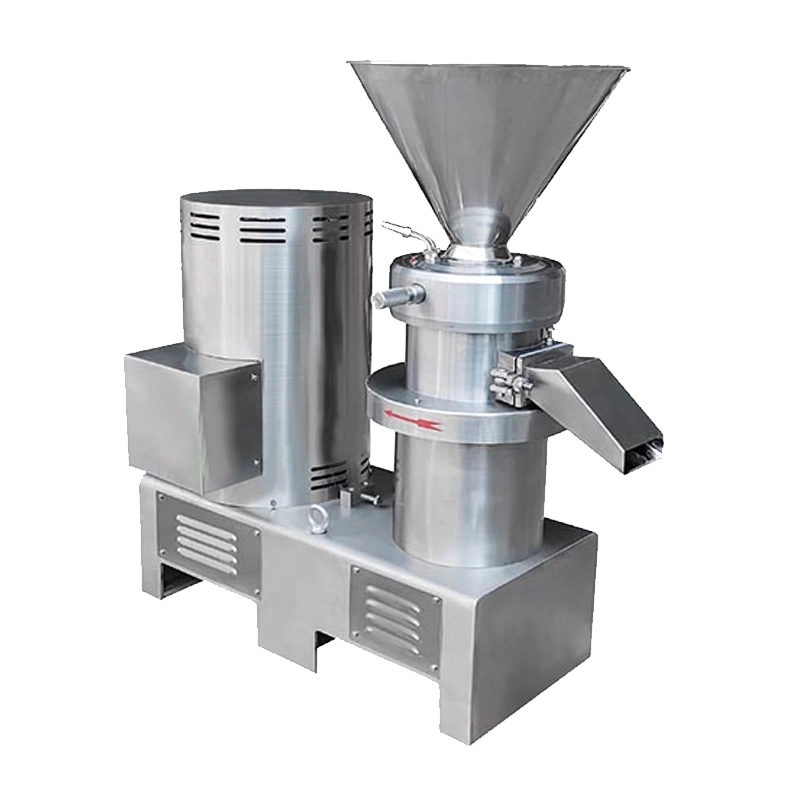
The feed system determines whether the mill receives a stable, air-free stream. A hopper, pump, or gravity feed may be used, depending on the installation. The goal is to keep the working zone full and to avoid surges that change residence time. The milling chamber houses the rotor and stator and directs material from the inlet to the outlet. Its internal shape should avoid dead zones where product can stagnate, overheat, or resist cleaning. Wetted surfaces are usually chosen for corrosion resistance and product compatibility. In sanitary applications, the chamber may need smooth finishes, drainability, and access for inspection. In abrasive applications, replaceable wear parts can extend service life. The feed system should also handle the required viscosity; a product that is too stiff may not enter the gap evenly, while a product with large foreign matter can damage the tools. A strainer or pre-screening step is often prudent, but it must not remove intended solid particles. The chamber and feed path should be evaluated as one system because a restriction upstream can starve the mill and create inconsistent results.
Rotor, Stator, and Gap Control
The rotor and stator form the precision pair that does the work. Their material, hardness, surface pattern, and concentricity affect both performance and service life. Toothed designs can create repeated shear and impact events, while smooth or conical designs may offer different flow and cleaning characteristics. The gap adjustment mechanism is especially important. It must hold a setting under load, allow controlled changes, and return reliably after cleaning. A poorly aligned rotor can wear unevenly, produce vibration, and give inconsistent product quality. Buyers should ask how the gap is set, how it is verified, and which parts wear. Replaceable inserts may reduce long-term cost, but they must be installed correctly. The rotor-stator assembly should also be balanced for the intended speed. At high speed, small mechanical faults become larger problems: noise, heat, seal stress, and downtime. The best design is not necessarily the one with the smallest possible gap; it is the one that can hold a suitable gap repeatably for the product and duty cycle. That is why application testing is more informative than a catalogue claim alone.
Drive, Sealing, Cooling, and Cleanability
The drive supplies the energy, but it also contributes to the machine's footprint, noise, and maintenance needs. A direct drive is compact, while a belt drive may offer different speed options and service access. The motor enclosure should suit the environment, especially where dust or washdown is present. Shaft sealing protects the product and the drive from cross-contamination. Seal choice depends on viscosity, temperature, pressure, and cleaning chemicals; no single seal type fits every duty. Some mills include a cooling jacket or other temperature-control feature because the working zone adds heat. That is valuable for heat-sensitive emulsions, but the need should be established during trials rather than assumed. Cleanability is another design issue. Product contact surfaces should be accessible, and the gap should be easy to reset after opening. In food, pharmaceutical, or cosmetic work, documentation and material certificates may matter as much as mechanical design. Finally, spare parts and service support should be checked before purchase. A mill that is difficult to maintain can erase the benefit of a good initial result. The practical question is whether the complete installation can be kept clean, cool, and correctly adjusted in daily use.
Key Performance Indicators and Selection Points
Selection starts with the material, not the machine. Viscosity, solids content, temperature sensitivity, abrasiveness, and the required dispersion quality set the boundaries. A supplier can then propose a working gap, tooling style, and feed arrangement. Because these factors interact, a trial with the actual formulation is more reliable than a generic capacity table.
Capacity, Flow, and Residence Time
Capacity is often expressed as a flow range, but the useful value depends on the product and the number of passes. A thin liquid may pass quickly, while a viscous paste may move slowly and heat up. The mill should be matched to the pump and piping so that the working zone remains properly fed. If the feed rate is too high for the available shear, the product may need recirculation; if it is too low, the product may spend too long in the chamber. Residence time is therefore a process variable, not just a machine specification. For batch operation, the batch size and recirculation loop shape the result. For continuous operation, flow stability matters because a surge changes both shear history and temperature. Buyers should ask for a capacity statement tied to a defined material, gap, speed, and endpoint. They should also consider turndown: can the mill run at a lower rate without losing the required dispersion? A machine that works only at one narrow condition may be difficult to fit into a real production schedule.
Particle Size, Emulsion Quality, and Repeatability
Fineness is usually described by a particle size or droplet size target, but the distribution can matter as much as the average. A product with a narrow distribution may feel smoother and remain more stable than one with the same average but a broad tail. Visual appearance, gloss, texture, sedimentation, and shelf life are practical indicators that complement instrumental measurement. Repeatability is equally important: the mill should deliver the same result after a gap adjustment, a cleaning cycle, or a tool change. That requires stable alignment, controlled feed, and a documented procedure. Buyers should not accept a single demonstration as proof of production performance. A meaningful test includes the actual formulation, the intended pre-mix method, and the planned number of passes. Samples should be taken at several points and evaluated with appropriate methods. If the product is an emulsion, stability under storage and temperature cycling deserves attention. If it is a suspension, settling and redispersion behavior should be checked. The right mill is the one that reaches the required quality window consistently, not simply the one that gives the smallest number in a short trial.
Materials, Sanitation, Energy, and Maintenance
Wetted materials must resist the product and the cleaning regime. Corrosion can shorten service life and contaminate the product, while a soft surface may wear quickly in abrasive duty. Surface finish, crevice-free joints, and drainability are important wherever hygiene is a priority. Energy use should be judged at the working point, not only at full load. A machine that requires multiple passes or long recirculation may consume more energy than its motor rating suggests. Maintenance access matters too: seal replacement, rotor inspection, and gap verification should be practical without excessive dismantling. Noise and vibration are useful warning signs during acceptance testing. Documentation, spare parts availability, and technical support are part of the total cost. Finally, the cleaning method should be agreed early. If the mill will be cleaned in place, the supplier should confirm that the seals and surfaces are compatible. If it will be opened manually, the rotor-stator assembly should be easy to handle safely. These practical details often decide whether a technically suitable mill becomes a reliable production asset.
Applications and Selection Advice
Colloid mills appear in many sectors because the need for fine, stable wet processing is widespread. Food products such as sauces, dressings, nut pastes, and dairy-type emulsions may use the action to smooth texture and reduce droplet size. Chemical and material products may use it to disperse pigments, fillers, or additives. Pharmaceutical and cosmetic preparations may use it for creams, gels, and suspensions where uniformity is critical. In each case, the mill is part of a larger process that includes formulation, pre-mixing, and downstream handling. The equipment should be selected for that whole process rather than as an isolated item.
Matching the Mill to the Product
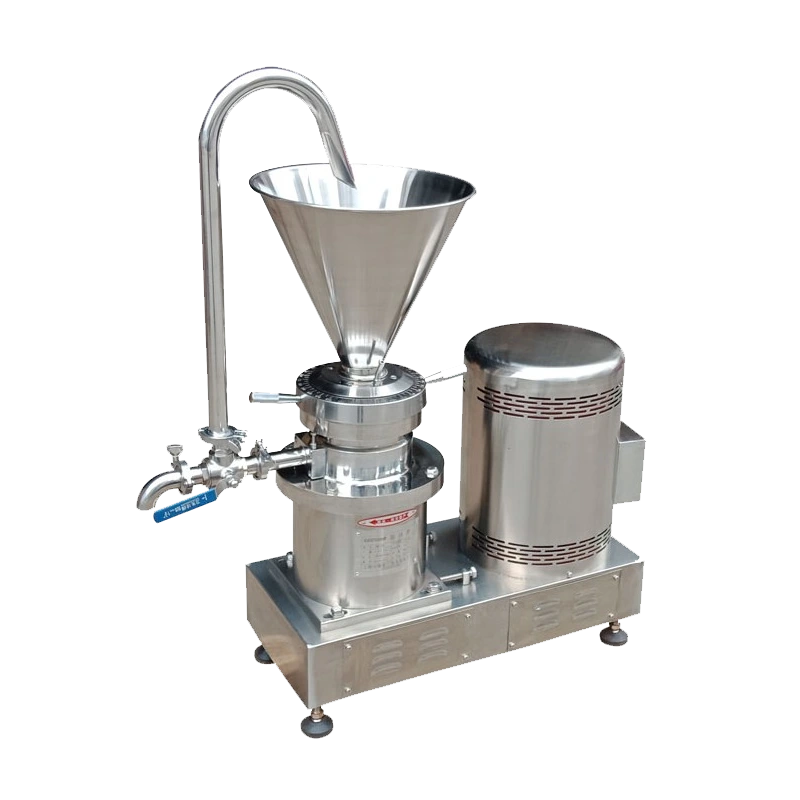
Start with the feed. If the material is a low-viscosity liquid, feeding and pumping are relatively straightforward, but the mill must still provide enough shear without overheating. If it is a viscous paste, the feed system and chamber design become more demanding, and the motor may need extra torque margin. Abrasive solids call for wear-resistant wetted parts and a realistic maintenance plan. Heat-sensitive products call for short residence time, cooling, or both. Hygienic products call for suitable materials, surface finish, and cleanability. Batch production favors flexibility and easy cleaning; continuous production favors stable flow and close integration with pumps and piping. Pilot units can be useful for formulation work, but scale-up should preserve the relevant shear history rather than only the rotor speed. A larger mill with the same tip speed may still behave differently because the gap, flow path, and residence time have changed. For these reasons, the selection conversation should include the recipe, the target quality, the cleaning regime, and the expected production range. A mill chosen only by motor power is likely to disappoint.
Pilot Testing and Scale-Up
A structured trial reduces risk. Begin with a representative pre-mix made by the intended method. Record the feed temperature, solids content, viscosity behavior, and appearance. Run the mill at several settings and sample at defined intervals. Measure the quality attributes that matter for the product, not only the particle size. Observe temperature rise, flow stability, foaming, and any signs of wear or blockage. After the trial, repeat the best condition to confirm that it is reproducible. For scale-up, compare the working gap, the shear zone geometry, the residence time, and the energy per unit mass rather than a single speed figure. A small change in gap can have a large effect, so the production machine should allow precise, repeatable adjustment. Cleaning and maintenance should also be tested, because a condition that is easy to achieve on a clean bench unit may be difficult after a production run. Finally, document the approved procedure and train operators. Consistent operation is part of the equipment performance, especially when the product quality window is narrow.
Installation and Operating Discipline
Good results depend on installation as well as machine design. The mill should be mounted on a stable base, aligned with its feed and discharge lines, and connected so that the working zone stays full. Operators need a clear procedure for setting the gap, checking rotation, and flushing the chamber. A simple log of gap setting, flow, temperature, and product result makes it easier to detect drift. Safety devices should prevent access while the rotor is moving and should allow safe isolation before cleaning. These points are not marketing features, but they decide whether a technically capable mill delivers consistent production.
Product Information and Further Reading
The TENCAN colloid mill belongs to the grinding series and is presented as equipment for wet processing. Configuration details, available options, and current specifications should be confirmed on the colloid mill product page. Buyers can use that page as a starting point, then discuss the actual formulation, target output, and cleaning requirements with the supplier. A technical conversation based on a real sample is more useful than a comparison based only on a model name.
Related Products
Get In Touch
Our professional team will reply to you within one business day. Please feel free to contact us!