

What Is a Colloid Mill? A Wet Grinding Machine for Fine Emulsions and Pastes
What Is a Colloid Mill?
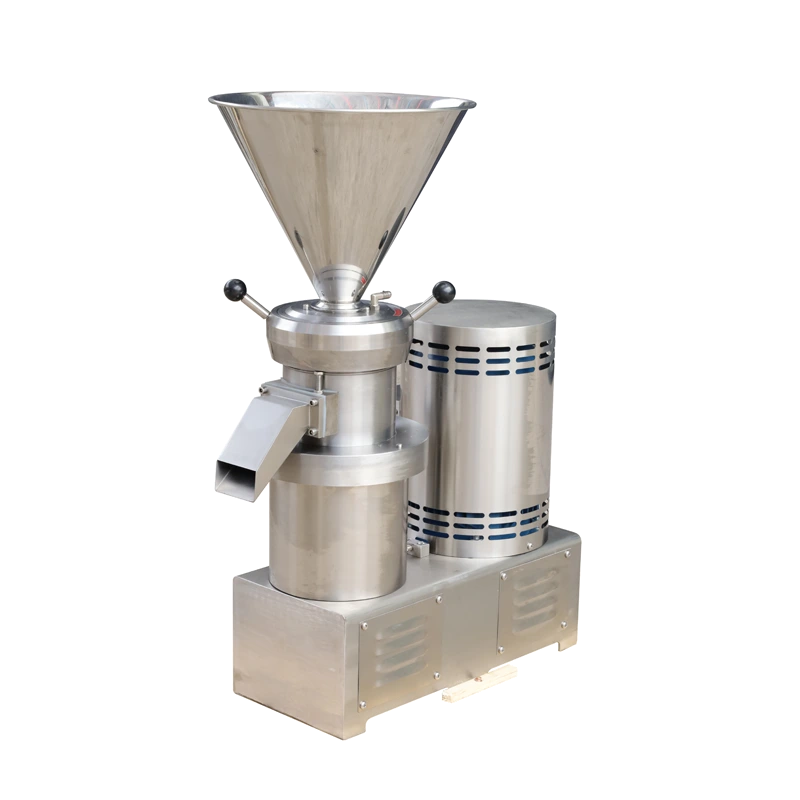
From its core, a colloid mill is a professional wet grinding and homogenizing machine that processors use to reduce the particle size of solid or liquid phases suspended in a carrier liquid, creating fine emulsions, dispersions, suspensions, and pastes. Unlike a dry ball mill or a jaw crusher, a colloid mill relies on a high-speed rotor turning very close to a stationary stator. The material passes through the narrow gap between these two surfaces, where intense shear, friction, turbulence, and cavitation break down droplets and agglomerates. The result is a stable, uniform product with a smooth texture and a small, consistent particle or droplet size.
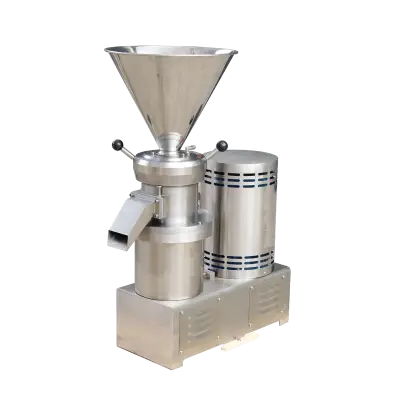
The equipment is widely used in food, pharmaceutical, cosmetic, chemical, and material-processing industries. It can turn coarse slurries into fine emulsions, blend immiscible liquids, de-agglomerate powders in liquid, and create pastes with a controlled texture. For readers who want to see an example of a commercially available unit, the colloid mill product page shows a typical configuration used in laboratory and production settings.
Core Functions and Working Principle
How Material Moves from Coarse Feed to Fine Product
A colloid mill is normally fed with a liquid-based mixture. The feed may contain oil, water, solvents, syrups, or other carriers, plus solid particles, powders, or a second immiscible liquid. A hopper, pump, or gravity line directs the mixture into the milling chamber. Inside the chamber, a conical or cylindrical rotor spins at high speed. The stator surrounds the rotor with a small, adjustable clearance, often called the rotor-stator gap. As the product is pushed through this gap, it is subjected to severe mechanical and hydraulic forces. The combination of shear, impact, and pressure pulses tears apart droplets and aggregates. The processed material then exits the chamber, often through an outlet that can be connected to a recirculation line or a filling system.
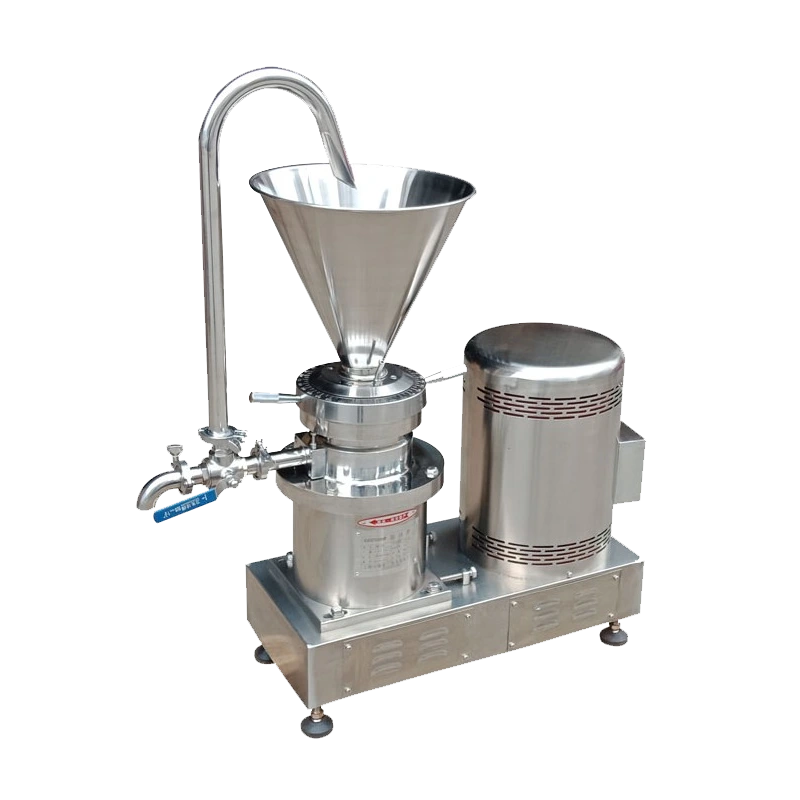
The transformation is not a dry crushing action. A colloid mill works best when the material has a liquid phase that can carry the particles and transfer the shear forces. In many applications, the mill is used in a recirculation loop: the product passes through the gap multiple times until the target fineness and stability are reached. For heat-sensitive products, the chamber may be water-jacketed so that cooling water removes the heat generated by high-speed shearing.
The Main Mechanisms: Shear, Friction, Turbulence, and Cavitation
Four mechanisms usually work together inside a colloid mill. First, shear is the sliding force between the fast rotor and the stationary stator. It stretches droplets and particle clusters until they break. Second, friction occurs as the product rubs against the rotor, stator, and adjacent liquid layers. Third, turbulence appears at high rotor speeds, creating chaotic flow that improves mixing and collision frequency. Fourth, cavitation can occur when local pressure drops and vapor bubbles form and collapse; the collapse releases energy that helps disrupt agglomerates. The exact balance among these mechanisms depends on the rotor design, speed, gap setting, product viscosity, and flow rate.
Because these forces act on the product in a very short time, a colloid mill can achieve fine emulsions without the long processing times required by some low-shear mixers. However, it is not a magic bullet: if the formulation is unstable, if the solids are too hard or too abrasive, or if the gap is set incorrectly, the result may be poor. Successful operation depends on matching the machine to the material and controlling the process parameters.
Key Process Parameters and Their Effects
Several parameters determine the final particle or droplet size, throughput, and product quality.
- Rotor speed: Higher speeds increase shear rate and tip speed. This usually reduces droplet or particle size, but also raises temperature and wear.
- Rotor-stator gap: A smaller gap increases shear intensity and produces finer dispersions, but it also reduces flow and may cause overheating or clogging with coarse or fibrous feed.
- Flow rate and residence time: A slower flow or longer recirculation time gives the product more passes through the high-shear zone. This improves fineness and uniformity, but excessive processing can over-heat the product or create unwanted aeration.
- Temperature: High shear generates heat. Cooling jackets or chilled feed help protect heat-sensitive ingredients such as proteins, flavors, and active pharmaceutical ingredients.
- Formulation and viscosity: The ratio of oil to water, surfactant type, solids loading, and viscosity all affect how easily the product can be pumped and how stable the final emulsion will be.
Operators should treat these parameters as a linked system. For example, reducing the gap may allow a lower rotor speed, which can save energy and reduce heat. Increasing the solids content may require a larger gap or a more powerful motor to avoid blockage. A systematic trial with a design-of-experiments approach often gives better results than adjusting one variable at a time.
Main Types and Configurations
Laboratory Colloid Mills
Laboratory colloid mills are designed for small batches, sample screening, and formulation development. They usually have a compact frame, a small milling chamber, and variable speed control. Researchers use them to test emulsification recipes, evaluate droplet size, and predict how a formulation will behave at larger scales. A lab mill may process only a few hundred milliliters to a few liters per batch, and it often allows quick disassembly for cleaning and inspection. Because the batch size is small, temperature control and gap adjustment are especially important; a small error can change the result significantly.
These units are also useful for teaching and for quality control. A technician can compare a new ingredient against a reference formulation, check whether a supplier's powder disperses properly, or study the effect of surfactant concentration. The small scale makes it practical to run multiple trials in one day.
Pilot and Production Colloid Mills
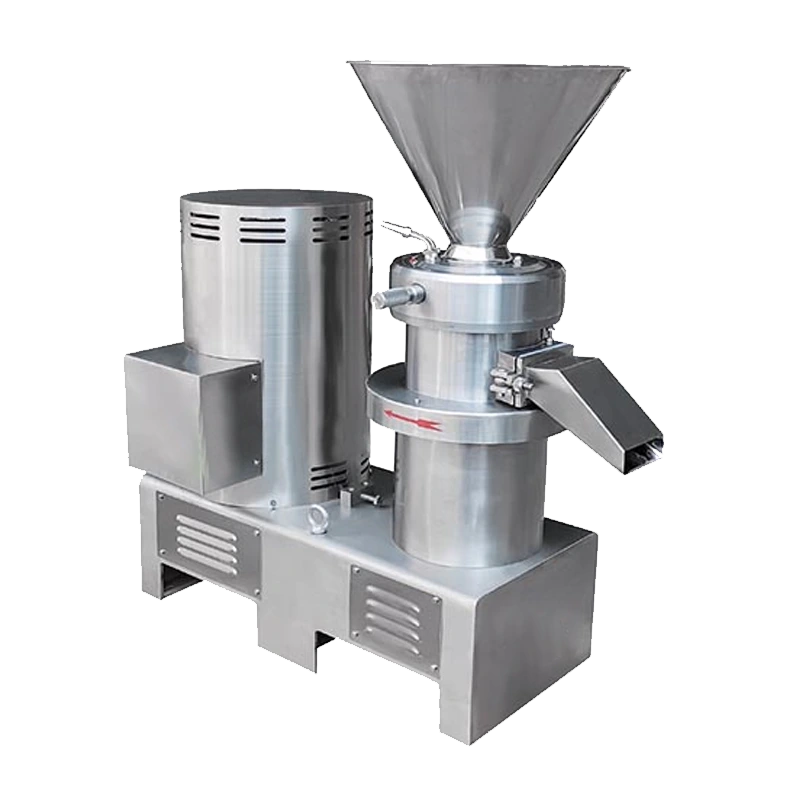
Pilot and production models are built for continuous or semi-continuous operation. They have larger motors, heavier bearings, and more robust sealing systems. A production colloid mill may be mounted on a mobile frame or integrated into a closed processing line with pumps, heat exchangers, and inline sensors. Throughput can range from several hundred liters per hour to many thousands of liters per hour, depending on the model, gap setting, and product viscosity. Sanitary designs with stainless steel contact parts, polished surfaces, and clean-in-place connections are common in food, pharmaceutical, and cosmetic plants.
Scale-up from a lab mill to a production mill is not simply a matter of increasing speed. Tip speed, gap geometry, residence time, and heat removal must be matched carefully. A useful approach is to keep the same shear rate or tip speed as the lab process, then adjust flow and cooling to achieve the same product temperature profile. Pilot trials help confirm that the formulation remains stable when the equipment size changes.
Vertical and Horizontal Designs
Colloid mills can be arranged vertically or horizontally. In a vertical design, the rotor shaft is upright, and the product often flows downward through the gap by gravity or pump pressure. Vertical mills are compact and easy to drain. In a horizontal design, the shaft is horizontal, and the product is pumped through the chamber. Horizontal mills can be easier to integrate into a pipeline and may offer better access for maintenance. The choice depends on plant layout, available floor space, cleaning requirements, and the viscosity of the product.
Toothed, Conical, and Smooth Rotor-Stator Sets
The rotor and stator may have different surface geometries. Toothed or grooved sets create additional turbulence and are useful for tough agglomerates and fibrous materials. Conical sets provide a gradually narrowing gap, which can handle higher viscosity and provide a more controlled shear profile. Smooth sets are often chosen for fine emulsions where gentle but intense shear is needed. Some mills allow the rotor-stator set to be changed, so one machine can serve multiple products. The selection should be based on the feed material, target particle size, and cleaning needs.
Key Performance Indicators and Selection Points
Capacity and Throughput
Capacity is one of the first specifications a buyer considers. Laboratory mills may be rated for batch sizes from a few hundred milliliters to several liters. Pilot mills might handle tens to hundreds of liters per hour. Production mills can reach thousands of liters per hour. However, the nameplate capacity is only a guide. Real throughput depends on product viscosity, solids content, gap setting, rotor speed, and whether the process is batch or continuous. A highly viscous paste will flow more slowly than a low-viscosity emulsion, so the same mill may have a much lower practical output. Buyers should ask for a trial with their actual formulation or, at minimum, provide detailed rheology data to the supplier.
It is also important to distinguish between single-pass and recirculation operation. A single pass gives a defined residence time and is easy to automate. Recirculation can achieve a finer product but requires a tank, pump, and longer processing time. For heat-sensitive products, a single pass with a chilled feed may be better. For products that need very small droplet size, multiple passes with cooling between passes may be necessary.
Particle Size and Emulsion Quality
The ability to control particle or droplet size is the central performance indicator for a colloid mill. In emulsions, the target is often a narrow droplet size distribution, because a narrow distribution improves stability and texture. In suspensions, the goal may be to break agglomerates and reduce the top size of solid particles. The rotor-stator gap and rotor speed are the primary controls. A smaller gap and higher speed generally produce a finer product, but they also increase energy consumption and heat generation. The optimal setting is the one that reaches the required quality without damaging the product.
Particle size can be measured by laser diffraction, microscopy, or sieving, depending on the material. A well-designed trial will measure not only the average size but also the distribution width. A product with a small average size but a wide distribution may still be unstable or gritty. Consistency from batch to batch is equally important, especially in pharmaceutical and food applications where specifications are tight.
Energy Consumption and Efficiency
High-shear milling is energy-intensive compared with simple mixing. The motor power, rotor speed, and gap setting all influence energy use. A larger gap and lower speed reduce power draw, but they may require more recirculation passes to reach the target size. The most efficient process is usually the one that achieves the required quality in the fewest passes while avoiding overheating. Variable frequency drives help by allowing the operator to match speed to the product and to ramp up or down smoothly. Energy efficiency also depends on the pump, piping, and cooling system, not just the mill itself.
Automation, Programmability, and Process Control
Modern colloid mills can be equipped with digital controls, recipe storage, and data logging. Automation is valuable for reproducibility: the same speed, gap, flow rate, and temperature profile can be repeated batch after batch. Inline sensors for temperature, pressure, and flow can trigger alarms or adjust the process automatically. For regulated industries, data logs help with traceability and quality assurance. Even in a simple laboratory mill, a digital display for rotor speed and a temperature readout make it easier to document experiments.
Maintenance, Cleaning, and Wear Parts
Because the rotor and stator operate with a very small gap, wear and alignment are critical. Abrasive solids can erode the surfaces, changing the gap and reducing performance. Regular inspection of the rotor, stator, seals, and bearings helps prevent unexpected downtime. Easy access to the milling chamber is a major advantage: operators should be able to open, clean, and reassemble the machine without special tools. In sanitary applications, the design should avoid crevices where product can accumulate. Stainless steel contact parts, food-grade seals, and clean-in-place or clean-out-of-place procedures are common requirements. Replacement parts should be readily available and dimensionally consistent so that process settings remain valid after maintenance.
Applications and Selection Advice
Colloid mills are used in many industries where fine emulsions, dispersions, and pastes are required. In food processing, they help produce sauces, dressings, mayonnaise, nut butters, chocolate coatings, and beverage concentrates. In pharmaceuticals and biotechnology, they are used for creams, ointments, gels, suspensions, and lipid-based delivery systems. In cosmetics and personal care, they support the manufacture of lotions, creams, serums, and color cosmetics. In chemical and material processing, they are found in paints, inks, dyes, lubricants, adhesives, sealants, and battery slurries. They can also be used in asphalt emulsions, wax dispersions, and agricultural formulations. The common thread is a need to reduce droplet or particle size and to create a stable, uniform product.
Selection advice depends on the user's scale and goal. A research laboratory should prioritize flexibility: variable speed, interchangeable rotor-stator sets, small batch capability, and easy cleaning. A pilot plant should look for a mill that can bridge lab and production conditions, with enough power and cooling to handle realistic flow rates. A production facility should focus on continuous operation, hygienic design, automation, and service support. For abrasive or highly viscous products, a supplier may recommend a different rotor material, a larger gap, or a different mill type altogether. It is always wise to run a trial with the actual formulation before making a final purchase decision.
Before choosing a colloid mill, define the target particle or droplet size, the required throughput, the product viscosity and temperature limits, the cleaning standard, and the available utilities. Then compare those requirements with the mill's speed range, gap adjustment, motor power, cooling capacity, and materials of construction. A machine that is oversized wastes energy; a machine that is undersized may never reach the required fineness. The best choice is the one that matches the process window with a reasonable safety margin.
Where to Learn More
The colloid mill product page provides more information on configurations, images, and contact options. When evaluating a colloid mill, request details on rotor-stator geometry, speed control, cooling, and maintenance access. With the right machine and process parameters, a colloid mill can turn a coarse, separated mixture into a smooth, stable, and repeatable product.
Related Products
Get In Touch
Our professional team will reply to you within one business day. Please feel free to contact us!