

What is a Vertical Production Planetary Ball Mill? A High-Energy Milling Equipment for Industrial-Scale Powder Processing
What is a Vertical Production Planetary Ball Mill?
At its core, a vertical production planetary ball mill is a specialized high-energy milling equipment used in industrial and research settings for fine grinding, mixing, homogenizing, and mechanical alloying of powders. Unlike conventional ball mills, this device employs a unique planetary motion—where the grinding jars rotate around their own axes while simultaneously revolving around a central sun wheel—to generate intense impact, friction, and shear forces. This design enables rapid particle size reduction down to micron and even nanometer levels, making it an indispensable tool for advanced materials processing, from battery materials and ceramics to pharmaceuticals and minerals.
How Does a Vertical Production Planetary Ball Mill Work?
The fundamental principle of a planetary ball mill is the "planetary motion": the grinding jars (planets) are mounted on a rotating support disk (sun wheel). When the disk rotates, each jar spins in the opposite direction on its own axis. This compound motion creates powerful centrifugal forces that drive the grinding balls and sample material inside the jars. The balls are lifted, then flung against the jar walls and each other, generating a three-dimensional cascade of impacts, collisions, and friction. This process effectively breaks down coarse particles into fine powders.
Key to its efficiency is the ability to generate Coriolis forces, which enhance the random motion of the grinding media. The result is a much higher energy input per unit volume compared to traditional tumbling mills, allowing for shorter grinding times and finer end products. The vertical configuration of the production planetary ball mill ensures stable operation, easy loading/unloading, and efficient heat dissipation, making it suitable for continuous or batch processing in industrial environments.
Key Components and Design Features
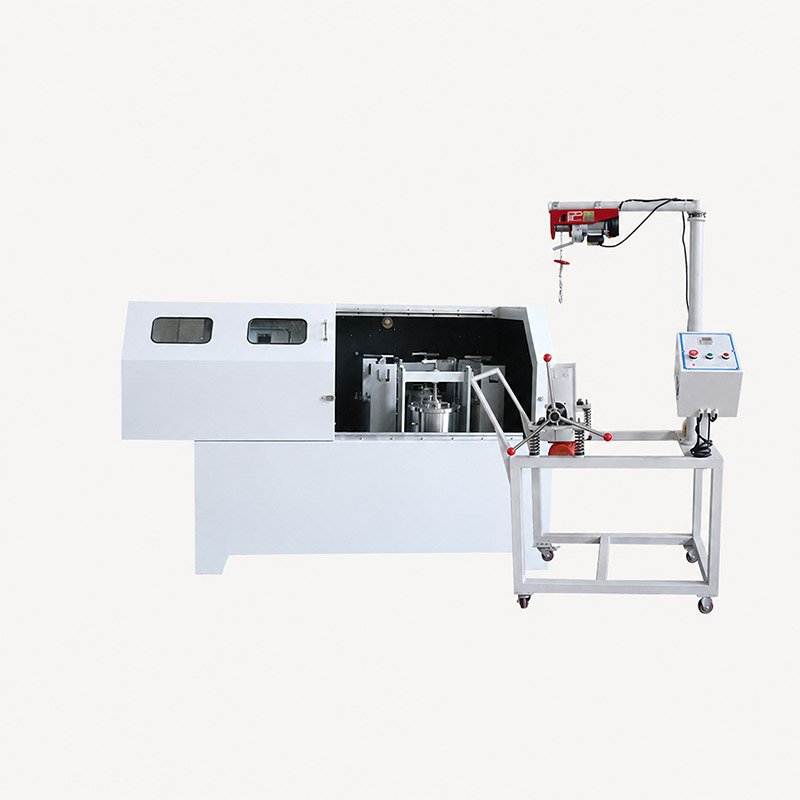
A vertical production planetary ball mill consists of several critical components:
- Main Drive System: A powerful motor and gearbox deliver precise rotation speeds, typically ranging from 100 to 600 rpm for the sun wheel, with adjustable jar speeds.
- Grinding Jars: Available in various materials (stainless steel, zirconia, agate, tungsten carbide, etc.) to match the sample's hardness and contamination requirements. Jar capacities range from 1L to 20L or more for production scale.
- Control Panel: Touch-screen interface with programmable parameters including speed, time, pause, and direction of rotation. Many models support multi-step programs for optimized grinding cycles.
- Safety Features: Emergency stop buttons, overload protection, and sealed housings to prevent dust leakage and ensure operator safety.
- Cooling System: Some heavy-duty models incorporate water cooling or air cooling to manage heat generated during prolonged milling, protecting heat-sensitive materials.
Key Performance Indicators and Selection Guide
When choosing a vertical production planetary ball mill, consider the following factors:
Processing Capacity and Jar Size
Determine the batch volume required. Production models typically accommodate jars from 2L to 20L per station, with total capacity ranging from 4L to 80L. For pilot-scale production, the vertical production planetary ball mill offers a balanced solution between laboratory and full-scale production.
Grinding Speed and Energy
Maximum rotational speed influences the impact energy. Higher speeds produce finer particles but may cause excessive heating. Look for variable speed control (e.g., 100-600 rpm) to adapt to different materials.
Material Compatibility
Select jar and ball materials that resist corrosion and avoid contamination. For example, agate is ideal for silica samples, while zirconia is recommended for high-hardness materials like ceramics.
Automation and Programmability
Touch-screen controllers with programmable cycles allow for unattended operation and consistent results. Features like forward/reverse rotation and pause intervals can improve grinding uniformity.
Maintenance and Durability
Check for wear-resistant linings, easy-to-clean jars, and robust construction. A good planetary ball mill should operate smoothly with minimal vibration and noise.
Applications and Industry Use
The vertical production planetary ball mill is widely used in:
- Battery Materials: Grinding of cathode and anode powders for lithium-ion batteries, solid-state electrolytes.
- Ceramics and Refractories: Fine grinding of alumina, zirconia, silicon carbide, and other advanced ceramics.
- Pharmaceuticals and Cosmetics: Micronization of active ingredients, pigments, and excipients.
- Mining and Metallurgy: Sample preparation for ore analysis, mechanical alloying of metals.
- Nanomaterials: Production of nanoparticles, nanocomposites, and quantum dots.
For users needing high throughput and consistent quality in industrial production, the vertical production planetary ball mill is an excellent choice. Research labs with smaller volumes may prefer a vertical square planetary ball mill or a micro-computerized touch screen model for more detailed control. Always consult with the manufacturer to ensure the selected machine matches your material properties and production requirements.
Reference
Product page: Vertical production planetary ball mill
Related product: Planetary ball mill (semi-circular model)
Related Products
Get In Touch
Our professional team will reply to you within one business day. Please feel free to contact us!