

What is a Vertical Production Planetary Ball Mill? A High-Energy Milling Equipment for Batch Grinding Production
What is a Vertical Production Planetary Ball Mill? A High-Energy Milling Equipment for Batch Grinding Production
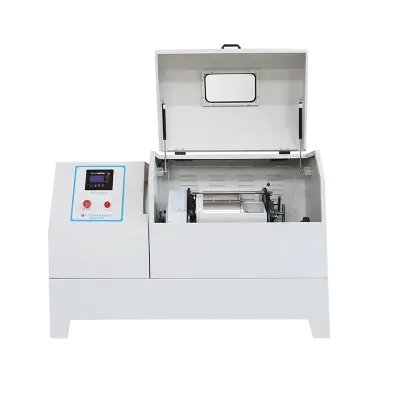
At its core, a vertical production planetary ball mill is a specialized high-energy milling equipment used in industries such as mining, ceramics, electronics, and new materials to convert coarse particles into fine or ultra-fine powders on a batch production scale. Unlike laboratory-scale mills, this production model is designed for larger throughput, typically handling several kilograms to tens of kilograms per batch, while retaining the same powerful planetary motion principle that delivers micro- or even nano-sized particles.
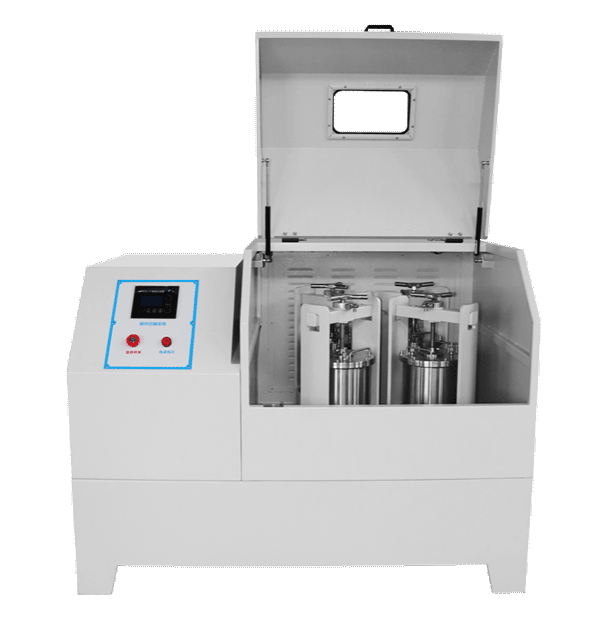
Core Function and Working Principle
The vertical production planetary ball mill transforms raw material from coarse granules or lumps into fine powder through a combination of impact and friction. The key working principle is the planetary motion: a rotating disc (the sun wheel) drives multiple milling jars mounted on it. Each jar simultaneously rotates around its own axis in the opposite direction to the disc. This dual rotation creates relative motion between the grinding balls and the jar wall, producing high-energy collisions that break down the material.
In a vertical configuration, the jars are arranged upright, which allows for efficient gravity-assisted material flow and easier loading/unloading compared to horizontal types. The mill can operate in both dry and wet modes, and can be equipped with vacuum or inert gas sealing for air-sensitive materials. Critical process parameters include rotation speed, grinding time, ball-to-material ratio, and jar material selection. These parameters directly affect the final particle size distribution and contamination level.
Key Components and Technology
Unlike small laboratory models, the vertical production planetary ball mill features a robust structure capable of handling continuous heavy-duty operation. Key components include:
- Main Drive System: A high-torque motor with frequency control (VFD) enables precise speed adjustment from low to high RPM, typically up to several hundred revolutions per minute.
- Sun Wheel and Jars: The sun wheel holds 2 to 4 milling jars, each available in sizes from 1L to 20L or more. Jars are made from wear-resistant materials such as stainless steel, zirconia, agate, or nylon depending on the application.
- Safety Enclosure: A sealed casing with interlock mechanism prevents accidental opening during operation and reduces noise.
- Control Panel: Touch-screen or digital interface allows programming of speed, time, and direction (forward/reverse/pause). Many models support multi-step cycles for optimized grinding.
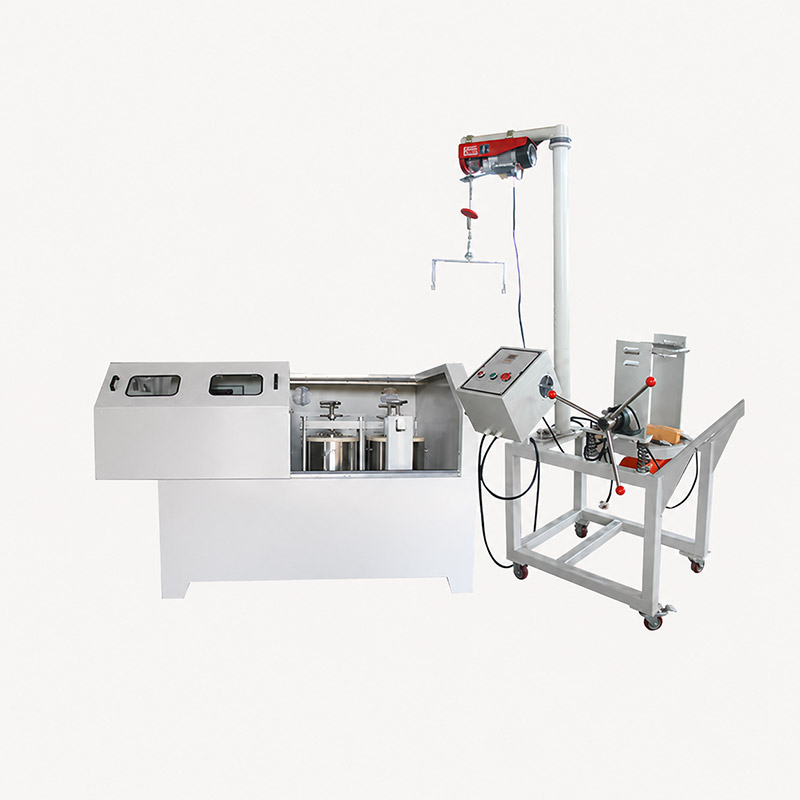
Key Performance Indicators and Selection Criteria
When selecting a vertical production planetary ball mill, consider the following factors:
- Processing Capacity: Typically ranges from 1 kg to 30 kg per batch. Choose a model that matches your daily production target.
- Particle Size Control: The mill can achieve final fineness down to 0.1 micron or even smaller. Check the mill's minimum achievable particle size and its consistency.
- Energy Efficiency: Look for a motor with high torque and low power consumption. Variable frequency drives help optimize energy use.
- Automation and Programmability: Advanced models offer touch-screen control, programmable grinding cycles, and data logging for repeatable results.
- Maintenance and Durability: The mill should have easy access to replace wearing parts like jar seals and belts. Stainless steel construction and sealed bearings extend service life.
Application Fields and Selection Advice
Vertical production planetary ball mills are widely used in:
- Ceramics and Glass: Grinding of ceramic powders, glazes, and glass frits.
- Electronics: Preparation of battery materials (e.g., lithium cobalt oxide, manganese oxide), magnetic materials, and piezoelectric ceramics.
- Mining and Metallurgy: Fine grinding of ores, minerals, and alloys.
- Chemical and Pharmaceutical: Grinding of catalysts, pigments, and active pharmaceutical ingredients.
For users scaling up from laboratory to production, choose a mill with the same jar material and geometry as your lab tests to ensure process transferability. For applications requiring high purity, select jars made of zirconia or agate to minimize contamination. For high-volume production, consider a model with larger jars and automatic jar lifting systems.
For more details, visit the product page: Vertical Production Planetary Ball Mill.
Related Products
Get In Touch
Our professional team will reply to you within one business day. Please feel free to contact us!