

What is a Vertical Production Planetary Ball Mill? A High-Throughput Milling Solution for Industrial-Scale Fine Grinding
What is a Vertical Production Planetary Ball Mill?
At its core, a vertical production planetary ball mill is a specialized industrial grinding machine designed for large-scale batch processing of fine powders. It is primarily used in sectors such as advanced ceramics, battery materials, metallurgy, and chemical engineering to efficiently reduce coarse particles into submicron or even nanometer-scale powders. Unlike laboratory-scale planetary mills, production models are built with robust structures and higher power capacities to handle kilogram-scale or even larger batches, making them ideal for research pilot plants and small-to-medium production lines.
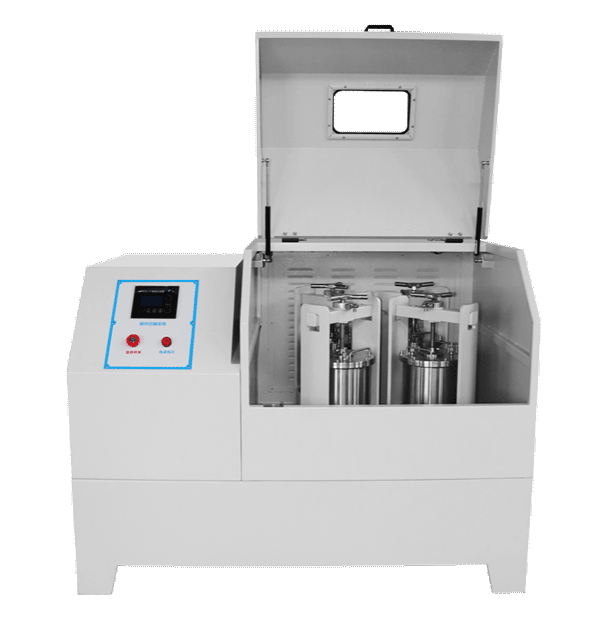
Core Function and Working Principle
The vertical production planetary ball mill shares the same fundamental planetary motion concept as its smaller counterparts but is scaled up for continuous or batch production. The key principle is a combination of revolution and rotation: the main turntable (sun wheel) rotates around its central axis, while several grinding jars (planetary pots) mounted on the turntable rotate in the opposite direction around their own axes. This creates a complex three-dimensional motion that generates high centrifugal forces and Coriolis forces, driving the grinding balls to impact, shear, and friction the material inside the jars.
During operation, the material is transformed from coarse particles or agglomerates into a fine, homogeneous powder. The grinding media (balls made of zirconia, agate, stainless steel, etc.) collide with each other and with the jar walls, applying intense mechanical energy to the sample. Key parameters that influence final particle size include rotation speed, grinding time, ball-to-powder ratio, and the size and material of the grinding balls. Typical achievable fineness ranges from several microns down to below 0.1 micron, depending on the material and process conditions.
Key Components and Critical Technologies
Unlike smaller laboratory models, vertical production planetary ball mills incorporate several design features to ensure reliability and throughput:
- Heavy-duty drive system: A powerful motor and gear transmission (often with variable frequency drive) provide stable torque even under high loads, enabling processing of dense or hard materials.
- Vertical jar configuration: The vertical orientation of the jars allows for easier loading/unloading and better utilization of gravity, which is beneficial for wet grinding and slurry mixing.
- Sealed grinding jars: Production jars are typically equipped with airtight seals to support vacuum or inert gas grinding, preventing oxidation or contamination of sensitive materials.
- Advanced control system: Many models feature a touch screen interface with programmable timing, speed control, and automatic stop, allowing for reproducible grinding cycles.
- Safety features: Emergency stop, overload protection, and noise-dampening enclosures are standard to ensure safe operation in industrial environments.
Key Performance Indicators and Selection Criteria
When selecting a vertical production planetary ball mill, users should evaluate the following factors:
- Capacity and throughput: The total volume of the grinding jars (e.g., 1L, 2.5L, 5L, 10L per jar) and the number of jars (typically 2 or 4) determine the maximum batch size. For production, machines with larger jar capacities and higher power ratings are preferred.
- Fineness control: The ability to achieve the required particle size distribution (e.g., D50 < 1 μm) is critical. Look for models with adjustable speed and programmable grinding cycles.
- Energy efficiency: Higher rotational speeds and optimized jar geometry can reduce grinding time, lowering energy consumption per batch.
- Material compatibility: The grinding jar and ball materials must be chemically inert to the sample. Common options include agate, zirconia, tungsten carbide, stainless steel, and nylon.
- Automation and ease of maintenance: Features like touch screen programming, easy jar replacement, and self-lubricating bearings reduce operator workload and downtime.
- Noise and vibration levels: Industrial mills often incorporate soundproof enclosures and vibration dampening to meet workplace standards.
Application Fields and Selection Advice
Vertical production planetary ball mills are widely used in:
- Advanced ceramics: Grinding of alumina, zirconia, silicon carbide, and other ceramic powders for electronic components or structural parts.
- Battery materials: Preparation of cathode materials (e.g., lithium cobalt oxide, lithium iron phosphate) and anode materials (e.g., graphite, silicon) for lithium-ion batteries.
- Metallurgy: Mechanical alloying and grinding of metal powders, such as titanium, aluminum, and nickel alloys.
- Chemical industry: Fine grinding of catalysts, pigments, dyes, and pharmaceutical intermediates.
- Geology and mining: Sample preparation for mineral analysis and ore beneficiation studies.
For users transitioning from laboratory research to small-scale production, a vertical production planetary ball mill offers a convenient upgrade path. If your batch size is below 1 kg and you only need occasional grinding, a standard laboratory planetary ball mill may suffice. For batches of 1–10 kg or more, and where reproducibility and process control are essential, the vertical production model is the recommended choice. Always consult with the manufacturer to match the machine's specifications to your specific material properties and production goals.
References
- Vertical production planetary ball mill – TENCAN official product page
Related Products
Get In Touch
Our professional team will reply to you within one business day. Please feel free to contact us!