

What is a Vacuum Planetary Mill Jar? A Hermetically Sealed Container for Oxygen-Sensitive Material Grinding in Planetary Ball Mills
What is a Vacuum Planetary Mill Jar? A Hermetically Sealed Container for Oxygen-Sensitive Material Grinding
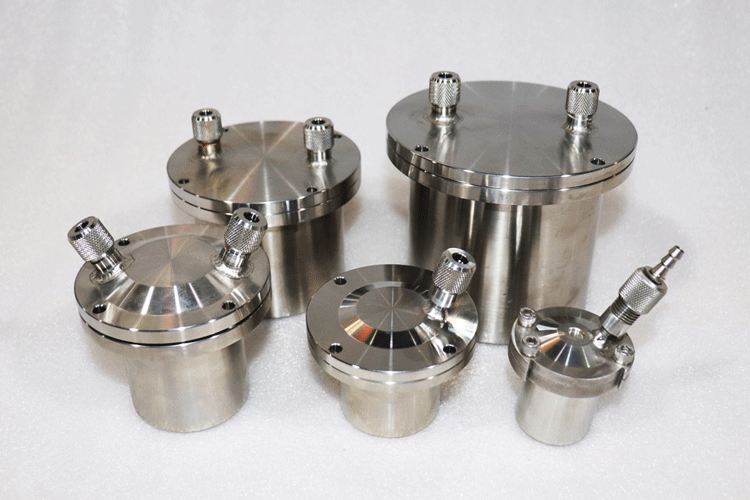
At its core, a vacuum planetary mill jar is a specialized, hermetically sealed container designed for use with planetary ball mills. Researchers and engineers in materials science, chemistry, and battery development use it to grind, mix, and homogenize powders and slurries while strictly controlling the internal atmosphere. By enabling vacuum or inert gas environments, this jar prevents oxidation, moisture absorption, and cross-contamination of sensitive materials, setting it apart from standard grinding jars.
Core Function and Working Principle
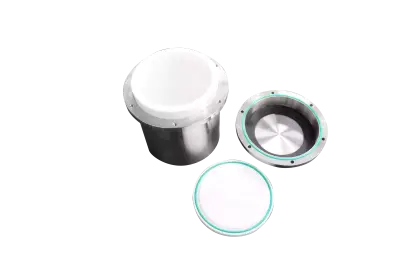
The primary function of a vacuum planetary mill jar is to transform materials from a raw, often coarse state into a fine or ultra-fine powder under controlled atmospheric conditions. Its working principle relies on a robust airtight design. The jar features a double-sealing structure, typically using fluororubber O-rings, that achieves a vacuum level down to -0.098 MPa. This seal prevents any gas exchange between the interior of the jar and the external environment.
During operation, the jar is mounted on a planetary ball mill. The mill's rotating turntable and the jar's counter-rotation create powerful planetary motion. This motion imparts high-energy impacts and friction to the grinding balls and the sample inside. The vacuum inside the jar ensures that these mechanical forces are the only ones acting on the sample, eliminating any chemical reactions with air. This is crucial for processing materials like lithium battery compounds, catalysts, and other air-sensitive nanopowders.
Key process parameters include the vacuum level, the grinding speed (both revolution and rotation of the mill), the size and material of grinding balls, and the grinding time. For instance, a smaller grinding ball size is preferred for achieving a finer final particle size, while a higher vacuum level is essential for materials that are extremely sensitive to oxygen or moisture. The interplay of these parameters determines the final material properties, such as particle size distribution, purity, and phase composition.
Core Components and Key Materials
Vacuum planetary mill jars come in various materials, each offering distinct advantages. The choice of material is critical for preventing contamination and ensuring durability.
- 304 Stainless Steel Vacuum Jar: The most common and cost-effective option. It offers high corrosion resistance and durability, ideal for general-purpose grinding of many materials. It provides a good balance between strength and compatibility with various chemicals. 304 stainless steel planetary mill jars are widely used in pharmaceutical and food processing laboratories.
- Zirconia Vacuum Jar: Provides exceptional wear resistance and chemical inertness. Zirconia jars are the preferred choice for grinding hard, brittle materials like ceramics and minerals, as they minimize contamination from the jar itself. The high density of zirconia also contributes to more efficient grinding.
- Agate Vacuum Jar: Made from natural agate, these jars offer excellent hardness and chemical resistance, making them ideal for grinding materials that must remain extremely pure, such as in certain geological or pharmaceutical samples. Agate jars effectively block moisture and light.
r
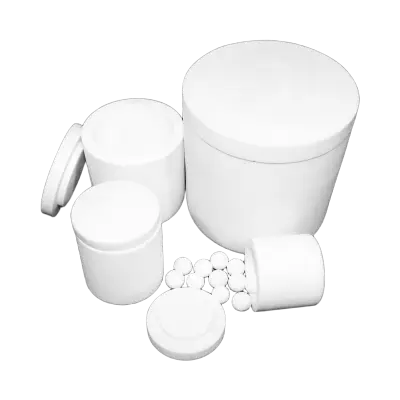
Other materials include tungsten carbide for the hardest materials, PTFE (Teflon) for extreme chemical resistance, and tempered nylon for applications requiring a non-metallic, durable option. The core components of a vacuum jar also include a pressure gauge, a valve for gas filling or evacuation, and a secure locking mechanism to maintain the seal during high-energy milling.
Key Performance Indicators and Selection Criteria
When selecting a vacuum planetary mill jar, several key performance indicators should be considered:
- Vacuum Level: The ability to achieve and maintain a specified vacuum (typically up to -0.098 MPa) is the most critical performance metric. A higher vacuum ensures better protection for oxygen-sensitive materials.
- Material Compatibility: The jar's material must be chemically inert to the sample and grinding media to avoid contamination. For example, A-grade corundum jars are excellent for high-purity applications.
- Capacity and Throughput: Jars are available in various sizes, from 50 ml to 500 ml or more. The optimal filling volume is typically one-third to one-half of the jar's total capacity to allow for efficient grinding motion.
- Sealing Integrity: A high-quality O-ring seal system that can withstand repeated cycles of vacuum and pressure is essential. Look for jars with double-sealing structures to ensure long-term reliability.
- Ease of Use and Maintenance: Features like quick-release clamps, easy-to-clean surfaces, and accessible valve systems reduce downtime and simplify routine maintenance.
Application Areas and Selection Suggestions
Vacuum planetary mill jars are indispensable in industries where material purity and controlled atmospheres are paramount:
- Battery Research and Production: For milling and mixing cathode, anode, and electrolyte materials without oxidation or moisture uptake.
- Pharmaceutical and Biotechnology: For processing drug compounds, catalysts, and biological samples under inert conditions.
- Nanomaterials and Advanced Ceramics: For producing high-purity nanopowders for electronics, sensors, and structural ceramics.
- Geology and Metallurgy: For grinding ore samples and metal powders under controlled conditions for analysis.
For researchers primarily dealing with hard and brittle materials, a zirconia planetary mill jar is often the best choice. For those working with air-sensitive chemicals in the pharmaceutical sector, a 304 stainless steel jar provides a robust, clean solution. If the budget is a major constraint, an agate jar is a reliable alternative for many standard applications. The key is to match the jar's material properties with the specific requirements of your material to achieve the best possible grinding results without contamination.
References
For more detailed specifications, please visit the following product pages:
- Vacuum Planetary Mill Jar Product Page
- 304 Stainless Steel Planetary Mill Jar
- Zirconia Planetary Mill Jar
- Agate Planetary Mill Jar
- Tungsten Carbide Planetary Mill Jar
Related Products
Get In Touch
Our professional team will reply to you within one business day. Please feel free to contact us!