

What is a Tungsten Carbide Planetary Mill Jar? A High-Performance Grinding Container for Ultra-Hard Material Processing and Contamination-Free Nano Grinding
Introduction
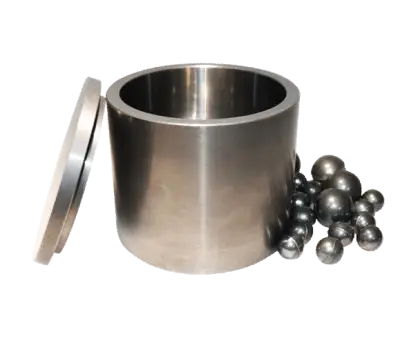
From the core, a tungsten carbide planetary mill jar is a professional grinding container used in planetary ball mills for ultra-fine grinding, mixing, and homogenization of hard, brittle, and wear-resistant materials. It is the preferred choice when extreme hardness, high density, and zero metallic contamination are required. Researchers and engineers in powder metallurgy, ceramic processing, cemented carbide production, and nano-material synthesis rely on these jars to transform coarse powders into submicron or even nano-sized particles with exceptional purity.
Core Function and Working Principle
The fundamental function of a tungsten carbide planetary mill jar is to act as the grinding chamber where the planetary ball mill's high-energy impact and attrition forces reduce particle size. The jar is mounted on a rotating sun disk and simultaneously rotates on its own axis (planetary motion). Inside, grinding balls (often also made of tungsten carbide) collide with the material and the jar walls, generating intense impact, shear, and friction.
Key process parameters include milling speed (typically 250–500 rpm for planetary mills), milling time (from minutes to tens of hours), and ball-to-powder weight ratio (commonly 5:1 to 15:1). Studies have shown that increasing milling speed and time significantly reduces particle size, while the ball-to-powder ratio shows diminishing returns beyond 10:1. The tungsten carbide jar's exceptional hardness (up to 1600 HV) and high density (≈14.8 g/cm³) enable efficient energy transfer to the powder, allowing rapid size reduction even for materials like silicon carbide, boron nitride, and alumina.
Key Features and Material Advantages
Ultra-High Hardness and Wear Resistance
Tungsten carbide (WC-Co) exhibits hardness second only to diamond. This makes the jar extremely resistant to abrasion from hard grinding media and feed materials. Even after thousands of hours of operation, the inner surface maintains its dimensional accuracy, ensuring reproducible grinding results.
Excellent Density for High-Energy Milling
With a density of nearly 15 g/cm³, the tungsten carbide jar provides greater momentum to the grinding balls during planetary motion. This translates into higher impact energy, enabling the comminution of ultra-hard materials that would be impossible in lighter jars such as agate or corundum.
Zero Contamination for Purity-Critical Applications
Tungsten carbide is chemically inert and does not react with most materials. It introduces no metallic impurities (like iron, chromium, or nickel) that could alter the composition of sensitive powders. This is vital for synthesizing high-purity nano-powders for electronics, catalysts, and biomedical devices.
Key Performance Indicators and Selection Criteria
When selecting a tungsten carbide planetary mill jar, consider the following parameters:
- Capacity: Typical laboratory jars range from 50 ml to 500 ml. Larger volumes are available for pilot-scale production.
- Internal Geometry: Semi-circular or round-bottom designs optimize ball motion and reduce dead zones.
- Sealing System: High-quality jars feature vacuum-tight or pressure-tight seals to allow inert atmosphere milling or safe handling of toxic materials.
- Compatibility: Ensure the jar fits your specific planetary ball mill model (e.g., Fritsch Pulverisette 5, Retsch PM 100, Tencan XQM series).
- Maintenance: Tungsten carbide jars are extremely durable but can be heavy. Secure clamping and easy-to-clean designs reduce downtime.
For most laboratory research, a capacity of 80–250 ml with matching tungsten carbide grinding balls is recommended as a starting point. For production scale, consult the manufacturer to confirm weight and balance constraints of your planetary mill.
Application Fields and Selection Advice
Tungsten carbide planetary mill jars are indispensable in industries where hardness and purity are non-negotiable:
- Advanced Ceramics: Grinding of alumina, zirconia, silicon nitride, and boron carbide for sintering and additive manufacturing.
- Cemented Carbide Production: Milling of WC-Co powder blends without introducing foreign elements.
- Battery Materials: Nano-grinding of cathode and anode materials (e.g., LiCoO₂, graphite) under controlled atmospheres.
- Geological and Mining Samples: Pulverizing rocks, ores, and minerals for assay analysis.
- Pharmaceuticals and Fine Chemicals: Mechanochemical synthesis and activation of active ingredients.
For researchers primarily dealing with soft or medium-hard materials, an agate or zirconia jar might suffice. However, for those working with materials above 7 on the Mohs scale or requiring absolute purity, a tungsten carbide jar is the only reliable choice. Always verify that the jar's outer dimensions and locking mechanism match your planetary ball mill's specifications.
References
- Tungsten Carbide Planetary Mill Jar – TENCAN: https://www.planetaryballmills.com/products/grinding-series/planetary-ball-mill-jar/tungsten-carbide-planetary-mill-jar.html
Related Products
Get In Touch
Our professional team will reply to you within one business day. Please feel free to contact us!