

What Is a Tungsten Carbide Planetary Mill Jar? A Durable Laboratory Grinding Jar
Quick Definition: What Is a Tungsten Carbide Planetary Mill Jar?
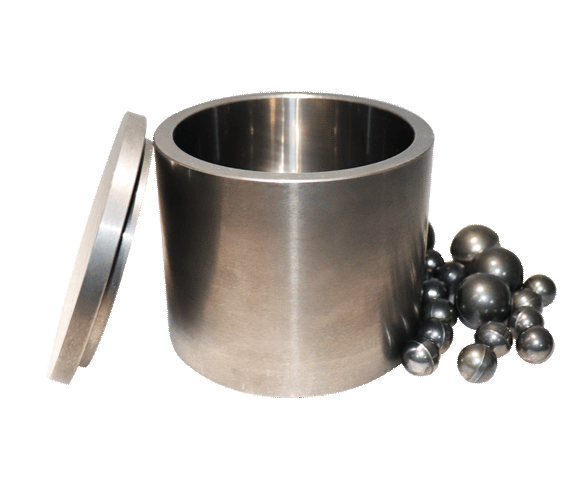
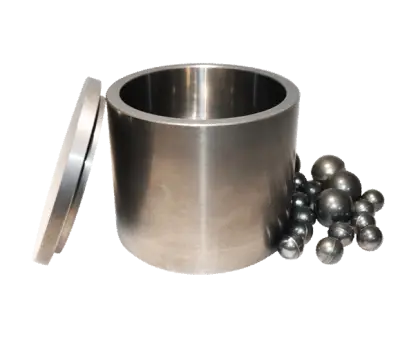
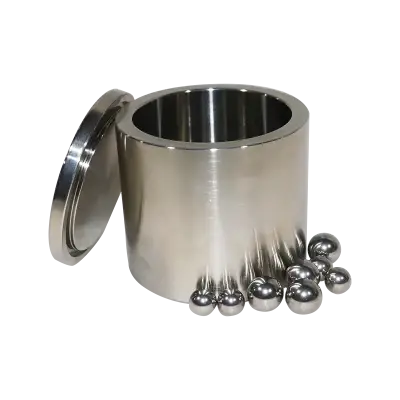
From the core, a tungsten carbide planetary mill jar is a specialized grinding container used on planetary ball mills. It holds the sample and the grinding media during high-energy milling, and its tungsten carbide construction is chosen when wear resistance, dimensional stability, and low contamination are important. The jar is not a mill by itself; it is the working chamber that mounts in the mill's jar seat and moves with the mill's planetary motion while the media inside grind the charge. In laboratories and small production settings, operators use it to turn coarse powders, chips, or small solids into finer particles, to mix powders, or to prepare samples for analysis. The product referenced here is the Tungsten carbide planetary mill jar, a dedicated jar within the planetary ball mill jar family.
How the Jar Works Inside a Planetary Ball Mill
A planetary ball mill creates motion rather than pressure. The jar is clamped in a carrier that rotates around a central axis, while the jar itself rotates in the opposite direction. This compound motion makes the grinding balls inside the jar travel along complex paths, lifting, rolling, and impacting against the sample and the jar wall. The jar's job is to contain that high-energy action safely, transfer mechanical energy to the charge, and keep the sample clean. When the mill runs, the sample is repeatedly fractured by ball impacts and reduced by friction and shear between balls and the jar surface. Over time, the particle size distribution shifts toward finer sizes, and the powder becomes more intimately mixed.
The process is usually described in three stages. First, the jar is charged with the sample and grinding media; the fill level and ball-to-powder ratio influence how much free space remains. Second, the mill accelerates the jar, and the media begin to cascade and collide. Third, after the set milling time, the jar is removed and the powder is recovered. The jar does not set the final particle size by itself; results depend on the mill's speed, milling time, media size and density, sample hardness, and the jar's internal volume. A tungsten carbide jar is chosen when the user wants a robust chamber that can withstand repeated high-energy cycles and resist wear from hard or abrasive powders.
From Charged Powder to Milled Product
In practice, the material enters the jar as a coarse powder, a crushed solid, or a suspension, and leaves as a finer powder or a more uniform mixture. The transformation is mechanical, not chemical, although heat and fresh surfaces can affect sensitive materials. The jar wall and balls strike the particles with enough energy to create cracks; repeated impacts propagate those cracks until pieces separate. At the same time, sliding and rolling contacts smooth rough edges and blend different components. Because the jar is a closed vessel, the process can be kept relatively clean, provided the lid, gasket, and sealing surfaces are in good condition.
The Jar's Role in the Milling Circuit
The jar is one part of a milling circuit that also includes the mill, the grinding media, and the sample. A well-matched jar fits the carrier securely, closes without leakage, and provides enough internal volume for the charge to move. If the jar is too large for the batch, the media may not contact the powder efficiently; if it is too small, the charge may be crowded and the temperature may rise. The jar material also matters: a jar that wears quickly can add unwanted contamination to the powder, while a jar that is chemically unsuitable may react with the sample or cleaning agents. Tungsten carbide is generally selected for its combination of hardness and wear resistance, but it is not automatically the best choice for every powder or every mill.
Why Tungsten Carbide Is Used for Planetary Mill Jars
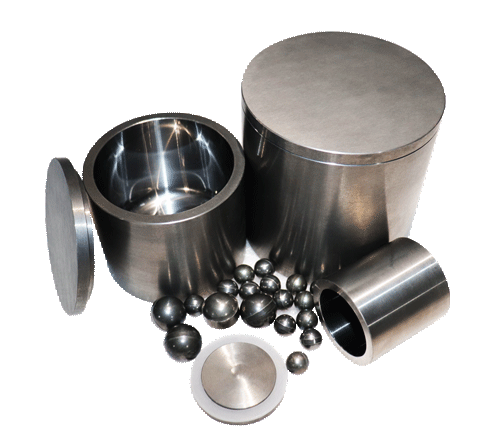
Tungsten carbide is a cemented carbide material made from hard tungsten carbide grains held together by a metallic binder, commonly cobalt. This structure gives the material high hardness and good resistance to abrasion, which is useful in a jar that repeatedly contacts hard grinding media and abrasive powders. In a planetary mill, the jar experiences sliding wear, impact, and occasional thermal cycling. A wear-resistant jar helps maintain the working volume and reduces the amount of jar material that could enter the sample. That is a key reason tungsten carbide jars are used in laboratories that mill hard materials, prepare polished samples, or need to limit metallic contamination.
However, tungsten carbide is not identical to steel, and it is not a universal replacement for agate, zirconia, or ceramic jars. It is dense, so a jar of a given volume can be heavier than a ceramic jar. Density can be an advantage because the jar is stable and robust, but it also means the operator must check the mill's load limits and handling requirements. The material is hard and wear-resistant, but it is not immune to impact damage; careless handling, dropped jars, or excessive milling conditions can chip or crack the jar or lid. Users should follow the jar manufacturer's instructions rather than assume that tungsten carbide means indestructible.
Hardness and Wear Resistance
Hardness is the ability to resist local deformation and scratching. In a mill jar, hardness helps the wall survive contact with grinding balls and abrasive particles. Wear resistance is broader: it describes how well the material resists material loss under sliding, impact, and erosion. A tungsten carbide jar is often chosen when the sample is harder than common ceramics or when the user wants a long service interval. The benefit is not only jar life; wear particles can affect powder purity and analysis. A jar that resists wear can reduce the risk of contamination, although no jar is completely wear-free under all conditions. The actual wear rate depends on the sample, media, milling time, speed, and how well the jar is maintained.
Density, Impact, and Contamination Trade-offs
Density influences the jar's weight and the energy environment inside the mill. A heavier jar can feel more substantial and may be chosen for demanding milling, but the mill carrier and clamping system must be rated for that load. Impact resistance is also important. Tungsten carbide is hard and strong in compression, yet it can be brittle under sharp impacts or bending loads. The jar should be seated correctly, the lid should be tightened as specified, and the jar should not be overfilled. Contamination is another trade-off. Wear from any jar can introduce trace elements into the sample; the user should consider the sample's sensitivity and the analytical method's detection limits. For trace analysis, a blank milling run or a different jar material may be appropriate.
Chemical and Thermal Considerations
Tungsten carbide is generally selected for mechanical rather than chemical reasons, but chemical compatibility still matters. The binder phase and the sample can interact under some conditions, especially with strong acids, oxidizing agents, or high humidity during storage. Cleaning agents should be chosen with care. Thermal cycling from high-energy milling can warm the jar and sample; the jar should be allowed to cool before opening when the protocol requires it. If the process generates heat, the user should check whether the sample is heat-sensitive and whether the mill has a suitable pause or cooling cycle. These are practical precautions, not product-specific limits.
Core Components and Design Features to Inspect
A planetary mill jar is a relatively simple assembly, but small design details matter. The main body provides the grinding chamber; the lid closes the chamber; a gasket or sealing element helps retain the powder and prevent leakage; and the clamping or fixing arrangement holds the lid during operation. On some jars, the exterior shape is designed to fit a specific jar seat, and the lid may include a connection for gas or vacuum if the product supports it. Because the reference product is a tungsten carbide planetary mill jar, the key inspection points are the jar body, lid, sealing surfaces, and the fit between the jar and the mill.
Before each use, the operator should check for chips, cracks, worn gaskets, and powder residue on the sealing surfaces. A damaged sealing edge can allow fine powder to escape, and a loose lid can be unsafe at high speed. The jar should be clean and dry unless the process is intentionally wet. When installing the jar, the operator should confirm that it sits squarely in the carrier and that all clamping points are secure. After milling, the jar should be opened carefully, because fine powders can become airborne and because pressure or heat may have built up. These checks are simple, but they protect both the sample and the equipment.
Installation, Operation, and Maintenance Checklist
Installation Checks
Installation begins with a compatibility check. The jar should be designed for the mill's jar seat and should not be forced into place. The operator should confirm that the carrier is clean, that the jar sits flat, and that the clamping system engages fully. If the mill uses counterweights or paired jars, the user should follow the mill's balance instructions. An unbalanced load can cause vibration, noise, and accelerated wear. The lid should be closed with the specified gasket and tightened according to the manufacturer's method. Over-tightening can distort sealing parts, while under-tightening can allow powder to escape. A short no-load or low-speed check can reveal unusual vibration before a full milling run.
Operation Practices
During operation, the jar should be used within the mill's speed and load limits. The operator should avoid sudden changes in speed and should stop the mill if there is abnormal noise, movement, or leakage. The total mass of the jar, media, and sample matters, especially with a dense tungsten carbide jar. The milling time should be chosen for the sample and the target fineness, not simply extended without checking the result. For heat-sensitive samples, the protocol may need pauses or a lower energy input. Wet milling may be used when the sample and jar are compatible with the liquid, but the jar should not be filled so much that the media cannot move. After the run, the jar should be allowed to cool if needed and opened in a controlled way.
Cleaning and Maintenance
Cleaning is part of maintaining performance. The jar should be emptied and cleaned soon after use so that powder does not harden on sealing surfaces. Soft brushes and suitable cleaning agents are preferable to abrasive tools that may scratch the jar or damage the gasket. The sealing element should be inspected regularly and replaced when it shows cuts, compression, or contamination. The jar body should be checked for chips and cracks, especially near the rim and lid contact area. Storage should protect the jar from impacts and from conditions that could corrode the binder or contaminate the interior. A simple log of milling runs can help the laboratory track wear and plan replacement.
Key Performance Indicators and Selection Points
Selecting a tungsten carbide planetary mill jar is not only a question of material. The jar must match the mill, the sample, the grinding media, and the analytical goal. A useful starting point is the mill's specification: jar seat dimensions, maximum jar load, rotation speed, and clamping method. The jar should be designed for that mill and should not be forced into a seat or held with improvised clamps. The next question is capacity. The jar volume should suit the batch size and the amount of grinding media. Overfilling reduces media movement; underfilling can reduce contact between balls and powder. The user should also consider the density of the jar and media together, since the mill's load rating applies to the total moving mass.
Capacity, Media, and Fill Level
Capacity is usually expressed as the nominal volume of the jar, but the usable volume is smaller because space is needed for the balls and powder. A practical charge leaves enough free volume for the media to move and for the powder to be carried through the charge. The ball-to-powder ratio, media diameter, and media material all affect grinding efficiency. Tungsten carbide media can be paired with a tungsten carbide jar when the user wants a hard, wear-resistant grinding system, but the media must be compatible with the jar and the mill. Larger balls provide more impact energy, while smaller balls provide more contact area. The right combination depends on the initial particle size and the target fineness.
Sealing, Wear Life, and Cleaning
Sealing is a practical performance indicator that is easy to overlook. A good seal keeps fine powder inside the jar and keeps the environment out. The user should inspect the gasket or sealing element and replace it when it becomes compressed, cut, or contaminated. Wear life is another indicator, but it cannot be judged from a single number. It depends on how abrasive the sample is, how long the jar runs, and how carefully the jar is handled. Cleaning is part of wear life: abrasive cleaning tools can scratch sealing surfaces, and aggressive solvents can attack gaskets. Mild cleaning, soft tools, and proper drying help preserve the jar.
Contamination Control and Analytical Fit
For many laboratories, the reason to choose a tungsten carbide jar is contamination control. Hard, wear-resistant surfaces can reduce the amount of jar material released into the powder. Yet contamination control is a system-level issue. The grinding media, the lid seal, the sample preparation tools, and the handling environment all contribute. If the analysis is sensitive to tungsten, cobalt, or other jar constituents, the user should evaluate blanks and consider an alternative jar material. If the goal is simply to reduce wear and extend jar life, tungsten carbide may be a strong candidate. The selection should be based on the sample, the analytical method, and the manufacturer's guidance.
Applications and Selection Advice
Tungsten carbide planetary mill jars are used in laboratories and small-scale processing where hard materials must be reduced or mixed with limited contamination. Typical settings include materials research, hard-metal and carbide powder preparation, ceramic and mineral sample preparation, and general laboratory milling where a durable jar is preferred. They can be useful for abrasive powders that would wear through softer jars quickly. They are also used when the jar must withstand repeated high-energy milling cycles. The exact suitability depends on the sample, the mill, and the protocol; a jar that works well for one powder may not be the best choice for another.
For a user choosing between jar materials, the decision should start with the sample. If the sample is soft and contamination is not critical, a lower-density ceramic or agate jar may be sufficient. If the sample is hard and abrasive, a tungsten carbide jar may be attractive because of its wear resistance. If the sample is sensitive to metallic contamination, the user should check the jar composition and run appropriate blanks. If the mill has load limits, the heavier tungsten carbide jar must be within those limits. The best selection is the one that fits the mill, suits the sample, and can be maintained safely. The Tungsten carbide planetary mill jar page is the appropriate starting point for the current product information.
Safety and Handling Notes
Safety begins with respect for the stored energy in a planetary mill. The jar should be used only with a mill that is in good condition and rated for the load. The lid must be secure, and the jar must be seated correctly before the mill starts. Fine powders can be hazardous if inhaled, so emptying and cleaning should be done in a suitable environment with appropriate personal protection. If the sample is flammable, toxic, or reactive, the user should follow the relevant laboratory procedures and check whether the jar and sealing materials are compatible. A jar that has been dropped or chipped should be inspected before reuse, because damage can grow under repeated milling loads.
Handling a dense tungsten carbide jar also requires care. It may be heavier than expected, and a wet or oily surface can make it difficult to grip. The jar should be carried with both hands or with a suitable lifting aid when necessary. It should not be thrown, stacked loosely, or used as a general-purpose container. When the jar is not in use, it should be stored clean and dry with the lid protected. These habits reduce the risk of accidental damage and help maintain a reliable seal.
FAQ: Common Questions About Tungsten Carbide Planetary Mill Jars
Is a tungsten carbide jar the same as a planetary ball mill?
No. The jar is the grinding container; the planetary ball mill is the machine that moves the jar. The mill provides the motion, while the jar contains the sample and media. A jar cannot grind material by itself, and a mill needs a compatible jar to operate.
Can any planetary mill use a tungsten carbide jar?
Only if the jar fits the mill's jar seat and the mill is rated for the jar's mass. The user should check the mill instructions and the jar dimensions. A jar that is too heavy or poorly seated can cause vibration, damage, or unsafe operation.
Does tungsten carbide eliminate contamination?
No material eliminates contamination completely. Tungsten carbide is chosen for wear resistance, which can reduce wear-related contamination, but the sample, media, and handling still matter. Sensitive analysis may require blanks or a different jar material.
How full should the jar be?
Follow the jar and mill manufacturer's guidance. As a general principle, leave enough free volume for the media to move. Overfilling can reduce grinding efficiency and increase load; underfilling can reduce contact. The right fill depends on the jar size, media, and sample.
How should the jar be cleaned?
Use a method that is compatible with the jar, gasket, and sample. Avoid scratching sealing surfaces and avoid solvents that attack the seal. Dry the jar thoroughly before the next use. If the sample is sensitive, use a cleaning procedure that leaves no residue.
Can the jar be used for wet milling?
Wet milling may be possible when the jar, gasket, and sample are compatible with the liquid. The user should confirm this with the manufacturer and should not fill the jar so much that the media cannot move. After wet milling, cleaning and drying are especially important.
Reference and Product Information
The product discussed in this FAQ is the Tungsten carbide planetary mill jar. The product page provides the manufacturer's current information and should be consulted for dimensions, compatibility, and handling guidance. For laboratory planning, confirm the jar fit, mill load limit, and sealing condition before each milling campaign.
Related Products
Get In Touch
Our professional team will reply to you within one business day. Please feel free to contact us!