
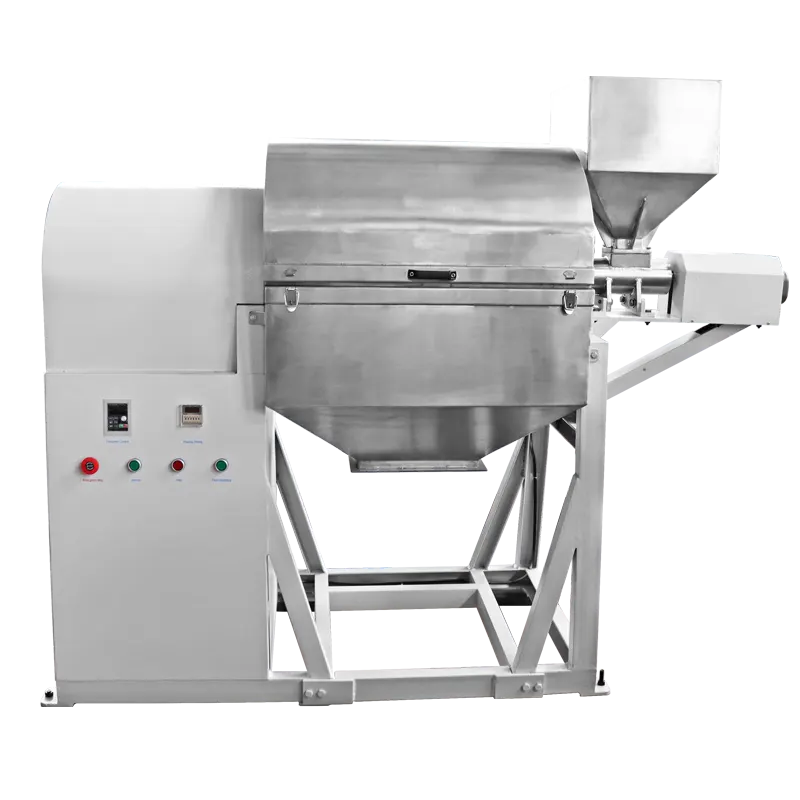
What is a Screening Ball Mill? A Drum Ball Mill for Integrated Grinding and Particle Size Classification

What is a Screening Ball Mill?
At its core, a screening ball mill is a specialized drum ball mill that integrates both grinding and particle size classification into a single process. Laboratories and small-scale production facilities use it to crush brittle, medium-hard, or fibrous materials into fine powders while simultaneously separating the desired particle size range through an integrated mesh screen. This design eliminates the need for separate sieving steps, saving time and ensuring consistent output.
Core Function and Working Principle
The screening ball mill converts coarse feed material (typically ≤3mm for most materials) into a fine powder with a controlled particle size distribution, often down to the micron level. The machine consists of a rotating drum mounted on rollers, similar to a conventional roll ball mill. Inside the drum, grinding media such as ceramic balls, steel balls, or agate balls are loaded along with the material. As the drum rotates, the media cascade and impact the material, breaking it down through a combination of impact, attrition, and shear forces.
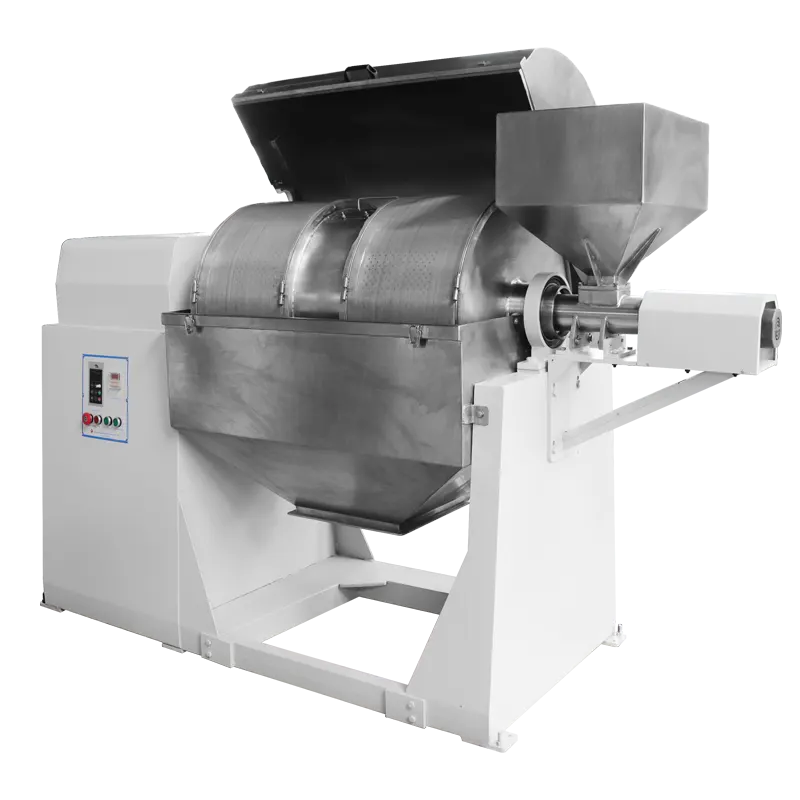
What sets the screening ball mill apart is the integrated screen section at the discharge end. The drum is partially or fully lined with a replaceable mesh screen of a specified aperture size. Once the ground particles reach a size smaller than the screen openings, they pass through and are collected in a tray or container below. Oversized particles remain inside the drum for further grinding until they meet the size criterion. This continuous classification ensures that the final product has a narrow particle size distribution, critical for applications requiring consistent powder properties.
Key process parameters include drum rotation speed (typically 50-300 rpm), grinding media size and material, media-to-material ratio, and screen mesh size. The rotation speed must be optimized to maintain a cascading motion without centrifuging the media. Finer screens produce finer product but reduce throughput, while coarser screens increase throughput at the expense of particle size uniformity.
Core Components and Key Technologies
The screening ball mill comprises several essential components:
- Drum Assembly: A cylindrical steel drum with an inner lining (e.g., rubber, polyurethane, or ceramic) to protect the shell from wear and reduce contamination. The drum has a removable lid for loading material and media.
- Roller Drive System: Two or more rollers support and rotate the drum. The rollers are driven by a motor with a variable frequency drive (VFD) for precise speed control.
- Integrated Screen Section: A section of the drum wall or a separate discharge housing is fitted with a woven wire mesh or perforated plate. The screen is easily replaceable to change the cut size.
- Collection System: A tray or chute underneath the screen collects the fine product, while oversized material recirculates within the drum.
- Safety Features: Emergency stop button, protective cover, and overload protection are standard on modern units.
Advanced models may include a variable frequency drive for programmable speed profiles, enabling different grinding stages (e.g., initial coarse grinding followed by fine grinding). Some units also offer a ceramic jar option for contamination-sensitive materials.
Key Performance Indicators and Selection Criteria
When selecting a screening ball mill, consider the following parameters:
- Throughput Capacity: Typically ranges from a few hundred grams to several kilograms per batch, depending on drum volume (e.g., 0.5L to 20L). For continuous operation, the feed rate and screen area determine the maximum throughput.
- Particle Size Control: The achievable finest particle size depends on screen mesh (e.g., 20 mesh to 500 mesh). For sub-micron grinding, a separate planetary ball mill may be more suitable, but the screening ball mill excels at achieving a strict upper size limit.
- Grinding Efficiency: The ratio of media volume to material volume, media size distribution, and drum speed all affect energy consumption and grinding time. A VFD allows optimization for different materials.
- Automation: Basic models have manual speed and timer controls; advanced units offer programmable digital timers, automatic reverse rotation, and data logging.
- Maintenance: Easy access to the screen for cleaning or replacement, durable roller bearings, and a robust gearless drive system minimize downtime. Check if the drum lining is replaceable.
Application Areas and Selection Advice
The screening ball mill is widely used in geology, metallurgy, ceramics, chemicals, pharmaceuticals, construction materials, and environmental testing. Typical samples include soil, ores, coal, cement clinker, slag, glass, ceramics, and plant fibers. It is ideal for preparing samples for XRF, XRD, or particle size analysis where a specific top size is required without contamination from subsequent sieving.
For laboratories processing small batches of diverse materials, a compact lab roll ball mill with a screening attachment is a good choice. For higher throughput, a larger large roll ball mill with a robust screen system is recommended. Users handling abrasive materials should opt for models with wear-resistant linings (e.g., alumina or polyurethane).
References
- Screening Ball Mill product page: https://www.planetaryballmills.com/products/grinding-series/drum-ball-mill/screening-ball-mill.html
- Related drum ball mill products: Small ball mill with a ceramic jar
Related Products
Get In Touch
Our professional team will reply to you within one business day. Please feel free to contact us!