

What is a PU planetary mill jar? A grinding container for planetary ball mills
What Is a PU Planetary Mill Jar?
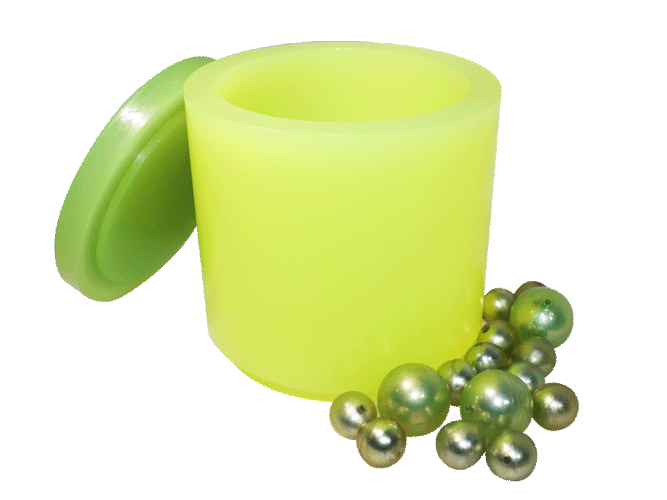
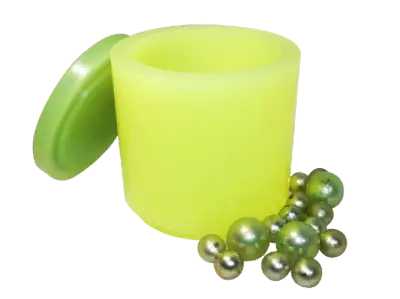
At its core, a PU planetary mill jar is a polyurethane grinding vessel used as the sample chamber in a planetary ball mill. Laboratories and industrial research teams use it to mill, mix, and homogenize solid samples, powders, and slurries inside a sealed container while the mill moves the jar through a complex planetary motion. The PU in the name stands for polyurethane, a polymer material chosen for its toughness, elasticity, and resistance to wear. Instead of a steel, agate, zirconia, or ceramic jar, a PU jar uses a polymer body to reduce noise, absorb impact, and limit metallic contamination in the sample.
Planetary ball mills are common in materials science, mineral processing, chemistry, pharmaceuticals, battery research, and quality control. The mill holds several jars on a rotating disk, often called the sun wheel. Each jar also spins around its own axis. Because the two rotations happen at the same time, the grinding media inside the jar are thrown against the walls and against each other with high energy. The jar is therefore more than a simple container. It is the working chamber where impact, friction, and shear break down particles.
The PU planetary mill jar is one specific option within the broader family of planetary mill jars. It is selected when a laboratory wants a balance of durability, quiet operation, and low metal pickup. It is not a universal replacement for every grinding jar, but it can be a practical choice for many soft, medium-hard, elastic, and moderately brittle materials when the grinding task is set up correctly.
Core Function and Working Principle
The basic function of a PU planetary mill jar is to hold the sample and the grinding media during high-energy milling. The jar closes with a lid and sealing system so that powder or slurry does not escape. During operation, the planetary mill spins the jar in two directions at once. The grinding balls inside the jar tumble, roll, and collide. The sample is trapped between moving balls, pressed against the jar wall, and sheared by friction. Over time, coarse particles are reduced to finer particles, and dry powders or wet slurries become more uniform.
From Coarse Sample to Fine Powder
The transformation begins when the user loads a measured amount of material into the jar. The material may be a brittle mineral, a ceramic precursor, a polymer, a plant tissue, a soil sample, a chemical powder, or a slurry. Grinding media, usually small balls, are added. The jar is then sealed and mounted in the planetary mill. As the mill starts, the jar rotates around the central axis of the machine and simultaneously spins around its own center. This creates a planetary path. The media are lifted along the jar wall and then fall or roll back, generating impact and friction.
In the first stage, large particles are fractured at weak points. In the next stage, the particle size decreases and the specific surface area increases. As particles become finer, they may tend to agglomerate, stick to the jar wall, or coat the grinding media. A well-chosen PU jar can help here because the elastomeric surface is less likely to produce sharp metallic wear particles and may reduce sticking for some samples. However, the user still needs to control milling time, rotation speed, ball charge, and sample load to avoid over-grinding or contamination.
How the Planetary Motion Grinds Material
The key mechanism is a combination of impact and shear. Impact occurs when grinding balls collide with each other or with the jar wall at speed. Shear occurs when particles are squeezed and rubbed between two surfaces. In a planetary mill, the centrifugal and Coriolis forces caused by the dual rotation create a dynamic ball charge. The balls do not simply sit at the bottom. They are constantly rearranged, so the sample is exposed to many random collisions.
The jar material influences this process. A hard ceramic jar transfers impact energy efficiently and resists abrasion, but it can be brittle and noisy. A steel jar is tough and dense, but it can introduce iron or chromium contamination. A PU jar is softer and more elastic. It absorbs some of the impact energy, which can reduce noise and vibration. It also tends to flex slightly under collision, which changes the energy transfer. For soft and medium-hard samples, this can be an advantage because it limits excessive heat and prevents the jar from chipping. For very hard or highly abrasive samples, the same elasticity may reduce grinding efficiency, so a harder jar material may be better.
Key Process Parameters
Several parameters determine the final result. Rotation speed controls the energy of collisions. Higher speed usually means faster grinding, but it also raises the temperature and wear rate. Milling time controls how long the sample is exposed to impact and shear. Ball-to-powder ratio affects how many collisions occur per particle. Ball size affects the balance between impact and friction: larger balls create stronger impact, while smaller balls create more surface contact and finer grinding. Jar fill ratio is also important. If the jar is too empty, balls may not interact efficiently; if it is too full, there is not enough free space for movement. Finally, the material of the jar and balls must be compatible with the sample and with the target analysis.
Core Components and Key Technologies
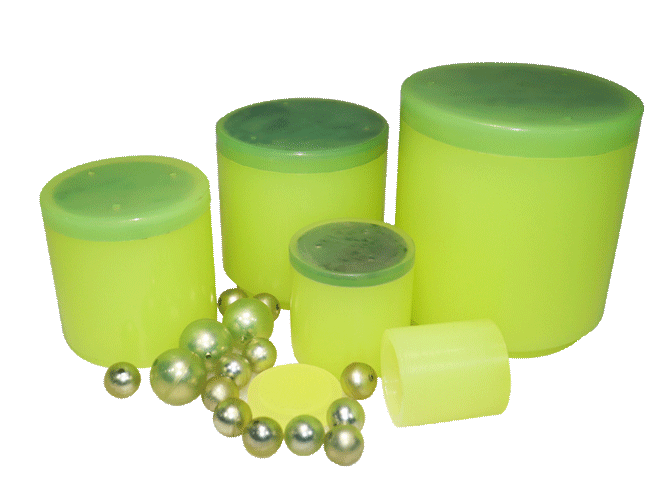
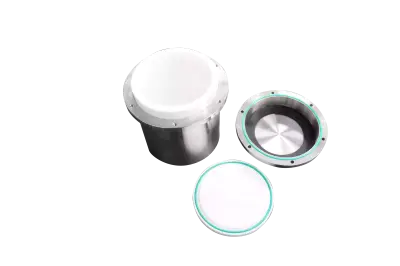
Because a PU planetary mill jar is a focused product rather than a machine with many separate models, it is more useful to look at its core components. Each part affects sealing, grinding performance, and service life. The main components are the jar body, the lid, the sealing gasket or ring, the clamping area, and the grinding media. Optional features may include different lid designs, reinforced rims, or custom dimensions, but the basic working principle remains the same.
Polyurethane Jar Body
The jar body is made of polyurethane, an elastomeric polymer. This material is chosen for its combination of toughness and flexibility. Unlike brittle ceramic, PU can absorb impact without shattering. Unlike metal, it does not produce sharp metallic chips under normal use. It is also relatively lightweight, which reduces the load on the mill and makes handling easier. Polyurethane can be formulated in different hardness grades. A harder PU gives better dimensional stability and abrasion resistance; a softer PU gives better impact absorption and noise reduction. The right grade depends on the sample and the mill.
The inner surface of the jar should be smooth and free from deep scratches. A smooth surface helps the grinding media move freely and makes cleaning easier. If the surface becomes rough, sample may stick, and cross-contamination between batches becomes more likely. For this reason, PU jars should be cleaned with care and inspected regularly.
Lid, Gasket, and Sealing System
The lid closes the grinding chamber. In a planetary mill, the jar experiences strong centrifugal forces, vibration, and internal pressure changes. A secure lid and a reliable gasket are therefore essential. The gasket, often an O-ring or a shaped seal, prevents fine powder from escaping and keeps the sample contained. It also helps maintain a consistent internal environment. If the seal fails, powder can leak into the mill, the sample can be lost, and the jar can become difficult to clean.
The sealing system also affects the type of milling that can be done. Dry milling produces fine dust that can penetrate small gaps. Wet milling uses liquid, which can leak if the seal is not chemically compatible. For some applications, a gas-tight or vacuum-compatible design may be needed. In all cases, the user should check that the lid, gasket, and jar body fit together correctly before every run.
Grinding Media Compatibility
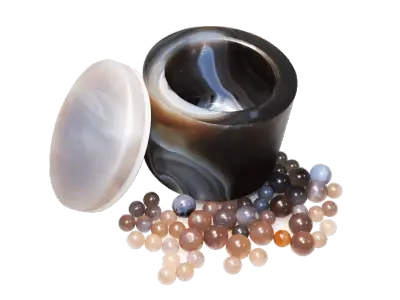
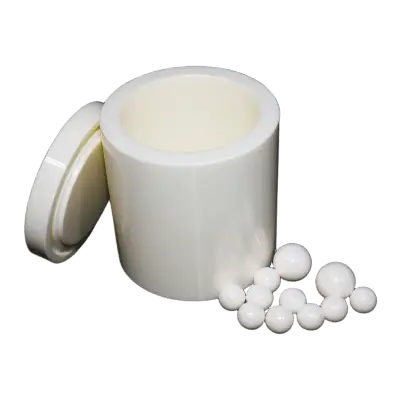
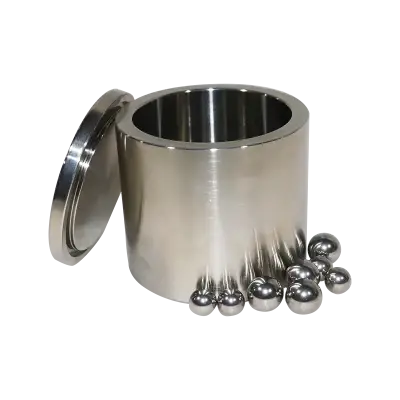
A PU jar does not work alone. The grinding media do most of the actual breakage. Balls can be made from zirconia, agate, alumina, stainless steel, tungsten carbide, or other materials. The choice affects grinding energy, contamination, and wear. Dense media such as zirconia or steel provide strong impact, while lighter media such as agate or ceramic are gentler and may introduce different trace elements.
With a PU jar, the media should be selected carefully. Very hard media can wear the polymer surface faster. Very large or very dense media may also cause deformation or heat buildup. In many laboratory setups, the jar and media are matched to the sample: a soft sample may need lighter media and a lower speed, while a medium-hard sample may need denser media and a longer milling time. The goal is to reach the target particle size without damaging the jar or contaminating the sample.
Clamping and Fit with the Mill
A planetary mill jar must fit the mill correctly. The jar dimensions, lid height, and clamping groove must match the mill's jar holders. If the jar is too loose, it can move during operation and damage the mill or the jar. If it is too tight, mounting and removal become difficult. The jar should sit securely and rotate freely according to the mill's design. This is one reason to use jars from a supplier that understands planetary mill compatibility. The PU planetary mill jar is designed as part of a grinding jar range, so users should confirm the model, volume, and holder type before ordering.
Key Performance Indicators and Selection Points
When choosing a PU planetary mill jar, the buyer should look beyond the material name. The most important indicators are compatibility, capacity, sealing quality, wear resistance, and cleaning convenience. The following sections explain what to check and why.
Capacity, Fill Ratio, and Sample Load
Capacity is the internal volume of the jar. It determines how much sample and grinding media can be loaded. In practice, the jar should not be filled completely. The grinding media need free space to move, tumble, and collide. A common rule is to leave enough empty volume for the ball charge to cascade. If the jar is underfilled, the media may slide instead of impact. If it is overfilled, movement is restricted and grinding becomes inefficient.
Sample load should also match the jar size. A small sample in a very large jar wastes energy and may be difficult to recover. A large sample in a small jar will not grind uniformly. Users should consider the target batch size, the density of the sample, and the required particle size. For research and quality control, smaller jars are often preferred because they use less material and are easier to handle. For pilot or small production work, larger jars may be needed, but the mill must be able to carry them safely.
Particle Size Control and Grinding Efficiency
Particle size control depends on the whole milling system, not just the jar. However, the jar contributes to efficiency through its shape, surface, and material. A smooth, cylindrical PU jar allows the media to move predictably. The elasticity of PU can reduce the intensity of impact, which is useful for heat-sensitive or easily deformed samples. It can also help prevent the sample from compacting on the wall.
If the goal is very fine grinding, the user may need a harder jar and denser media. If the goal is gentle mixing or homogenization, a PU jar with light media may be sufficient. In many cases, a two-stage approach works well: coarse grinding in a hard jar, followed by fine homogenization in a PU jar. This reduces wear on the PU jar and limits contamination at the final stage.
Contamination, Wear, and Chemical Compatibility
Contamination is a major concern in trace analysis and high-purity materials research. Metal jars can introduce iron, chromium, nickel, or tungsten. Ceramic jars can introduce zirconium, aluminum, or silicon. PU jars can reduce metallic contamination because the body is a polymer. However, PU is not completely inert. It can wear, especially when used with hard, abrasive media or at high speed for long periods. Small amounts of polymer wear may appear in the sample. For most routine grinding and mixing, this is acceptable. For ultra-trace analysis, the user should run a blank test and check the detection limits.
Chemical compatibility is also important. Polyurethane generally resists many oils, greases, and some solvents, but it can be attacked by strong acids, bases, or certain organic solvents. The user should check the sample chemistry before milling. If the sample contains aggressive chemicals, a different jar material such as PTFE, zirconia, or agate may be more suitable. For dry powders and neutral slurries, PU is often a practical choice.
Sealing, Cleaning, and Maintenance
A good seal keeps the sample inside and the environment outside. Users should inspect the gasket before each run, remove any powder from the sealing surfaces, and replace worn gaskets promptly. A damaged gasket can cause leakage, sample loss, and inconsistent results. The lid should close smoothly and evenly. If the lid is difficult to close, the jar may be overfilled, the gasket may be misaligned, or the threads or clamp may be damaged.
Cleaning a PU jar should be gentle. Hard brushes, sharp tools, and abrasive cleaners can scratch the polymer surface. Scratches trap particles and make cross-contamination more likely. A soft brush, lukewarm water, and a mild detergent are usually enough for many samples. After cleaning, the jar should be rinsed and dried completely before the next use. Some laboratories use a solvent rinse, but the solvent must be compatible with polyurethane. When in doubt, clean with a small test area first or ask the supplier for guidance.
Maintenance is simple but important. Check the jar body for cracks, deep scratches, discoloration, or soft spots. Check the lid and gasket for deformation. Check the clamping area for wear. A well-maintained PU jar can provide reliable service, but it is a consumable item in high-energy milling. Replacing worn parts protects the mill and keeps results repeatable.
Automation and Repeatability
Planetary ball mills often allow programmable speed, time, and direction changes. Some models can run alternating cycles, pause intervals, or reverse rotation. These features improve repeatability and reduce heat buildup. The jar itself does not need electronics, but it must be consistent from run to run. A jar with stable dimensions and a reliable seal helps the mill deliver the same energy each time. For quality control, users should record the jar type, media type, ball-to-powder ratio, speed, and time. This makes it easier to reproduce a particle size distribution.
Applications and Selection Advice
PU planetary mill jars are used in many laboratories and small-scale production settings. They are especially common where metal contamination, noise, or sample sticking is a concern. The following examples show typical application areas, but the final choice always depends on the sample and the required result.
Typical Application Areas
- Materials research: grinding and mixing polymers, composites, ceramics, and soft metals.
- Geology and mineralogy: preparing soil, sediment, rock, and mineral samples for analysis.
- Environmental testing: homogenizing soil, sludge, and solid waste samples.
- Chemistry and chemical engineering: mixing powders, catalysts, and pigments.
- Pharmaceutical and food research: milling soft, brittle, or fibrous materials in a contained jar.
- Battery and energy materials: gentle mixing or final homogenization steps where metallic contamination must be limited.
- Quality control: preparing consistent samples for particle size analysis, spectroscopy, or other tests.
How to Choose the Right PU Jar
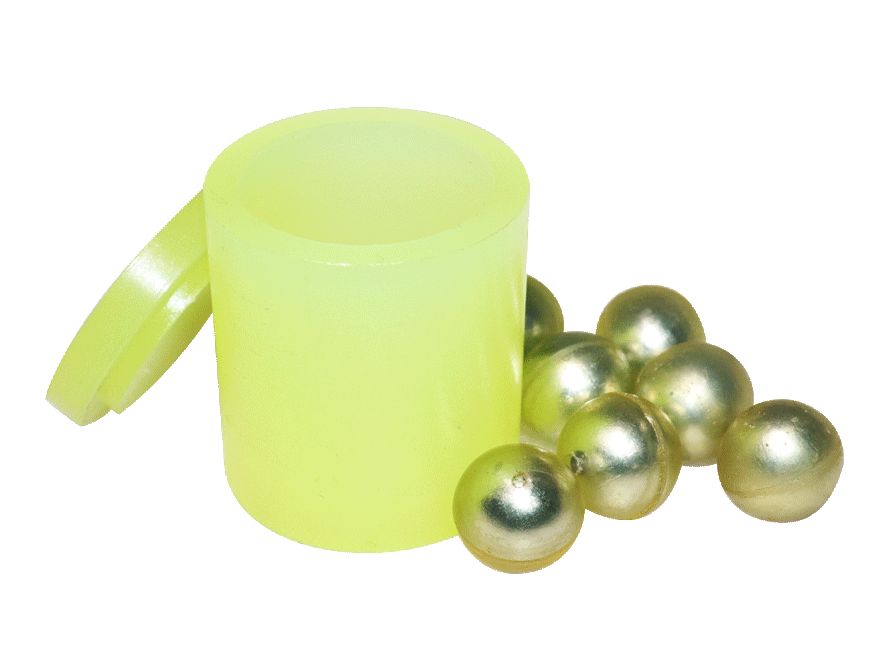
Start with the mill. Confirm the jar volume, outer dimensions, lid type, and clamping method required by the planetary ball mill. A jar that does not fit cannot be used safely, no matter how good the material is. Next, define the sample. Consider hardness, brittleness, elasticity, moisture content, chemical reactivity, and the target particle size. Soft and medium-hard samples are generally good candidates for PU. Very hard, highly abrasive, or chemically aggressive samples may need a different material.
Then choose the grinding media. Match the media material and size to the sample and the jar. Use enough media to create collisions, but do not overload the jar. Set the mill speed and time according to the sample and the desired fineness. Run a small trial before scaling up. Check for leakage, wear, and contamination. If the result is satisfactory, record the parameters and keep them consistent.
Finally, consider the supplier and support. A product page should provide clear information about dimensions, volume, material, and compatible mills. The PU planetary mill jar from TENCAN is part of a broader grinding jar range, so users can compare it with other jar materials and choose the best fit for their application. If the application requires a different polymer, ceramic, or metal jar, the same supplier may offer alternatives.
Frequently Asked Questions
What does PU mean in a PU planetary mill jar?
PU stands for polyurethane. It is a polymer material with rubber-like elasticity and good wear resistance. In a planetary mill jar, it provides a tough, non-metallic grinding chamber that can absorb impact and reduce noise.
Can a PU jar grind hard materials?
It can be used for some medium-hard materials, but it is not the best choice for very hard or highly abrasive samples. Hard materials accelerate wear and may not reach the finest particle sizes. For those tasks, a zirconia, agate, alumina, or tungsten carbide jar may be more suitable.
Is a PU jar suitable for wet milling?
It can be used for wet milling if the liquid is compatible with polyurethane and the lid and gasket provide a reliable seal. Strong acids, bases, and certain solvents may damage PU, so compatibility should be checked before use.
How full should a PU planetary mill jar be?
The jar should not be filled completely. Leave free space for the grinding media to move and collide. The exact fill ratio depends on the sample, media, and mill settings. A trial run is the best way to find the right load.
How do I clean a PU planetary mill jar?
Use a soft brush, lukewarm water, and a mild detergent. Avoid sharp tools, abrasive pads, and harsh chemicals unless they are known to be compatible with polyurethane. Rinse and dry the jar completely before the next use.
How often should the jar be replaced?
Replace the jar when it shows deep scratches, cracks, deformation, soft spots, or persistent contamination. The gasket may need more frequent replacement. In high-energy milling, the jar should be treated as a wear item and inspected regularly.
Where to Learn More
For detailed product information, dimensions, and ordering options, see the PU planetary mill jar page. Before ordering, confirm that the jar matches your planetary ball mill model and that the material is suitable for your sample. A short consultation with the supplier can prevent costly mismatches and improve grinding results.
Related Products
Get In Touch
Our professional team will reply to you within one business day. Please feel free to contact us!