

What is a PU Planetary Mill Jar? A Lightweight, Wear-Resistant Container for Ultra-Fine Grinding of High-Purity Materials
What is a PU Planetary Mill Jar?
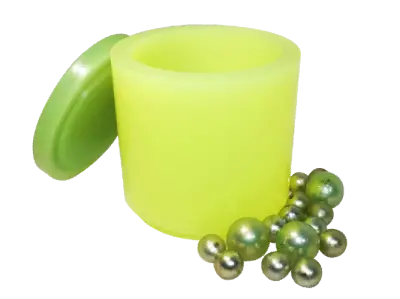
At its core, a PU (polyurethane) planetary mill jar is a specialized grinding container designed for use with planetary ball mills. It is used by laboratories and industries in materials science, ceramics, electronics, pharmaceuticals, and chemical engineering to perform ultra-fine grinding, mixing, and homogenization of powders and suspensions. The jar is made from high-quality polyurethane, which provides exceptional wear resistance, light weight, and zero metal contamination, making it an ideal choice for processing materials that require high purity and absolutely no metallic impurities.
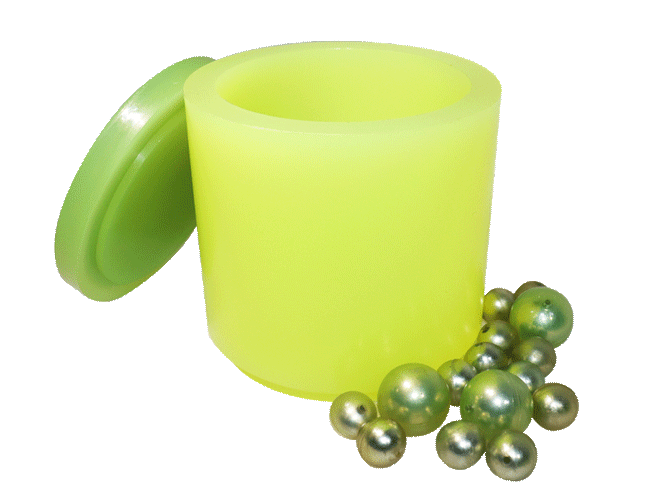
Core Function and Working Principle
The primary function of a PU planetary mill jar is to serve as the vessel where materials are transformed from coarse particles or agglomerates into fine powders, often down to the micron or even submicron level. The jar is mounted on a rotating platform (the sun wheel) of a planetary ball mill. As the sun wheel rotates, the jar also rotates around its own axis in the opposite direction, creating a powerful planetary motion. Inside the jar, grinding balls (typically made of materials like zirconia, agate, or stainless steel, depending on the application) are subjected to both centrifugal and Coriolis forces, resulting in high-energy impact, friction, and shear forces that pulverize the sample.
Key operational parameters include the rotation speed (typically adjustable from 100 to 600 rpm or higher), the size and density of the grinding balls, the ball-to-powder ratio, and the grinding time. The PU material of the jar itself is chemically inert, has low friction, and excellent resilience, which reduces wear on both the jar and the grinding media, prolonging service life while maintaining sample purity. Many PU jars also feature a tight sealing mechanism to prevent leakage and can be used for dry or wet grinding.
Key Features and Technical Advantages
Outstanding Wear Resistance and Light Weight
Polyurethane is a tough elastomer that exhibits excellent resistance to abrasion and impact. Compared to traditional metal jars, PU jars are significantly lighter, reducing the overall load on the planetary ball mill and allowing for higher rotational speeds and more efficient grinding. The material also has a low coefficient of friction, which minimizes wear on the grinding media and reduces the generation of heat during the milling process.
Zero Metal Contamination
One of the most critical advantages of a PU planetary mill jar is that it introduces no metallic contamination into the sample. This is especially important for applications in electronic ceramics, catalysts, battery materials, and pharmaceutical formulations where trace metal impurities can compromise product performance or safety. The inner surface of the jar is smooth and non-porous, preventing the sample from adhering to the walls and ensuring easy cleaning between batches.
Chemical Resistance and Temperature Stability
PU jars are resistant to many organic solvents, oils, and mild acids and bases, making them suitable for wet grinding of various chemical formulations. They can withstand moderate operating temperatures (typically up to 80°C), which is sufficient for most planetary ball mill applications. For extremely high-temperature or corrosive environments, alternative materials such as PTFE or zirconia should be considered.
Key Performance Indicators and Selection Criteria
When selecting a PU planetary mill jar, users should focus on the following parameters:
- Capacity: Common sizes range from 100 mL to 500 mL per jar. Choose a capacity that matches your sample volume and batch requirements. A good rule is to fill the jar to 1/3 to 2/3 of its volume with grinding media and sample.
- Matching with Planetary Ball Mill: Ensure the jar's outer dimensions, locking mechanism, and weight are compatible with your specific planetary ball mill model. Most PU jars are designed with standard lock clamps or flange systems for easy mounting.
- Sealing Performance: For wet grinding or volatile samples, a jar with a robust sealing gasket (usually made of silicone or PTFE) is essential to prevent leakage and solvent evaporation.
- Grinding Media Compatibility: PU jars work well with most grinding media (zirconia, agate, corundum, etc.). However, avoid using extremely hard and sharp media (e.g., tungsten carbide) in high-speed applications as they may cause excessive wear.
- Ease of Cleaning: The smooth inner surface of PU allows for quick cleaning with water or mild solvents, making it ideal for multi-sample processing without cross-contamination.
Applications and Selection Recommendations
PU planetary mill jars are widely used in the following fields:
- Electronic ceramics: Grinding of barium titanate, ferrites, and dielectric powders to ensure high purity and uniform particle size.
- Pharmaceuticals: Preparation of fine drug powders, excipients, and formulations where metal contamination is unacceptable.
- Advanced materials: Mechanical alloying, synthesis of nanocomposites, and processing of energetic materials.
- Chemical industry: Mixing and grinding of pigments, dyes, catalysts, and coatings.
For users who require the highest purity and minimal wear, a PU jar combined with zirconia grinding balls is an excellent choice. If you are working with extremely hard materials (e.g., silicon carbide, tungsten carbide), consider using a tungsten carbide jar or a high-density corundum jar instead. For routine grinding of soft to medium-hard materials, the PU jar offers the best balance of performance, durability, and cost-effectiveness.
References
For more details, please visit the product page: PU planetary mill jar.
Related Products
Get In Touch
Our professional team will reply to you within one business day. Please feel free to contact us!