

What is a PU Planetary Mill Jar? A Polymer Grinding Container for Low-Contamination Grinding
What is a PU Planetary Mill Jar?
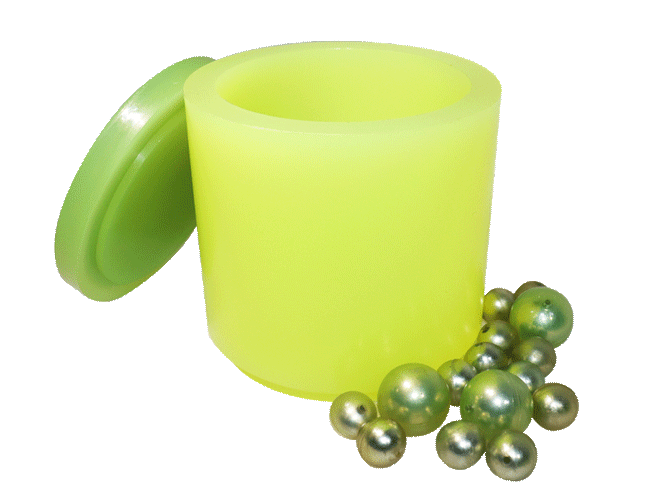
At its core, a PU planetary mill jar is a high-performance grinding container made from polyurethane (PU), specifically engineered for use in planetary ball mills. It serves as a reaction vessel where raw materials, grinding balls, and optional liquid media interact to achieve fine grinding, mixing, or mechanical alloying. Unlike traditional metal or ceramic jars, the PU jar is designed to minimize contamination from metal ions, making it an essential tool for industries that demand high purity in their final products, such as advanced ceramics, battery materials, pigments, and pharmaceuticals.
Core Function and Working Principle
In a planetary ball mill, the jar is not just a passive container; it plays an active role in the grinding process. The mill features a rotating sun wheel (platform) on which the jar is mounted. As the sun wheel rotates, the jar also rotates around its own axis in the opposite direction, creating a complex planetary motion. This motion generates powerful centrifugal and Coriolis forces that drive the grinding balls inside the jar to collide with the material and the jar walls repeatedly.
The PU jar's unique material properties enhance this process. Polyurethane is a resilient elastomer with excellent damping characteristics, which allows it to absorb some of the impact energy while still transferring sufficient force to the balls for effective comminution. This results in reduced wear on both the jar and the grinding media, leading to longer service life and lower contamination levels. The smooth inner surface of a PU jar also minimizes material adhesion, ensuring consistent grinding and easy cleaning.
Key process parameters such as rotational speed, grinding time, ball-to-powder ratio, and jar filling volume directly influence the final particle size and distribution. Typically, PU jars can achieve particle sizes down to the sub-micron range, depending on the material and operating conditions.
Comparison with Other Common Jar Materials
To understand the value of a PU planetary mill jar, it helps to compare it with other popular materials:
Stainless Steel (304SS) Jars
Stainless steel jars are robust and widely used, but they can introduce iron, chromium, and nickel contamination into the sample. PU jars are preferred when metal ion contamination is unacceptable, such as in electronic ceramics or pharmaceutical research.
Zirconia (ZrO₂) Jars
Zirconia jars offer extremely high hardness and wear resistance, making them suitable for hard materials like silicon carbide or alumina. However, they are heavy, expensive, and can introduce zirconium contamination. PU jars are lighter, more cost-effective, and provide sufficient wear resistance for medium-hard materials, while eliminating zirconium contamination.
Agate (SiO₂) Jars
Agate jars are prized for their high purity and aesthetic appearance, but they are brittle and prone to chipping, especially at high speeds. PU jars are far more impact-resistant, safer to operate, and less likely to shatter, making them a practical choice for routine laboratory use.
Nylon and PTFE Jars
Nylon jars offer good chemical resistance and low cost, but they wear faster than PU. PTFE (Teflon) jars are chemically inert but softer, leading to more rapid degradation. PU strikes a balance: it has better abrasion resistance than nylon and PTFE, while maintaining excellent chemical resistance to many solvents and acids.
Key Performance Indicators and Selection Criteria
When selecting a PU planetary mill jar, consider the following factors:
- Capacity Range: PU jars are available in sizes from 50 mL to several liters. Choose a volume that matches your batch size, but remember that the jar should not be filled more than two-thirds of its total volume to allow proper ball movement.
- Wear Resistance: High-quality PU can withstand thousands of hours of use without significant wear. Look for jars with a Shore hardness of 90A or higher for optimal durability.
- Temperature Resistance: PU typically operates well up to 80°C. For processes that generate excess heat, consider using a cooling system or selecting a material with higher thermal tolerance.
- Sealing and Vacuum Capability: Many PU jars come with O-ring seals and can be used under vacuum or inert gas atmosphere. This is critical for oxygen-sensitive materials like metal powders or carbon-based compounds.
- Compatibility with Mill: Ensure the jar's dimensions and locking mechanism are compatible with your planetary ball mill. Most standard models fit common mills, but always verify the attachment system.
Applications and Recommendations
PU planetary mill jars are widely used in:
- Advanced Ceramics – grinding of alumina, zirconia, silicon nitride, and other ceramic powders without metal contamination.
- Battery Materials – preparation of electrode materials (e.g., lithium cobalt oxide, graphite) where purity is paramount.
- Pigments and Dyes – fine grinding and dispersion of colorants for paints, coatings, and inks.
- Pharmaceuticals – micronization of active pharmaceutical ingredients (APIs) and excipients.
- Geology and Mining – preparation of mineral samples for analysis when metal contamination must be avoided.
For users who routinely process soft to medium-hard materials (Mohs hardness < 7) and require minimal contamination, the PU jar is an excellent choice. If you are grinding extremely hard materials (e.g., tungsten carbide, silicon carbide), consider a tungsten carbide jar for maximum wear resistance. For high-temperature processes, a zirconia jar may be more suitable.
References
Related Products
Get In Touch
Our professional team will reply to you within one business day. Please feel free to contact us!