
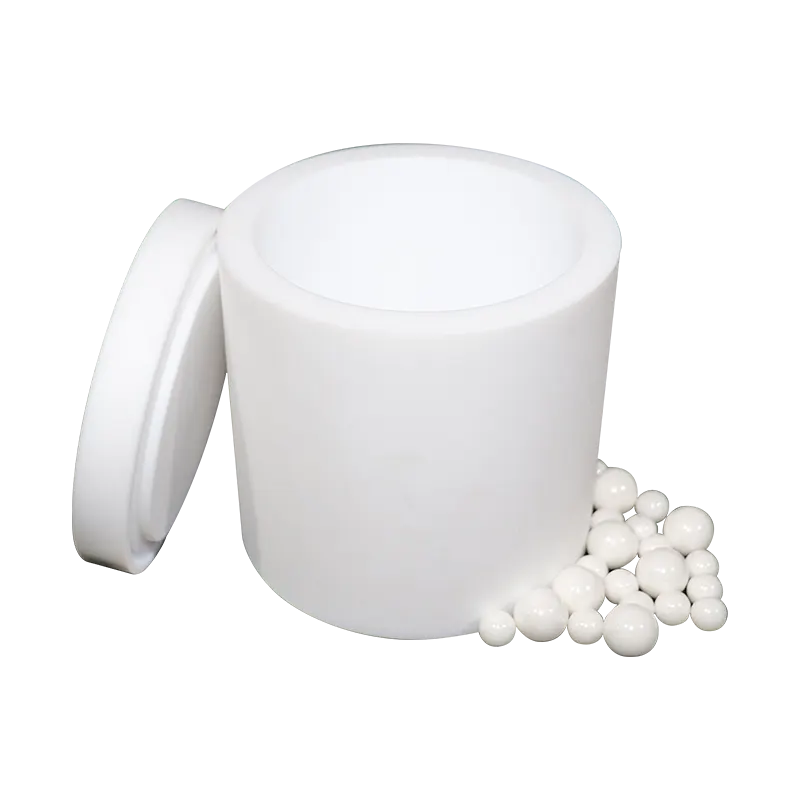
What is a PTFE Planetary Mill Jar? A Chemical-Resistant Grinding Container for Contamination-Free Fine Milling

Introduction
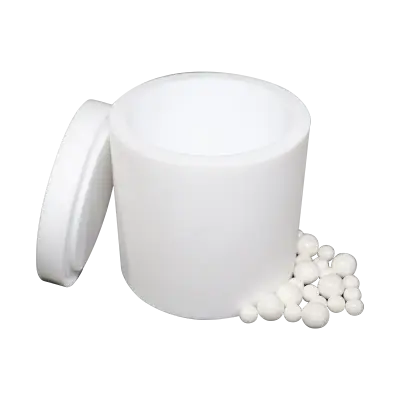
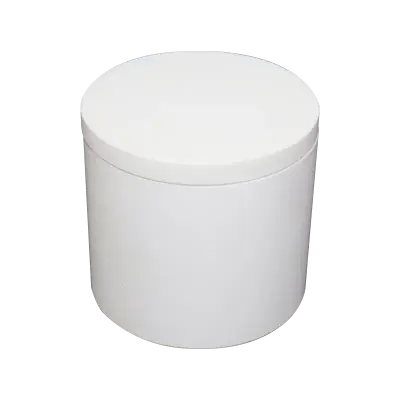
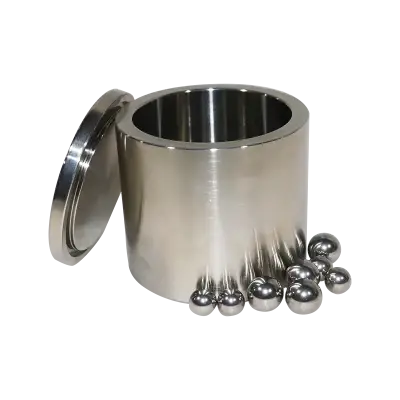
From the core, a PTFE planetary mill jar is a high-performance grinding container designed for use in planetary ball mills. It is crafted from polytetrafluoroethylene (PTFE), a fluoropolymer renowned for its exceptional chemical inertness, wide temperature tolerance, and non-stick surface. Laboratories and industries use it to mill, mix, and homogenize samples that are highly corrosive, sensitive to metallic contamination, or require ultra-high purity, such as battery materials, pharmaceuticals, and advanced ceramics.
Core Function and Working Principle
A PTFE planetary mill jar operates as part of a planetary ball mill system. The jar is mounted on a rotating platform and spins both on its own axis (rotation) and around the center of the mill (revolution). This dual motion creates high-energy impacts and friction between the grinding balls and the sample, effectively breaking down particles from coarse to fine or even nano-scale powders.
The PTFE material provides a chemically inert environment that prevents any reaction between the jar and the sample. Its non-stick surface minimizes sample adhesion and residue buildup, ensuring consistent grinding efficiency and easy cleaning. The jar can withstand temperatures from -200°C to +260°C, making it suitable for cryogenic grinding or high-temperature processes. The grinding effect is controlled by adjusting rotation speed, ball-to-powder ratio, and milling time.
Key Characteristics and Classification
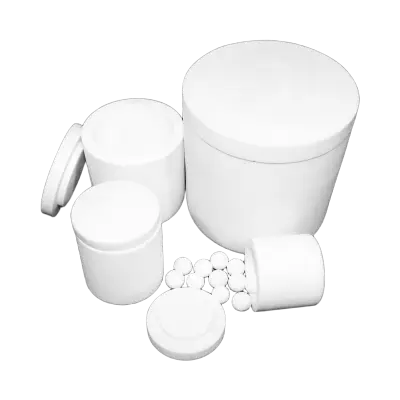
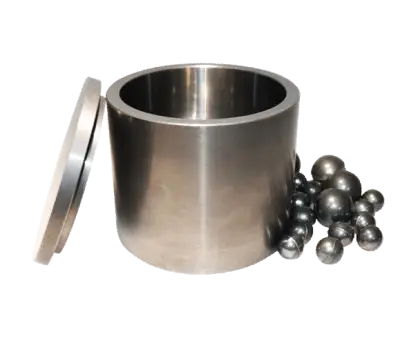
PTFE planetary mill jars are available in various capacities, typically ranging from 0.1L to 5L, to fit different planetary ball mill models. They often feature a leak-proof sealing design with a PTFE or silicone O-ring to prevent contamination and solvent evaporation. Compared to other jar materials such as stainless steel, zirconia, or agate, PTFE offers the best chemical resistance and is completely non-reactive with most acids, alkalis, and organic solvents. However, it is softer than ceramic jars, so it is not recommended for extremely hard materials that may cause wear.
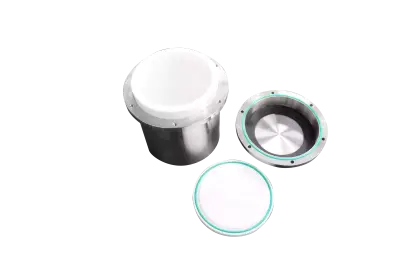
Some PTFE jars come with a reinforced outer shell (e.g., stainless steel jacket) to improve mechanical strength and durability under high-speed operation. The choice between standard PTFE and reinforced PTFE depends on the required pressure resistance and the specific mill model.
Key Performance Indicators and Selection Considerations
When selecting a PTFE planetary mill jar, consider the following parameters:
- Capacity: Choose a jar size that matches your sample volume and mill capacity. Common sizes are 100 mL, 250 mL, 500 mL, 1 L, and 2 L.
- Chemical Compatibility: PTFE is compatible with virtually all chemicals except molten alkali metals and fluorine gas. Verify that the jar material suits your specific sample.
- Temperature Range: PTFE retains its properties from -200°C to +260°C. For cryogenic milling, ensure the jar can withstand low temperatures without cracking.
- Sealing Performance: A good sealing system prevents leakage during high-speed rotation. Check for PTFE or FKM O-rings.
- Mechanical Strength: Pure PTFE is relatively soft; reinforced jars (e.g., with stainless steel shell) are preferred for high-energy milling.
- Ease of Cleaning: The non-stick surface greatly simplifies cleaning, reducing cross-contamination risks.
Application Areas and Selection Advice
PTFE planetary mill jars are widely used in:
- Battery Material Research: Milling of cathode, anode, and electrolyte materials without metal contamination.
- Pharmaceutical Industry: Grinding of active pharmaceutical ingredients (APIs) and excipients that require high purity.
- Chemical & Petrochemical: Processing of corrosive catalysts, pigments, and polymers.
- Nanomaterial Synthesis: Mechanical alloying and grinding of sensitive nanomaterials.
- Food & Cosmetic: Milling of flavorings, colorants, and additives that must avoid metallic ions.
For users who frequently mill highly corrosive samples or require ultra-low contamination, a PTFE planetary mill jar is the best choice. If mechanical strength is a concern, opt for a reinforced version. For routine milling of hard materials, ceramic jars (e.g., zirconia or corundum) may be more durable. Always match the jar to your PTFE planetary mill jar specifications for optimal performance.
Related Products
Get In Touch
Our professional team will reply to you within one business day. Please feel free to contact us!