

What is a PTFE Planetary Mill Jar? A Specialized Grinding Container Used for High-Purity and Corrosion-Resistant Laboratory Sample Preparation
Opening Definition
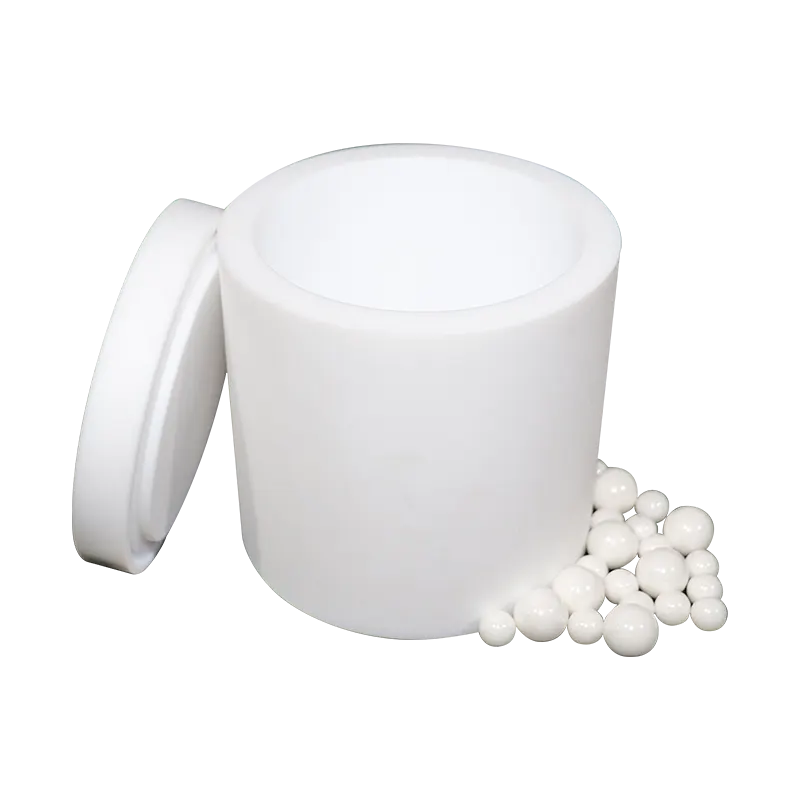
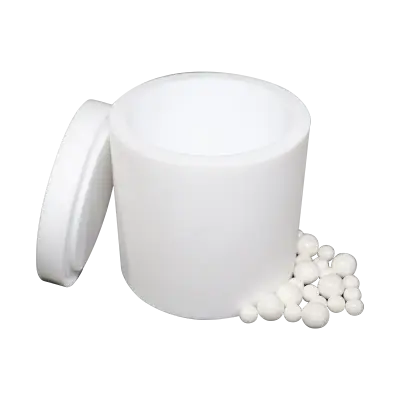
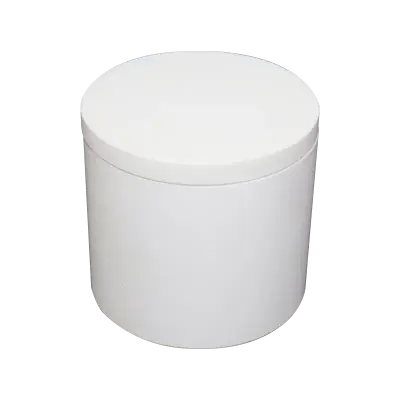
From a core perspective, a PTFE Planetary Mill Jar is a specialized laboratory grinding container engineered specifically for planetary ball mills. It is widely utilized in research institutions, quality control laboratories, and advanced manufacturing facilities to grind, mix, and disperse solid materials under conditions that demand extreme chemical inertness and zero metallic contamination. Unlike conventional metal or ceramic containers, this jar is integrally molded from high-purity polytetrafluoroethylene (PTFE), providing a seamless, impurity-free structure that safeguards sensitive analytical results.
Core Functions and Working Principles
The fundamental function of the PTFE planetary mill jar is to transform coarse, fibrous, or moderately hard bulk materials into ultra-fine powders or homogeneous suspensions. When securely mounted onto a planetary ball mill, the jar participates in a complex kinematic motion: it revolves around a central drive axis while simultaneously rotating on its own vertical axis. This dual-motion profile generates high centrifugal forces that lift the internal grinding media (typically PTFE, zirconia, or agate balls) to a critical height before they cascade downward.
The resulting particle size reduction occurs through three primary mechanical actions: impact crushing from falling media, shear fracturing from sliding contact between particles and jar walls, and attrition grinding from continuous friction. Operators can precisely tune the final fineness by adjusting rotational speed, milling duration, media-to-sample mass ratio, and liquid-to-solid ratio for wet processing. These parameters directly dictate the energy input per unit volume, enabling consistent achievement of sub-micron particle sizes (down to approximately 0.1 µm). Throughout this high-energy cycle, the PTFE matrix remains chemically stable, preventing leaching, adsorption, or cross-contamination that could compromise downstream spectroscopic or chromatographic analyses.
Key Components and Technical Features
The structural integrity of the PTFE planetary mill jar relies on its monolithic construction. The main cylindrical body, precision-tapered lid, and integrated sealing gasket are all fabricated from a single batch of high-density PTFE resin using advanced compression molding and CNC machining techniques. This eliminates welded seams, adhesive joints, or bolted flanges that typically serve as contamination traps or failure points in traditional vessels.
Material science properties further enhance its operational reliability. PTFE exhibits an exceptionally low coefficient of friction and minimal surface energy, which prevents fine powders from adhering to inner walls and ensures complete sample recovery. The polymer maintains mechanical toughness across an extensive thermal window (-196°C to +250°C), allowing compatibility with cryogenic milling setups or heated reaction environments. Additionally, its non-porous microstructure resists penetration by aggressive reagents, including hydrofluoric acid, concentrated sulfuric acid, aqua regia, and most organic solvents, making it indispensable for hazardous or highly reactive sample matrices.
Key Performance Indicators and Selection Guidelines
Selecting the appropriate PTFE planetary mill jar requires evaluating several technical metrics aligned with experimental objectives. Volume capacity typically ranges from 50 ml to 2 L; users should calculate daily throughput and ensure loading never exceeds two-thirds of the nominal volume to prevent overflow during vigorous agitation. Dimensional compatibility with your specific mill model must be verified, particularly regarding outer diameter, height clearance, and base mounting geometry.
Energy efficiency and motor load represent another critical consideration. Due to its low density (~2.1 g/cm³), PTFE jars significantly reduce the total rotating mass compared to stainless steel or tungsten carbide alternatives. This lowers bearing stress and extends drive train longevity, especially in continuous-operation scenarios. For maintenance, the smooth interior allows rapid solvent rinsing or mild detergent cleaning, though wire brushes or abrasive pads should be strictly avoided to preserve surface finish. If your workflow involves oxygen-sensitive or moisture-reactive compounds, verify whether your mill system supports vacuum-rated or inert-gas-purged variants of this container.
Application Fields and Selection Advice
PTFE planetary mill jars are foundational tools in disciplines where trace-level accuracy and chemical purity are non-negotiable. They dominate environmental monitoring workflows for soil, sediment, and atmospheric particulate analysis; pharmaceutical development for API homogenization and excipient blending; semiconductor fabrication for precursor powder preparation; and food safety testing for pesticide residue extraction. Analytical chemists performing ICP-MS, atomic absorption, or X-ray fluorescence routinely specify these jars to eliminate background signals from iron, chromium, or nickel ions commonly released by metal containers.
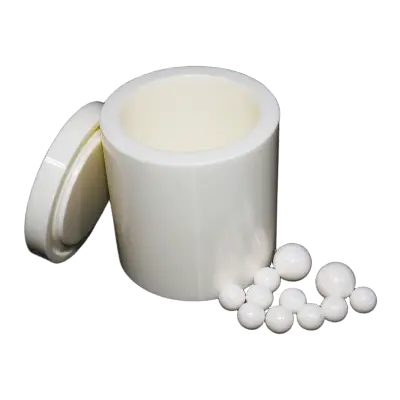
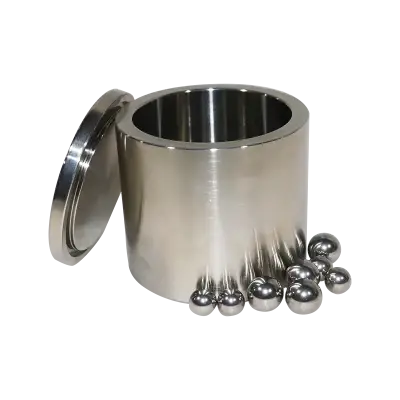
For procurement decisions, academic and government labs prioritizing elemental traceability should default to PTFE over 304 stainless steel planetary mill jars or zirconia planetary mill jars. However, if processing highly abrasive minerals such as quartz, feldspar, or corundum, consider upgrading to reinforced wall thicknesses or switching to harder media combinations to mitigate accelerated wear. Always cross-reference your mill's rated torque, maximum safe RPM, and ventilation requirements before deployment to ensure optimal performance and operator safety.
References
Related Products

Get In Touch
Our professional team will reply to you within one business day. Please feel free to contact us!