
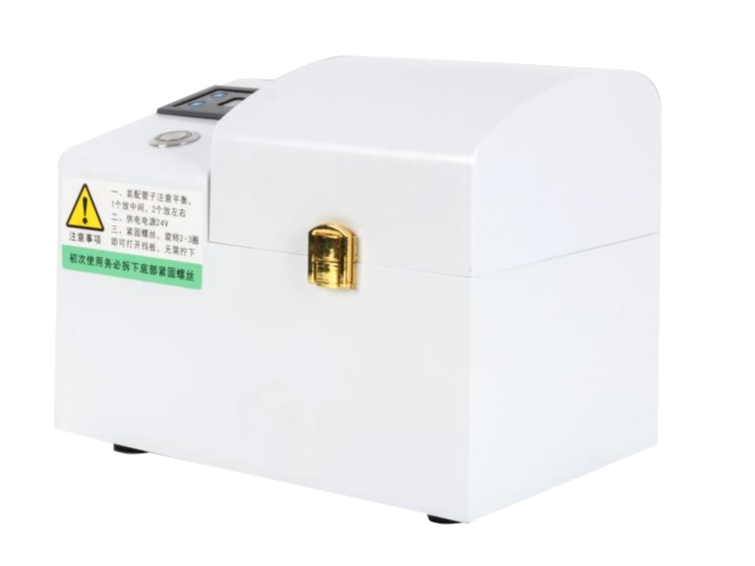
What is a Portable Tissue Grinder? A Compact Device for Rapid Biological Sample Homogenization in Field and Lab Settings

What is a Portable Tissue Grinder?
From the core, a portable tissue grinder is a specialized, compact homogenization device used by researchers in molecular biology, agriculture, and food safety to rapidly break down plant and animal tissues into fine particles for downstream analysis. Unlike bulky benchtop mills, this portable grinder is designed for both field sampling and small laboratory workflows, offering a simple, efficient, and contamination-free solution for sample preparation.
Core Function and Working Principle
The primary function of a portable tissue grinder is to convert solid biological samples (e.g., leaves, roots, seeds, animal muscle, or hair) into a homogeneous slurry or fine powder. The device operates by using a high-speed motor to vigorously agitate a grinding tube containing the sample and one or more grinding beads (typically made of ceramic, glass, or stainless steel). The rapid oscillations cause the beads to collide with the tissue, effectively disrupting cell walls and membranes through impact and shear forces.
Key parameters include grinding time, speed, and the type of bead used. For soft plant tissues, dry grinding can be completed in as little as 1 minute, while wet grinding or tougher samples may require up to 3 minutes. The user can adjust these parameters to achieve the desired particle size, typically down to the micrometer range, ensuring optimal release of nucleic acids, proteins, or metabolites.
Key Technical Features
Although the portable tissue grinder is a single type of device, its design incorporates several critical components:
- Grinding Tube and Beads: Each sample is processed in an individual, sealed tube to prevent cross-contamination. The beads are chosen based on sample hardness – glass for soft tissues, zirconia for tough ones.
- Motor and Drive System: A powerful yet compact motor delivers consistent oscillation frequencies, typically 2000–4000 rpm, ensuring efficient homogenization.
- Ergonomic Design: With dimensions of only 20×17×18 cm and a weight of about 2.3–2.8 kg, the device is easily portable and can be battery-powered for field use.
- Safety Features: Many models include a lid lock that stops the motor when opened, protecting the user from accidental exposure to moving parts.
Performance Indicators and Selection Guide
When selecting a portable tissue grinder, consider the following specifications:
- Processing Capacity: Most portable models handle 3–6 samples per run, ideal for small-scale experiments or field surveys.
- Grinding Speed and Time: Look for adjustable speed settings and timers; dry grinding in under 1 minute is a benchmark for efficiency.
- Sample Compatibility: Ensure the device works with standard 1.5 mL to 2.0 mL microcentrifuge tubes, as well as larger tubes for bulk samples.
- Portability: Weight under 3 kg and the option to run on rechargeable batteries or power banks are critical for field work.
- Ease of Cleaning: Removable tube holders and sealed grinding chambers simplify maintenance and prevent residue buildup.
Applications and Recommendations
Portable tissue grinders are widely used in plant genetics (e.g., DNA extraction from leaves), veterinary diagnostics (e.g., homogenization of animal tissues for pathogen detection), food safety (e.g., pesticide residue analysis), and environmental monitoring (e.g., soil microbial community analysis). For field researchers, choose a model with a robust battery and durable construction. For lab use, prioritize models with accurate speed control and low noise levels. To explore more options, see the Portable Tissue Grinder product page or check our Multi-Channel Tissue Grinder for higher throughput needs.
Related Products
Get In Touch
Our professional team will reply to you within one business day. Please feel free to contact us!