
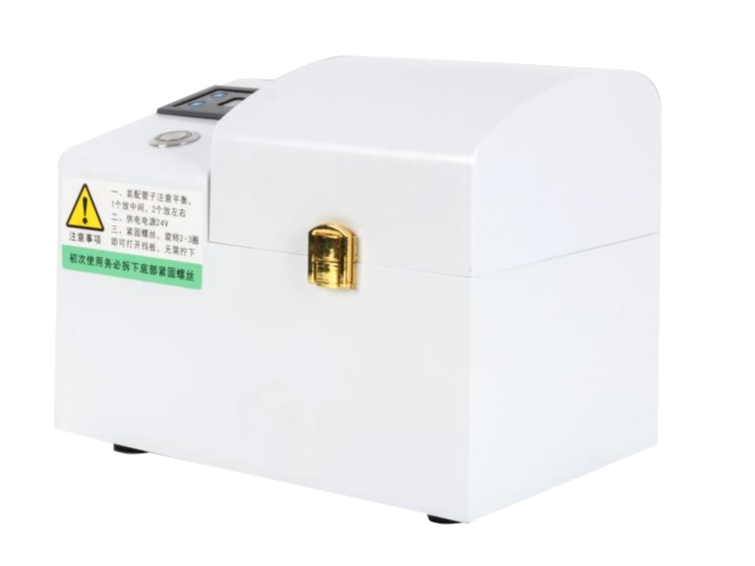
What is a Portable Tissue Grinder? A Compact Tissue Homogenizer for On-Site Sample Preparation

What is a Portable Tissue Grinder? A Compact Tissue Homogenizer for On-Site Sample Preparation
From the core, a portable tissue grinder is a specialized, lightweight homogenizer that researchers, field biologists, and forensic scientists use to rapidly disrupt and grind biological tissues at the point of collection. Unlike bulky benchtop mills, this device is designed for mobility—often powered by a rechargeable battery or 12V car adapter—allowing DNA, RNA, and protein extraction directly in remote or field settings. It combines high-frequency vibration with sealed grinding tubes to achieve complete cell lysis and tissue homogenization within seconds, ensuring sample integrity and eliminating cross-contamination.
Core Function and Working Principle
The primary function of a portable tissue grinder is to transform solid biological tissues (such as animal organs, plant leaves, or bacterial pellets) into a homogeneous slurry or fine powder suitable for downstream analysis. The device operates on a high-frequency three-dimensional vibrational principle: a grinding adapter holding sample tubes (typically 1.5 mL or 2 mL centrifuge tubes) together with grinding beads oscillates at rates ranging from 2,500 to 6,000 times per minute. The rapid motion causes the beads to collide violently with the sample, generating impact and shear forces that break cell walls and membranes.
Key parameters affecting grinding efficiency include vibration frequency, processing time (typically 10–300 seconds per cycle), and the size and material of grinding beads (e.g., stainless steel, zirconia, or ceramic). The sealed tube design prevents aerosol contamination and allows for liquid nitrogen pre-cooling to process heat-sensitive samples without degradation. Most models feature a touchscreen interface for storing multiple grinding protocols, enabling one-touch recall for different sample types.
Core Components and Key Technologies
Despite its compact size, a portable tissue grinder integrates several critical components:
- Vibration Drive System: A high-torque, low-noise motor drives the grinding adapter in a three-dimensional orbital or vertical oscillation path. The stroke length (typically 30–38 mm) determines the impact energy.
- Grinding Adaptor: Made of metal or high-strength plastic, the adaptor holds centrifuge tubes securely. Some models offer interchangeable adaptors for 24×1.5 mL tubes or 12×5 mL tubes.
- Grinding Beads: Available in diameters from 0.2 mm to 3.0 mm and materials such as 316 stainless steel, zirconia, or ceramic. Multiple small beads improve homogenization efficiency for soft tissues.
- Control Panel: A digital display and intuitive buttons allow adjustment of time (1–300 s) and vibration intensity (usually 5 fixed levels or variable speed). Many units have a pause/reset function for safety.
- Power Supply: Most portable grinders accept 12V DC input (car lighter or battery pack), with an optional AC adapter for lab use. This enables operation in greenhouses, field stations, or mobile labs.
Key Performance Indicators and Selection Criteria
When choosing a portable tissue grinder for your application, consider these essential metrics:
- Throughput: The number of samples processed per batch. Common capacities range from 8 to 24 samples (1.5/2 mL tubes). For high-volume work, a 24-tube adaptor is preferred.
- Vibration Frequency Range: Higher frequencies (up to 6,000 beats/min) deliver more energy for tough samples like seeds or bone. Lower frequencies (2,500–3,000 beats/min) are gentler for soft tissues.
- Grinding Time: Most samples are fully homogenized in 30–60 seconds. Look for units with precise timer control (1-second increments) for reproducibility.
- Cooling Capability: For heat-sensitive samples (e.g., RNA, enzymes), a model that allows liquid nitrogen addition or a pre-frozen adaptor is critical to maintain integrity.
- Noise Level: Bench-friendly models operate below 50 dB, making them suitable for shared lab spaces.
- Portability: Weight under 5 kg and compact dimensions (e.g., 280×400×530 mm) facilitate transportation. Battery life should support at least 30 full cycles.
Application Areas and Selection Recommendations
Portable tissue grinders are widely used in molecular biology, forensic science, agricultural testing, and environmental monitoring. Typical applications include:
- Genomic DNA/RNA Extraction: From animal tissues, plant leaves, insects, and microorganisms for PCR, sequencing, or qPCR.
- Protein Extraction: For Western blot, ELISA, or enzymatic assays requiring cell lysis.
- Food Safety Testing: Homogenization of food samples (meat, vegetables) for pathogen detection or pesticide residue analysis.
- Field Forensics: On-site DNA extraction from crime scene evidence (blood, hair, tissue) without needing a full laboratory.
For researchers who need to process a moderate number of samples (up to 24 per batch) in field or mobile lab settings, a portable tissue grinder with adjustable speed and liquid nitrogen cooling capability offers the best balance of performance and cost. If your work exclusively involves soft tissues and you require maximum portability, a smaller 12-tube model with fixed intensity may suffice. Always verify that the grinder supports standard centrifuge tubes to avoid recurring consumable costs.
References
- Product Page: Portable Tissue Grinder
- Related Product: Multi Channel Tissue Grinder
- Related Product: High Throughput Tissue Grinder
Related Products
Get In Touch
Our professional team will reply to you within one business day. Please feel free to contact us!